A Polish war hero, the insurgent of the Warsaw Uprising in 1944, has completed his last mission - by proudly walking his granddaughter down the aisle.
Two days later, Major Bronisław Karwowski retired to the eternal guard at the age of 94.
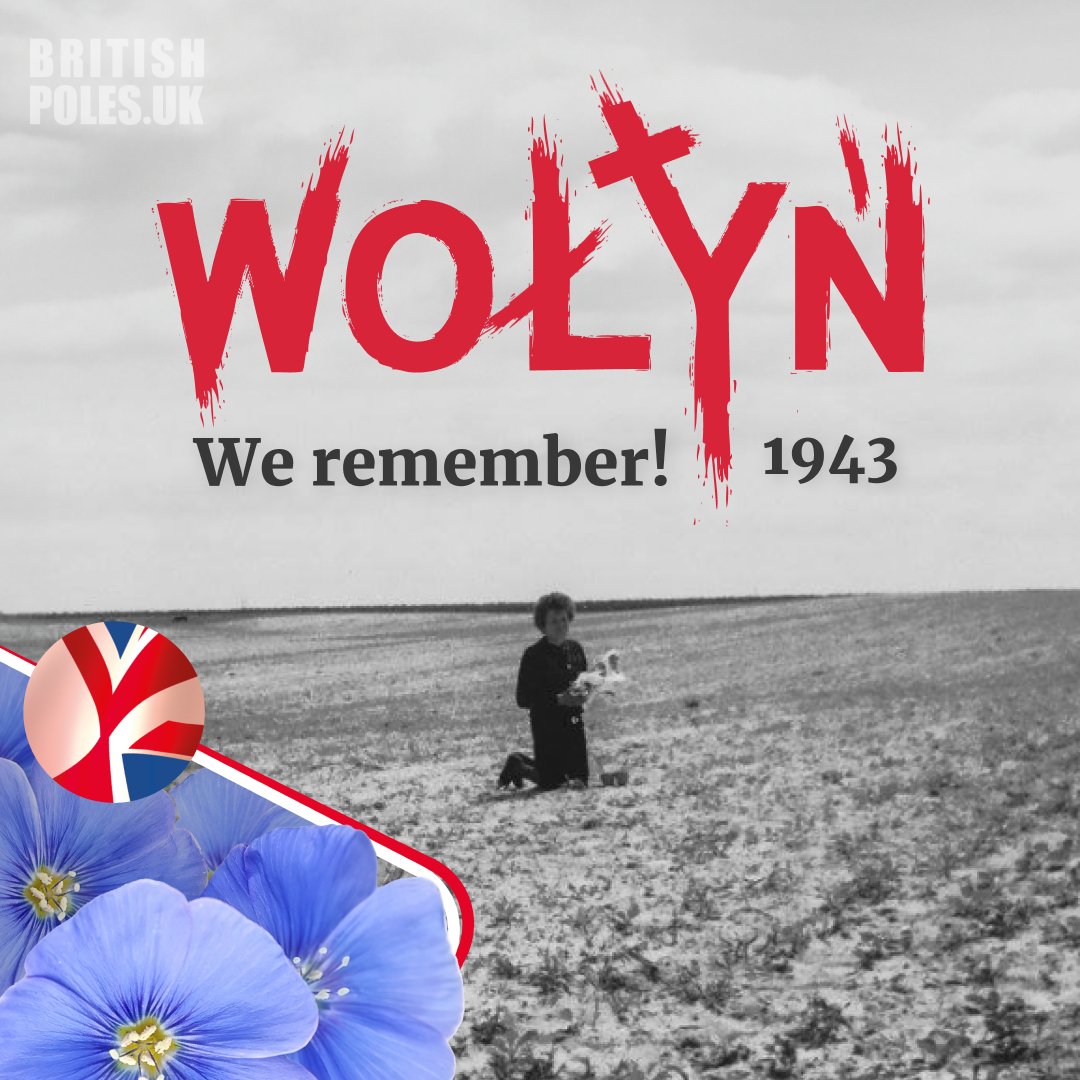
On 11 July 1943, the culmination of the Volhynia Massacre took place. On that day alone, Ukrainian nationalists murdered tens of thousands of Poles with extraordinary and unprecedented cruelty.
In total, during the entire Volhynia Massacre, Ukrainian nationalists killed over 100,000 innocent Polish civilians.
As we mark the 83rd anniversary of that tragic event, many ask when the Ukrainian side will finally allow proper burial of the victims and full recognition of this crime.
The history of Poland and Ukraine is marked by many difficult moments, including the tragic events in Volhynia in 1943, when the Ukrainian Insurgent Army (UPA) brutally murdered more than 100,000 innocent Polish civilians.
Despite these painful experiences, both sides continue to strive for understanding and reconciliation.
When will the Ukrainian side finally allow proper burial of the victims and full recognition of this crime?
Today marks the 83rd anniversary of the so-called Bloody Sunday in Volhynia, the deadliest day of the Volhynia Massacre, during which the Ukrainian Insurgent Army (UPA) murdered more than 100,000 Polish victims in 1943–1945.
https://t.co/d5KAhFVLBa
POLSKA🇵🇱DUMA! On European highways, you can spot a lorry decorated with incredible artwork tributes to the Polish airmen who fought in the Battle of Britain.
This is how the Polish drivers remember the heroes!
The truck belongs to the Polish firm Repiński Transport i Spedycja .
Thank you!
The Battle of Britain, one of the most pivotal moments in the UK’s history, started on 10 July 1940. The largest and most effective group of foreign aircrew were from Poland - 145.
303 Kościuszko Squadron became the most successful Fighter Command unit which shot down 126 German planes in only 42 days.
Take a moment to reflect on the sacrifices made by the Few. The largest and most effective group was🇵🇱Polish - 145.
No 303 Polish Fighter Squadron entered the Battle of Britain, credited with 126 kills, was rated the highest-scoring fighter squadron of the Battle of Britain.
#BattleOfBritain started 86 years ago today.
Never was so much owed by so many to so few!
https://t.co/mOa78m60sI
It’s tomorrow! The @BofBBunker in Uxbridge is excited to announce Polish Air Force Day 2026: “A Fight For Victory and a Freedom Lost”.
Join us for a full programme of events celebrating the vital contribution of Polish airmen to the Allied victory in WW2.
https://t.co/TpdW48aQ6k
"Polscy myśliwcy byli na ustach wszystkich i w sercu każdego Brytyjczyka" - napisał o Bitwie o Anglię Arkady Fiedler, podróżnik, pisarz, żołnierz Polskich Sił Zbrojnych na Zachodzie.
Prasa pisała o polskich lotnikach: „Ich męstwo jest ogromne; ich sprawność graniczy z wyczynem nadludzkim. Polacy oddali wielkie usługi."
A czego oczekiwali w zamian za to bohaterstwo i poświęcenie?
https://t.co/0MphqvbtEv
Zdzisław Krasnodębski was the first commander of the Polish 303 Kościuszko Squadron.
During the Battle of Britain, the squadron claimed 126 kills, the highest number among all RAF squadrons during that period.
Krasnodębski was born on 10 July 1904.
https://t.co/oIOQmQjfmg
The #BattleOfBritain began on 10 July 1940.
Poles played an important role in defending Britain: two Polish bomber squadrons (300 and 301) and two fighter squadrons (302 and the famous 303) supported the British Air Force.
In total, 145 Polish pilots took part in the Battle of Britain, including 81 who fought within British @RoyalAirForce units.
Air Chief Marshal Sir Hugh Dowding, who led @RoyalAirForce Command during the decisive 1940 #BattleOfBritain, said: “Had it not been for the magnificent material contributed by the Polish Squadrons and their unsurpassed gallantry, I hesitate to say the outcome of the Battle of Britain would have been the same.”
303 Polish Squadron became the most successful Fighter Command unit in the battle, shooting down 126 German planes in just 42 days.
Eighty-six years ago, the skies over Britain bore witness to a fierce struggle that changed the WW2 - the #BattleOfBritain.
At its heart were not only British pilots, but also valiant Polish airmen, whose courage and skill left an indelible mark on history.
This legacy remains at the very core of British Polish identity.
https://t.co/9PqyoyjcI5
505 years ago, on 9 July 1521, the Royal Sigismund Bell (Dzwon Zygmunt) was installed in the tower of Wawel Cathedral in Kraków. Commissioned by King Sigismund I the Old, it remains Poland's most famous and revered bell.
Including its clapper, yoke, bearings and swinging mechanism with ropes, it weighs an impressive 12,600 kg.
This historic moment was immortalised by Poland's most celebrated painter, Jan Matejko, in his renowned 1874 painting "The Hanging of the Sigismund Bell", one of the most iconic works of Polish historical art.
One of the most important missions of WWII, known as “Operation Most III” or “Operation Wildhorn III” in British records, did not take place over London, but deep inside occupied Poland.
Discover how the extraordinary courage of the Polish resistance enabled the Allies to uncover the secrets of Hitler’s deadly V-2 rocket and helped change the course of the war.
Belgijka z zachwytem opowiada jak bezpiecznie czuje się w Polsce. Poniżej tłumaczenie:
"Dopiero kiedy przyjeżdżasz do takiego kraju jak Polska, zdajesz sobie sprawę, że w naszym kraju, w krajach takich jak Belgia czy Francja, naprawdę są problemy. W tym samym stroju wychodziłam już tysiące razy na miasto, zwłaszcza w Brukseli, w takich szerokich, a jednocześnie obcisłych legginsach.
I czy to w Brukseli, w Liège, czy w innych większych miastach, zawsze na mnie gwizdali, trąbili, zaczepiali – no cóż, naprawdę wszystko mi się przydarzało.
A teraz jestem w Krakowie w Polsce, od dwóch dni spaceruję w takim stroju i nie słyszę absolutnie żadnych uwag, nie spotykam żadnych spojrzeń, no po prostu sam szacunek – nikt na mnie nie gwiżdże, nie ma żadnych zaczepek, w końcu nikt nie sprawia, że czuję się nieswojo z powodu tego, jak jestem ubrana.
Zdaję sobie sprawę, że to dowodzi, iż w naszych krajach istnieje poważny problem. To naprawdę wyzwalające uczucie móc tak po prostu wyjść na miasto.
Słyszałam już wcześniej, że Polska jest bardzo bezpieczna – zresztą właśnie dlatego wybrałam ją na moją samotną podróż – ale tutaj okazuje się, że jest jeszcze lepiej."
📷 Alice de Kraheoff
Rozszyfrowanie Enigmy? To był dopiero początek. Ogromny wkład Polski w zwycięstwo aliantów wciąż pozostaje niedoceniany.
Jedna z najważniejszych misji II wojny światowej, znana jako "Operacja Most III" (w brytyjskich dokumentach "Operation Wildhorn III"), nie odbyła się nad Londynem, lecz w samym sercu okupowanej Polski.
Odkryj, jak niezwykła odwaga polskiego podziemia pozwoliła aliantom poznać tajemnice hitlerowskiej rakiety V-2 i przyczyniła się do zmiany biegu wojny.
https://t.co/rBpQsmlEHE
Czy wiedzieliście, że wybitna polska poetka Maria Pawlikowska-Jasnorzewska w czasie wojny wyemigrowała do Wielkiej Brytanii, gdzie spędziła 6 lat? Zmarła 9 lipca 1945 roku w Manchesterze.
https://t.co/0BUZ21qfGy