2026 Ambassador of Polish History Award | Father, writer & seeker of truth. Exploring memory, faith & the moral weight of history. Memento Mori. Veritas Manet.
Long post: 😊
As someone not of Polish descent, I approach Polish history with an objective and committed perspective.
My passion for uncovering and sharing these often-overlooked stories comes from a deep respect for the resilience and sacrifices of the Polish people.
In my journey to shed light on these narratives, I’ve faced criticism, name-calling, censorship, and the spread of falsehoods.
Some deliberately distort history for personal gain or to diminish the significance of Polish experiences or simply out of malice.
I refuse to remain silent in the face of such lies.
The truth matters, both to history and to the dignity of those who lived it.
As a real Christian, I believe that truth, honor, and integrity are essential virtues.
To follow Christ is to value honesty and stand for justice, even when it’s difficult or unpopular.
This belief guides my work in exploring Polish history and every other aspect of life.
Whether analyzing past events, current issues, or personal struggles, I am committed to revealing the truth. In a world rife with misinformation, this pursuit is a reflection of the gospel’s call to love, humility, and justice.
Yet, I’m not afraid to confront evil and call out manipulators for what they truly are.
I believe in speaking honestly and directly, as truth requires boldness and integrity.
This commitment reminds me that all people, regardless of nationality, are made in the image of God and deserve dignity and compassion.
Just as I seek to honor Poland’s history and legacy, I strive to live a life dedicated to truth in all areas.
From addressing injustices in my own country to confronting global issues, I am committed to shedding light on what truly matters.
Falsehoods must be challenged for the betterment of humanity, wherever they arise.
To those who intentionally manipulate facts or distort history, I say this: the truth cannot be silenced.
You may mislead for a time, but truth always prevails.
Your actions dishonor the memory of those who suffered and are currently suffering.
Accountability is not optional, it is essential for justice and healing.
Poland’s history is not only a tale of oppression and struggle but a testament to the strength of the human spirit, the fight for freedom, and the belief in justice.
These ideals fuel my broader mission to promote truth, compassion, and integrity.
The challenges and betrayals I witness in my own country inspire me to uphold the values of honesty, compassion, and justice.
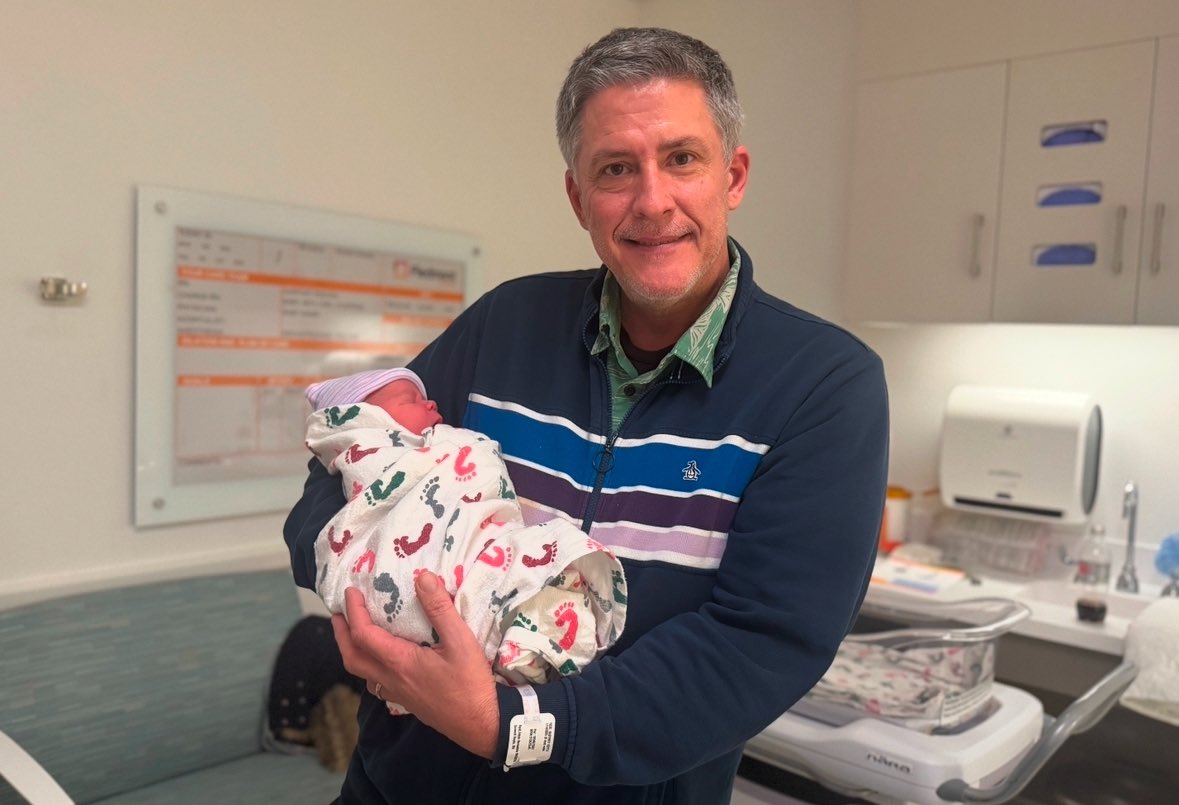
Today is a special day for me as I welcome another member of my family, my namesake, Theodor (“Gift from God”).
I am eager to teach him the knowledge I have, share with him the truth, and, God willing, see him become a better man than I.
I also want to take a moment to thank everyone who has supported my work.
Your encouragement and willingness to share my research inspire me to continue, even in difficult times.
It is because of you that I remain committed to sharing the truths that must be heard.
You remind me that standing by the truth, regardless of the challenges, is always worth it.
To everyone who believes in the power of truth: thank you.
Together, we honor the past and work toward a future grounded in honesty, dignity, and faith.
Let us continue seeking the truth, confronting falsehoods, and ensuring that the legacies of courage and hope endure.
Fiat Lux et Veritas
This is all unfair, one sided, and based on racial superiority.
To easily find out if they even have the right to defame Poles on that topic, you must simply ask them if they would risk often their entire family to save a Polish family or even one Pole they didn’t know - considering the consequences get a yes or no anc you’ll have an answer
Longer post:
When judging Poles under German occupation for not doing enough to save Jews, people must understand the reality, brutality and context.
The punishment for helping a Jew was often not imprisonment, but death, often for an entire family. German terror could also bring collective reprisals against neighbors or villages. To offer food, shelter, forged papers, or a hiding place was therefore not a small act of kindness; it could be an almost suicidal decision that placed one’s children, parents, and community at risk.
Still, countless Poles did help often due to their theology and strong Christian morals. They hid Jews, fed them, carried messages, secured documents, and created rescue networks such as Żegota (the only aid organization, created in occupied Europe; the duty was saving Jews). Many paid with their lives and the lives of family members.
Before judging people who lived under that terror, we should honestly ask ourselves: would we risk our own children, spouse, parents, and home to save someone from another faith or community? Often Polish saviors took great risk doing this and they may not even known the person. It is easy to make moral judgments from the safety of a computer screen decades later. It was far harder to act with courage when the consequence could be the murder of everyone you loved.
Polish rescuers deserve lasting honor, and the frightened should be understood in the context of a system designed to make humanity itself punishable. Those who did not help Jews lived under the knowledge that even small acts of assistance could bring lethal consequences. Their choices should be assessed with the seriousness and historical context that such terror demands.
Photos:
Jan Karski risked his life as a courier of the Polish Underground State. After witnessing the Warsaw Ghetto and the deportation machinery, he carried firsthand reports of the destruction of Poland’s Jews to Allied leaders in Britain and the United States.
Irena Sendler, shown with a child, was a Polish social worker and member of Żegota, the underground Council for Aid to Jews. Żegota was the only state-supported underground organization in occupied Europe devoted specifically to aiding Jews. With a network of brave Polish collaborators, she helped remove Jewish children from the Warsaw Ghetto and place them in hiding with families, convents, and orphanages.
Aleksander Ładoś, head of the Polish Legation in Bern, helped lead a rescue network that arranged Latin American passports for Jews under German occupation. The Ładoś Group sought to help as many as 8,000–10,000 people, and researchers estimate that its work contributed to saving approximately 2,000–3,000 Jewish lives. Ładoś spent the final years of his life in crushing poverty.
Zofia Kossak-Szczucka, seen welcomed with flowers, was a writer and co-founder of Żegota. In 1942, she publicly condemned the mass murder of Jews in her underground appeal Protest! and helped establish organized rescue efforts despite the deadly consequences imposed by the German occupiers.
These photographs show four Polish figures, who were amidst thousands whose actions during the German occupation deserve to be remembered and honored highly.
These were not distant observers - they acted in a country where helping a Jewish neighbor could mean execution, not only for the rescuer but often for family members as well.
Once people understand this essential context, the terror, isolation, and threat to entire families, it becomes easier to understand why rescue was so difficult and and why fear cannot be judged casually from a safe distance
Frankly, sometimes people may stare because they are curious and interested in getting to know as someone different from themselves and they could learn from you, don’t be so offended If you feel turned off because of this - it is not necessarily because of hostility or racial profiling. For the most part that is simple curiosity and fascination. Something I found to be one of the meaningful parts of living in Poland for over a year - their unmatched interest in me was special.
I indeed do not look Polish. I have a darker complexity and still when people met me, they were respectful and polite individuals who I have to admit were just curious about a new guy in town.
I taught at a university and met students from many backgrounds. Some became close friends, still today almost 20 years later. Many were working students with limited means, yet showed remarkable generosity, at one point even paying for a vacation for me. I experienced real openness, kindness, and a sincere desire to share their culture and history with me and at the same time wanting to hear about me
I am sure Poland, like every country, has its rotten people. America certainly does too, and in my own experience I have encountered far more prejudice and ugliness here than I ever did there. That does not erase anyone else’s difficult experience, but one painful encounter should not become a verdict on an entire nation and its people.
As for immigration, this is a problem out of control in my own USA.
Poland has the right to maintain an orderly immigration system and to expect newcomers to respect its laws, language, customs, and civic life, just as any country does. A country can be welcoming while still setting reasonable limits and screening entrants for public safety.
In action and effort, this means distinguishing between lawful migrants, refugees, students, and workers who want to build a life and contribute, and individuals who enter illegally or have credible criminal or security concerns. Protecting citizens and preserving a nation’s social cohesion are legitimate responsibilities of all decent and logically thinking government.
So i guess my story varies much from yours. If you visit again. Take it easy, and don’t make assumptions. Good luck.
Well, we’ve followed and supported each other for quite a long time. She’s fantastic and a great historian. Also, IPN and your president, and many influential patriots follow and share my work.
I indeed share about the atrocities and brutality committed against the Polish by both Soviets, Germans and Ukrainians and have been for years, fighting for the Polish truth which includes Jews and their behavior. All this should be told factually. I have no idea how long you’ve been following me if you had been following me and you’ve read my posts you will find yourself to be incorrect about me.
This is vital to understanding the full Polish-Jewish history. Archival reports, memoirs, and contemporary newspapers cannot simply be erased because their contents are uncomfortable or challenge a preferred narrative.
Many documented cases of support for the Soviet advance, participation in revolutionary committees, or hostility toward the Polish state must be open to honest discussion alongside the many other parts of that complicated history.
Too often, people who know this avoid these subjects because they fear being defamed, labeled antisemitic, professionally attacked, treated as morally suspect merely for citing primary sources. This extends to censorship, deplatforming, and libelous statements that are just wrong. That fear is indeed real, and it encourages silence rather than serious historical inquiry. It’s a terrible shame, but the winds are changing and more people are starting to question the entirety of some Jewish narratives, that they were the alone were the ultimate victim and could do wrong something that obviously applies to all humans. More Americans and youth are asking uncomfortable questions, which will lead to more censorship, propaganda, and claims of group innocence. This is a positive aspect.
Your voice truly matters because history cannot be approached by deleting evidence or shifting every uncomfortable question back onto Poles. Truth requires context, moral seriousness, and the willingness to examine the record even when it unsettles people.
Thank you. All people are both capable of good and evil.
Irena Sendler — Gestapo arrested, tortured, and sentenced her to death in 1943 for her underground rescue work with Żegota. She was freed through a bribe, went underground, continued aiding Jewish children, and survived the war.
Wacław Łada — helped Adam Nadniejski obtain false “Aryan” papers. He was betrayed, arrested by the Germans, sent to Auschwitz and then Buchenwald, and survived until liberation. Yad Vashem recognizes him as Righteous Among the Nations.
Jan “Grek” Gozdek — sheltered and supported two Jewish men for about a year. The Gestapo arrested and tortured him in April 1944; he escaped prison and survived. Both men he aided also survived.
Helena Blam (Sara Blam) and her mother — hid Jews who escaped the Borysław ghetto and helped others flee forced labor. They were arrested and interrogated, denied the charges, were released, and survived; the people in hiding escaped.
There were many, many more.
Your claim is disproven by these few documented cases: Irena Sendler, Wacław Łada, Jan Gozdek, and Helena Blam all helped Jews, were discovered or arrested by German authorities, and survived. Some endured torture, prison, Auschwitz, or Buchenwald.
None of this diminishes the fact that many Polish rescuers, and often their families and the Jews they hid were murdered (this is important to know).
@TlustySzkielet Believe what you want but my history proves you to be misguided. Good luck. Find another American who talks about Polish history factually and positively. Follow them.
I am not paid to write about this, and I am not Polish. I do it because I believe the Polish experience deserves to be understood more fully.
That is not always easy and can actually be a major hurdle that I jump. There are real barriers, hateful, personal, and abusive messages and responses, I face true hostility, and false claims made about me that I’m an antisemite, and Holocaust denier. I’ve faced censorship, and deplatforming for writing about the Polish truthfully and hopefully I will be able to continue to write carefully, honestly, and in good faith. Obviously it may not satisfy all people, including the Poles that I’ve stood up for.
If my work is not for you, you are welcome to unfollow or write your own articles.
Thank you
I understand completely, and I agree. What is troubling is when suffering is treated as a competition, as though acknowledging Polish victims somehow diminishes anyone else’s tragedy. It should not, but I see this a lot. Historical memory has room for every innocent victim.
I have learned firsthand how difficult it can be to tell the full Polish story. Sharing documented crimes against Poles has at times brought censorship, defamation, harsh accusations without evidence, distortion of my work, and removal from social-media platforms. Some people wrongly treat any effort to honor Polish victims or add necessary context as inherently antisemitic.
What is especially revealing is that many of the same people attacking me show how little they know about me or my work. They often call me Polish or label me a Polish nationalist without even knowing the basic fact that I am American. My work is motivated by historical truth, compassion for victims, and a conviction that Polish suffering deserves honest recognition, not hatred toward anyone.
Remembrance should never require silence about another people’s suffering. That is a sin. I will continue to speak honestly about the German and Soviet crimes committed against Poles - rejecting hostility and lies toward any people. This is not a battle for superiority, it’s a battle for truth, human dignity, and the victims who deserve not to be forgotten.
@Zbigi58Silesia I know this very well, but they are not American Polonia, they reside in Poland. They’ve done fabulous work and it’s a shame it’s not more widely recognized, the organization and true historical narrative are unequaled.
Another longer post, but an important one:
The Shoah is remembered and memorialized in museums, schools, and institutions around the world. Countless Holocaust museums exist across the United States and Europe, while museums devoted to the victims of communism or to the full Polish experience under German and Soviet occupation remain comparatively rare.
That imbalance is striking when one considers that more than 8.3 million Americans report Polish ancestry, compared with an estimated 7.5 million Jewish Americans. This is not an argument against Holocaust remembrance; it is an argument for broader and more equal historical awareness.
In the countries where communist crimes occurred, their victims are often remembered, but outside those nations, millions who were murdered, imprisoned, deported, starved, or broken by communist regimes often receive far less attention. Poland’s experience is especially neglected. Germany and Soviet Russia both sought to crush the Polish nation through terror, mass murder, deportation, and the destruction of its institutions.
Poles have often carried a survivor’s mentality rather than building a collective identity around victimhood. They rebuilt their country after partitions, occupation, genocide, and communist repression; preserved their language, faith, and culture; and continued forward. That resilience is admirable, but it has also meant that many outside Poland never learned the full scale of what Poles endured.
As a student, and later as an educator, I saw full units devoted to the Shoah but almost nothing about the suffering of other targeted peoples under German and Soviet rule. That omission is a genuine educational tragedy. Many Westerners know little of Poland’s wartime destruction, its resistance, its losses, or the resilience with which Poles rebuilt their country. This is not the fault of ordinary Westerners; they were rarely taught this history. In my experience, many people are genuinely surprised and interested when they first learn about Poland’s ordeal, its resistance, and the scale of its losses. The problem is the gap in education and public memory that has left so much of this history unknown.
When Poles were mentioned, it was too often through a narrow and damaging stereotype: backward, antisemitic people rather than a nation whose citizens were subjected to occupation, terror, deportation, mass murder, and the destruction of their cultural and political life. Only through more self directed study can one encounter the fuller story of Poland: its victims, its complexity, its courage, and its extraordinary resilience.
The Katyn Memorial in Jersey City reminds us why this matters. In 2018, the mayor and constituents proposed moving the monument commemorating the Soviet murder of approximately 22,000 Polish officers, police, intellectuals, and other prisoners in 1940. Polish Americans had to organize and fight to preserve it. Such memorials are rare and deserve protection. Efforts to question the proposed removal were, often met with accusations of antisemitism. It is a serious issue when the issue halts further study or logical claims are branded antisemitism.
Antisemitism must always be treated seriously, but the accusation must also be accurate, not used as a shield against legitimate historical questions or as a weapon to silence those asking that Poland’s victims be remembered. More people are beginning to understand that the genocide and mass terror created millions of victims, way beyond the Jewish population: Poles, Roma and Sinti, Soviet prisoners of war, people with disabilities, political prisoners, and many others.
Remembering Polish victims does not diminish Jewish or other suffering; it broadens our understanding. Historical memory is a duty to the dead and the truth.
We should remember that every victim mattered, not only the six million Jews murdered but also millions of beautiful and courageous other victims.
Never Forget all victims.
I think many Poles mention Jewish victims because it’s right and honorable, they understand the Shoah’s immense horror and some do not want recognition of Polish victims to be misread as minimizing it. It was a major tragedy and should be mentioned along with their story.
I think part of the difference is that many Jewish people are taught the Holocaust principally as the story of the destruction of European Jewry, often leaving Poland out of the discussion, but if it is mentioned its usually accusingly. Still, It is natural for a community to center their history and experiences, but that focus can leave people unaware of the wider reality of occupied Poland: millions of ethnic Polish citizens were also killed, while the nation itself faced German and Soviet terror, deportation, forced labor, destruction, and extermination.
I also truly believe and have witnessed in some circles, that the Shoah has become so central to identity and public education - that questions about the full wartime record, including the conduct of particular people or institutions are treated automatically as hostility, but asking evidence-based historical questions is not antisemitism; nor should any group be above others and above answering questions that may be uncomfortable.
Every community’s history includes victims, heroes, bystanders, and criminals. Still, honest remembrance must make room for all of it, good and bad. We are all humans and sadly this thinking that some groups should be elevated is absolutely wrong. When we look closely at this way of thought some of it lines up with the Aryan ideology, something that we should all be against.
@JzefBk This is all very clear throughout the article, it is in passages like this that clarify this brutal history and execution for saving Jews. I spoke repeatedly about the execution of the entire, family and more for helping a Jew in any form
@SplawikFontanna Do not judge, or you too will be judged. For in the same way you judge others, you will be judged.” - Matthew 7:1–2. This is the New Testament of course and it applies to how Christians should behave but this should be universal to everyone with self awareness.
I understand the frustration, you’re not alone. I feel it as well, but I have found the opposite in America: when people are given the facts about Poland’s resilience, suffering, resistance, and survival, they are often genuinely fascinated not faked interest) . Most simply have never been taught it - they cannot always be to blame.
The Shoah is taught extensively through schools, museums, films, and books (probably everyone by their teens have been taught about this). .Yet the destruction of Poland under both German and Soviet occupation, the murder of its civilians and intelligentsia, deportations, terror, resistance, sheltering of Jews. and communist repression remain far less familiar to most Americans.
Poland does not have the same global institutional resources to tell this history. That is why personal conversations, independent sites, historians, families, and ordinary people sharing well-sourced stories matter so much. Every person who learns becomes another person able to carry that fuller truth forward. Poland’s story deserves to be known and known factually.
I have certainly written about these massacres myself, but I am just one American, so I’m not in connection with ( a few) most of American Polonia. I also agree they should take these incidents on and write about them honestly, remembering the innocent. They are inconvenient to some historians and groups.
In the West, Poland’s wartime experience has too often been minimized, or simply fabricated in distorted curricula, museums, and institutions (paid for with my tax dollars). And absolutely some influential writers and organizations have promoted narratives that are manipulated or lack essential context about German and Soviet occupation, the terror directed at ethnic Poles, and the extreme penalties for helping Jews.
I have spoken with Poles who tried to correct professors or challenge inaccurate claims in the classroom, sometimes at real personal cost. Historical education should make room for the full record, including Jewish suffering, Polish suffering, Polish rescue efforts, and the difficult realities of occupation, without treating any people as beyond criticism or any victims as unworthy of remembrance.