#Eritrea - Congrats to all for this preliminary milestone": #CelebrateEritreanExcellence in any domain and in any place/corner of the planet!
https://t.co/x0Lc5FsSR9
Good Read - #Eritrea: Scaling Water Security; by Bana Negusse
*"...Eritrea established a comprehensive legal and policy framework to guide water management from the outset. Beginning in 1997 and revised in 2007, the Water Policy, Water Law, Water Sector Institutional Framework, and related Water Sector for Human Development documents, are grounded on the principles of Integrated Water Resources Management".
*"...The results over the past three decades have been striking. At independence in 1991, only 13 percent of the population had access to clean and safe water. Today, nationwide coverage exceeds 85 percent. Urban access has increased from 30 percent to over 92 percent, while rural coverage has expanded from just 7 percent to nearly 80 percent – a powerful reflection of the country’s commitment to leaving no one behind".
*"...At the heart of this progress lies a sustained expansion of water infrastructure. At independence, Eritrea had only 138 dams and ponds. Today, the number exceeds 800, significantly enhancing water storage capacity and distribution".
*"...Looking ahead, Eritrea remains firmly committed to strengthening efficiency and climate resilience in its water sector. Agriculture, the largest consumer of freshwater, is undergoing a gradual transition from traditional furrow irrigation to modern pressurized systems that reduce waste and improve productivity. Aging pipelines are being replaced to minimize losses and extend services to underserved areas. Equally important is environmental stewardship: investments in reforestation, watershed management, and ecosystem protection help safeguard the natural systems on which water availability depends".
https://t.co/PgBxmfHH1X
Good Read - #Eritrea: Living Symbols of a Resilient, Patient, Richly Diverse Nation; by Bana Negusse
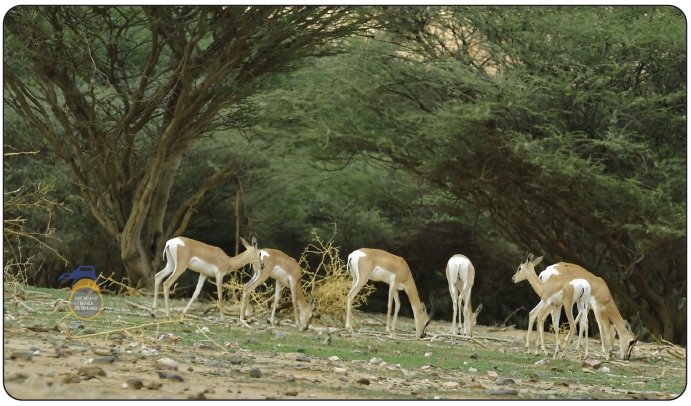
*"...In the Horn of Africa, Eritrea, with its diverse landscapes – from deserts and mountains to rugged hills and pristine seas – carries a rich tapestry of wildlife, each species offering a lens into the nation’s character. These animals are more than just inhabitants of the land and waters; they are living symbols of Eritrea’s resilience, patience, diversity, and abundance, embodying the stories, struggles, and strengths of its people".
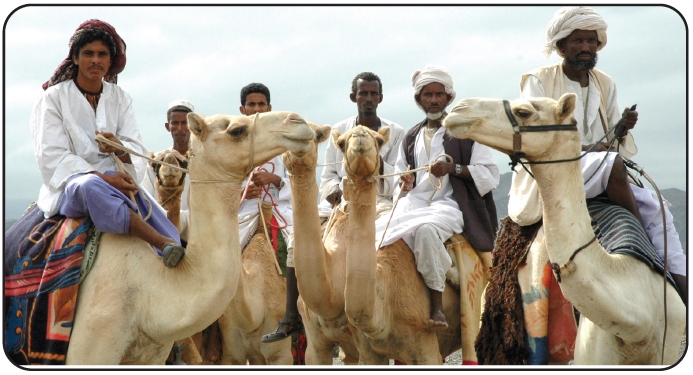
*"...At the forefront of these symbolic creatures is the camel, prominently featured on Eritrea’s national emblem and even on its currency, the Nakfa. Camels are remarkable animals, embodying resilience, endurance, and adaptability – qualities honed by their ability to survive in harsh desert environments where few others can. In Eritrea, camels played a critical role during the long struggle for independence, transporting fighters, supplies, and resources across treacherous landscapes. They mirror the Eritrean people’s resilience and capacity to adapt to ever-changing challenges".
*"...Their unwavering focus is captured in the famous Eritrean proverb: “The camel marches while the dogs bark,” a saying that resonates given the persistent media attacks and external rhetoric the nation has faced and continues to confront. Even today, camels powerfully symbolize the country’s steadfast endurance through unjust sanctions, external pressures, and environmental and climate challenges".
*"...Eritrea’s natural diversity extends to its seas. With an extensive Red Sea coastline that is one of the longest in Africa, the country’s waters surrounding hundreds of islands host over 1,100 fish species and 44 genera of hard coral, creating one of the highest levels of marine species diversity and endemism recorded anywhere. Around 18 percent of fish species and 20 percent of coral species are endemic to these waters. This rich marine life mirrors Eritrea’s broader abundance of resources and potential, from minerals and landscapes to perhaps its most treasured asset: its people".
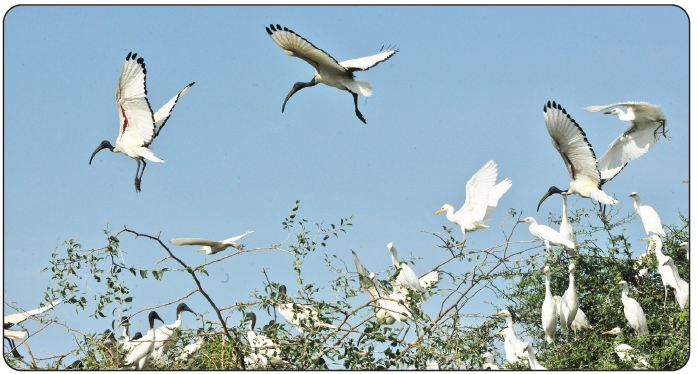
*"...Together, Eritrea’s symbolic animals reveal a nation defined by resilience, patience, diversity, and abundance. They offer more than reflection – they provide perspective, showing how enduring values and collective strength shape a country’s identity and potential. Beyond their individual traits, these creatures collectively mirror Eritrea’s cultural identity and historical experience, from the endurance of camels to the freedom of birds and gazelles. In this way, the story of wildlife becomes inseparable from the story of the nation itself".
https://t.co/9VPKJ8PBw1
Profile Q & A - From the Red Sea to the Farm: How #Eritrea is Transforming Seaweed into Liquid Gold; by Sabrina Solomon
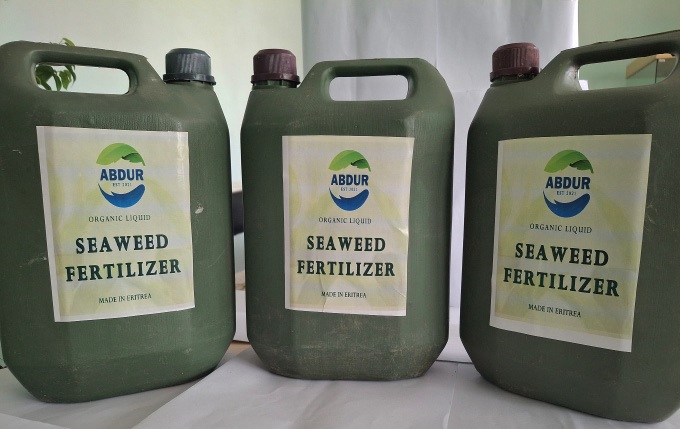
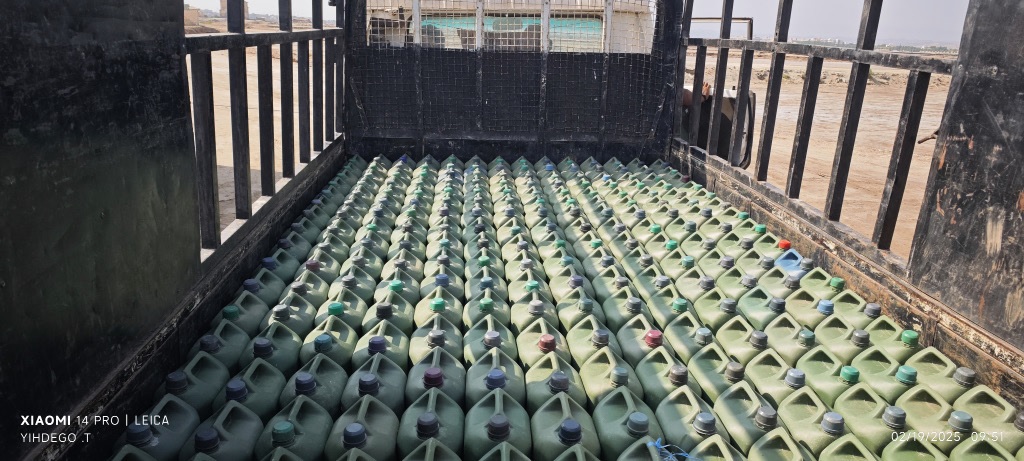
*"...At the forefront of this movement is Abdur Enterprise, a facility based in the port city of Massawa in the Northern Red Sea region. The enterprise is dedicated to the sustainable utilization of marine resources, with a core mission to enhance local livelihoods through ecological innovation".
*...Abdur is a village in the Gelalo sub-zone where people were already exploiting coastal resources 125,000 years ago. Published research identifies them as among the first to do so, which is why we chose the name for our enterprise. In addition to fish amino acid fertilizer and seaweed liquid fertilizer, we produce seaweed soap and bleach made from sea salt. We now have three branches: Abdur 1 focuses on organic fertilizer production, Abdur 2 on seaweed soap production, and Abdur 3 on seaweed and sea cucumber farming. We also have a website, https://t.co/V1Xd3AScIf, to help us connect with customers and gather feedback".
Potemkin Party's propaganda machine is on overdrive mode particularly these days to churn out a deluge of disinformation against Eritrea on a daily basis.
The menu/themes broached revolve around the same stale topics: revision of Eritrea's ancient, medieval & modern history to hoodwink public opinion and thereby "legitimize" the regime's illicit agenda of "sovereign access to the sea"; re-packaging of its reckless and adventurist agenda in the mantle of "self-defense"; distortion of Eritrea's normative diplomatic and economic cooperation ties in the wider neighborhood as "conspiracies" against Ethiopia; and disparaging of Eritrea's governance architecture and unparalleled social/national cohesion in its wholesale campaign of demonization... etc.
But while the themes remain the same, the new element in its latest disinformation spree is using official platforms - Foreign Policy Institute; Ethiopian Broadcast Corporation etc. - in lieu of unofficial mouthpieces (Horn Review; notorious lobbyists' and trolls ) that were the principal vehicles in the past.
1. First off, it will be pointless to waste time on mythology and manufactured narratives in as far as Eritrea's ancient, medieval and modern history are concerned. For serious students of history, there is indeed expansive literature based on rigorous archeological findings and interpretations on the Kingdom of Punt (from 1500 - 500 B.C.) that encompassed parts of modern Eritrea, Sudan, Djibouti, and extending toward Egypt); and the Adulis Civilization (300 B.C. - 700 A.D.) which predates and was latter concurrent, with sporadic linkages, to the Axumite Kingdom (300 - 700 A.D.). Historical reading of medieval and modern periods likewise illustrate that Ethiopia's meaningful presence in the Red Sea were confined to the unlawful Federation and Annexation periods that came about through the denial of Eritrea's right to decolonization. As such, there is no historical, legal, security or commercial rationale for its reckless and illicit of agenda of "sovereign access to the sea".
2. In this perspective, the Potemkin Party's new-found ploy to accuse Eritrea of "perennial subversion" stems from its transparent desire to change tack so as to rationalize its war agenda as "an act of self-defense". Indeed, official statements issued on the 25th Anniversary of the Algiers Agreement by the UN, the European Union, and several other countries have unequivocally reiterated the foundational principle of full respect for the sovereignty and territorial integrity of nations as the normative parameter of international relations. PP's nominal change of tone and tactics is evidently designed to circumvent this explicit and unambivalent position.
3. The Potemkin Party is further feigning annoyance on speculative cooperation and port development agreements that Eritrea "has reportedly" reached with Egypt, Saudi Arabia etc. In the first place, Eritrea's cooperation policies with prospective partners from the region and the wider world are based on cardinal principles of symmetry and mutual interest. And as it is the case with other countries, they stem from, and are predicated on, its own prerogatives and national interest considerations. Eritrea's positive and constructive stance on the cooperation of the littoral States of the Red Sea in order to enhance the safety and security of this important global maritime route is also well-known and in the public domain. As such, it cannot be misconstrued for nefarious political ends.
4. Eritrea has been and remains an oasis of national cohesion, peace and harmony that leverages ethnic and religious diversity as an asset rather than a liability for stoking perpetual tension and conflict among its constituent parts. The Potemkin Party, which is presiding over spiraling internal conflicts due to governance deficit, is not, and cannot be, in a position to disparage Eritrea on these and other accounts.
5. In a nutshell, it is the Potemkin Party's misguided policies that are at the root cause of the manufactured "crisis". As it is, the panacea does not lie in finger pointing at, or scapegoating, Eritrea; but in rectifying its reckless agenda of "sovereign access to the sea".
https://t.co/IKNPfp0qBL
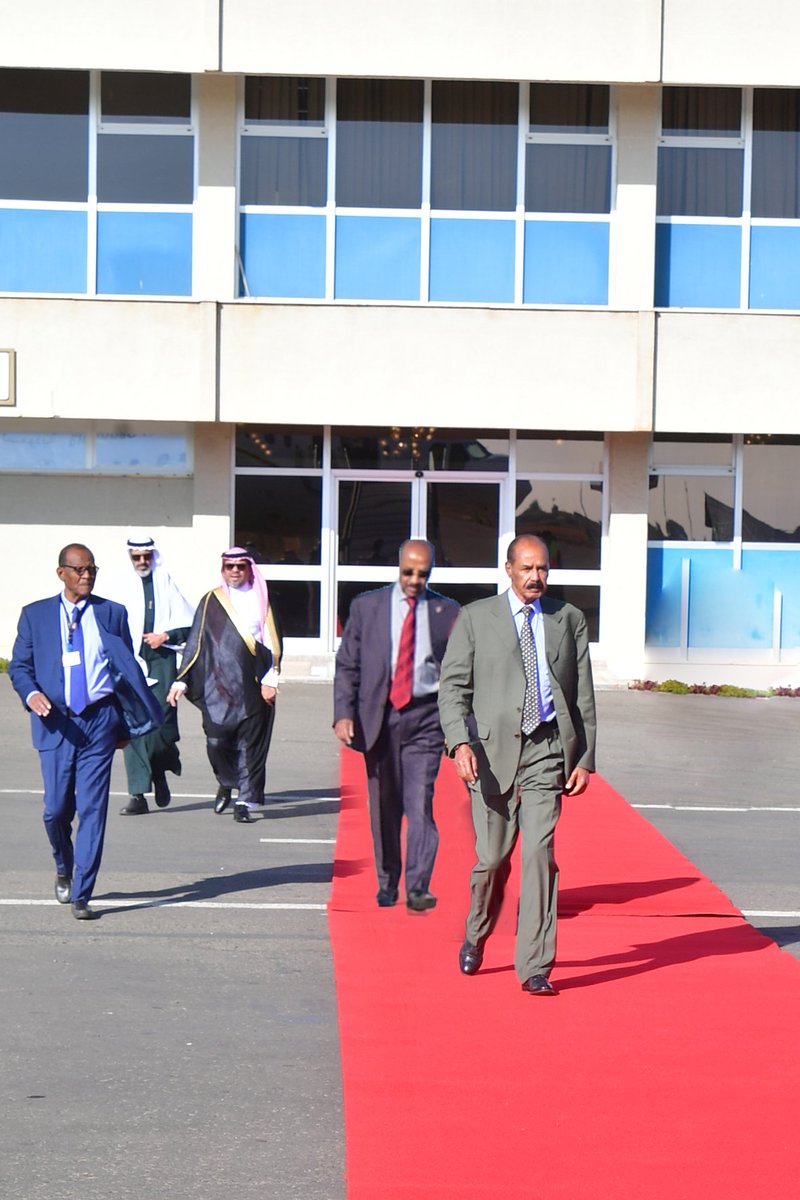
President Isaias Afwerki and his delegation returned home in the mid-afternoon hours today winding down a fruitful visit to Saudi Arabia.
Earlier in the day, President Isaias and his delegation met with the President (CEO) of the Saudi Ports Authority, Engineer Suliman bin Khalid Al-Mazroua as well as the Executive Manager and Chief Administrator of the Jeddah Port.
The hosts made detailed presentation to the President and his delegation on the operational doctrine; scope of operations; technology and human capital deployed; and safety and service quality standards. They also expressed the readiness of Saudi Ports Authority to foster cooperation with Eritrea.
President Isaias Afwerki underlined the importance of cultivating cooperation and synergy among the various ports in the Red Sea focused on rendering services to the global market. The framework must be based on complementarity rather than narrow competition and include investments on infrastructure, transfer of knowledge as well as emulation of best practices. Tangible and broad road-map of cooperation in this sector will have to be developed through continuous contacts and consultations, President Isaias stressed.
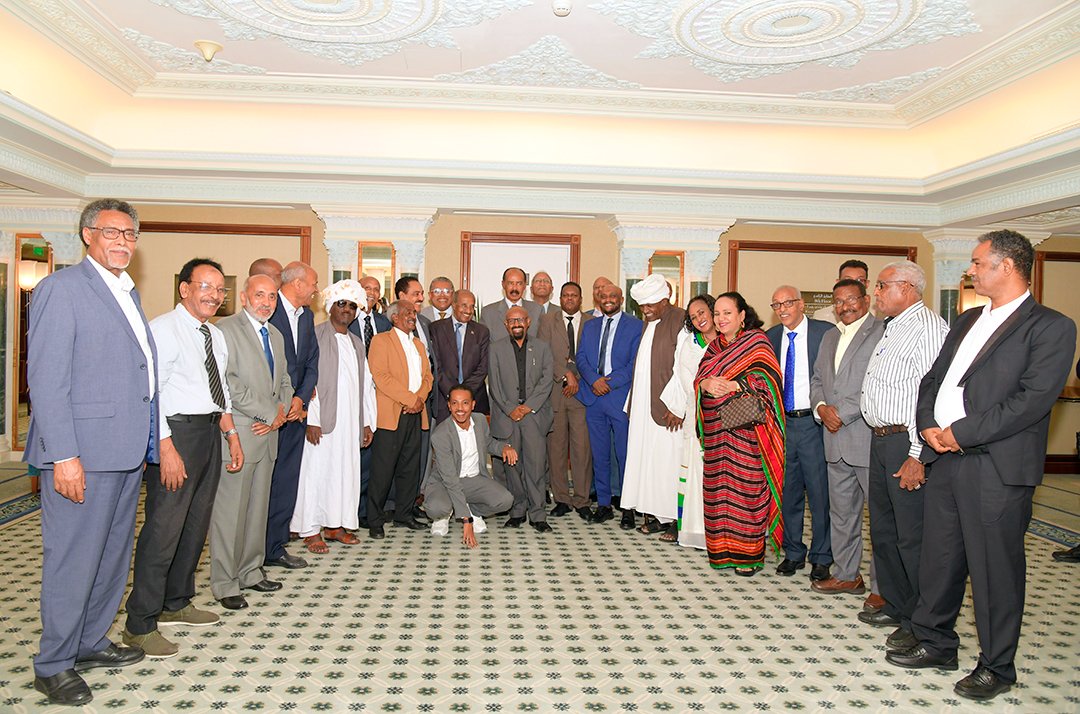
President Isaias and his delegation also met Community and National Association leaders in Jeddah and its environs. Themes discussed include: domestic developments against the backdrop of global and regional challenges; GOE's current development policies and strategies; prospects and potential of bilateral partnership with Saudi Arabia; and the role and importance of strengthening Eritrean communities all over the world.
President Isaias Afwerki met, this morning at Ad Halo, a delegation led by Mr. Hu Changchun, the Special Envoy of China's Foreign Ministry to the Horn of Africa.
President Isaias underlined the imperative for China to foster ties of constructive engagement with Africa to bolster and strengthen capacity building in these crucial times of global change and that is not encumbered by sheer competitive perspectives. The President further referred to China's potential role in playing a positive role in the resolution of conflicts in the Horn of Africa region that are often fomented and exacerbated by intervention of major external powers.
President Isaias also affirmed that Eritrea will strive to consolidate the 70-year old warm and bilateral all-rounded ties with China.
Mr. Hu Changchun, for his part, conveyed President Xi Jinping's message of goodwill to President Isaias Afwerki and ascertained China's readiness to enhance its strategic partnership with Eritrea. The Special Envoy further elucidated that China will strengthen its partnership with Africa which is hinged on capacity building and self reliance.
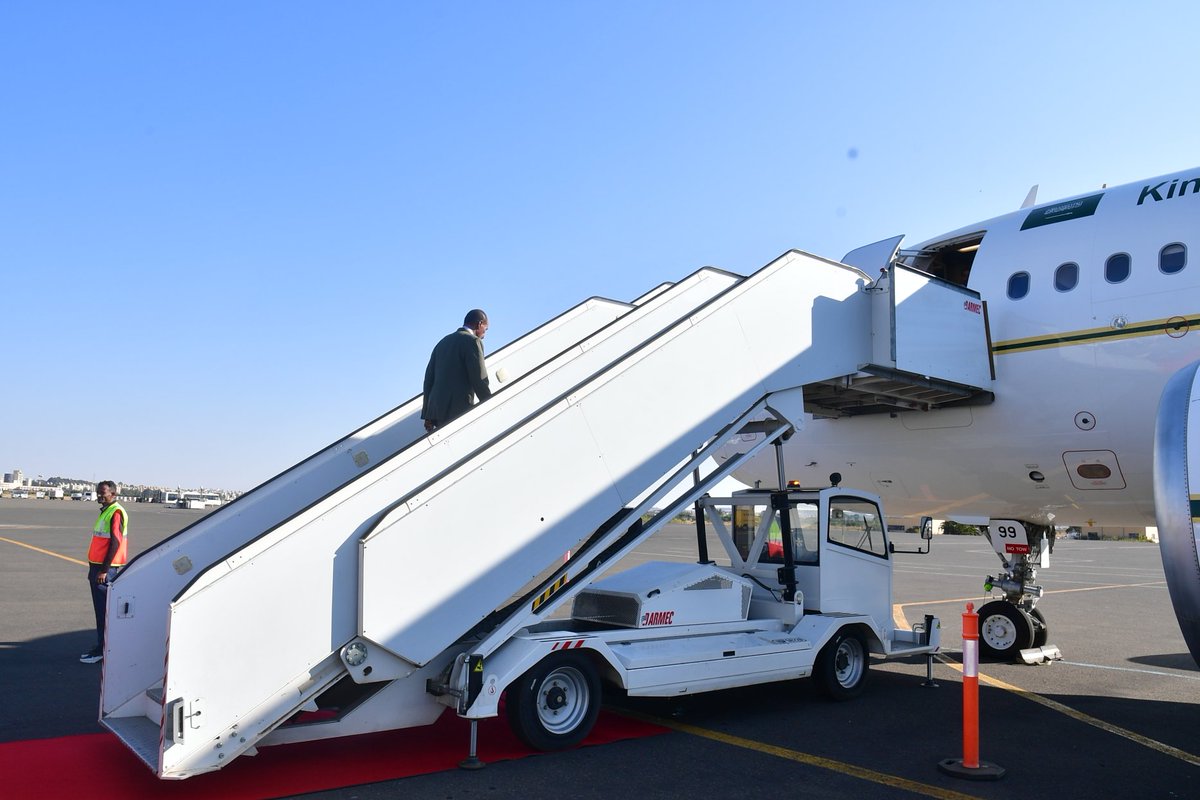
On the invitation of King Salman bin Abdulaziz Al Saud, President Isaias Afwerki has departed, in the mid-morning hours today, to Saudi Arabia for a four-day working visit.
During their stay in the Kingdom, President Isaias and his delegation are scheduled to hold meetings with senior Saudi Government officials on enhancement of bilateral ties of cooperation and partnership as well as regional and international issues of mutual interest.
Eritrea 🇪🇷 & Saudi Arabia 🇸🇦 — A Strategic Partnership That the Red Sea Cannot Live Without 🌊⚓
🌍 A New Geopolitical Reality Is Emerging in the Red Sea & Horn of Africa
The working visit of President Isaias Afwerki to Saudi Arabia — on the invitation of King Salman — comes at a critical moment. The stakes could not be higher.
🇪🇷🤝🇸🇦 Why Eritrea & Saudi Arabia Are Becoming Indispensable Partners
🔴 Shared Security Interests
✅Sudan 🇸🇩 and Yemen 🇾🇪 — neighbors to both nations — are burning in conflict.
✅If the fire spreads, no one in the region is safe.
✅Doing nothing is not an option; security is now a shared destiny.
🟢 Eritrea’s Unique Strategic Value
⚓ A commanding position over the world’s most critical maritime corridor.
🛡️ Unmatched resilience, stability, and military capability in the Horn.
🌐 A reliable, disciplined partner for real regional security.
🟩 Saudi Arabia’s Key Strengths
💰 Vast economic power.
🏛️ Diplomatic weight across the Middle East, Africa, and global institutions.
🤝 Ability to mobilize regional coalitions for peace & development.
🟦 Why This Partnership Must Accelerate — Now
✅The Red Sea is too important to be left vulnerable.
✅Eritrea & Saudi Arabia have too much to lose if instability deepens.
✅A strategic partnership — security + economics — is not optional. It is urgent.
✅Port of Assab ⚓ stands as a potential cornerstone of long-term cooperation.
Egypt 🇪🇬 also remains a key regional stabilizer with vital Red Sea interests.
🟡 A Human Tragedy We Cannot Ignore
- The suffering in Sudan and Yemen is beyond imagination.
- The region must act before the crisis expands and destroys more nations.
- Eritrea and Saudi Arabia are among the few capable of driving a real solution.
🕊️ Wisdom for the Moment:
“A fire on your neighbor’s roof is not his problem alone — the wind may soon carry it to yours.”
📌 The Mission of This Visit
President Isaias and senior Saudi officials will discuss:
🔹 Strengthening bilateral cooperation
🔹 Deepening security partnership
🔹 Coordinating regional & international strategies
🔹 Building long-term resilience in the Red Sea basin
#Eritrea 🇪🇷 #SaudiArabia 🇸🇦 #RedSeaSecurity #HornOfAfrica #Geopolitics #SudanCrisis #YemenCrisis #Assab #RegionalStability #MBS #PIA #StrategicPartnership #AfricaMiddleEast
The writing on the wall is crystal clear. The Potemkin Party must be at the end of its tether !
How else can one explain PP Leader's outburst, in his speech this week and to the chagrin and embarrassment of his audience, that the PP will "eliminate Ethiopia's enemies one by one, like removing head lice".
This is utterly repugnant and cannot be shrugged off as an unfortunate misstep; even by factoring in his penchant for plagiarism which at times are invoked in incongruent circumstances. But then, this is the real substance of the Potemkin Party!
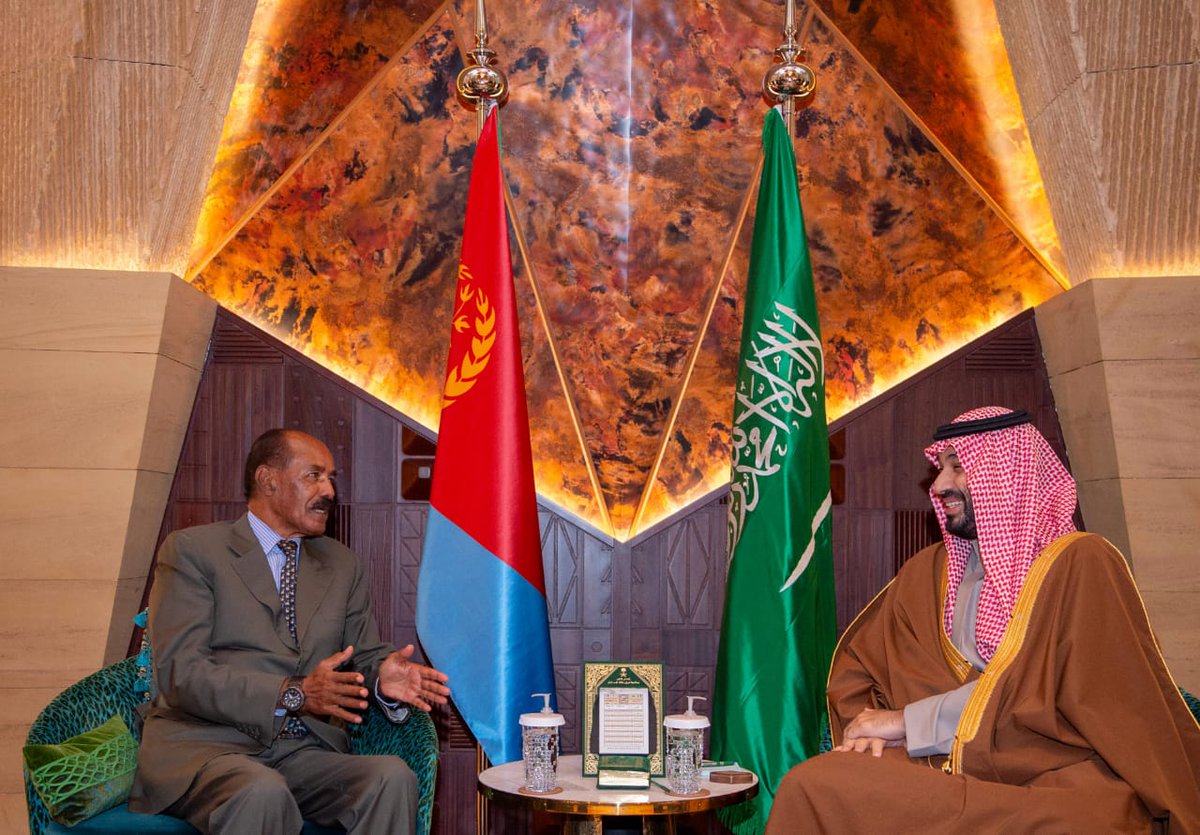
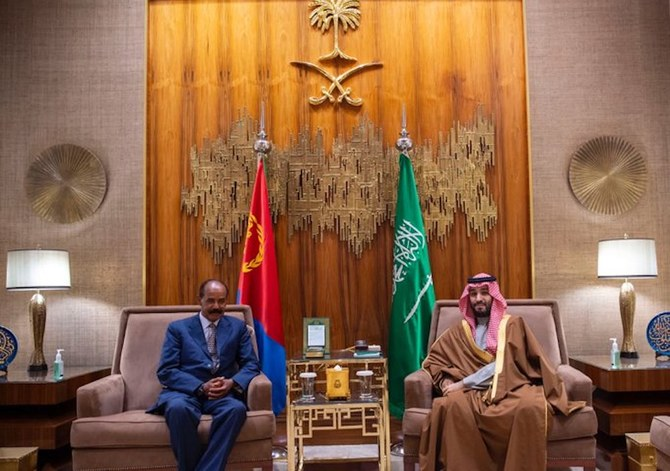
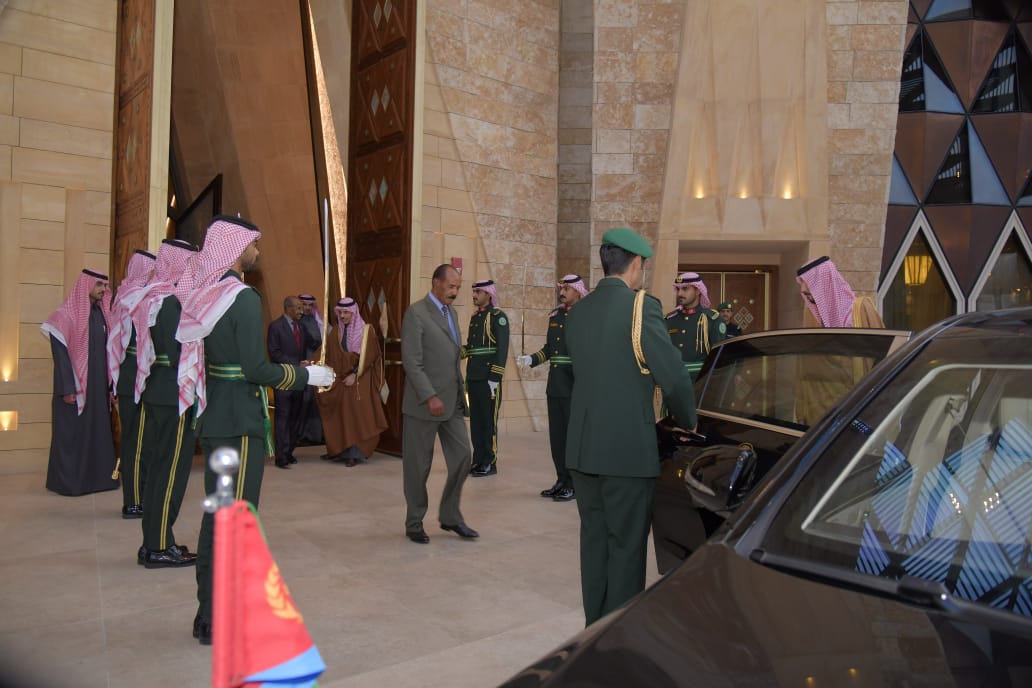
President Isaias Afwerki met, at Al Yamamah Palace in Riyadh in the mid-afternoon hours today, Crown Prince and Prime Minister Mohammed Bin Salman for extensive talks on bilateral ties as well as other matters of vital interest to both countries.
The warm discussions focused on the historical and brotherly ties between the two countries and prospects and opportunities for broadening their bilateral ties of economic cooperation.
On regional issues, the exchange of views revolved around current developments in the Nile Basin, the Horn of Africa, the Red Sea and the Arabian Gulf. The two sides deliberated on Saudi Arabia's appropriate role in all these regional matters.
President Isaias remarked on the absence of active Saudi role in these affairs in the past stressing the pivotal requirement of enduring regional peace as a pre-requisite for vibrant economic development.
In this regard, President Isaias urged for significant contributions of Saudi Arabia in the promotion of peace and stability in the wider region in general and in our neighbourhood in particular.
Crown Prince Mohammed Bin Salman, for his part, stated that he will shortly send a delegation to Eritrea for more profound consultations on all these vital regional issues.
Foreign Minister Osman Saleh; Eritrea's Charge d'Affaires Weini Gerezgiher; Saudi Foreign Minister Faisal bin Farhan; Advisor for National Security Dr. Musaed bin Mohammed Al-Aiban; and Saudi Ambasador to Eritrea Mushael Hamdan Elroquin participated in the meeting.
#Eritrea: Statement by Ambassador Beyene Russom at 7th Session of the UN Environment Assembly; Nairobi, 11 December 2025
*"...Eritrea continues to combat environmental degradation through domestic capacities and community-driven action. One of our most transformative national undertakings has been the construction of hundreds of dams across the country; efforts that have strengthened drought resilience, expanded irrigated agriculture, and secured drinking water for rural communities".
*"...Eritrea is further accelerating investments in solar, wind, and geothermal energy. However, for many least developed countries, the renewable-energy transition requires substantial upfront capital and technical expertise. We therefore reiterate the urgent need for accessible, predictable, and timely climate finance delivered without burdensome bureaucratic conditions".
https://t.co/ehvns8GrC5
Press Release: #Eritrea has withdrawn its Membership from IGAD; Ministry of Foreign Affairs; Asmara, 12 December 2025
"Eritrea finds itself compelled to withdraw its membership from an organization that has forfeited its legal mandate and authority; offering no discernible strategic benefit to all its constituencies and failing to contribute substantively to the stability of the region".
https://t.co/TPSPZRyxu9
As the UN, other relevant International Institutions, and Governments issue statements on the 25th Anniversary of the Algiers Agreement, the brief remarks of wisdom that President Isaias Afwerki delivered at the signing ceremony: "we (Eritrea and Ethiopia) are not cursed but blessed to be neighbours", carries greater weight and significance today. This is in view of the turbulences that have occurred intermittently in the subsequent period due to willful and repetitive violations of international law by successive Ethiopian regimes.
As it will be recalled, Eritrea fully adhered to its Treaty obligations and accepted the final and binding EEBC Award that was rendered on 13 April 2002 without equivocation.
But incumbent Ethiopian regimes invoked flimsy and unlawful pretexts first to obstruct and delay the implementation of the EEBC Arbitral ruling, and ultimately to reject, the entire agreement with impunity.
The current Ethiopian regime first signaled its decision to abide by, and fully implement, the EEBC Award. This seemingly positive stance led to diplomatic reproachment between the two countries culminating in the signing of the five-point Declaration of Peace and Friendship in Asmara on 9 July 2018.
The Agreement heralded, among other things, "the end of the state of war between Ethiopia and Eritrea and the opening of a new ear of peace and friendship", (Article 1); and, "the implementation of the EEBC Award", (Article 4).
But barely five years down the road, the current regime has reneged on its commitments to foment a dangerous situation of tension and conflict through its brazen declaration of "acquiring sovereign access to the sea through peaceful means if possible, and force if necessary".
These days, the regime has gone further to insinuate the illegitimacy of Eritrea's inviolable independence in flagrant violation of international law, the UN Charter and the AU Constitutive Act.
In the circumstances, the critical issue is, and remains, the response of the international community: will it be the usual apathy and appeasement for narrow interests; or prudent use of the substantial leverages and tools at its disposal for the sake of peace and legality?
President Isaias Afwerki received, at the Denden Guest House today, the credentials of five Resident and seven non-Resident Ambassadors to Eritrea.
These include:
1. Resident Ambassadors of the Kingdom of Saudi Arabia; the Republic of Italy; the Russian Federation; the Republic of Sudan; and, the Delegation of the European Union respectively; and,
2. Non-Resident Ambassadors of the Commonwealth of Australia; the Republic of Poland; the Islamic Republic of Mauritania; the Republic of Zambia; the Republic of Cote D'Ivoire; the Republic of Rwanda; and, the Democratic Socialist Republic of Sri-Lanka.
The Ambassadors conveyed messages of goodwill from their respective Heads of State and Government to President Isaias Afwerki and their commitments to further consolidate bilateral ties of friendship and cooperation between their homeland and Eritrea.
Good Read: Imperative of Paradigm Shift for Enduring Regional Peace and Stability; by Dr. Weldu Ghebreselassie
*"...Ethiopia’s historical disposition for regional destabilization is closely intertwined with its intermittent obsession with acquiring 'sovereign access to the Red Sea', often couched in the rhetoric of 'reunification'; its proclivity to serve as a pliable proxy for external patrons; and, its deeply flawed domestic governance anchored on perennial ethnic polarization and strife.
*"...In conclusion, the Potemkin Party lacks the moral or political standing to project its own destabilizing behavior onto Eritrea. Rather than externalizing its domestic failures and stoking regional tensions, the PP should confront the root causes of Ethiopia’s internal and regional crises. Reliance on external actors while sidelining proven local and regional mechanisms only deepens divisions and imperils regional peace. Indeed, durable peace in the Horn requires mobilizing internal resources, strengthening regional cooperation, and minimizing foreign interference. The African proverb: 'He who is carried on another person’s back does not know how far the journey is', underscores the visceral pitfalls of structural dependency on external patrons.
https://t.co/2Krg8btRvZ
2nd Letter of Ethiopia's Foreign Minister, (2 October last week), to the UNSG is astounding in its audacity and constitutes an act of duplicity in its extreme!
As the local proverb goes: "ጭጉራፍ'ሲ ሃሪማ ተእዊ!" , which roughly translates into: "A sling emits a shrill cry as it hits its target".
Day-in and day-out for the last two years, the PP's policy mantra has revolved on acquiring "sovereign access to the sea through legal means if possible, and military force if necessary". The intense propaganda campaign aimed at whipping up irredentist ambitions has been accompanied by reckless and provocative saber-rattling.
In the circumstances, the latest letter is a deceitful charade; an insult to the intelligence of the Ethiopian people and the international community at large.
For its part, Eritrea has explicitly stated from the outset, that "it will not, as ever, be drawn into such alleys and platforms" urging all concerned "not to be provoked by these events"; MOI Press Release, 16 October 2023.
In this vein, President Isaias Afwerki further underlined, in his interview with the local press in July last year: "We have no appetite for war... We have no territorial claims or ambitions against our neighbours. But as history attests, we know how to defend our country when and if attacked. The PP is bragging about Drones and long-range missiles, tanks, etc. it has purchased, and the massive wave of attacks that it will unleash against Eritrea. This is mind-boggling and can only be entertained by those who do not know history. Our response is: do not plunge the people of Ethiopia into a futile war: focus on solving your real problems...ዓዲ ወዓሉ! (Stay put)".
https://t.co/dkidqtYCZX
President Isaias Afwerki met, in mid-afternoon hours today at State House, Sudanese delegation led by Prime Minister Dr. Kamil Idris for extensive discussions on enhancement of bilateral ties, the efforts underway to resolve the conflict in Sudan, as well as other regional and international issues of mutual interest.
President Isaias underlined that Eritrea's position on vital matters regarding Sudan is both principled and immutable; anchored, as it is, on unequivocal support to Sudan's unity and dignity. President Isaias further added that Eritrea will continue to play its part in the ongoing endeavours for a durable solution to the conflict in the Sudan.
Prime Minister Kamil Idris, on his part, delivered a message of good wishes from General Abdul-Fattah al- Burhan, the Chairman of Sudan's Sovereign Council, to President Isaias Afwerki, as well as greetings and gratitude from the entire people of Sudan.
Prime Minister Kamil paid tribute to "the bold position of the Government and people of Eritrea at a critical juncture in which the people of Sudan were going through difficult and trying times due to an imposed war". PM Kamil further attested that "Eritrea's inspirational and historic stance stem from its profound values".