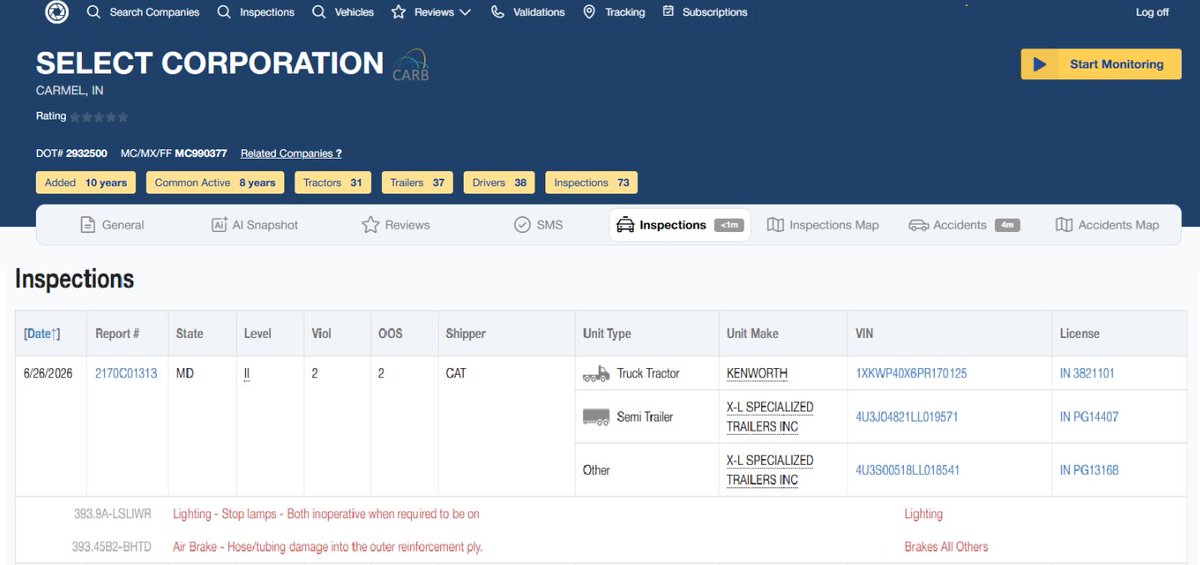
A carrier can look clean on paper and still be one small piece of a much messier picture.
Aliases and name variations. Shared addresses and officers. Vehicles registered across multiple companies. A history that includes a carrier whose authority was already revoked.
None of that shows up if you only check the name in front of you.
BrokerSnapshot maps the connections at https://t.co/48IRB6ZGEL
#FreightFraud #CarrierVetting #Logistics #BrokerSnapshot
Indiana State Police recovered about 12 stolen truckloads since April, valued at more than $11 million. Officials say it's the largest cargo recovery effort they've seen in over a decade.
The methods keep repeating: chameleon carriers, forged documents, stolen USDOT numbers, and repeated re-brokering to make stolen freight look legitimate.
ISP's own advice lines up with basic vetting. Confirm the carrier name matches what's on the truck. Check contact details before releasing freight. Question any request to reroute a load.
Catch the mismatch before the truck leaves at https://t.co/48IRB70euj
Read the story: https://t.co/kgEzQSvu5w
#FreightFraud #CarrierVetting #Logistics #BrokerSnapshot
New carriers don't get flagged as often as they should.
Carriers under six months old are responsible for a disproportionate share of cargo theft. No inspection history yet. No operating pattern to compare against. And if something goes wrong, it's easy to shut down and reopen under a new name.
That doesn't mean reject every new carrier. It means look closer, especially on high-value loads.
See authority age, inspection history, and related entities at https://t.co/48IRB6ZGEL
#FreightFraud #CarrierVetting #Logistics #BrokerSnapshot
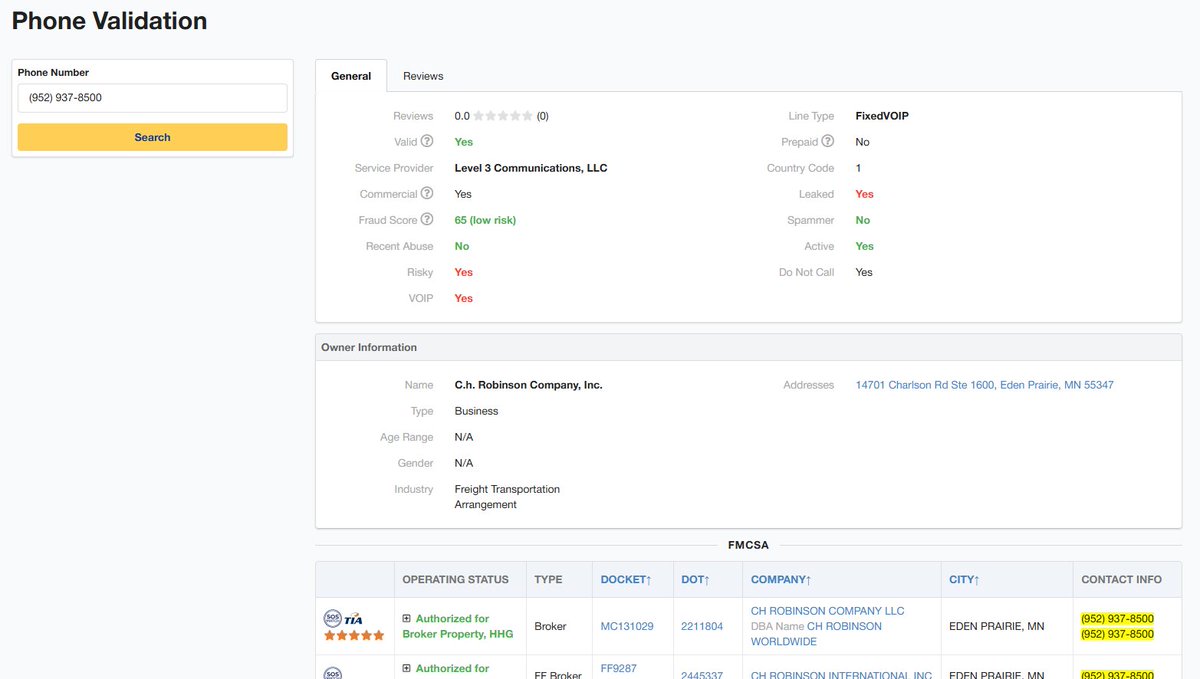
Most vetting stops at the MC number. The phone number just gets a call.
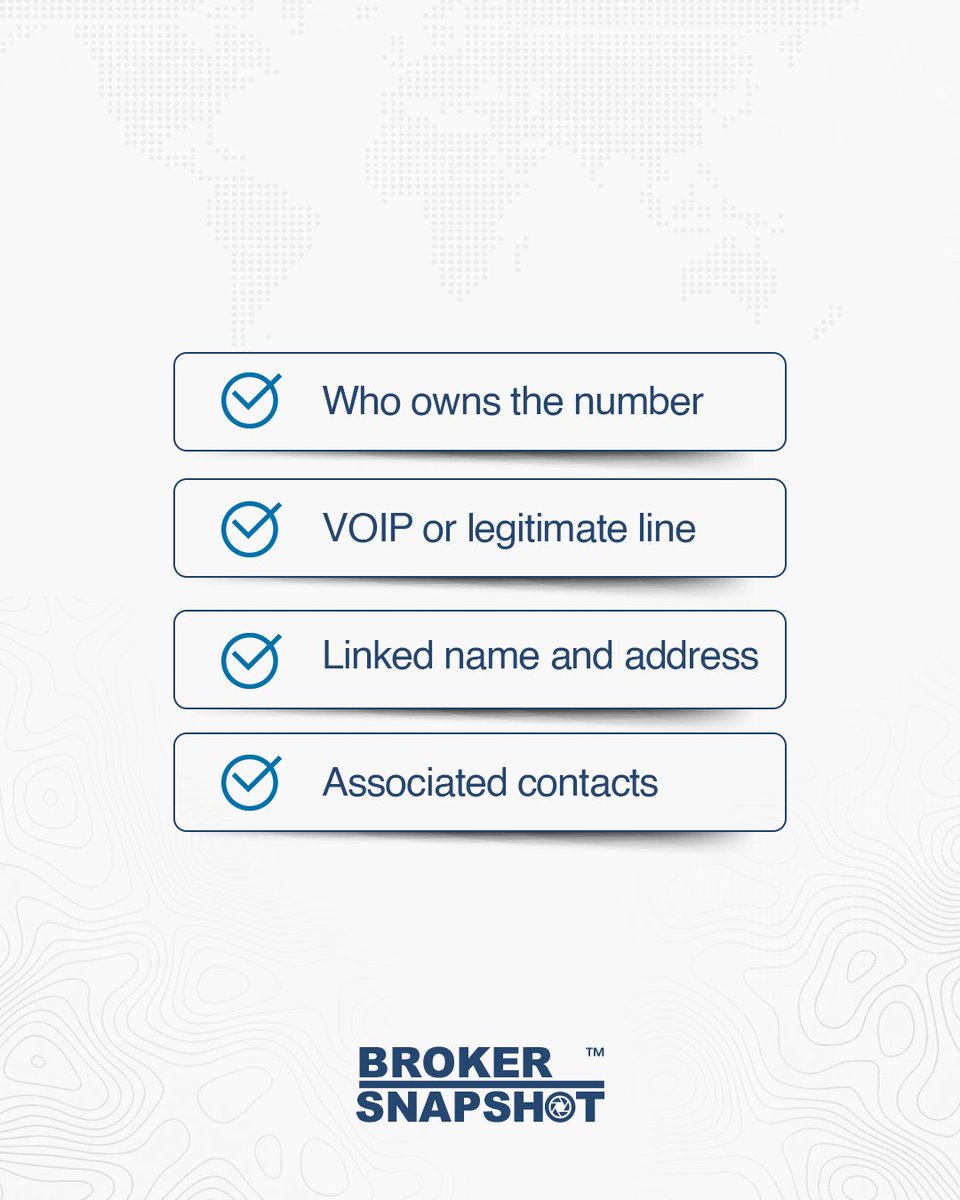
That's a blind spot. Who owns the number. Whether it's VOIP or a legitimate carrier line. Whether the name and address attached to it actually match. Whether the same contact shows up across other unrelated companies.
One search catches all of it in seconds.
Try it free at https://t.co/48IRB70euj
#FreightFraud #CarrierVetting #Logistics #BrokerSnapshot
Everyone is talking about MOTUS. Very few have figured it out. We have.
Broker Snapshot has completed its MOTUS integration the right way. Our platform delivers live MOTUS updates, unmatched historical data validation, and industry leading AI analytics all in one place.
The result? Faster insights. Better decisions. Superior due diligence.
A FreightWaves opinion piece this week asks a fair question about C.H. Robinson's AI push. The company automates pricing, tracking, and quoting. Carrier vetting still stops at active authority and insurance on file.
After Montgomery, that gap is exactly what plaintiff attorneys will point to. The CAVRA standard puts it plainly: automation is not the same as reasonableness.
Read the full piece: https://t.co/xoQYRf5Y6s
Put real data discipline behind your vetting at https://t.co/48IRB6ZGEL
#FreightFraud #CarrierVetting #Logistics #BrokerSnapshot
"Insurance on file" sounds like a safety net. It isn't the same thing as insurance in force.
On file means a policy existed when the carrier signed on. In force means it's active today. Policies lapse in between, and that gap becomes the broker's problem if nobody caught it.
Check the effective date, the carrier name, and the coverage amount. Every load, not just the first one.
See live status, not a cached record, at https://t.co/48IRB70euj
#FreightFraud #CarrierVetting #Logistics #BrokerSnapshot
Carrier identity theft does not announce itself. The MC number is real. The company exists. Everything looks right until you check the details against each other.
A mismatch between an MC number and a DOT on file, recently changed contact information, someone who cannot verify basic details about their own operation. These are the signals that show up before the fraud does.
Catching them requires checking data points against each other, not just checking each one in isolation.
Cross-reference your next carrier at https://t.co/48IRB70euj
#FreightFraud #CarrierVetting #Logistics #BrokerSnapshot
Most vetting stops at the MC number. The phone number gets a call, not a check.
That is a real gap. A number tied to a VOIP service, recently changed, or appearing across multiple unrelated companies is a signal worth catching before the load moves.
One call to the wrong contact is how double brokering starts.
Validate before you book at https://t.co/48IRB6ZGEL
#FreightFraud #CarrierVetting #Logistics #BrokerSnapshot
BrokerSnapshot users can now instantly uncover who's behind the data:
📞 Phone numbers
📧 Email addresses
👤 First and last names
🏠 Addresses
By integrating multiple data networks, we've built one of the most comprehensive identity validation systems in the freight industry.
A huge thank you to our incredible tech team for making this possible. We're already receiving fantastic feedback from our customers!
The Montgomery ruling didn't just change broker liability. It changed what due diligence actually looks like.
There are four steps to a defensible vetting process. Most brokers cover some of them. Few cover all four, every time, with documentation to back it up.
BrokerSnapshot handles all four automatically on every search.
Put the checklist to work at https://t.co/48IRB6ZGEL
#FreightFraud #CarrierVetting #Logistics #BrokerSnapshot
As many of our users have noticed, BrokerSnapshot continues to set the standard for speed and data quality.
We're redefining how carrier data is delivered, providing insights that simply aren't available anywhere else.
With BrokerSnapshot you can:
Identify who owns a number
See their address
Find related companies
Check fraud signals
Verify FMCSA connections
One phone number can reveal an entire business network.
A vetting check done right can still be useless without proof it happened.
The timestamp is what turns a search into evidence. It shows you checked the carrier's authority, insurance, and history at the exact moment you booked them. Not before. Not after. At booking.
That distinction matters in court.
Run your first timestamped search at https://t.co/48IRB6ZGEL
#FreightFraud #CarrierVetting #Logistics #BrokerSnapshot
The Supreme Court's ruling in Montgomery v. Caribe Transport II changed the shape of broker liability. It also changed what the defense has to look like.
Checking active authority and insurance is no longer the standard. Courts will want to see a consistent, documented process behind every carrier selection: What you reviewed, what you found, and why you approved it.
The question has shifted. It is no longer "who can move this load." It is "can I defend this decision?"
Read the full breakdown: https://t.co/IEOy7Hmojy
Build a process worth defending at https://t.co/48IRB70euj
#FreightFraud #CarrierVetting #Logistics #BrokerSnapshot
Vetting a carrier is one thing. Being able to prove you vetted them is another.
Authority changes overnight. Insurance lapses. Carriers rebrand after violations. What was accurate at the time of search may not be accurate at pickup.
Without a timestamped record, there is no proof. And no proof is the same as no vetting.
Check your record at https://t.co/48IRB70euj
#FreightFraud #CarrierVetting #Logistics #BrokerSnapshot
Eight people were indicted in New York over a scheme that allegedly stole $4.49 million in freight across six incidents.
They didn't forge credentials from scratch. Prosecutors allege they used real MC numbers and carrier identities that weren't theirs, then showed up at loading docks and collected the freight.
A basic authority check wouldn't have flagged it. The risk was in the details underneath.
Read the full story: https://t.co/JATYtKeW3k
Dig deeper into any carrier at https://t.co/48IRB70euj
#FreightFraud #CarrierVetting #Logistics #BrokerSnapshot