🇺🇸 George Washington and the First National Thanksgiving - A Message To President Trump
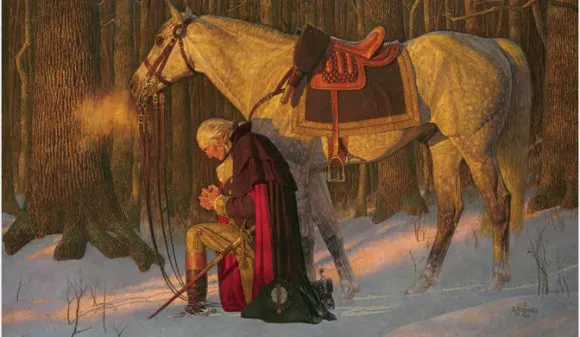
The year was 1789, and the United States was still an experiment—fragile, uncertain, and trying to find its identity under a brand-new Constitution. George Washington had been unanimously elected President just a few months earlier and had taken office in New York City, the nation’s temporary capital.
Washington spent his early months shaping the executive branch, calming regional tensions, and trying to unify states that often distrusted each other. During this time, Congress debated whether the new federal government should call for a national day of thanksgiving—a practice that had previously existed only at the state and local levels.
On September 25, 1789, the First Federal Congress passed a resolution asking President Washington to recommend a national day of gratitude. The request reflected a widespread belief that the nation had survived extraordinary dangers—war, financial ruin, and political division—and that a public day of reflection would set the tone for the new Republic.
Washington agreed.
On October 3, 1789, in New York City, he drafted and signed what would become the first Thanksgiving Proclamation issued by a U.S. president. The wording was prepared with help from his staff—most likely from Secretary of State Thomas Jefferson’s office, though Washington personally reviewed and approved every line.
His proclamation declared:
“Thursday the 26th day of November next to be devoted by the People of these States to the service of that great and glorious Being who is the beneficent Author of all the good that was, that is, or that will be.”
For the first time in American history, all states were invited to observe the same day of Thanksgiving, not just individual communities or regions.
Washington’s proclamation emphasized:
Gratitude for the end of the Revolutionary War
Gratitude for the newly adopted Constitution
Gratitude for “civil and religious liberty”
Gratitude for the opportunity to build a stable government
A call for national unity and moral reflection
The document was printed in newspapers across the young country, including the Massachusetts Centinel, Pennsylvania Packet, and the Gazette of the United States. Many state governors and local leaders endorsed the request, and November 26, 1789, became the first federally recognized Thanksgiving Day in U.S. history.
Across the states, citizens marked the day through:
Religious services
Community gatherings
Public prayers
Family meals
There is no evidence of turkey, stuffing, or modern traditions. Those developed in later centuries.
In 1789, Thanksgiving was primarily a religious and civic observance, rooted in gratitude and national solidarity.
Washington issued a second national Thanksgiving proclamation in 1795, during tensions with France and ongoing frontier conflicts. Again, he encouraged Americans to reflect on their blessings and remain united.
After Washington’s presidency, national Thanksgivings became irregular. Presidents John Adams and James Madison issued occasional proclamations, but the tradition faded at the federal level until Abraham Lincoln, in 1863, made Thanksgiving an annual national holiday.
Lincoln’s proclamation closely mirrored Washington’s themes, intentionally invoking the founder’s precedent.
Today, historians view Washington’s 1789 proclamation as:
The birth of Thanksgiving as a national tradition,
A deliberate act to unify the new Republic,
And a foundational moment in American civic culture.
The proclamation survives in several preserved manuscripts, including copies held by the Library of Congress, the National Archives, and historical societies across the country.
In many ways, the moment America faces today mirrors the uncertainty Washington confronted in 1789.
He understood that a divided nation cannot stand, and that the work of a President is not only to govern, but to steady the Republic, calm rising tempers, and remind citizens of the blessings they share.
Washington used the idea of a national Thanksgiving to pull the States back toward a common identity — gratitude, unity, and purpose.
That same spirit is what the country needs now.
We do not need more outrage or factionalism, but a leader willing to lower the temperature, bridge divides, and call the nation to remember what binds us together.
A leader who can cut through the noise, call the country back to its foundations, and stand firmly as a President for every American — not just the ones who agree, but all who call this nation home.
Mr. President @realDonaldTrump@POTUS — this moment calls for your leadership. The nation needs a unifying proclamation, just as Washington offered in 1789, to steady the country, remind Americans of what we share, and let the people know that you hear us.
@GenFlynn@xAlphaWarriorx@SecWar@DNIGabbard
I’m a Millennial with parents who fled the Soviet Union in 1985, came here in 1986 and this trend scares me. Its horrors are still very raw to me, my sister, & more. Communism is a wretched philosophy that should be tossed in the ashtray of history, not something “en vogue.”
Between now and THON Weekend, for every #6abcFTK posted, @Ford and @6abc will donate $1 each to THON! Quote this tweet with #6abcFTK and help us find a cure.