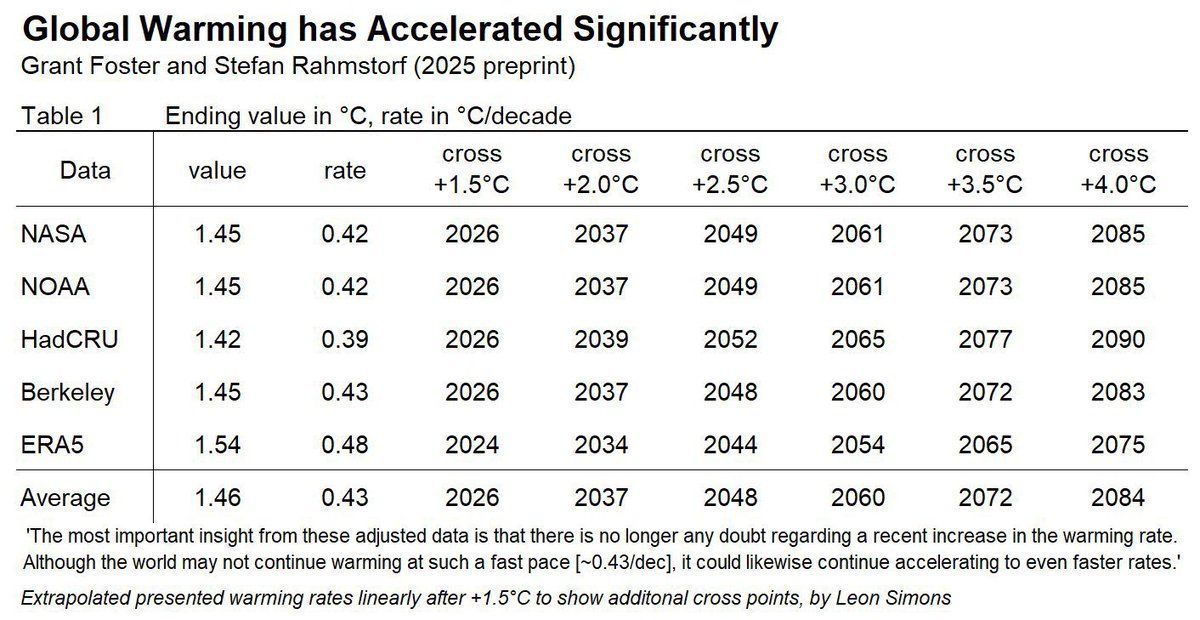
This is extremely important: civilization was enabled by a 6C spike in temperature above the glacial norm of the last 2 million years. It’s a “Goldilocks” temperature where much hotter or colder makes civilization impossible. At 1.5C hotter, civilization could fail.
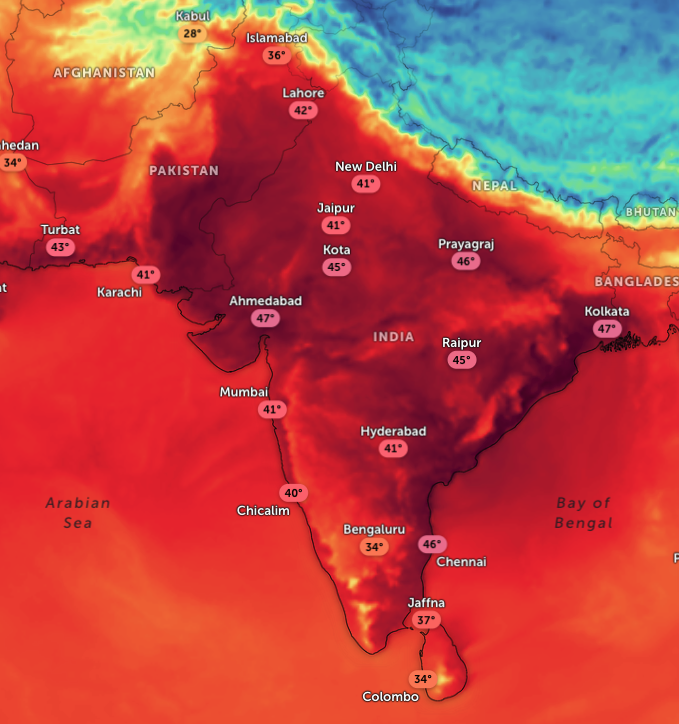
Large parts of India have been approaching “feels like” temps near 50°C. Some coastal regions may reach ~33°C wet-bulb. At 35°C wet-bulb, heat and humidity overwhelm the human body’s ability to cool itself. Survival becomes measured in hours, especially for the elderly & infants
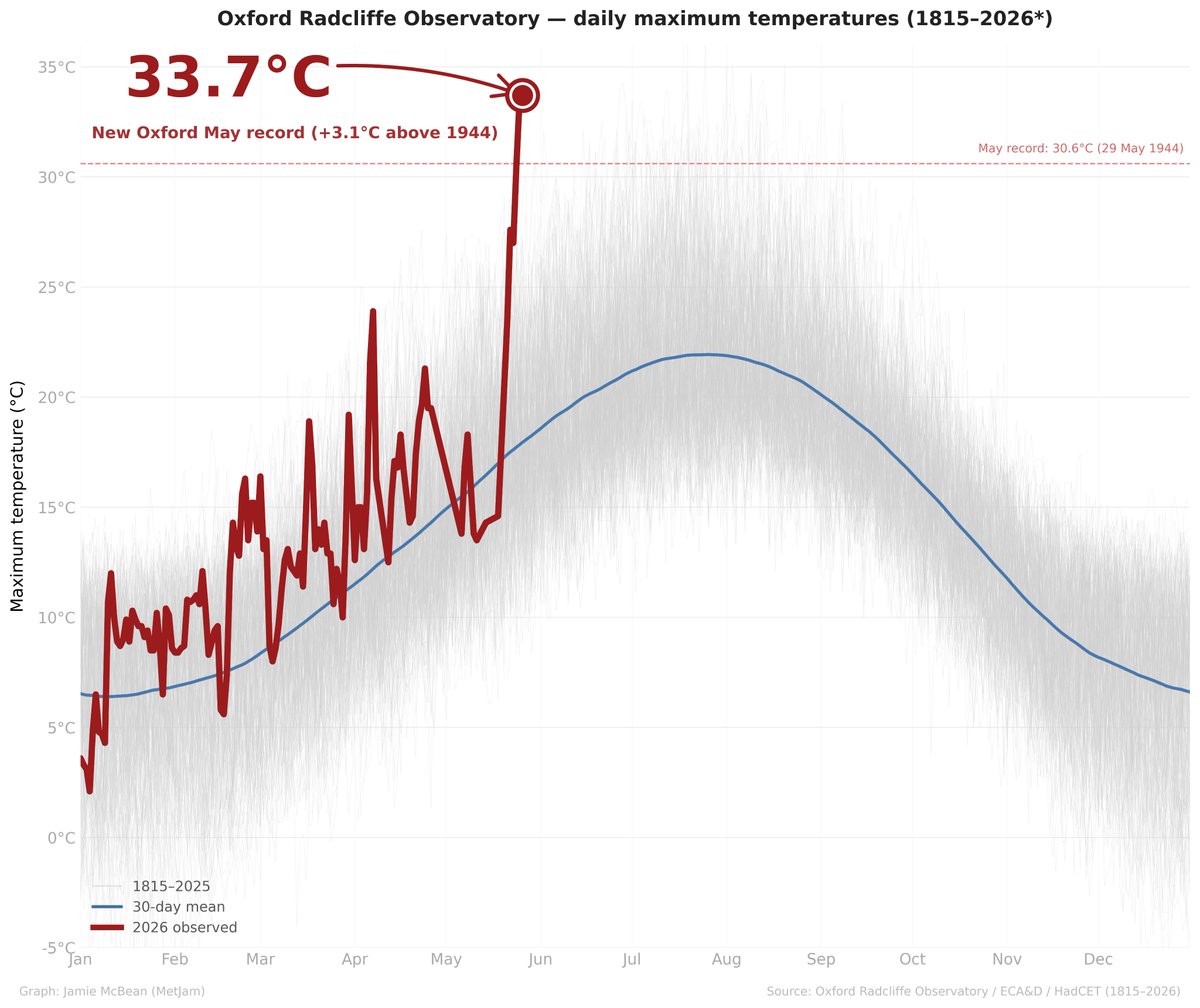
Oxford, the longest running continuous weather station in UK history, with temperature observations stretching back to 1815, has preliminarily broken its maximum temperature record for May yesterday by OVER 3ºC with a temperature of 33.7ºC. Unprecedented in its 211-year history.
A British scientist invented the single most valuable piece of technology in human history, then signed a document that legally guaranteed he would never make a cent from it, and he did it on purpose while every university around him was racing to patent everything they could.
His name is Tim Berners-Lee, and the invention was the World Wide Web (WWW).
Not the internet, which already existed as a way to connect computers, but the actual web of pages and links you are using to read this right now. HTML. HTTP. The URL. He built all three while working at CERN, a physics lab in Switzerland, between 1989 and 1991.
He wrote the first browser on a NeXT computer and stuck a label on it that said "DO NOT POWER IT DOWN" because if anyone unplugged it, the entire web would vanish.
Here is the part that should stop you cold.
CERN owned the invention. Under the rules of the time, the lab could have licensed it, charged a fee for every installation, and collected a royalty on every server that ever came online.
His colleague Robert Cailliau confirmed they actively discussed exactly this, because in the early 1990s patenting university inventions and squeezing money out of them was the standard move.
They could have charged for every search. Every upload. Every page load on Earth, forever.
Berners-Lee fought to give it away instead.
He pushed CERN to release the source code into the public domain with no patent and no fee of any kind. On April 30, 1993, two CERN directors signed a half-page document that relinquished all intellectual property rights to the World Wide Web. A few signatures on a single sheet of paper.
That was the moment nobody came to own the thing that now connects more than five billion people.
His reasoning was not sentimental. It was mechanical.
He understood something most inventors never grasp. The value of the web was not in the code. It was in the network. And a network only grows if everyone can join without asking permission.
The second you charge a toll, people route around you, and you end up with a hundred tiny incompatible webs instead of one universal one. He said it plainly years later.
If he had demanded fees, there would be no World Wide Web. There would be lots of small webs, and none of them would have mattered.
So the thing that made the web worth trillions is the exact same thing that guaranteed he would never personally capture any of it. Openness was not a sacrifice he made against the invention's success. Openness was the success. The free part was the product.
People who made far less consequential things became billionaires off the platform he built. He watched it happen and kept running a nonprofit standards body out of an office at MIT, setting the rules that keep the web working for everyone, paid like a normal professor.
When an interviewer once asked him why he never cashed in, he refused the premise of the question. He said that framing only makes sense if you measure a person's worth by their net worth. People are what they have done and what they stand for, not what sits in their bank account.
The man who could have owned a piece of every click ever made chose to own none of it, because he understood that the only way to give the world something this big was to make sure he could never take it back.
The most valuable thing ever built belongs to everyone, and that was the entire point.
Student loans inquiry shows ‘massive scale of frustration and upset’.
£292bn debt is a tax on ambition. Millions can't start family, buy home.
Most EU countries, and Scotland, don't charge Uni tuition fees.
England must do the same. Write-off debt,
https://t.co/udS6binCLe
I have a little question for social scientists...
has anyone seen any AI-powered research that's rocked their priors?
where might we anticipate new breakthroughs?
what big puzzles might AI be able to solve?
eg the drivers of growth?
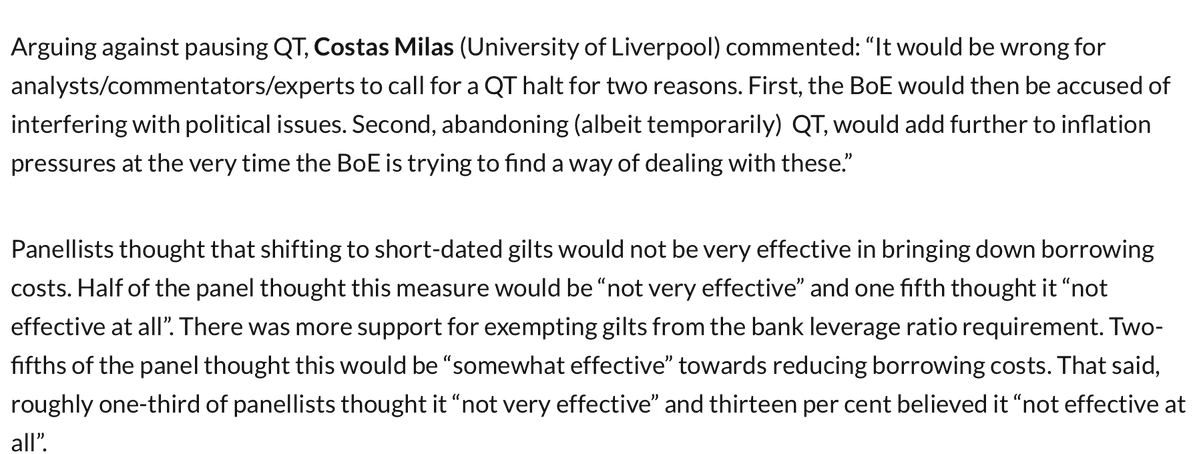
yes @adam_tooze and the manufacturing of silence around the Bank's actions to shrink fiscal space deliberately is astounding:
here one alarmist claim that halting gilt sales would trigger inflation!
Meteorologist here. The UK Met Office calculated the odds of breaking that exact record are 3x higher in today's climate vs. a world without fossil fuel emissions.
You took an attribution study and turned it into a punchline - right before the record got shattered by 2°C at 12 sites.
Do better.
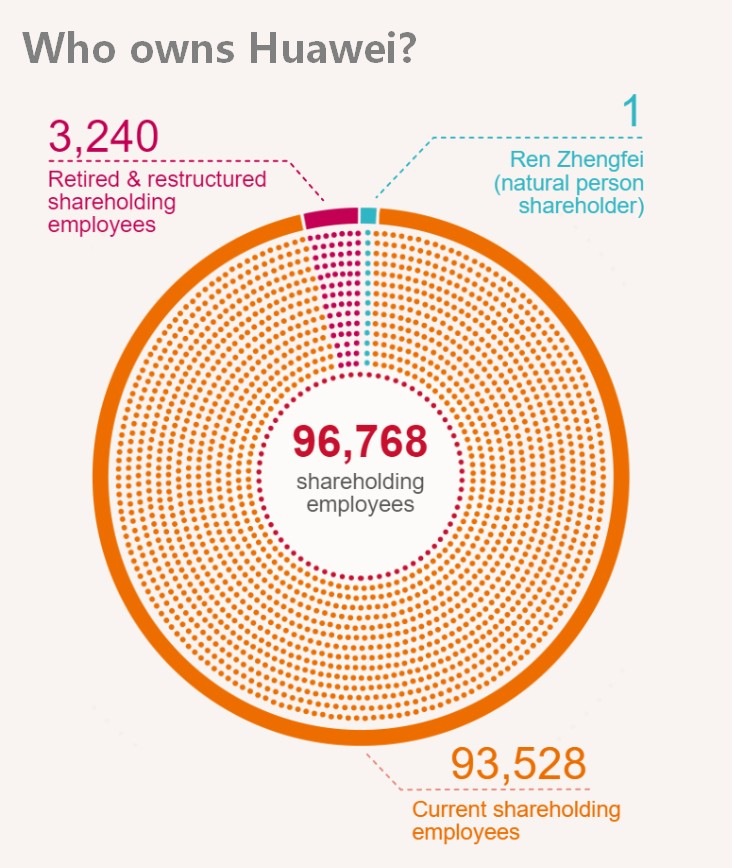
Huawei is the world's most successful coop.
Maybe the reason the ultra-wealthy in the west hate Huawei, is because it's owned by its employees?
No investors taking an un-earned share of the workers efforts to be seen...
The IMF and World Bank spent 40 years stigmatising industrial policy. Now they are mainstreaming it. My piece for @CriticalDev asks: has the tide really turned on market fundamentalism?
I know the heat can make us all light headed but i think I just heard the ex Chair of @Ofcom Michael Grade tell @katierazz on #mediashow that @bbcr4today or any other BBC News programme could be presented by a politician just like @GBNEWS. Can anyone remind me when parliament, the public, licence fee payers or anyone else was asked their opinion on this ?
Let’s go back to 2010!
We didn’t need cancer pathways as urgent referrals were seen in 2-3 weeks, routine in 2-3 months
Recruitment was rising, jobs were good. It wasn’t perfect but in 4 decades of NHS work it was the best it had been
THEN SOMETHING HAPPENED ….
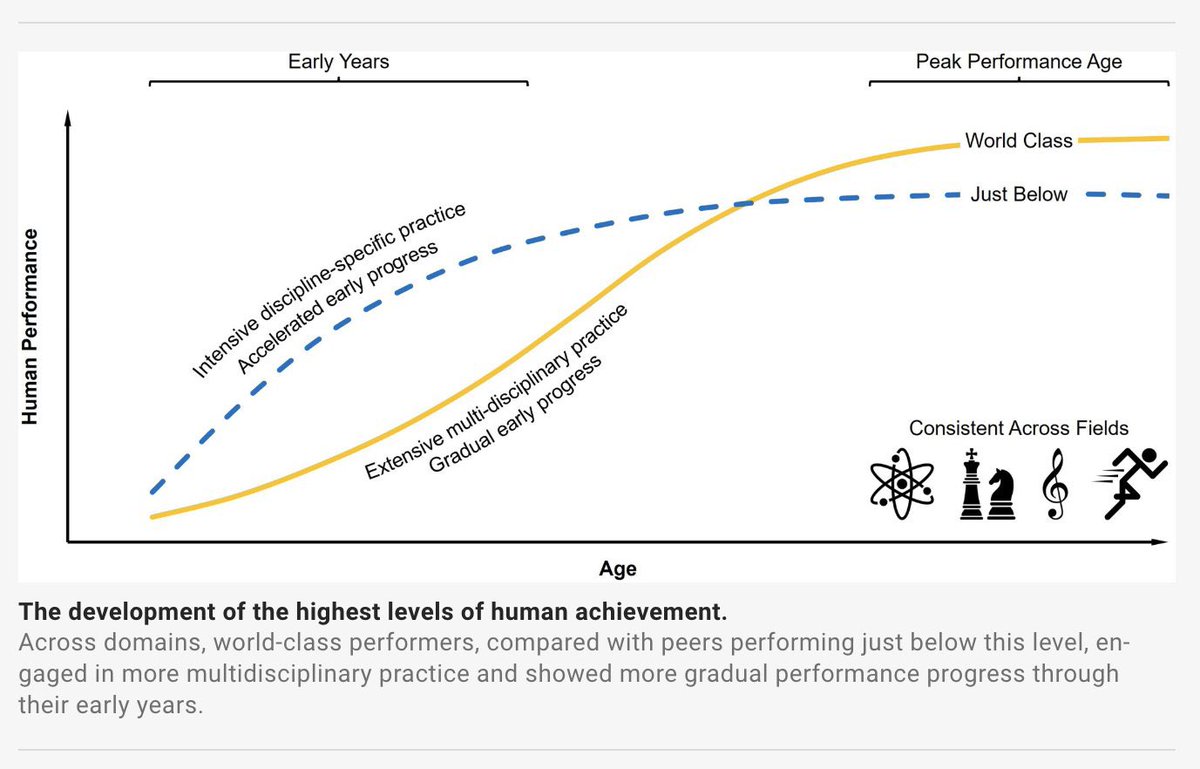
Fascinating paper just published in Science.
The authors analyze the career trajectories of top performers across multiple domains, including Nobel laureates, elite chess players, Olympic gold medalists, and more.
Their central finding challenges a common belief.
Intensive, single-discipline training at a young age does confer an early advantage, but this advantage fades over time.
By contrast, individuals exposed to multidisciplinary practice early in life tend to start more slowly. Yet, over the long run, they are more likely to reach world-class performance, eventually overtaking early specialists, who often plateau just below the very top.
An important reminder that breadth early on can be a powerful investment in long-term excellence.
Link to the paper in the first reply.
China is doing exactly what any developing country should do: utilise industrialisation to build up capabilities in clean energy.
China’s emissions are now *reversing* amidst rapid growth in energy demand.
The reason: huge investments in clean energy.