How do lipids influence aging?
We find that membrane lipid composition impacts neural stem cell aging and 'rejuvenation'!
HUGE congratulations to @xiaoaizh on her paper just published at @ScienceAdvances!! 🤩🍾
And a big thank you to all our collaborators!
A thread 🧵...
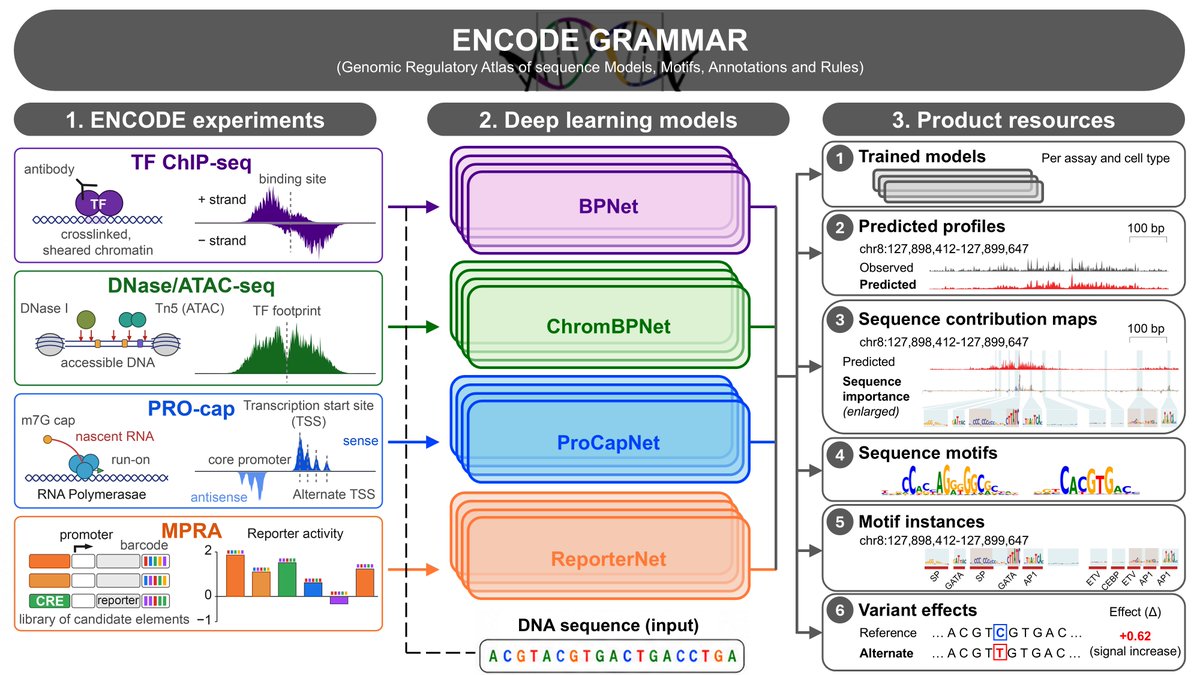
I can not emphasize enough how much love and care has gone into this resource. Each of the 3865 models has been individually optimized and thoroughly vetted. It’s a truly foundational resource, and holds many many stories that are begging to be told.
Very excited to announce ENCODE GRAMMAR (Genomic Regulatory Atlas of sequence Models, Motifs, Annotations & Rules): 3,865 experiment-specific deep learning model sets and sequence annotations for decoding human regulatory DNA. 1/
Excited to see our new paper published in @eLife!
https://t.co/mRpqBJGRWy
Huge congratulations to Rahul Nagvekar and team @Ravi__Nath and @clairebedbrook!! 🙌✨
We identify brain macrophages that engulf extracellular material in the aging #killifish brain!
Our model provides an opportunity to test interventions that boost engulfment by these macrophages, with the goal of promoting brain resilience in old age and disease.
How do lipids influence aging?
We find that membrane lipid composition impacts neural stem cell aging and 'rejuvenation'!
HUGE congratulations to @xiaoaizh on her paper just published at @ScienceAdvances!! 🤩🍾
And a big thank you to all our collaborators!
A thread 🧵...
Our paper introduces membrane-impermeable caspase inhibitors that use GSDMD pores as their entry route.
Because these compounds can't cross an intact membrane, they enter only cells already forming GSDMD pores — before pore density exceeds the cell's repair capacity. This confers built-in specificity: the drug acts solely on pyroptotic cells, leaving apoptosis and healthy cells untouched, addressing the off-target toxicity that has limited earlier, cell-permeable caspase inhibitors.
The effect goes beyond arresting cell death. Cells already committed to pyroptosis reverse course and regain viability — a "Lazarus effect" that challenges the assumption that lytic cell death, once initiated, is irreversible.
In essence, these unexpected results could create new opportunities for precisely targeting inflammatory cell death while safeguarding healthy tissue.
Happy to see this fantastic paper finally out. Started as a PostDoc in our lab and finished in her own lab @mpicbg talented Sandra Scharaw show how intestinal stem cells optimize niche signal reception by multiple lateral Golgi stacks facing Paneth cells https://t.co/wNsabgQQs9
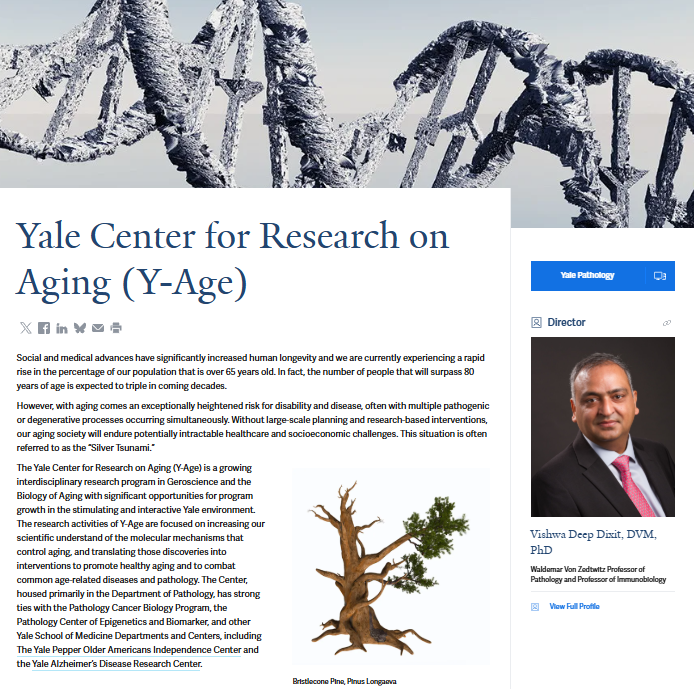
We seek to fill a tenure-track faculty position at the Assistant or Associate Professor Level (PhD or MD/DVM/PhD) to build an interdisciplinary research program here at @YaleAge, part of @YalePathology & @YaleMed. #pathologyjobs Learn more & apply here: https://t.co/xPvj6fuSH8
Thrilled to post thread re: new single-cell lineage of mouse embryo reconstructed w/ DNA Typewriter. One animal, zygote to late organogenesis (E13.5). Tree has 1,340,794 transcriptionally profiled, annotated tips (cells), 1,142,588 dated internal nodes, rooted at zygote
1/n
My lab is moving to Stanford, and we’re looking for an RA and a Postdoc to join us.
The position will focus on ovarian and brain aging in flies. If you’re excited about genetics, aging, and discovery, we’d love to hear from you.
Please email at [email protected]
Incredible finding. With age our brains become infiltrated by monocytes/macrophages that help reinforce/replace microglia.
These 'reinforcements' may be better than leaving old microglia to fend for themselves in the aged/diseased brain...
Yet other studies show these infiltrating peripheral immune cells are dramatically more pro-inflammatory and detrimental to brain relative to genuine microglia.
Restoring a youthful microglia compartment -- rather than passively accepting this age-associated compensatory influx of immune cells -- could be huge.
It may rejuvenate the tissue composition of the aged brain.