@SenatorDraheim I'm opposed to the DFL's ban on nearly all semi-automatic firearms in SF1596. Will you help STOP this bill? @mnguncaucus speaks for me in Saint Paul.
@BjornOlsonMN@SenatorDraheim I support Stand your Ground. Will you join me in supporting such a bill in the legislature? @mnguncaucus speaks for me in Saint Paul.
@GovTimWalz@SenatorDraheim I'm opposed to the DFL's ban on peaceable citizens carrying at the State Capitol for self-defense. Will you help STOP this bill? @mnguncaucus speaks for me in Saint Paul.
At first glance, maintaining healthy prairie habitat might seem easy: Just plant some native grasses and forbs, walk away, and let nature do its thing.
But prairies don’t work that way. Grasslands especially, but also woodlands and wetlands, need periodic disruption to stay healthy.
“Nature needs fire” is what I tell people when they ask me why prescribed burning is important for habitat. Simply put, fire is good for the land.
Fire prevents trees from taking over grasslands and turning them into forests. Fire also reinvigorates grasses and wildflowers, creating a flush of growth following a burn. Pheasants and quail, along with many other wildlife species, benefit from periodic fire. Burning removes the buildup of dead plant material, allowing chicks to travel under the cover. Birds also benefit from the increased insects and seeds a fire can bring.
Fire is an important and natural part of keeping habitat healthy. However, the benefits of fire are only realized when it is used, and this is where you come in. Learn more about the ecological benefits of prescribed burning at the link below.
https://t.co/BOxbX8R0VD
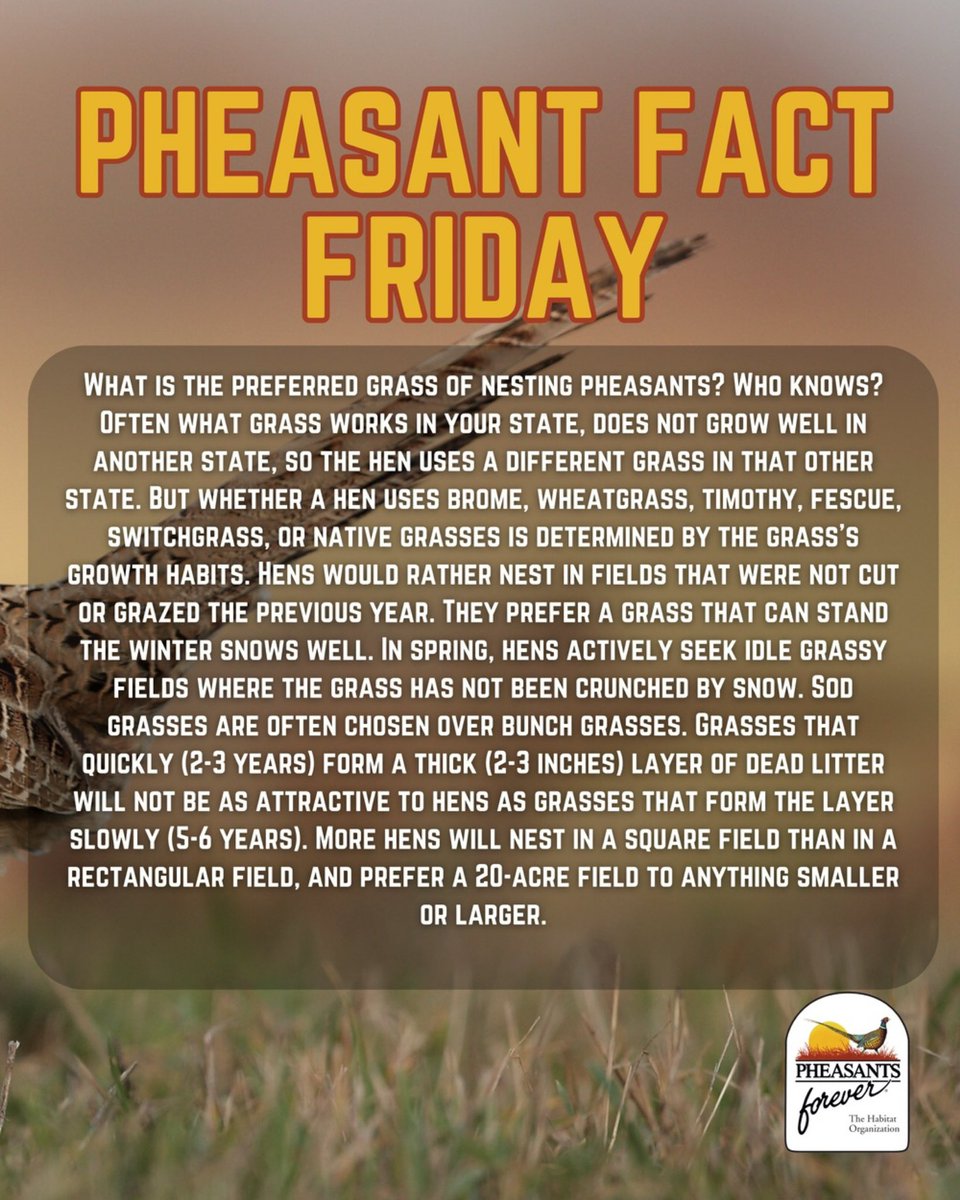
Pheasant Fact Friday!💡
What is the preferred grass of nesting pheasants? Who knows? Often what grass works in your state, does not grow well in another state, so the hen uses a different grass in that other state. But whether a hen uses brome, wheatgrass, timothy, fescue, switchgrass, or native grasses is determined by the grass’s growth habits. Hens would rather nest in fields that were not cut or grazed the previous year. They prefer a grass that can stand the winter snows well. In spring, hens actively seek idle grassy fields where the grass has not been crunched by snow. Sod grasses are often chosen over bunch grasses. Grasses that quickly (2-3 years) form a thick (2-3 inches) layer of dead litter will not be as attractive to hens as grasses that form the layer slowly (5-6 years). More hens will nest in a square field than in a rectangular field, and prefer a 20-acre field to anything smaller or larger.
#pheasantsforever #pheasants #pheasantfactfriday
Quail Fact Friday!💡
While many hunters and landowners know the benefits of prescribed fire, many are nervous that fires will also kill wildlife. The timing of a controlled burn is very important, but wildlife is also better at escaping fire than many realize. Animals like deer, turkeys, doves, and bobwhite quail can run or fly away from the flames. Squirrels can climb trees and let flames pass underneath. Pollinators and other insects can fly ahead of the fire or into tree canopies. In the southeast, the gopher tortoise plays a key role in helping small animals escape fire. Their burrows provide sanctuaries where animals can escape heat and flames.
#quailforever #quail #quailfactfriday #prescribedfire
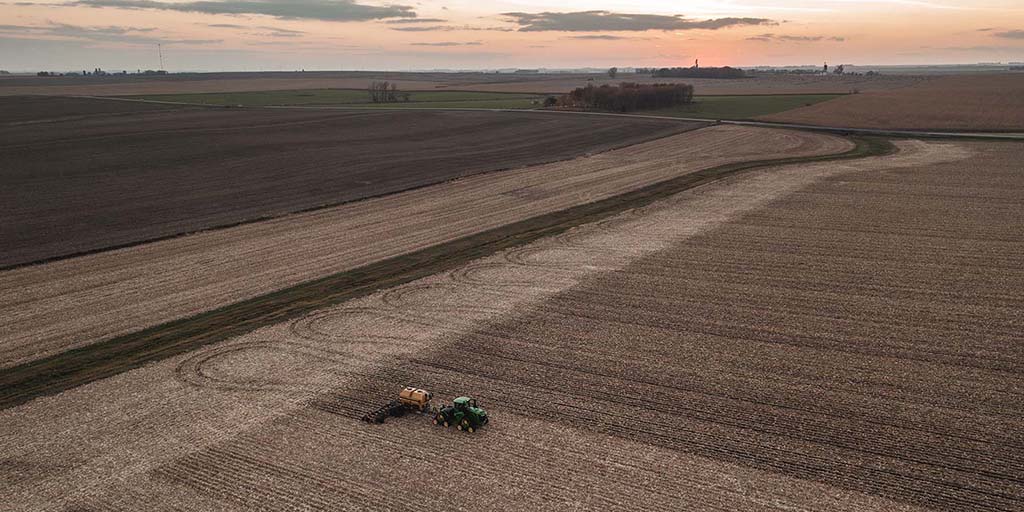
Guided by his faith and a commitment to leaving the land better for the next generation, Shawn Feikema has transformed how he manages his Minnesota farm. https://t.co/hMa1QmYdVI #soilhealth
Pheasant Fact Friday!💡
What can pheasants be eating this time of year? It has been 6 months since last fall’s crop harvest. A new crop of weed seeds won’t be available for 4 or 5 months. Juicy insects are still 2 to 3 months away. Is there anything out there to eat? Obviously there is or your birds would be dead now. The pheasant is an agricultural bird, and even at this barren time of year, they still show a preference for farm crops. In March, over 80% of their diet is farm crops, with corn being number one. Less corn is consumed now than was during last year’s corn harvest (Oct-Dec), but the difference is made up by increased consumption of wheat, barley, and oats. This change to small grains is probably due to less corn being available, and the birds having to eat the less desirable small grain seeds.
#pheasantsforever #pheasant #pheasants #pheasantfactfriday