A work in progress, but I used @claudeai to organize all the Chicago price theory problems @irwincollier has collected from the archives. Access the database here: https://t.co/CaNJy8TMs0
Suggestions welcome.
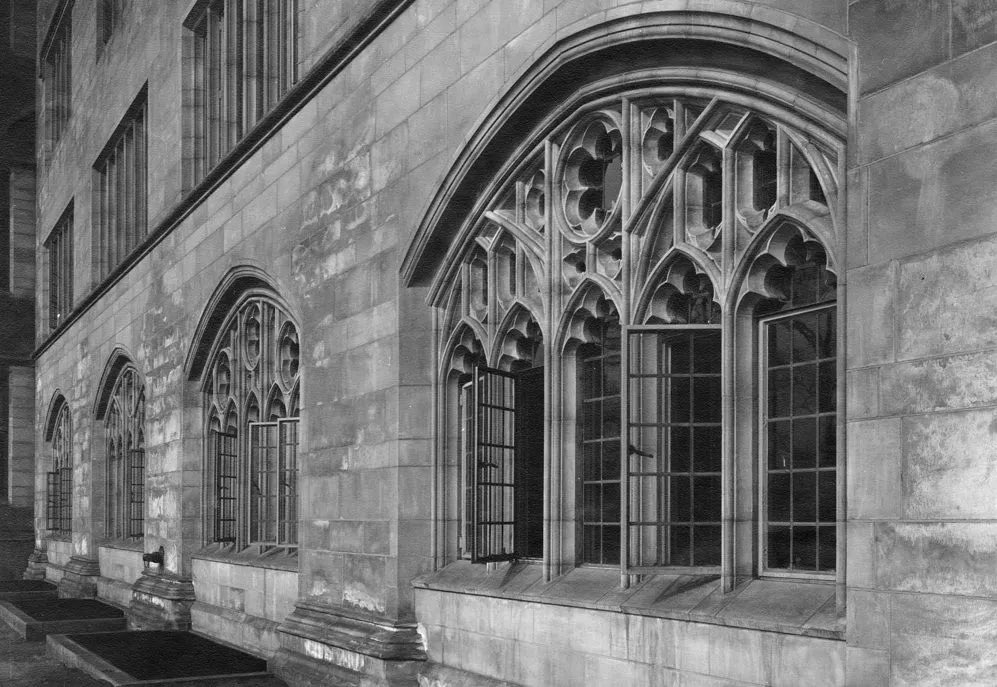
Economics in the Rear-view Mirror has crossed the 2000th artifact threshold. Presenting the Univ of Chicago’s economic theory prelim from the Winter quarter of 1953.
https://t.co/R20A8MbZQO
1/ @zingales says it’s preposterous to compare firing a pilot with a customer switching airlines. The stakes are totally different, and it’s all about power, which an employer has and a customer clearly doesn’t. His example is a disingenuous straw man built on a loaded example. Alchian and Demsetz deserve better.
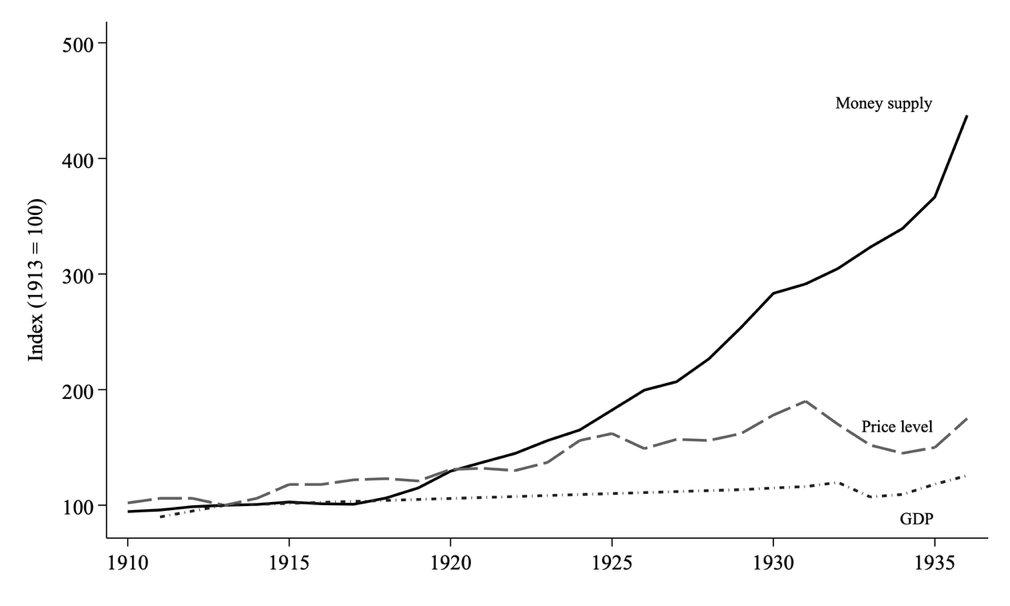
How did China keep its money from falling apart between 1905 and 1936? War, country split up, no central bank, no national banknote. Even so, the money supply grew about 4x, while prices rose only moderately.
Our new paper (with X. Dong, D. Li, D. Ma, and M. Wu) explains it 🧵1/5
New paper with @PIrelandEcon and @WilliamJLuther, out today in Contemporary Economic Policy: "Reviewing the Federal Reserve's 2025 Monetary Policy Framework Review."
Did the review bring in new ideas and real criticism? Did it fix the old framework's flaws? 🧵
Right on cue for Thanksgiving, @basilhalperin reminds us of important macrohistory facts for which we should be thankful: we are ~10x richer than our great-great-great grandparents; ~20x richer than people living two millennia ago. Six macrohistory facts those of us living in advanced economies should be thankful for this week: https://t.co/LZKqgnCkOR
Bottom line: the 2025 review moved away from the 2020 framework's biggest flaw, but committed to little in its place. Future reviews should open the door wider to outside ideas and aim for a clearer statement of how policy will respond.
Asking "what's your alternative to covering Social Security's shortfall that doesn't include benefit cuts or tax increases" is going to yield a null set. The senator is asking for an alternative to math.
If part of the narrative is "billionaires are bad because they buy elections", your stance has to change a bit if we observe the richest man on earth spending more money than anyone ever has on an election, and wins nothing. But, we observe no change (beacuse its not science).
Obviously, I agree with Jesús. Two ways to learn Price Theory Chicago style:
- See Kevin Murphy's videos (and read the book). He is an outstanding lecturer: https://t.co/AsSwkoj3uk
- For 40 or so grad students: Erik Hurst and I have taken the baton from Kevin and are running the Chicago Price Theory summer camp in 2027, as we did in 2026. Expect an announcement soon. https://t.co/3ap5V0hS8x
First podcast recording in central bank gold vault with the legendary Claudio Borio! He has a 🔥🔥🔥 new paper titled "Scarce is Beautiful" on central bank operating systems. Fed's balance sheet task force will love it! (1/3) https://t.co/aM0qvryxlD
Did automation hurt income mobility, or did licensing? @VincentGeloso & Pradyot Sharma of @MasonEconomics and Alicia Plemmons of @wvuchambers find much of automation’s predicted mobility decline is actually tied to occupational licensing. https://t.co/IzaSzQsel6
Hiking the inflation tax by 50% would be a bad idea.
Remember, an increase from 2% to 3% is not 1%, it's 50%.
It's the difference between prices doubling every 35 years vs. every 24 years.