Mae Ciara wedi bod yn aelod o’r tîm ers 2017, ac ar hyn o bryd mae’n ymchwilio ar gyfer Doethuriaeth ym Mhrifysgol Caerdydd, wedi ei ariannu gan Archaeoleg Brython. I ddathlu 100 mlynedd o Archaeoleg yn adran Archaeoleg a Chadwraeth Prifysgol Caerdydd...
Ciara has been a member of our team since 2017 and is currently undertaking a PhD funded by Brython Archaeology at Cardiff University. To celebrate 100 years of Archaeology in the department of Archaeology and Conservation at Cardiff...
#StudentSpotlightSunday ft PhD student Ciara Butler! Ciara is exploring kin-structured burial in Early Medieval Wales using biodistance analysis to assess genetic affinity, with spatial analysis of grave location and type, to identify family groups within cemeteries. #CUarch100
Stay tuned for results! Data collection has been paused due to Covid-19, but I hope to start back up again soon. Thank you for coming to my Tiny Talk! #CUArch100 17/17
Refs can be found on the blog: https://t.co/0jU65es9RF
Being sponsored by the company who excavated these sites has been a huge benefit to the project, through promoting local involvement in Welsh heritage research and providing me with resources and insider knowledge!
So: further research was needed into genetic affinity between individuals & what role it plays in their burial treatment. This led to @BrythonArch 's sponsorship of the study to further knowledge about sites they excavated and patterns of Early Medieval burial throughout Wales 15
At these sites we observed a range of different cist types and distinct areas of burial, as well as evidence for successive and double inhumations. Some dental non-metric traits were also identified in the osteological analysis at one site (Rusu and Madgwick 2017). 14/
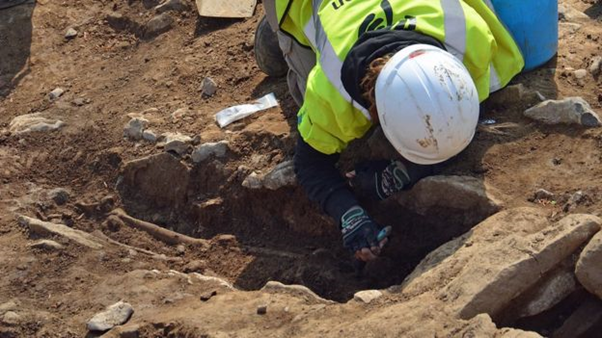
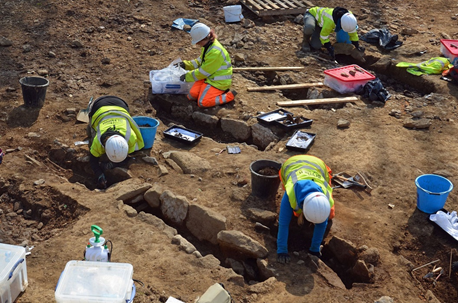
The questions posed by this research were first considered when I was working as a commercial archaeologist, excavating Early Medieval cemeteries on Anglesey with @BrythonArch . 13/
Many cemeteries present distinct groups of burials, often focused around a central “special” grave or graves (Thomas 1971). Burial in family groups has been suggested as a possible reason for these patterns (Britnell et al. 1990; Brassil et al. 1991; White and Smith 1999) 12/
The use of stone to line the edges inside the grave, called a cist, is also found in quite commonly. A lot of variation exists in the form of these cists – they may have side stones, capstones, floors stones, or any combination of the above. 11/
West-east orientated burials, without grave goods, are characteristic of Early Medieval cemeteries in Wales, as in much of the rest of Britain at this time (though this is not to say these kinds of graves don’t exist in other periods). 10/
This consideration of family organisation and its relevance in a mortuary context can illuminate many other aspects of an individual’s social identities and lived experiences in the past (Johnson 2019). 9/
Image: The ideal family unit
Units based around immediate relatives are only one way a family group may be organised. A nuanced understanding of kinship is necessary to explore these ideas in the past, using diverse family models & considering the range of familial identities an individual can have. 8/
Using this multi-analysis approach, both the biological and social relationships between individuals within a cemetery population can be explored, allowing a holistic exploration of the range of familial identities emphasised through burial practice. 7/
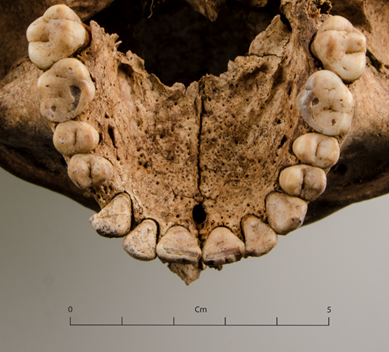
This involves collecting metric &/or non-metric data (traits part of normal variation) from skeletal remains & using statistics to see who groups together. This will be supported by targeted isotope analysis of geographic origin, & spatial analysis of grave location & type. 6/
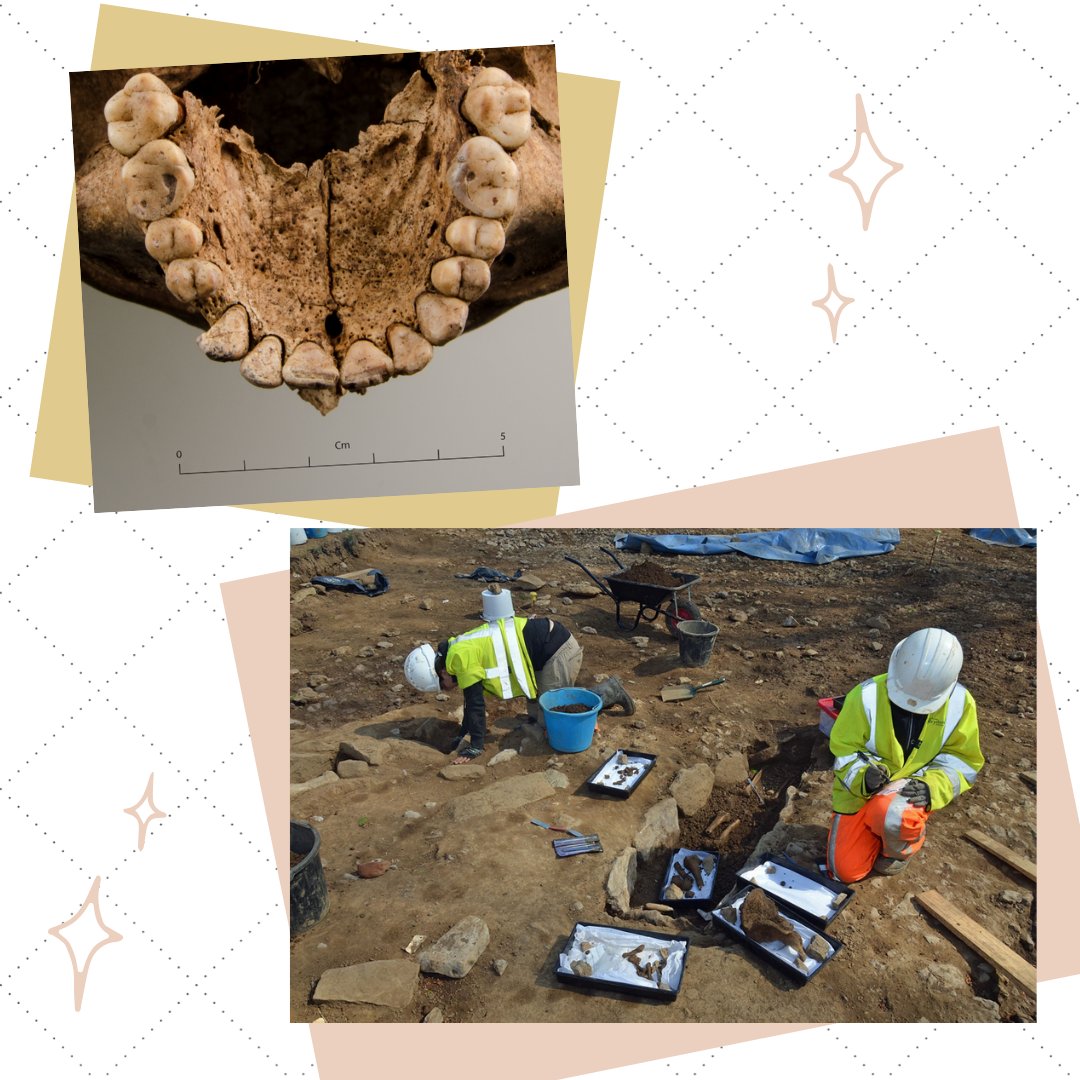
The primary methodology of the project is biological distance analysis based on dental measurements. Biodistance analysis aims to identify genetic affinity between individuals, or more commonly between populations, based on the evidence of skeletal and dental morphology. 5/