Bitcoin's technical consensus is bulletproof.
Its social consensus runs on gentlemen's agreements.
At $2T, this is Bitcoin's biggest attack surface.
Building governance as robust as Bitcoin's cryptography.
🔗 https://t.co/cZmHADdAbe
🔗 https://t.co/gBW7tuk9hJ
Bitcoin has had forks. It has not had alternative implementations. Not real ones. And forks don't solve the problem.
A Core fork is not an alternative implementation. It inherits everything. The technical debt, the undocumented behavior, the monolithic architecture. Change the team, keep the structure, and the structure wins. That's not an exit from the problem. That's the same castle with a different flag.
Node diversity matters. But nodes don't mine blocks. Without a value proposition for miners, implementation diversity remains a preference signal rather than a security guarantee. No Core fork has given miners a reason to switch.
The hardening problem is real, but the solution isn't forking Core. It's building from an independent mathematical specification and proving consensus validity through fuzzing and differential testing across the full chain history. That's verifiable safety. Everything else is institutional trust with better branding.
That's why we're building. @BtcCommons
Bitcoin's security model assumes adversarial nodes. Implementation diversity extends that same logic to the development layer. Follow @BtcCommons and @secsovereign for the release.
If you care about keeping Bitcoin antifragile, you should support the development of the most comprehensive and provably consensus-valid drop-in alternative implementation of Bitcoin that has ever existed.
🧵
AI-assisted development made this feasible for a small team. A formal spec, Rust, and AI tooling in Cursor compressed what would have taken years into months. The methodology is reproducible and we intend to document it fully.
EP270 drops for everyone Monday. 🟠
Subscribers get it now.
@secsovereign — 13 years, one hard drive, and the truth about who controls Bitcoin.
Fountain early access — $5/month or 99 cents.
@_BitcoinMatrix
⚡️https://t.co/YJZ0itkXzu
New Nova Episode with @secsovereign
Bitcoin's technical consensus is bulletproof. Its social consensus runs on gentlemen's agreements. At $2T, this is Bitcoin's biggest attack surface. Building governance as robust as Bitcoin's cryptography.
https://t.co/HuHFfOY660
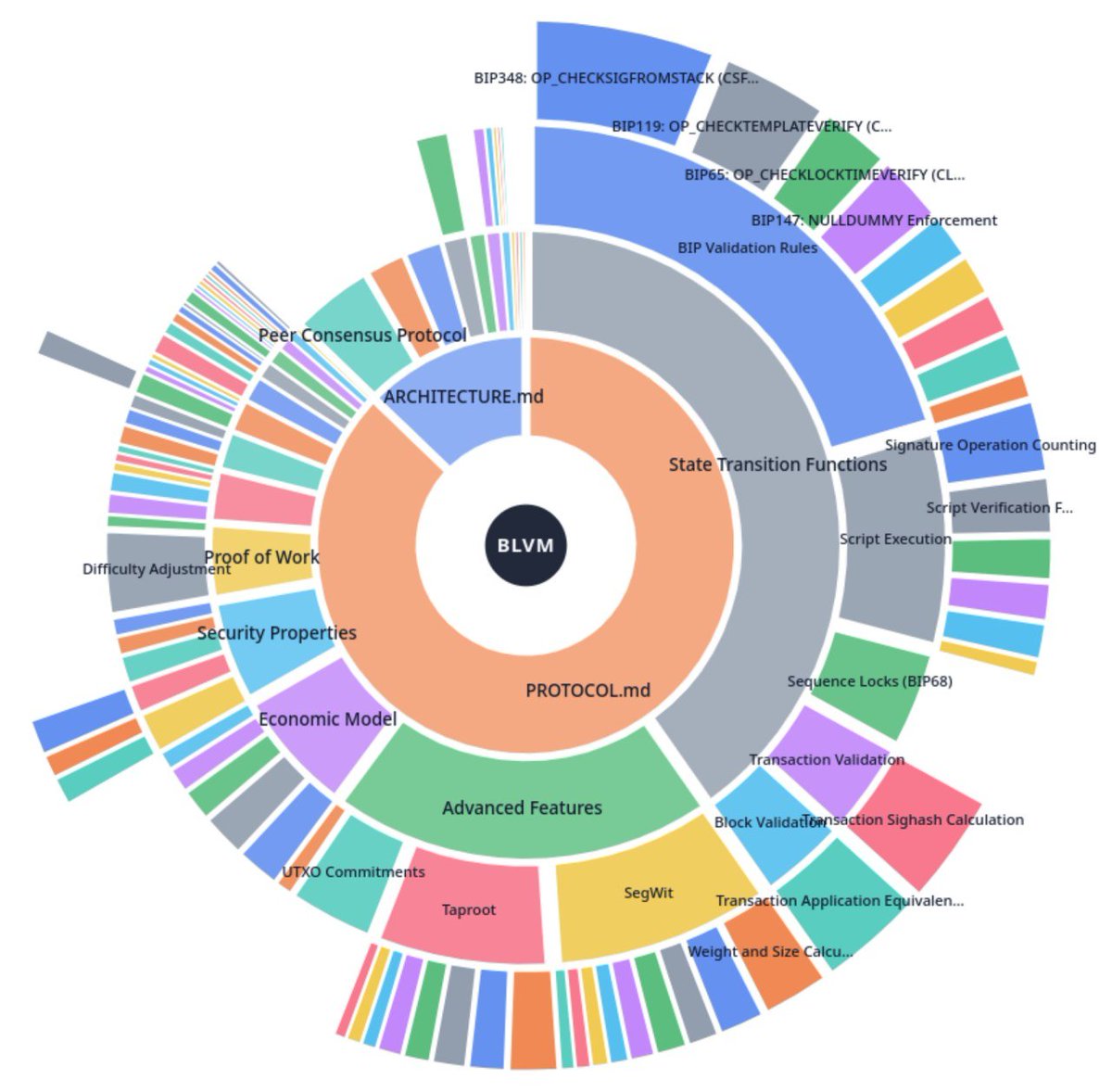
@Anton__BTC - Complete mathematical specification
- Formal verification of consensus rules
- 100% compatibility proven across 900K+ blocks
Knots is a Core variant (same codebase, extra features). btcd and Libre Relay are implementations, but neither has formal proofs.
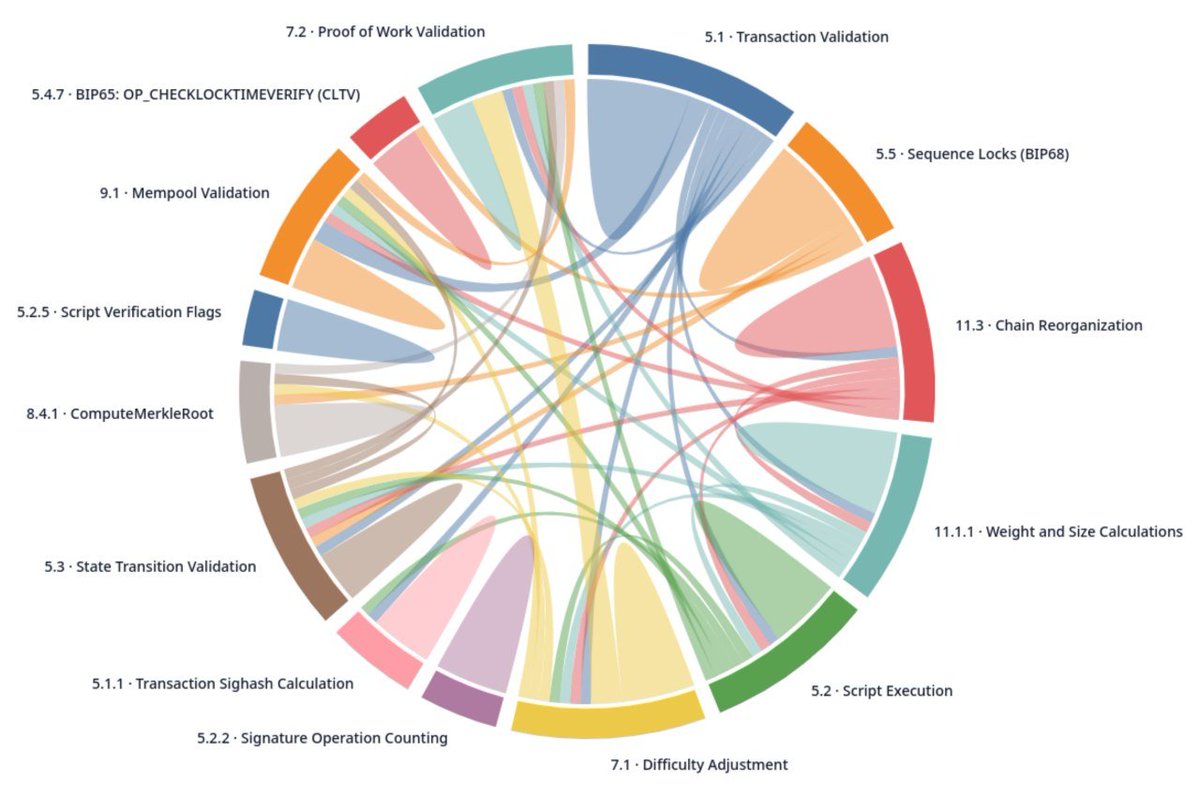
After months of differential testing, Bitcoin Commons has achieved 100% consensus compatibility across 900K+ blocks.
First alternative implementation with mathematical proof of consensus validity. Bitcoin needs this.
With consensus solved, we work on our first release next..
@Anton__BTC BCH and BSV are hard forks with different consensus rules - they're different coins, not alternative Bitcoin implementations.
Bitcoin Commons is the first alternative Bitcoin implementation with..
📊 Bitcoin Core governance analysis (2009-2025)
🎯 THE CONTRADICTION: Bitcoin eliminates trusted third parties. Its reference implementation is controlled by them.
KEY FINDINGS:
📈 Power concentration increased: Top 3 control 81.0% (historical) → 84.5% (recent)
📈 Top 10 control: 49.8% of PRs (increased from 42.7%)
📉 Gini coefficient: 0.851 (74% higher than US income inequality)
⚡ Speed hack persists: Self-merged PRs merge 2.4x faster (historical), 1.8x faster (recent)
✅ Process improved: Zero-review down 88.7% (30.2%→3.4%)
❌ Structure didn't: Self-merge stable at 26.5% (not declining)
⚠️ Critical PRs: 23.2% still merge with zero review
🔒 No accountability: 12.2% of maintainer PRs merge with zero review
🤝 Review reciprocity: 88.7% of maintainer review relationships are reciprocal
🚧 Segregation: 28% of maintainer PRs reviewed only by other maintainers
⚖️ Review weight bias: Maintainer reviews carry 5.5x more weight than non-maintainer reviews
Process improved. Power didn't move.
Is this the governance Bitcoin deserves?
https://t.co/LuL2A08aJQ
Bitcoin is facing an existential threat, and it's not quantum computing.
Central banks are onboarding trillions into CBDC control grids. They'll market them as "Bitcoin, but better" - faster, more functional, institutionally backed.
Bitcoin's response? Frozen governance. Petty infighting. Critical improvements blocked for years. Humiliating bugs making it through review.
The vulnerability isn't in the protocol - it's in the governance structure. A small group controls the reference implementation that 99% of nodes run. When adversaries have trillion-dollar budgets and geopolitical motives, this becomes a measurable attack surface.
I've spent months analyzing 16 years of development data. Every methodological concern is being addressed. The structural problems persist.
We're building @BtcCommons to prove there's a better way - transparent rules, distributed decision-making, cryptographic enforcement of governance principles.
But if the community keeps denying this problem exists, we're going to lose to adversaries who understand power concentration when they see it.
Our choice is to adapt or become irrelevant as CBDCs eat Bitcoin's legitimacy for breakfast.