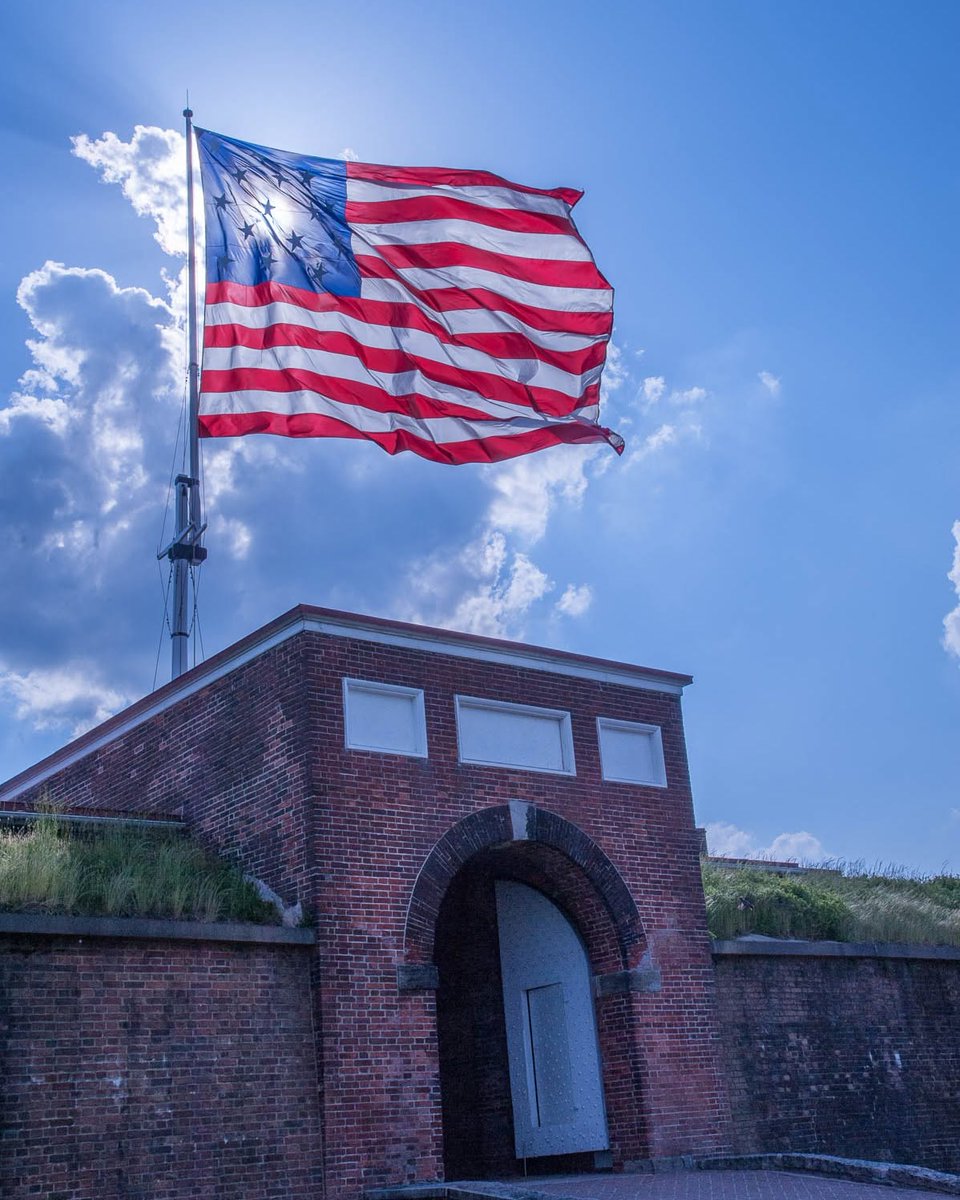
The story of our national anthem began under fire. 🇺🇸
On September 13, 1814, British warships bombarded Fort McHenry. At dawn, Francis Scott Key saw the American flag still flying, inspiring the words that became “The Star-Spangled Banner.”
There's a small window in life when your parents are healthy, your children are little, and everyone is happy and together. It feels like it will last forever, it won’t. Cherish every moment of it.
🚨EPA Administrator Lee Zeldin announces that $20 billion in taxpayer funds were just discovered, laundered into in external financial institutions managed by agents of the Biden Admin to finance left wing NGOs.
“$7 billion was sent to an entity called the Climate United Fund.”
But Zeldin has now clawed back the money and referred the case to the Department of Justice. Boom.
In the 1960s the sugar industry paid three Harvard scientists to publish a review blaming fat for heart disease and clearing sugar. The payments were discovered in 2016 by researchers at the University of California, San Francisco, who found the internal industry documents and published them in JAMA Internal Medicine.
The documents showed that the Sugar Research Foundation, now called the Sugar Association, paid the equivalent of about 50,000 dollars in today's money to three Harvard researchers to write a review of the evidence on sugar, fat, and heart disease. The review, published in the New England Journal of Medicine in 1967, concluded that fat was the dietary villain and that sugar was innocent. The funding was not disclosed.
The consequences lasted fifty years. Dietary guidelines in the United States shifted toward low-fat diets, and the food industry replaced fat with sugar in thousands of products. Americans ate less fat and more sugar for three decades, and rates of obesity and type 2 diabetes rose in parallel. The science that drove the shift was paid for by the industry that benefited from it.
The 2016 paper, led by Cristin Kearns, found that the Sugar Research Foundation had set the review's objective in advance, selected the studies to include, and reviewed drafts before publication. The Harvard researchers accepted the money and the direction without question, and the journal published the result without requiring disclosure of the funding.
Every time someone argues about whether fat or sugar is the problem, they are still living inside a debate that was shaped by a cheque written in 1965. The science was bought. The guidelines followed. The food changed. The disease followed the food. https://t.co/CDavNcATrk
Joseph Pfeifer was the first NYC fire chief on scene at the World Trade Centers on 9/11.
On CNN two days ago, he made a point I'd never heard or read anyone make about 9/11:
The Towers had ~20,000 people in them when the planes hit.
'We lost 3,000 people at Ground Zero that day,' Pfeifer said.
'But we rescued something like 17,000 people before the Towers came down,' he said.
That's so amazing. Amid the confusion, the chaos, first responders and workers inside the World Trade Center got 85% of people to safety.
That's a fact worth knowing, too.
Tom Brady says his career turned around when a sports psychologist told him to stop complaining about what he wasn’t getting and start stewarding what he had the right way
“Greg said to me, ‘Why don’t you quit bitching about all the things you’re not getting, and how about you do the best with whatever opportunities you get?’, ‘Stop worrying about what the other quarterback’s getting. Stop worrying about what the coach is saying to you.’”
“‘Every time you get in there, you bring the juice. You bring the energy. You bring the enthusiasm. You treat practice like a game.’ Because if you just decide to go out there and you’re blaming everybody else, where does that get you? So I started to change my attitude.”
“I didn’t have a lot of confidence in myself. And when you don’t have a lot of confidence in yourself, you blame other people. When you gain confidence in yourself, you start pointing the finger at yourself.”
“I would encourage every athlete to look in the mirror after every day of practice or a game and say, ‘What can I do better to help the team? What can I do better?’”
“Not, ‘What does the coach need to do better?’ Not, ‘What do my teammates need to do better?’, ‘What do I need to do better?’ If every player does that, you’re going to have an incredible team.”
“You can’t have a false confidence. You don’t only gain your confidence because of your physical ability. You gain your confidence because you’re prepared, because you’re competitive. I couldn’t just show up and be better than everybody.”
“I had to show up prepared. I had to show up with energy. I had to show up with my body feeling right. I had to show up like I was on a mission.”
Bill Maher: “A little strip of land that was not part of the original Israel, but which they won in a war launched against them, but then gave back, as a peace gesture. Did they tell you that part on TikTok, kids? And the people who run Gaza, Hamas, who you celebrate as a liberation movement, but are really a terrorist mafia gang… only ever used it to stage attacks on Israel. I think McLemore spoke for all clueless celebrities when he said, ‘I know enough to know this is a genocide.’ Actually, you don't know sh*t. It's not.”
“It's not a genocide. It's a counterattack in a war. A war that's been waged on Israel since 1948, based on the ridiculous premise that Jews don't belong in the one place on Earth they are indigenous, and indisputably their ancestral homeland. Hey, geniuses, they're the Indians in this scenario.”
Mamdani and AOC are spotted laughing with each other as people cry while the names of those who died are read during the 9/11 Memorial in New York City.
After September 11, more than a million tons of the World Trade Center was loaded onto barges and shipped to a garbage dump on Staten Island.
Then hundreds of men and women stood at conveyor belts for ten months and picked through every ounce of it by hand.
They were looking for people.
The place is called Fresh Kills. For fifty years it was the largest landfill in the world. It took its last barge of household trash on March 22, 2001, and shut down for good. New York was finally done with it.
Five and a half months later, at two o'clock in the morning on September 12, the landfill's director got a phone call at home. He had just walked in the door.
Two trucks were at the gate. They were carrying pieces of the World Trade Center.
He drove back.
The man who ran the dump would later say, without any drama, that if Fresh Kills had not been closed, this could never have happened. There would have been no room. The garbage would have been in the way.
The site was empty. So that is where the towers went.
Here is how it worked.
At Ground Zero, cranes and grapplers lifted the debris into dump trucks. The trucks drove to a pier on the Hudson. There, the load went onto barges, six hundred tons at a time. The barges were towed down the harbor, past the Statue of Liberty, to Staten Island. More than fifteen hundred barges made the trip.
At Fresh Kills, sanitation workers unloaded them onto a hill.
And then the sorting began.
The debris was mechanically screened into three sizes. Chunks bigger than eight inches. Two to eight inches. A quarter inch to two inches. Anything smaller than a quarter of an inch, the size of a fingernail, fell through the last sieve.
Everything above that size went onto a conveyor belt.
And along the belts stood the detectives.
NYPD. FBI. Port Authority police. Medical examiners. Dressed head to toe in white Tyvek suits, in masks, in gloves, on a hill that stank of jet fuel and pulverized concrete and things nobody wanted to name. Looking down at the belt, hour after hour, as the towers rolled past them a fist-sized chunk at a time.
When they saw something, they reached in and took it, and placed it in a white bucket at their feet.
A wedding ring. A photo ID. A set of keys. A shoe.
A piece of a person.
The white buckets went to a tent that served as a morgue.
The volume was beyond comprehension. In mid-September the operation was processing 1,750 tons of debris a day. By mid-October, 17,500 tons a day. Ten times more. Round the clock. The 200-acre hill was declared a federal crime scene and stayed one for ten months.
A retired NYPD detective later wrote down what a shift looked like, because almost nobody outside knew it existed.
You wake at 3 a.m. You get a giant coffee. You drive two hours in the dark from Orange County, through New Jersey, to Staten Island. You park at the bottom of a hill that looks like the end of the world. You put on the white suit. You go to your belt. You stand there. You look.
Then you drive two hours home and do it again tomorrow.
Sanitation workers pulled sixteen-hour shifts, seven days a week. One of them, a supervisor named Barry Asnes, said afterward what kept him there. We were attacked on our own soil, in the city where I was born. This was personal.
The operation did not stop for weather. It did not stop for Christmas. It ran until July 2002. Ten months.
By the end, the men and women on that hill had recovered thousands of human remains. Tens of thousands of personal effects. Wallets, badges, wedding bands, photographs, all cleaned and catalogued and returned to families who had nothing else to bury.
When they were finished, the remaining material was placed in a 48-acre section of the landfill, a mound two hundred and twenty-five feet high, and covered.
It is a park now.
Many of the men and women who stood on that hill have lung disease. Asthma. Cancer. PTSD. The air they were breathing, eight and ten and sixteen hours a day, was full of the towers. Some of them have died of it.
Almost nobody knows their names. Almost nobody knows the place.
Mention Fresh Kills and 9/11 in the same sentence, the retired detective wrote, and most people will have no idea what you are talking about.
Here is what you should know.
Two thousand seven hundred and fifty-three people were murdered in those towers. Only about six in ten have ever been identified.
Every one of those identifications came out of a white bucket.
Every wedding ring returned to a widow. Every badge returned to a firehouse. Every fragment of bone matched to a name and buried with a headstone instead of a question mark.
Somebody in a white suit, standing at a belt on a garbage dump at four in the morning, reached into the World Trade Center as it rolled past, and picked that person up, and put them in a bucket, and sent them home.
They did that for ten months.
Nobody applauded on the hill. There was nobody to watch.
They did it anyway. 🇺🇸
25 years ago today Welles Crowther gave his life helping others on 9/11. This is the best story @espn has ever done. Share it with your kids and any others who may not have been alive on 9/11 and don’t know what true bravery in the face of evil is.
Every step in remembrance.
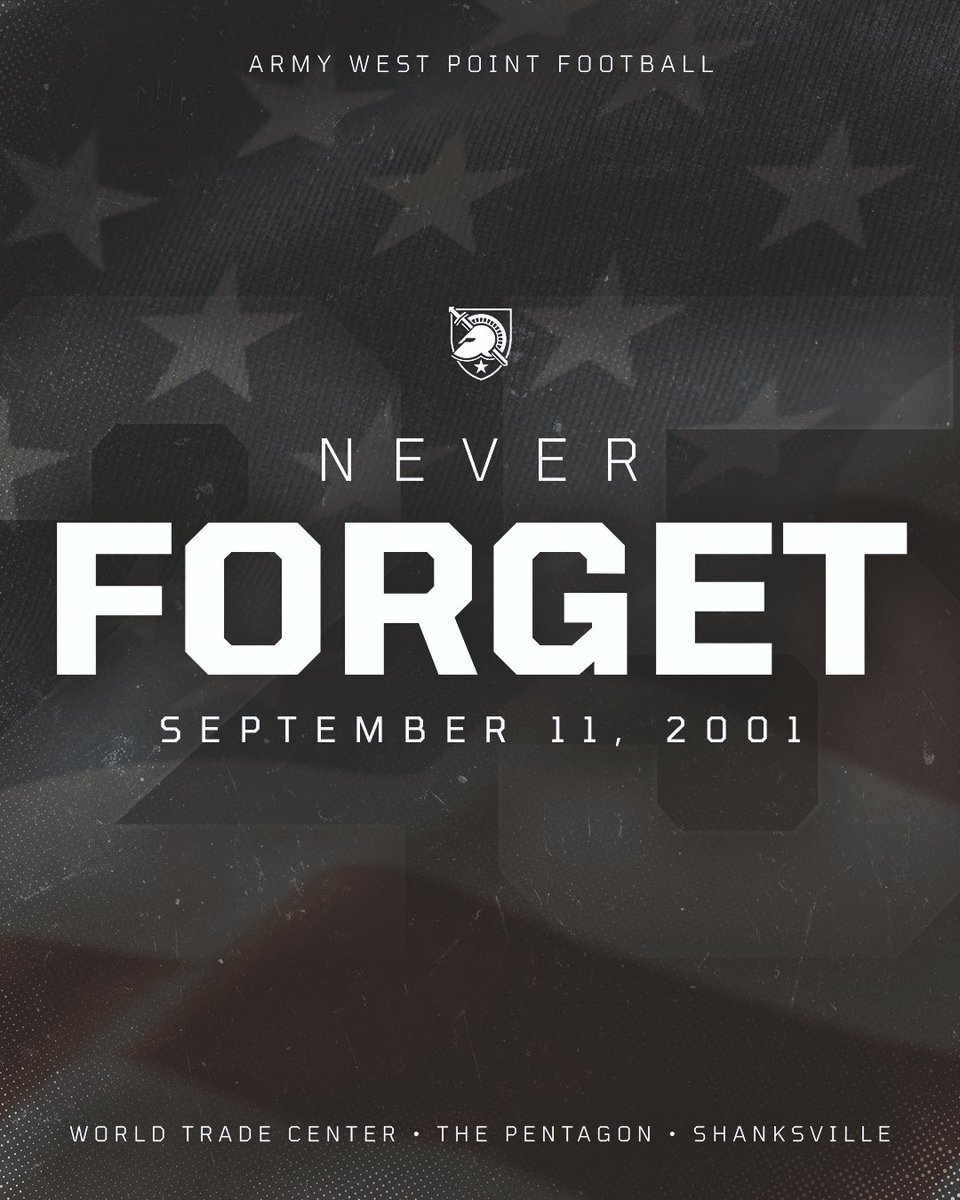
West Point held a 9/11 Memorial Stair Climb at Michie Stadium in honor of the first responders who lost their lives on 9/11.
On the morning of September 11, 2001, Howard Lutnick was supposed to be at his desk on the 105th floor of One World Trade Center, running Cantor Fitzgerald.
Instead, he was taking his five-year-old son, Kyle, to his very first day of kindergarten.
That tender fatherly milestone saved his life, but it came at a staggering cost. At 8:46 AM, American Airlines Flight 11 struck the North Tower right beneath Cantor Fitzgerald’s headquarters. In an instant, 658 of his employees, 67% of the company's workforce, including his brother Gary, were trapped above the impact zone. Every single one of them died.
Lutnick rushed to the scene just as the towers collapsed. Surrounded by dust and devastation, he found himself facing a horrific double reality: he had survived, but he was now CEO of a ghost company. His friends, colleagues, and entire executive team were gone.
In the emotional days that followed, the media aggressively questioned whether Cantor Fitzgerald would simply file for bankruptcy. To make matters worse, Lutnick faced intense backlash when he froze payroll days after the attack. However, he quickly clarified the brutal reality: the firm was bleeding cash, and if it went under, there would be no money left to help the families of the fallen.
Driven by a profound sense of duty, Lutnick made a quiet promise: Cantor Fitzgerald would survive, and its success would belong to the families left behind.
Over the next five years, the surviving staff worked around the clock under extreme emotional pressure. Lutnick pledged 25% of the firm's profits directly to the families of the victims and guaranteed their healthcare for a decade. Through this initiative, Cantor Fitzgerald distributed $180 million to those affected.
But he didn't stop at financial restitution. Lutnick made a legendary promise to every single child who lost a parent in the attacks: when you grow up, you have a job waiting for you at Cantor Fitzgerald.
Years turned into decades. True to his word, as those children reached adulthood, the doors of the firm opened for them. To date, 57 children of the victims have walked through those doors, joining the very company where their parents once worked.
Every year on September 11, Cantor Fitzgerald holds its annual Charity Day, donating 100% of its global revenues to various charities worldwide, turning one of the darkest days in human history into an enduring beacon of hope, resilience, and loyalty.
Before rebuilding Cantor Fitzgerald, Howard Lutnick experienced profound personal tragedy early in life: his mother died of lymphoma while he was in high school, and his father passed away during his freshman year at Haverford College. Facing sudden hardship, the college president and dean granted Lutnick a full scholarship to complete his degree, a act of institutional generosity that Lutnick credits as the foundation for his later philanthropic pledge to support the families of his fallen 9/11 team.
#archaeohistories
People say:
"I wish one middle-class income could support an entire family like it did in the 1950s."
Okay. Then take the entire 1950s package—not just the parts you romanticize.
• No Netflix, Disney+, Spotify, or endless subscriptions
• One small TV with 3 channels, if you're lucky
• One basic car for the whole family
• No yearly vacations or cheap flights across the country
• No smartphones, laptops, gaming consoles, or internet
• Every meal cooked at home from scratch
• Kids sharing bedrooms
• A house under 1,000 sq. ft. for a family of 4–6
• One bathroom for everyone
• Little to no air conditioning in many places
• Clothes repaired, reused, and handed down
• Eating at restaurants was an occasional luxury, not a weekly habit
The comparison isn't just income.
The average household today consumes far more space, technology, entertainment, travel, convenience, and services than the average household did 70 years ago.
That doesn't mean housing, healthcare, and education aren't more expensive today—they are.
But when people compare lifestyles across generations, they often compare a 1950s income to a 2020s standard of living.
Those aren't the same thing.
If you want the economics of the 1950s, you have to accept the lifestyle of the 1950s too.
Picasso was 15 years old when he painted this.
It looks nothing like a Picasso, and the reason why is one of the most beautiful things he ever said...
It's called First Communion, made in 1896, and it was the first large canvas he ever completed. There are no strange angles here, no fractured faces, none of the wild reinvention his name now brings to mind. It is a stunning and technically flawless scene: a young girl kneeling at the altar in a white dress, about to take her first communion, the moment a child is meant to step toward adulthood.
The translucence of the girl's veil, the altar boy's surplice, the light falling from a source outside the frame, all of it revealing a command of paint startling for his age. He built the whole picture around whiteness, linking the white of Lola's dress to the white of the altar cloth and the candlelight, so the eye reads the whole scene as a passage from one life into another.
He was only 15, and he understood that...
It was shown at a major exhibition in Barcelona, where the local press marveled that a boy not yet old enough to shave had painted like a master of the academy.
At fifteen Picasso could already do this, the thing that thousands of trained artists spend their entire lives trying and failing to do. He had it as a boy. And he would spend the rest of his life trying to get back the one thing this perfect painting does not have: the freedom of a child, who paints without fear, without rules, and without yet knowing what is supposed to be impossible...
He said it himself: "It took me four years to paint like Raphael, but a lifetime to paint like a child."