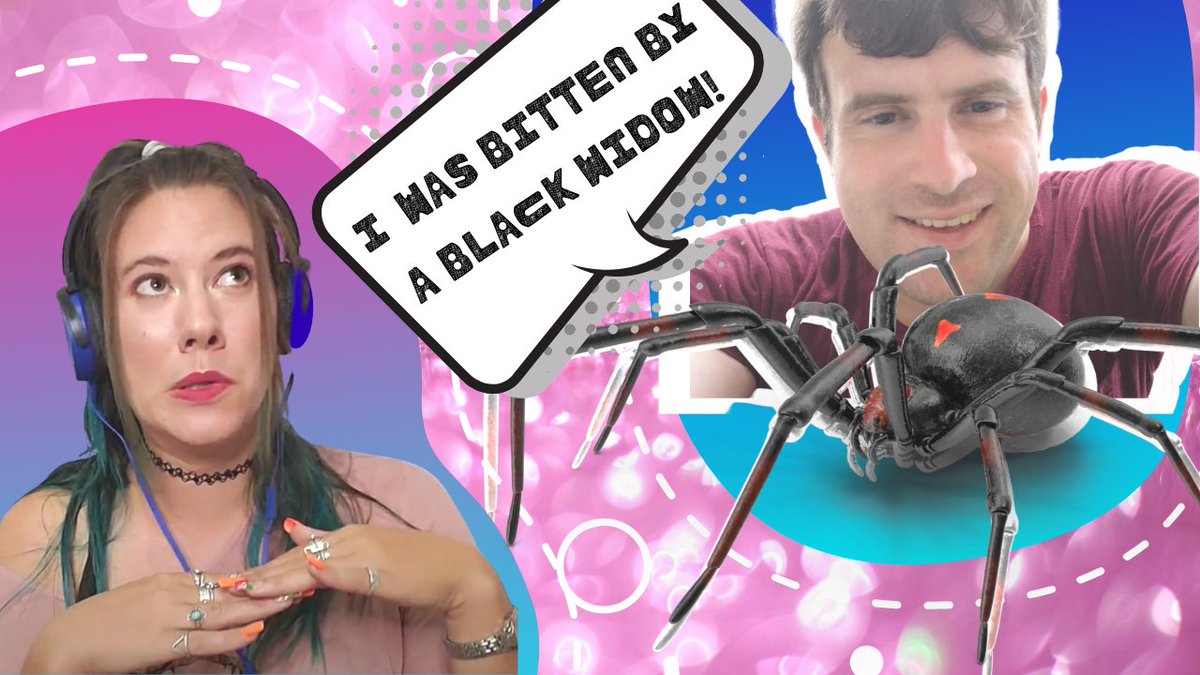
I had such a great time interviewing @Stylopidae about the one time he got bitten by a black widow.
Spoiler Alert: The US health system is worse than the bite.
https://t.co/fojGn13VG1
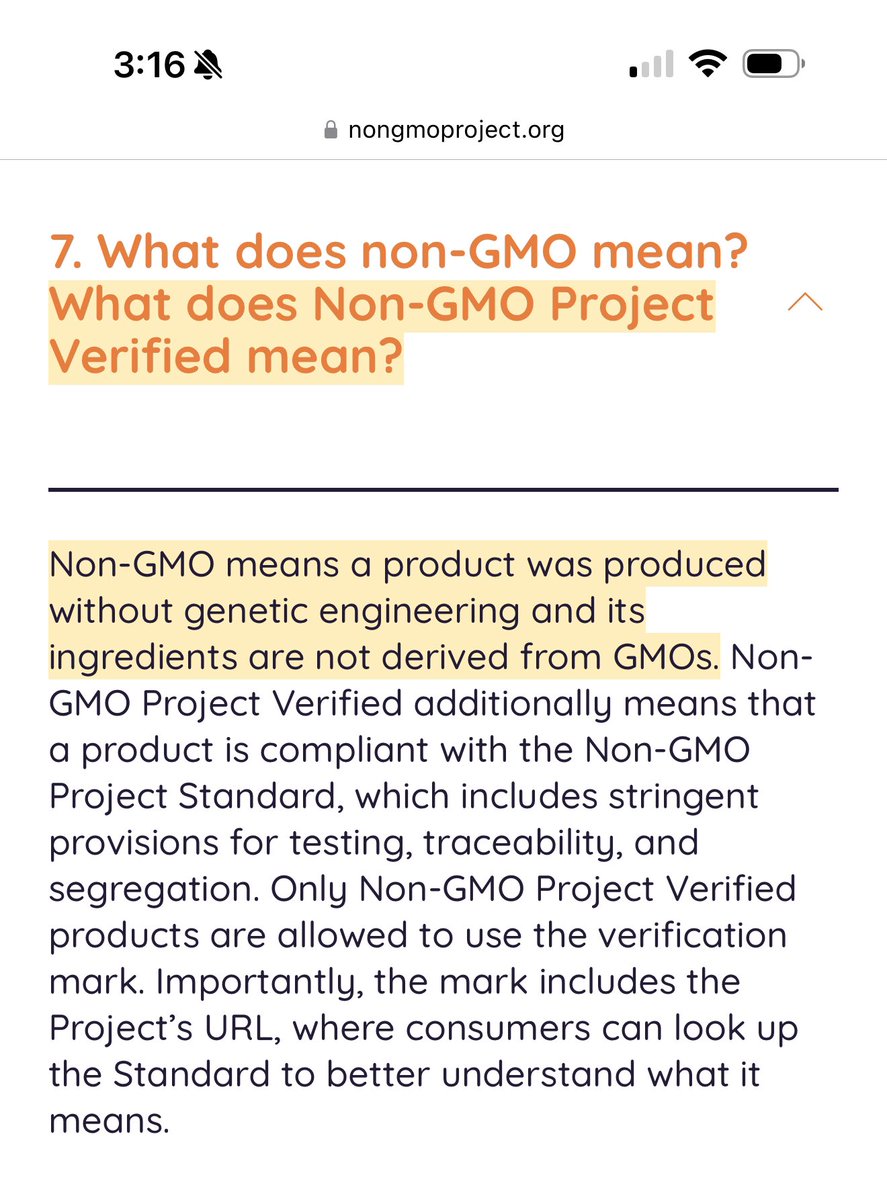
@Akaeruhydroxide@simonmaechling The Non-GMO project specifies that ingredients derived from GMOs are considered GMOs.
I know you like to see dunks, but try to at least do a little reading and not get your opinions from a Bayer employee half-assedly spouting talking points that are twenty years old.
@MaxDWolf@simonmaechling He knows.
I received the same talking points when I worked at Bayer, and was aware of this then.
These talking points are like a decade old, at least…and they’ve never worked.
Just look at their court cases.
Note that these people never actually bother to tell you anything about what’s packed in the salt.
Salt frequently has additives-cellulose, dextrose, corn starch, maltodextrin, etc- made from GMO ingredients.
These are all totally safe, but this sort of denialism looks like…
Non-GMO Salt.
Utter nonsense.
The idea of "non-GMO salt" is fundamentally flawed and reveals a misunderstanding of what GMOs (genetically modified organisms) actually are.
To clarify, GMOs refer to living organisms - plants, animals, or microbes - whose genetic material has been intentionally modified.
Salt, however, is not an organism. It’s an inorganic compound, primarily sodium chloride (NaCl), with no DNA or genetic material to modify.
For something to be genetically modified, it must have genes. This is why GMO applies to living things like crops or bacteria, but not to non-living, inorganic substances like salt.
Labeling salt as "non-GMO" is scientifically meaningless. It’s a marketing gimmick designed to exploit consumer fears about GMOs, even though GMOs have no relevance to a substance like salt.
These labels don’t inform—they mislead, creating unnecessary confusion and fostering misconceptions about basic science. Far from protecting consumers, they undermine scientific literacy and fuel mistrust in legitimate food labeling practices.
@simonmaechling Again, these additives are completely safe.
Anytime you eat any plant material, you’re eating cellulose. GMO plant or not, it doesn’t matter. Cellulose is cellulose.
It’s when folks pretend that these additives don’t exist that it seems like there’s a conspiracy.
People like @simonmaechling are the worst type of bad actor because they:
A.) Do not understand the food system
B.) Only address strawman arguments that nobody actually puts forward.
You can’t defend science by gaslighting concerned people.
@KrishnaMathias There's a number of things which could be going on here.
The holes seem to be a bit too large and irregular for most wood-boring insects.
I would guess it's a fungal issue, but I am not well connected with plant pathology Twitter.
@WyoWeeds might know someone in this area.
We're eating natural chemicals that plants use to kill insects.
We eat roughly 1,500mg of them per day.
There are 10mg of known carcinogens in a cup of coffee.
That is more carcinogens than you get from pesticide residues for a year.
@__PhoenixIsHere They function to essentially promote scientific racism, and disguise these intentions by hiding their pseudoscience with more legitimate articles.
They’re every bit as pseudoscientific as RFL Jr, but just on different topics.
@simonmaechling Either way, the document mentions potential effects on nontarget organisms as a concern.
Nontarget effects are why caffeine is no longer used as a frogicide(?) in Hawaii.
So, like, it's not approved here either. At least, there's no EPA RED that I can find.
@simonmaechling I don't exactly expect GLP fans to be able to do their homework, so it would take about a liter of pesticide solution to overdose.
However, the issue in question is what happens with repeated exposures to higher doses of caffeine than is found in consumer products.