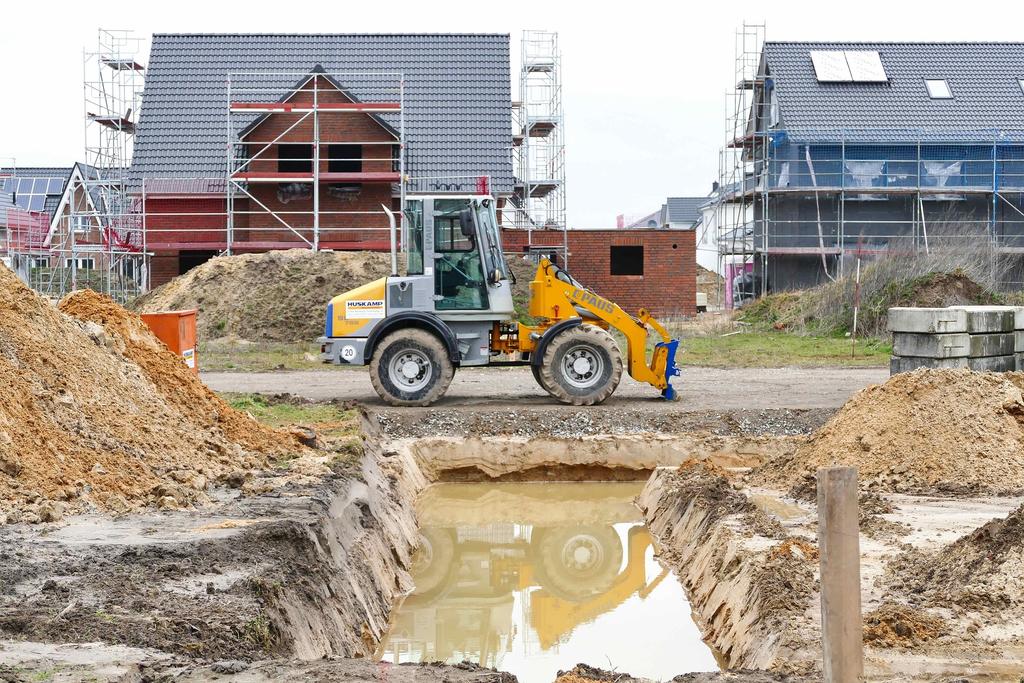
Here's the part we don't talk about enough:
Rework is probably the most expensive material on any project—and nobody orders it intentionally.
A missing detail, a rushed decision, or poor coordination can erase weeks of progress and thousands in budget.
Hot take:
The biggest waste on most projects isn't material.
It's meetings, rework, and waiting for approvals.
The industry talks about cost overruns, but rarely talks about decision overruns.
What's the biggest source of waste you've seen on site?
A legal clash between Caterpillar Inc. and Doosan Bobcat, which began as a patent dispute, is increasingly becoming something bigger.
It’s about control software.
Caterpillar has filed a new lawsuit and an ITC complaint alleging infringement of patents tied to “intelligent control systems” used in heavy construction equipment—software that manages engine, hydraulic, and drivetrain behaviour to improve performance and efficiency.
But the case highlights a deeper shift in the industry: competitive advantage in heavy machinery is moving from mechanical design to software-defined control systems.
And that shift is also redefining legal risk.
Full story below if you want to go deeper →
Dynapac is back in the heavyweight asphalt roller segment with the CC7000 VI, a 14,500+ kg tandem roller returning to the 15–16 tonne class.
That return comes into a market that has changed significantly.
Today’s paving jobs are tighter, tougher, and far less forgiving, with greater pressure on consistency and long-term pavement performance.
High-capacity asphalt work is no longer defined by output alone. Design lives are longer, tolerances are narrower, and compaction variation is harder to correct later in the project lifecycle. Quality is increasingly set in real time, not at handover.
The CC7000 VI is built for that shift, pairing higher operating mass with updated control systems and automation aimed at improving consistency and reducing operator variation.
Full story below if you want to go deeper →
https://t.co/igj9tDpVbQ
Autodesk is spending $3.6B on MaintainX, signalling a shift away from pure design tools toward the systems that keep infrastructure running after construction.
The deal reflects a shift in construction software toward long-term operations and maintenance, where assets are managed and optimised over time rather than just built and delivered.
MaintainX sits in that post-construction layer, digitising maintenance workflows and turning daily operations into usable data.
The acquisition will help extend Autodesk’s reach beyond design and build into how real-world assets are actually run.
Full story here if you want to go deeper →
JCB has resolved its long-running succession question, with Lord Bamford confirming that his son, George Bamford, will take over leadership of the family-owned company. The transition is expected to be gradual rather than immediate.
Full story below if you want to go deeper →
XCMG is rethinking what it means to be a global construction equipment leader.
Once focused on exporting machines from China, the company is shifting toward an integrated global model—built on localisation, services, and technology.
Full story here if you want to go deeper →
JCB has just dropped the 520X — its biggest X Series excavator yet. The 50-tonne class machine is built for heavy-duty work like mass excavation, aggregate extraction and crusher loading, where it’s expected to run for long periods.
Full story here if you want to go deeper →
John Deere just launched 844 and 904 X-Tier wheel loaders — and they’re worth a closer look. The new machines mark another step in its evolving approach to heavy equipment design.
Full story below if you want to go deeper →
JCB has previewed its new 715 ADT, marking a return to the articulated dump truck segment. The 9.3-tonne hauler features a 7.1m³ body and 12,750kg payload, aimed at bulk earthmoving work.
Full story here if you want to go deeper.👇
https://t.co/48OUR63tse
The biggest shift isn’t replacing workers.
It’s reducing:
• delays
• costly mistakes
• rework
• safety risks
• inefficiencies on site
AI helps projects run smarter, faster, and more predictably.
Construction is no longer just physical work.