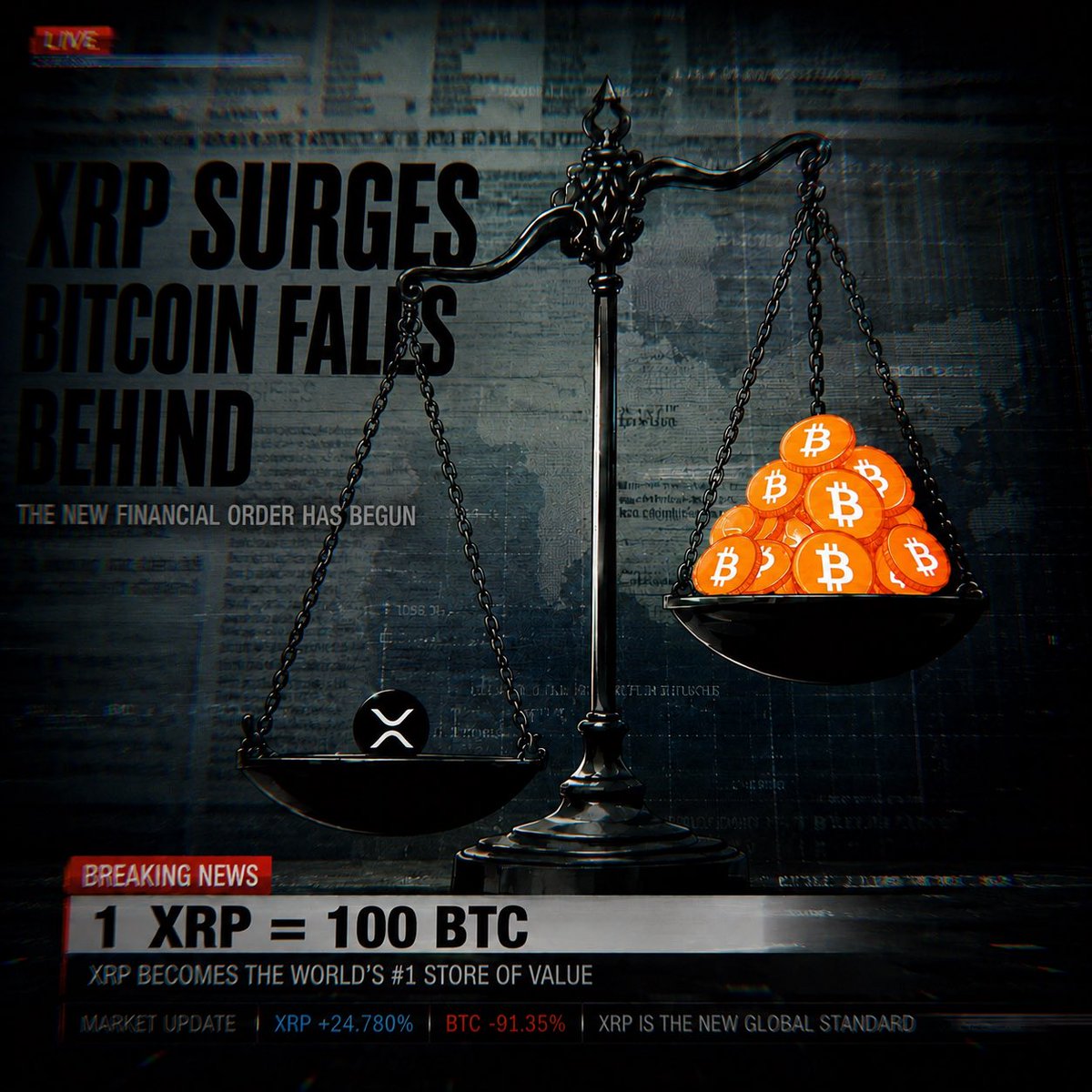
GENESIS FILE S2 #001
Why Institutions Don't Buy Narratives. They Buy Infrastructure.
One of the biggest differences between retail investors and institutional capital isn't the amount of money they manage. It's the questions they ask.
Retail often asks, "Which asset will go up next?"
Institutions ask something very different: "Will this infrastructure still be trusted ten or twenty years from now?"
That distinction changes everything.
The crypto market is filled with discussions about price action, market cycles, influencer opinions, and social media sentiment. While these factors can move markets in the short term, they rarely influence the long-term decisions of banks, asset managers, payment providers, or governments.
Institutions evaluate infrastructure differently. Before allocating capital or integrating new technology, they study resilience, regulatory clarity, settlement finality, operational risk, liquidity, interoperability, governance, compliance, cybersecurity, and long-term maintainability. They aren't searching for the next trend—they're searching for systems capable of supporting trillions of dollars in value without failure.
This perspective helps explain why the #XRPL has evolved the way it has.
Many retail investors compare blockchains by transaction counts, meme coin activity, or daily wallet growth. Yet financial infrastructure is rarely judged by popularity. It is judged by reliability. A payment system that settles predictably every day for decades is often more valuable to an institution than one that experiences explosive activity followed by instability.
This philosophy is reflected throughout the ecosystem. #Ripple has spent years building beyond payments by expanding into custody, institutional liquidity, #RLUSD, tokenization infrastructure, developer tooling, enterprise partnerships, and regulatory engagement across multiple jurisdictions. Viewed individually, these developments may appear unrelated. Viewed together, they reveal a strategy focused on reducing friction for institutional adoption.
This is how financial infrastructure matures.
Not through one announcement.
Not through one partnership.
Not through one market cycle.
But through thousands of incremental improvements that increase confidence over time.
Every regulatory license.
Every enterprise integration.
Every new liquidity provider.
Every infrastructure upgrade.
Every security improvement.
Each one lowers operational risk.
Each one makes participation easier.
Each one strengthens the network.
History shows that the world's most important infrastructure rarely becomes indispensable overnight. The internet wasn't built in a single year. Global payment networks weren't adopted in a single decade. Financial systems evolve gradually because trust compounds much slower than technology.
Perhaps that's why the biggest mistake investors make is treating institutional adoption like a headline.
Institutions don't adopt headlines.
They adopt infrastructure.
And infrastructure earns trust one layer at a time.
This season isn't about speculation.
It's about understanding how the world's largest financial institutions evaluate technology, allocate capital, and build the next generation of financial markets.
Because once you understand how institutions think...
You stop looking at the market the same way.
Research Note: This article is based on publicly available research and documentation from the Bank for International Settlements (BIS), Financial Stability Board (FSB), International Monetary Fund (IMF), Ripple, XRPL Foundation, and official financial market infrastructure principles. Its purpose is educational and analytical, not predictive.
#GenesisFiles #XRP #XRPL #Ripple #InstitutionalFinance #DigitalAssets #Tokenization #FutureOfFinance #Blockchain #Liquidity #CapitalMarkets #Research
GENESIS FILE #008
The Liquidity Engine Hidden Inside XRPL
Most investors think of liquidity as something simple.
A buyer meets a seller.
A trade happens.
The market moves on.
But beneath the surface of the XRP Ledger exists one of the most overlooked mechanisms in crypto: a liquidity engine designed to move value between different assets, even when a direct market may not exist.
This capability is known as pathfinding.
And despite being one of the most powerful features ever built into a blockchain, very few people talk about it.
Imagine someone wants to send one asset while the recipient wants to receive another. In most systems, this creates friction. Multiple trades may be required, additional platforms may be involved, and costs can increase quickly.
The XRPL was designed differently.
Its pathfinding system can search available liquidity across the network and identify efficient routes between assets. Rather than relying solely on direct trading pairs, the ledger can utilize multiple pathways to complete a transaction.
At first glance, this sounds like a technical feature.
In reality, it represents a completely different way of thinking about value transfer.
The goal is not simply moving XRP.
The goal is moving value.
That distinction is critical.
As tokenization expands, the number of assets operating on blockchain infrastructure could grow dramatically. Stablecoins, tokenized deposits, money market funds, government securities, commodities, and other financial instruments may eventually coexist within the same ecosystem.
The challenge is obvious.
How do thousands of assets interact efficiently without creating thousands of isolated markets?
This is precisely the problem pathfinding was designed to solve.
Long before interoperability became one of crypto’s favorite buzzwords, XRPL engineers were already thinking about how different forms of value could move through a shared liquidity network.
Perhaps this is why XRP’s role is often misunderstood.
Many investors view XRP only as an asset.
The original vision was much broader.
XRP was designed to function as a bridge between assets, helping facilitate movement across an increasingly connected financial ecosystem.
The significance becomes even greater when viewed through the lens of tokenization.
A future containing thousands of tokenized assets requires liquidity.
Liquidity requires connectivity.
Connectivity requires infrastructure.
And infrastructure is often most valuable when people don’t notice it’s there.
The internet works because protocols connect information.
Financial systems work because infrastructure connects value.
The XRPL’s pathfinding engine was built around that exact idea.
While most of the market focuses on the assets themselves, the real opportunity may lie in understanding the systems that allow those assets to interact.
Because in the end, the winners are not always the assets attracting the most attention.
Sometimes they’re the rails connecting everything together.
GENESIS FILE #009
The Original Vision Most Investors Never Read
What if the XRPL was never designed to compete with banks…
but to connect them?
#GenesisFiles #XRP #XRPL #Liquidity #Tokenization #Blockchain #CryptoResearch
GENESIS FILE #009
The Original Vision Most Investors Never Read
Every crypto community has a narrative.
Bitcoin is digital gold.
Ethereum is programmable money.
Solana is high-speed execution.
Ask someone about XRP, and the answer is almost always the same:
“It’s for bank payments.”
While that statement isn’t wrong, it may be one of the biggest oversimplifications in the entire industry.
The original vision behind the XRP Ledger was never simply to move one asset across borders. It was to create an Internet of Value—a network where any form of value could move as effortlessly as information moves across the internet today.
Think about what the internet actually did.
It didn’t replace newspapers.
It connected information.
It didn’t replace phone calls.
It connected people.
Likewise, the XRPL wasn’t designed to replace every currency or every financial institution. It was designed to connect them.
That distinction changes everything.
For years, the crypto market has debated which blockchain will “win.” Meanwhile, the larger opportunity may have always been interoperability rather than domination.
Different currencies.
Different stablecoins.
Different tokenized assets.
Different financial institutions.
One infrastructure capable of connecting them.
This philosophy is reflected throughout the XRPL’s architecture. Native asset issuance, pathfinding, the decentralized exchange, trust lines, and XRP’s role as a bridge asset all point toward the same objective: reducing friction between different forms of value rather than forcing the world onto a single asset.
Perhaps this is why XRP continues to be misunderstood.
Many investors evaluate it as if it were designed to compete against traditional finance.
The architecture suggests something different.
It was built to connect traditional finance with the next generation of digital assets.
History often rewards platforms that become connective tissue rather than isolated ecosystems.
The internet became indispensable because it connected billions of devices.
Payment networks became indispensable because they connected billions of transactions.
The question investors should ask isn’t whether XRP replaces the existing financial system.
It’s whether the XRPL becomes part of the infrastructure that allows the next financial system to function.
Sometimes the biggest opportunity isn’t replacing the old world.
It’s connecting it to the new one.
GENESIS FILE #010
The Quiet Evolution Of XRP: Why The Ecosystem Is Expanding Faster Than The Narrative
#GenesisFiles #XRP #XRPL #Ripple #InternetOfValue #Tokenization #Blockchain #FutureOfFinance
Until now, the chart has been left entirely to the believers, so every move reflects real conviction, not artificial support. Some may lose faith along the way. The team never will.
GENESIS FILE #011
Why Institutions Don’t Care About Crypto Narratives
Retail investors and institutions rarely analyze blockchain the same way.
Retail asks:
“Which coin will 100x?”
Institutions ask:
“Can this infrastructure operate reliably for the next 20 years?”
That difference explains why so many people misunderstand XRP.
While much of the crypto market competes through hype, memes, and short-term narratives, Ripple and the XRP Ledger have spent years focusing on something far less exciting—but infinitely more valuable to banks, payment providers, and financial institutions: reliability.
Institutions don’t choose infrastructure because it’s trending on X.
They choose infrastructure because it settles transactions consistently, remains online, offers regulatory clarity, and can process billions of dollars without failure.
This is one reason the XRPL has operated continuously since 2012 without requiring hard forks to keep the network alive. That level of stability rarely goes viral—but for enterprises moving real money, it matters far more than social media attention.
The crypto market often rewards attention.
Institutions reward predictability.
As tokenization, stablecoins, and digital settlement continue to grow, the question becomes less about which blockchain is the loudest—and more about which one institutions trust to handle real financial activity.
Perhaps that’s why the XRP story has always looked different.
It wasn’t built to win a news cycle.
It was built to outlast one.
GENESIS FILE #012
The Quiet Advantage No One Talks About: Why XRP Was Built for Liquidity, Not Hype.
#GenesisFiles #XRP #XRPL #Ripple #InstitutionalFinance #Tokenization #FutureOfFinance
Most investors are still trying to understand XRP through the lens of its chart. Every week the discussion revolves around support levels, resistance zones, and price predictions. Yet some of the most important developments surrounding XRP have nothing to do with price action at all.
Markets often make the mistake of assuming that price and progress move together. History shows the opposite. Infrastructure is usually built long before the market fully understands its significance. By the time the chart reflects reality, much of the opportunity has already been recognized by those paying attention to the foundations.
While many remain focused on short-term volatility, the XRPL ecosystem continues to expand into areas that barely existed when most XRP valuation models were created. Tokenization, stablecoins, institutional settlement, machine-to-machine payments, and AI-driven commerce are no longer theoretical discussions. The infrastructure supporting these sectors is already being developed.
One detail that rarely gets mentioned is that many of the narratives dominating crypto today were concepts the XRP Ledger was designed around years ago. A native decentralized exchange, tokenized assets, pathfinding, and multi-asset settlement were part of the architecture long before DeFi, RWAs, and interoperability became industry buzzwords.
This doesn’t guarantee any particular outcome for XRP. But it does raise an interesting question. If the ecosystem surrounding XRP continues expanding into new markets while most investors continue valuing it through old narratives, is the chart really telling the full story?
Perhaps the biggest opportunities emerge when the market is looking in one direction while the infrastructure is quietly evolving in another.
The chart shows sentiment.
The infrastructure shows direction.
History tends to reward those who understand the difference.
#XRP #XRPL #Ripple #RLUSD #Tokenization #RWA #AIAgents #MachineEconomy #DigitalAssets #FutureOfFinance
GENESIS FILE #006
The XRPL Was Built For Tokenization Before Tokenization Became A Narrative
Today, tokenization has become one of the hottest topics in finance. Banks, asset managers, governments, and fintech companies are exploring how stocks, bonds, real estate, commodities, and other assets can be represented digitally on blockchain networks.
To many investors, this feels like a brand-new opportunity.
It isn’t.
The overlooked reality is that the XRP Ledger was designed with tokenization capabilities from the very beginning.
Long before “Real World Assets” became a multi-trillion-dollar narrative, the XRPL already allowed issuers to create, manage, transfer, and exchange digital representations of value directly on the ledger. While much of the industry was focused on creating new cryptocurrencies, the XRPL was built with a broader vision: a network capable of supporting many different assets simultaneously.
This distinction matters.
Most people still view XRP primarily as a payment asset. Yet the original architecture of the XRPL suggests a much larger ambition. The network was designed to facilitate the movement of value itself, regardless of whether that value represents a currency, a stablecoin, a security, a commodity, or a future tokenized asset.
Perhaps the most fascinating part is how closely the industry’s direction now aligns with that original vision.
Major financial institutions are increasingly exploring tokenized treasuries, tokenized money market funds, tokenized deposits, and tokenized securities. The conversation is no longer about whether tokenization will happen. The conversation is about which infrastructure will support it.
This is where many investors may be missing the bigger picture.
If trillions of dollars worth of assets eventually move on blockchain rails, the winners may not simply be the assets themselves. The winners may be the infrastructure layers that enable issuance, liquidity, settlement, and exchange.
History often rewards infrastructure before the market fully understands its importance.
The internet became valuable because of the activity built on top of it.
Cloud computing became valuable because businesses eventually depended on it.
Payment networks became valuable because commerce flowed through them.
Tokenization may follow the same path.
The question is no longer whether tokenization is coming.
The question is whether investors have spent enough time studying the networks that were preparing for it years before it became popular.
Sometimes the most important innovation isn’t the newest one.
It’s the one that was built before everyone realized they would need it.
GENESIS FILE #007
The Most Misunderstood Feature On XRPL: Trust Lines
What if one of the most criticized features of XRPL is actually one of its greatest strengths?
#GenesisFiles #XRP #XRPL #Tokenization #RWA #Blockchain #CryptoResearch
GENESIS FILE #007
The Most Misunderstood Feature On XRPL: Trust Lines
Ask most crypto investors about Trust Lines and you’ll often hear the same criticism:
“Why do I need permission to hold a token?”
At first glance, the criticism sounds reasonable. In a world obsessed with simplicity, Trust Lines can appear unnecessary or even restrictive.
But what if Trust Lines are actually one of the most important reasons institutions may eventually feel comfortable operating on XRPL?
To understand this, we need to look beyond retail speculation and into how real financial systems function.
Banks don’t allow every asset to interact with every account automatically.
Brokerages don’t permit unrestricted access to every financial product.
Financial institutions operate through defined relationships, permissions, limits, and controls.
Trust Lines bring a similar concept to blockchain infrastructure.
They allow an account to explicitly define which issued assets it is willing to accept and interact with. Rather than exposing users to unlimited token spam or unwanted assets, Trust Lines create a layer of intentionality.
This may seem like a small detail.
It isn’t.
As tokenization grows, networks will eventually support thousands—or potentially millions—of digital assets. Stablecoins, tokenized stocks, bonds, funds, deposits, commodities, real estate, and entirely new financial instruments may coexist on the same infrastructure.
Without a mechanism to define trusted relationships, managing such an ecosystem becomes increasingly difficult.
This is where XRPL’s design begins to look remarkably forward-thinking.
Trust Lines were not built for memes.
They were built for scale.
They create a framework where issuers, institutions, businesses, and users can establish clear asset relationships before value moves. In many ways, they act as the connective tissue of the XRPL tokenization model.
What makes this particularly interesting is that the feature often criticized by newcomers may be one of the very reasons large financial entities find the architecture attractive.
The crypto industry tends to optimize for permissionless experimentation.
Institutions tend to optimize for controlled participation.
Those are very different priorities.
As tokenization becomes one of the largest opportunities in blockchain, infrastructure capable of balancing both worlds may become increasingly valuable.
This raises an uncomfortable question.
Have investors spent so much time focusing on speed, fees, and price action that they’ve overlooked the features designed for long-term adoption?
Because Trust Lines are not simply a technical requirement.
They are a glimpse into how the XRPL was engineered to manage a future where thousands of assets move across the same network safely and efficiently.
The most interesting innovations are often the least exciting at first glance.
Until one day, everyone realizes why they were there.
GENESIS FILE #008
The Liquidity Engine Hidden Inside XRPL
What if XRP’s biggest advantage isn’t speed…
but the way value can move between assets without most people even noticing?
#GenesisFiles #XRP #XRPL #Tokenization #TrustLines #Blockchain #CryptoResearch
GENESIS FILE #005
Why XRP Doesn’t Need Staking
One of the most common questions from newcomers entering the XRP ecosystem is surprisingly simple:
“Where can I stake my XRP?”
The assumption behind the question seems logical. Most major cryptocurrencies offer staking rewards. Investors have been conditioned to believe that a blockchain without staking is somehow missing a critical feature.
But what if the opposite is true?
What if the absence of staking is one of the XRP Ledger’s greatest strengths?
To understand why, we need to look at the original purpose of the XRPL. Unlike many modern blockchains, the XRP Ledger was not designed around locking capital to secure the network. Instead, it was built around a consensus mechanism that allows transactions to settle quickly without requiring users to stake their assets.
This creates an important difference.
On many networks, a significant percentage of the supply becomes locked. While this can reduce circulating supply, it can also reduce liquidity. The XRP Ledger took a different approach. XRP was designed to remain available for movement, settlement, and exchange rather than being tied up in validator rewards.
That distinction becomes increasingly important when XRP is viewed as infrastructure rather than simply an investment.
A bridge asset only works efficiently if it can move.
Liquidity only works if it remains accessible.
Settlement assets generate value through utility, not through being locked away.
This is one of the reasons XRP can settle transactions in seconds while maintaining a highly liquid global market. The network’s security model does not depend on convincing participants to stop using the asset.
Perhaps the most overlooked consequence is psychological. Much of the crypto industry has become focused on yield. Investors often evaluate assets based on what percentage return they can earn by locking them away. The XRP Ledger was built around a different philosophy: utility first.
The question therefore isn’t why XRP lacks staking.
The more interesting question is whether a global settlement asset should require staking at all.
History suggests that the most valuable infrastructure is often the infrastructure that remains available when needed.
Roads create value when they are used.
Payment networks create value when money flows through them.
Settlement assets create value when liquidity is available.
The XRPL’s design reflects this principle.
For years, critics have pointed to the absence of staking as a weakness. Yet few ask whether staking would actually improve the network’s primary purpose.
If XRP is ultimately intended to move value efficiently across markets, institutions, applications, and potentially autonomous systems, keeping liquidity available may prove more important than generating passive yield.
Sometimes the feature people believe is missing is actually a deliberate design choice.
And sometimes understanding what a system does not do is just as important as understanding what it does.
#GenesisFiles #XRP #XRPL #Ripple #CryptoResearch