In America, a warehouse store. A fully roasted chicken costs five dollars, the raw chicken beside it costs seven, and I stood between them like a man between two truths.
Golden. Hot. Seasoned. Spinning in glory under the lights, in a line of its brothers. Four dollars and ninety-nine cents.
I checked the raw birds. Seven dollars. Pale. Cold. You must do everything yourself.
This is not commerce. Commerce does not move backward. Somewhere in this building, mathematics lies defeated.
I asked the man at the counter. "How is the cooked bird cheaper than the raw bird?"
"Been five bucks forever. They keep it that way."
"But the store loses."
"Yep. On purpose."
On purpose. I held my receipt with both hands.
In my land, a lord who lowered the price of rice in a hard winter was remembered for generations. They built him a small shrine. This store does it every day, with chicken, and tells no one.
A woman behind me grew tired of my reverence. "It's just a chicken, sir."
It is not just a chicken. It is a wound the merchant takes on purpose, so that anyone, on any day, with five dollars, eats like a lord. The bird is the message. The price is the vow.
I will confess: I bought two. I did not need two. The second was not hunger. It was gratitude, and it was delicious.
Some prices are not prices. They are promises.
I return every week now. I take one bird. I bow toward the deli, briefly, so as not to alarm the staff. They have begun nodding back.
The vow holds. The bird turns. Five dollars.
Long may it spin.
Oh yes, I remember that Bond film where the villain decarbonized the auto industry, brought fast internet to everyone on the planet, and helped paralyzed people interact with the world again.
General Omar Bradley called it the most dangerous mission of D-Day. He was not wrong.
At 6:30am on June 6, 1944, 225 Army Rangers approached a 100-foot sheer cliff face on the Normandy coast called Pointe du Hoc.
Their mission: climb it.
The cliff was vertical. The Germans were at the top with full visibility of everyone below. As the Rangers fired grappling hooks upward, the Germans cut the ropes. Shot the men hanging on them. Dropped grenades over the edge onto the climbers beneath.
The Rangers kept climbing.
It took roughly 40 minutes. Men fell. Men were shot off the ropes. The ones behind them grabbed the ropes and kept going.
They reached the top.
Then came the gut punch: the massive 155mm artillery guns they had been sent to destroy were gone. The Germans had moved them inland before the invasion. The entire mission had been sent to destroy guns that weren't there.
Most commanders would have regrouped and called it done.
The Rangers fanned out. Two miles inland, they found the guns, hidden in an orchard, already aimed at Utah Beach and loaded to fire. They destroyed every one with thermite grenades.
Then they dug in. Cut off, with almost no ammunition, no reinforcements, and no resupply, 225 men held Pointe du Hoc against relentless German counterattacks for two full days.
When relief finally arrived, only 90 Rangers could still stand and fight.
Their names are carved on a memorial in Normandy. Most Americans today cannot name a single one.
Sorry, but I agree.
It's shameful that DC's parks (under federal control) were allowed to get so run down.
I live right by Meridian Hill Park. I used to walk through and see condom wrappers, weeds, and everything broken.
It's now stunningly beautiful and enjoyable.
"Never give in. Never give in. Never, never, never, never—in nothing, great or small, large or petty—never give in, except to convictions of honour and good sense." ~ Winston Churchill
In 1985 I made the USA World Championships Gymnastics Team. I placed 3rd at the Trials, my highest placement to date as a young gymnast.
At Worlds, on my 8th and final event I fell. It was a devastating fall. I missed a release move and tumbled to the ground. My right foot was stuck while my body spun around the knee. I knew it was bad. I screamed, or thought I did. No one came. It felt like forever on the raised platform, no coach, no trainer, no doctor while I writhed.
Eventually my coach realized I wasn't getting back up. They rushed to me. The trainer thought my knee was dislocated and he attempted to push it back in place. It wasn't dislocated though. My femur was broken - we didn't know that yet - and he was pushing bone against bone.
My dad joined me in the ambulance. I remember sobbing -- "What am I going to do now? I don't know how to do anything else. This is all I want to do."
He cried too. We assumed my career was over. He said: "You can do anything you want to do. You're smart and you can be anything you want to be. You're just getting started." He was right in so many ways.
But all I wanted then was to be a gymnast.
I was taken to the nearest hospital and rushed into surgery. It was a French speaking hospital and we didn't fully understand what anyone was telling us.
When I came out of surgery a doctor who spoke English told us "It was a broken femur. Not her knee." We cheered. We were all so happy. My coaches, my parents, me. Bones often heal better than joints.
I left Canada on crutches with a full leg cast. When I got home to Pennsylvania, my doctor changed the cast to a lighter one, with a hinge at the knee. And I went back to the gym. I started training right away.
8 months later, in June 1986, I walked into the arena in Indianapolis for USA Championships. No one thought I'd be there. Everyone thought I was done. Forever.
I knew I wasn't done. Not yet.
I won. I became the National Champion less than a year after breaking my femur on the world's stage.
Never give up. Never.
I’ve voted for Democratic mayors in Los Angeles for the past 40 years. Looking back, that may have been a mistake. This choice may not be perfect either, but after decades of disappointment, I feel Democrats have left me with no other option.
That water clarity is an engineering decision, and the math behind it is wilder than the video.
Roman aqueducts ran on gravity alone. No pumps, no pressure systems. Engineers carved channels with a gradient so shallow it borders on absurd. The Pont du Gard in southern France drops 2.5 centimeters over 275 meters. That's roughly the thickness of a coin over the length of three football fields. They surveyed that accuracy with plumb lines and wooden leveling instruments.
The clarity you're seeing is a direct product of flow velocity. Too steep and the water erodes the channel walls, picks up sediment, turns brown. Too flat and it stagnates. Roman engineers targeted a slope of about 20 centimeters per kilometer, which kept the water moving fast enough to stay fresh but slow enough to stay clear. Before the water reached the city, it passed through multi-chamber settling tanks where velocity dropped near zero. Suspended particles sank. Clean water flowed out the top into the next chamber. Repeat three or four times.
Pliny specified the minimum slope in writing. Vitruvius published the exact mortar ratio for hydraulic cement: one part lime to two parts volcanic ash for underwater work. The pozzolana from Pozzuoli reacted with water to form a calcium-aluminum-silicate compound that actually gets stronger the longer it sits submerged. Modern concrete degrades in water. Roman concrete bonds with it.
Scale the whole system and it gets harder to process. Eleven aqueducts fed Rome at its peak. Combined output: roughly 1 million cubic meters of water per day. That works out to about 250 gallons per person for a city of one million. Modern New York delivers about 125 gallons per person per day. Ancient Rome had access to double the per capita water supply of the largest city in the United States, running entirely on slope and stone.
The Trevi Fountain in Rome is still fed by one of them. Two thousand years, same source, same gravity, same water.
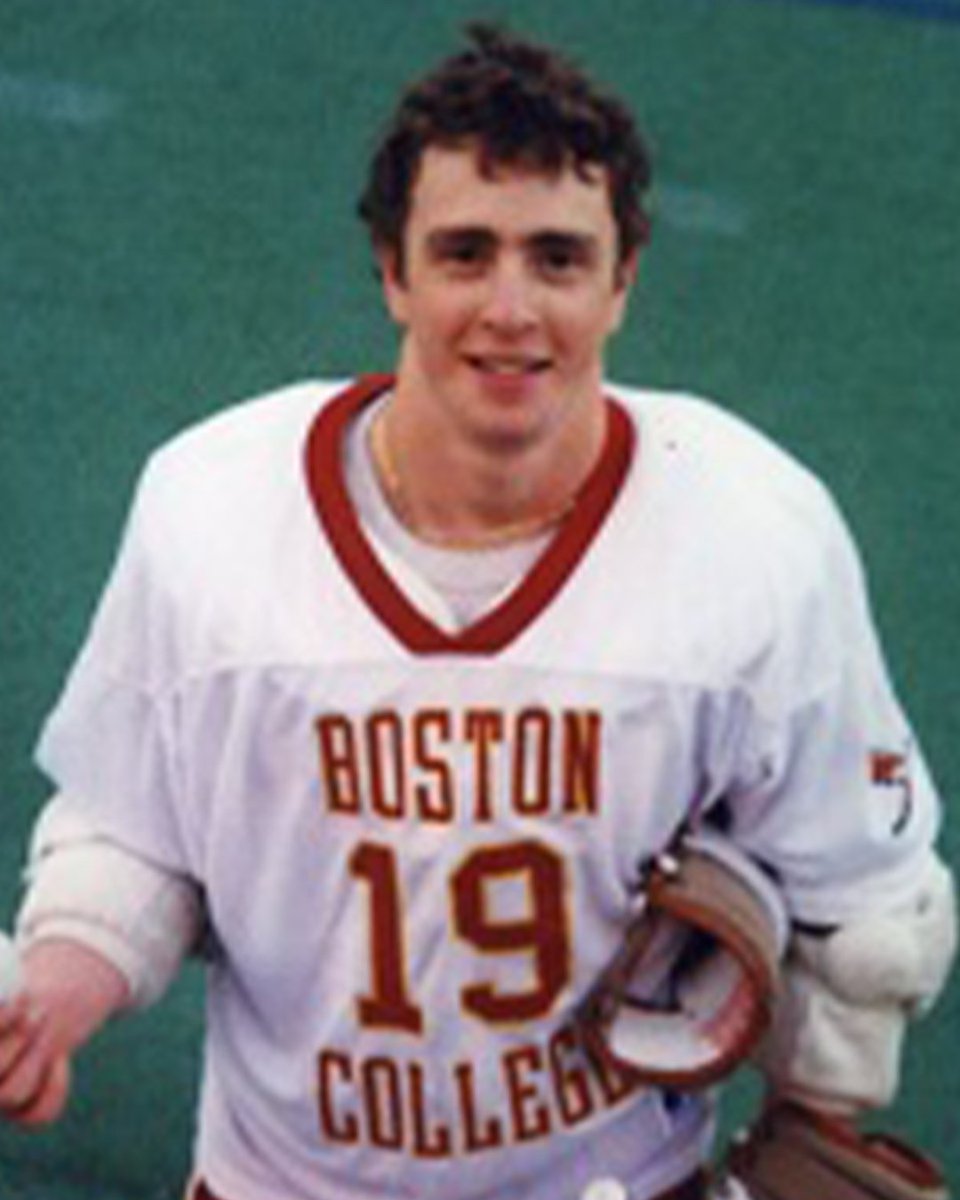
BREAKING: President Trump announces that 9/11 hero Welles Crowther will posthumously receive the Presidential Medal of Freedom.
Known as “The Man in the Red Bandana,” Crowther repeatedly ran back into the South Tower on 9/11 to help others escape, saving as many as 18 lives before losing his own.
Allison Crowther said her son’s legacy continues to endure nearly 25 years later: “Welles’ light still shines brightly.”
God will find you exactly where you are. Despite two arrests and many mistakes before I was 20, His grace and redemption found me in the summer of 2001 while at work. I heard the Lord tell me to "stop running," and I gave my life to Christ that very day. 🙏🏾