Geopolitics, economics, history and politics. Not an expert - just interested enough to occasionally disappear down a rabbit hole and write about what I find.
GENOCIDE IN GAZA HAS CHANGED HOW A GENERATION SEES ISRAEL
Part 1: How the Political Ground Shifted
This first post looks at how we reached the point where explicitly anti-Zionist politics can now win inside a serious British political party, and why the answer lies in a much bigger generational shift in Western attitudes towards Israel.
Part 2 will look at the battle that followed once that shift became impossible to ignore: TikTok and the information environment, censorship and institutional pressure, attempts to shame or marginalise pro-Palestinian voices, and whether some of those tactics are now starting to backfire.
But first, how did we get here?
The Green Party has just done something that would have been considerably harder to imagine in mainstream British politics not very long ago. At its 2026 conference, members voted to make the party explicitly anti-Zionist. The motion defines Zionism as an ethnonationalist project and commits the Greens to treating Zionism, as they define it, as racism. It also backs Palestinian right of return, BDS, a full arms embargo and a single democratic state across historic Palestine.
Zionism itself is obviously a contested word. Many Jews understand it mainly as Jewish national self-determination and the continued existence of Israel, while the Green motion uses a much broader and more critical definition. That is part of why the vote is so controversial. Most of the party’s MPs opposed the motion, and Zack Polanski did not vote on the final version, so this isn’t about pretending the whole Green Party suddenly thinks the same thing.
The more interesting question is how we got to the point where a position like this could win inside a serious British political party at all.
The Green vote is not really the story.
It is a symptom of something much bigger.
A generational shift has been building underneath Western politics for years.
The polling is striking. Younger people in Britain and America are considerably more sympathetic to Palestinians, much less supportive of the Israeli government and much more willing to question the military and political backing Western governments have traditionally given Israel. This goes much further than simply disliking Netanyahu.
A 2025 British poll, for example, found 52% of 18 to 24-year-olds saying Israel has a right to exist, while 21% said it does not. Most young people are not saying Israel should disappear. But compare that with older generations, where support for Israel’s right to exist was above three quarters, and the gap is hard to miss.
The same pattern appears when you ask about weapons and political support, with younger people far more willing to suspend arms sales, reduce military aid or support sanctions.
The age gap is enormous. Politics, religion and ideology clearly contribute to it, but they do not make the divide disappear.
This now amounts to a serious generational legitimacy problem for Israel. Not because Gen Z all thinks the same thing, because they clearly don’t, but because the kind of automatic Western support Israel could once rely on is much weaker among younger people than among their parents and grandparents.
One thing surprised me when I started looking into this properly.
I originally assumed Gaza had created most of that divide.
It hadn’t.
The shift was already happening years before October 7. There are probably several reasons for it: changing party politics, lower religiosity, earlier Gaza wars, settlements and occupation, human-rights arguments and the rise of social media.
Gaza did not create the realignment.
What it did was accelerate it, harden it and give it an emotional force it did not have before.
And this is probably the most revealing part of the whole thing.
Before October 7, young Britons already leaned heavily towards the Palestinians. In July 2023, among 18 to 24-year-olds, sympathy stood at 34% for Palestinians and just 6% for Israelis. Then Hamas attacked Israel. Two days later, sympathy with Israelis among that same age group had doubled to 12%, while sympathy with Palestinians had fallen to 28%.
Young opinion moved towards Israel.
That is important because one of the easiest ways to dismiss the youth shift is to say these people were already so ideologically anti-Israel that nothing could ever change their minds.
The polling says otherwise.
When Israeli civilians were massacred, young opinion moved in Israel’s direction.
Then Gaza unfolded.
By July 2024, sympathy with Israelis among British 18 to 24-year-olds was back down to 7%, while sympathy with Palestinians had risen to 46%. The American numbers moved even faster. In October 2023, Americans aged 18 to 34 sympathised more with Israelis than Palestinians by 41% to 26%. A month later that had flipped to 29% for Israelis and 52% for Palestinians.
Polling cannot tell us precisely what moved each individual. The death toll, the bombing, political arguments, traditional news and social media were all part of the environment.
But the overall direction is pretty clear.
Young opinion responded to October 7 by becoming more sympathetic to Israel, and then millions of younger people watched what happened next through a media environment no previous generation had inhabited to anything like the same extent.
Gaza wasn’t just televised. It was livestreamed to a generation.
Not unfiltered.
Differently filtered.
Before smartphones and algorithmic social feeds became the normal way younger people encountered news, following a war usually meant actively going to a news source. You switched on the BBC or ITV, opened a newspaper website or searched for what was happening. Editors still had a huge influence over what footage you saw, what order you saw it in and how much context came with it.
A twenty-year-old today can still see that same BBC report, but it might appear without them looking for it, in a personalised feed between a video from a Palestinian journalist, footage uploaded by an Israeli soldier, an injured child, an activist, a politician, some propaganda and then a football clip. And that feed travels around in their pocket all day.
Traditional media has not disappeared, but it no longer controls the whole sequence. Nor does that make younger people automatically better informed. An endless feed can mislead as easily as it can reveal, and algorithms partly learn from what people already choose to watch. The feed can reinforce an existing view just as easily as it can challenge one.
Even with those limitations, this is still a radically different way of experiencing a war.
Palestinian journalists inside Gaza became especially important because independent foreign reporters were largely kept out. Some built audiences bigger than established television personalities. Motaz Azaiza went from tens of thousands of Instagram followers to more than 18 million while documenting Gaza. Governments, activists and political organisations on all sides understood that this information battle mattered and tried to influence what people saw.
TikTok alone did not create this shift, and no study can tell us exactly how much any particular algorithm mattered. But an always-on stream of war footage reaching millions of younger people was plainly part of the environment in which attitudes changed so quickly.
And what they were seeing matters.
The military context is real. Israel was fighting Hamas after October 7, hostages were still being held in Gaza, and Hamas did operate from civilian areas. Not every civilian death in an urban war is evidence of a deliberate atrocity.
But none of that explains away what investigators subsequently found.
There is now substantial evidence that Israeli forces deliberately targeted civilians, including children. A UN Commission of Inquiry documented children shot directly in vital organs with precision weapons, including sniper fire and armed quadcopters. International doctors working in Gaza independently described treating children with single gunshot wounds to the head and chest.
The BBC later examined more than 160 cases of children shot during the war. Ninety-five involved head or chest wounds. In the cases where eyewitnesses could identify who fired, the overwhelming majority attributed the shots to Israeli forces.
Those 160 cases are not the scale of the massacre. They are the cases one investigation was able to examine in detail.
They sit inside a much larger body of evidence: thousands of dead children, repeated testimony from doctors and aid workers, UN investigations, journalists on the ground, satellite evidence, and an enormous visual record of what happened in Gaza circulating online.
The point is no longer whether there is evidence that civilians and children were deliberately targeted.
There is.
The serious question is how widespread that practice was.
Then there is Hind Rajab. She was six years old, trapped in a car with the bodies of her relatives, speaking on the phone while waiting for rescue. Her story went around the world. Israel initially denied its forces were operating nearby, but a later UN investigation attributed the attack on the car and on the ambulance sent to rescue her to Israeli military units. In 2026 the IDF acknowledged that its troops had fired on the car and ambulance and opened a criminal investigation.
Think about how a story like that unfolds for somebody following it through their phone: first the recordings, then the denial, then the investigation, and much later the acknowledgement that soldiers had fired.
As the war continued, the images changed again. Starving children, people desperate for food, Palestinians killed around aid-distribution sites and whole neighbourhoods reduced to rubble. Those were not simply TikTok aesthetics or activist slogans. The hunger crisis was documented by international health bodies, while satellite analysis later found roughly 81% of structures in Gaza had been damaged.
By this point, the word genocide was no longer confined to protesters or social-media activists.
Amnesty International concluded that Israel was committing genocide in Gaza. A UN Commission of Inquiry later concluded that Israeli authorities and security forces had committed, and were continuing to commit, genocide against Palestinians there.
Younger people were no longer simply seeing horrifying images and then being told by activists that they amounted to genocide. They were watching the same evidence increasingly being described in those terms by major international human-rights organisations and UN investigators.
The slaughter in Gaza had moved the genocide argument from the fringes of public debate into the mainstream.
Some individual claims shared online still turned out to be wrong. The al-Ahli hospital explosion early in the war is a good example. Israel was blamed almost immediately, but a later Human Rights Watch analysis said the evidence pointed towards an apparent misfired Palestinian rocket and made a large Israeli air-dropped bomb highly unlikely. There is also credible evidence that Hamas used parts of the al-Shifa hospital complex for military purposes, although some of the much larger claims made about the site were not supported by the public evidence.
Those examples strengthen the wider case rather than weaken it. If a claim against Israel fails scrutiny, it should be rejected. But by the same standard, the evidence that did survive scrutiny, the child shootings, the hunger, the aid-site killings, the destruction and the wider pattern of what happened in Gaza, which led major organisations to conclude that it amounted to genocide, cannot simply be waved away as propaganda.
And that may also help explain why the same war has landed so differently across generations.
People my age and older grew up with Israel sitting inside a very different moral story. For decades, Holocaust memory became one of the central lessons of post-war Western culture, while Israel was often understood alongside that history as refuge, survival and security after centuries of persecution. Films such as Exodus made that connection very directly.
Young people today learned about the Holocaust too. In Britain it has been part of the national curriculum for decades, so this is not older people knowing history while Gen Z knows TikTok.
The difference is that Gen Z inherited that older story while also growing up with another powerful visual association with Israel: Gaza, occupation, ruined cities, dead children, overwhelming military power and a war that major human-rights organisations and UN investigators have described as genocide.
That changes the moral picture completely.
Even “Never Again” can point people in different directions. For one person the lesson is that Jews must never again be left defenceless. For another it becomes that nobody should ever be allowed to do this to another people.
I cannot prove how much that explains the age gap, but it helps make sense of why different generations can look at the same country and see very different things.
You can see something similar inside Jewish communities too. Younger British and American Jews are considerably more divided over Israel than older Jews. In one recent British survey, fewer than half of Jews aged 20 to 29 described themselves as Zionist, while substantial minorities described themselves as non-Zionist or anti-Zionist. At the same time, after October 7 and amid a sharp rise in antisemitism, many Jews reported feeling more attached to Israel.
Those two movements can coexist. Younger Jews can become more critical of Israel while October 7 pulls much of the wider Jewish community closer to it. This isn’t consensus. It is something becoming more mainstream at the same time as the argument gets more polarised.
And those arguments are increasingly leaving the phone.
Go back to 2014 and the change in mainstream culture is striking. Rihanna tweeted #FreePalestine and deleted it minutes later. Javier Bardem and Penélope Cruz faced serious industry backlash after signing a letter accusing Israel of genocide. By 2025, around 5,000 film professionals had signed a pledge refusing to work with Israeli film institutions they regarded as complicit in abuses against Palestinians, including apartheid or genocide, while more than a thousand others signed a counter-letter.
That is not cultural agreement. It is evidence that the boundary of what can be said, organised around and openly supported has moved.
The word genocide itself is part of that change. A decade ago, using it against Israel could push a public figure straight to the political margins. Today it appears in statements from musicians, actors, university movements, human-rights organisations and international investigators.
Not everybody agrees with the charge, but it is no longer confined to the political fringes.
At Glastonbury in 2025, Palestinian flags and statements of solidarity were widespread across a broad cross-section of mainstream acts. At the same festival, Bob Vylan’s “death to the IDF” chant triggered police attention and a huge backlash. Even that contrast tells you something: Palestine solidarity had become highly visible inside mainstream culture, while some rhetoric still clearly crossed a line.
Universities tell a similar story. Gaza protests sometimes produced negotiations, formal reviews and changes to investment policy, while other universities rejected divestment or removed encampments. This isn’t capture or consensus. It is a mainstream institutional fight.
Then there is politics. At the 2024 British general election, five independent MPs won English seats from Labour after prominently campaigning against the major parties’ positions on Gaza. That effect was concentrated in particular constituencies, especially those with large Muslim populations, so it should not be exaggerated into some nationwide uprising. But it was a real electoral consequence.
Which brings us back to the Greens.
Their anti-Zionist vote did not appear from nowhere. It is part of a much wider political shift in which arguments that once sat much further outside the mainstream are increasingly appearing in music, film, universities, elections and party policy.
There is organised pressure in the other direction too, with documented examples of pro-Israel groups lobbying governments, platforms and institutions, sometimes successfully and sometimes not. No side has captured everything. What has changed is the line around what can now be said and supported in public, and the struggle is over where that line moves next.
That is the part Israel’s supporters should probably worry about most.
Nobody knows whether somebody who is 22 today will think exactly the same way at 42 or 62. People change, governments change and wars end, but those views do not have to remain frozen for this to matter. Those young people are already voting and entering journalism, law, universities, business, the arts and politics.
And they are doing so after watching Gaza unfold in real time and after hearing the word genocide move from activist accusation to the conclusions of major international organisations.
If even a substantial part of this realignment survives as that generation gets older, then Israel’s problem is bigger than one hostile government, one bad news cycle or one Green Party conference vote. For decades, Israel could rely not only on military power and American backing, but on a deep reservoir of Western political legitimacy.
Among younger generations, that reservoir is already much shallower.
Which is why the most interesting thing about the Green Party vote is not really what it tells us about the Greens.
It is what it tells us about where a significant part of the West may already be heading.
Part 2 will look at what happens when people who can see that shift taking place start trying to stop it.
I watched the full interview and, if anything, it gets worse.
Feiglin actually describes October 7 as an opportunity to take full control of Gaza. He wants the entire Palestinian population removed, the territory annexed and Israeli settlements established in their place. He even talks about building a new Israeli international airport there.
And this isn't some random extremist shouting into a webcam. He's number two on Finance Minister Smotrich's electoral list and openly wants to become Israel's defence minister.
It's difficult to blame Tucker Carlson or Candace Owens for growing hostility towards Israel when people seeking positions of power are openly advocating the removal of an entire population. We don't have to invent their intentions. They're telling us themselves.
I recently wrote about why Israel is losing an entire generation of young Westerners. It's my pinned post, and Feiglin has rather helpfully illustrated the point.
There's an interesting detail missing here. The US Treasury has already sanctioned an Iranian-linked maritime insurance scheme operating around Hormuz, and says payments collected through it have been channelled back to Tehran using cryptocurrency.
That doesn't prove Gulf producers are secretly handing over 10–20% of their cargo values, but the idea of Iran earning money from safe passage isn't coming out of thin air.
And the recovery in crude exports only tells half the story. Refined fuel supplies, particularly diesel, remain badly disrupted, while the costs of tankers, transfers, insurance and security have increased enormously.
The oil may be getting out again, but that doesn't mean the energy crisis is over. It just means we're finding increasingly expensive ways of keeping it going.
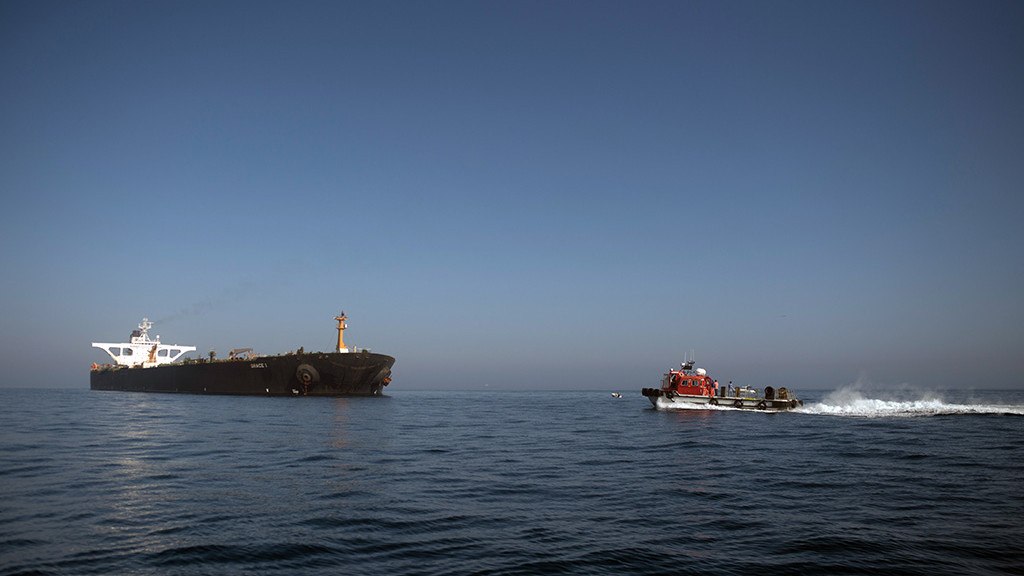
🚨 Something strange is happening in the Strait of Hormuz.
Middle Eastern oil exports are recovering toward pre-war levels, yet Brent is still trading around $100 a barrel.
Kpler's Michelle Brohard suspects there's another cost nobody is openly discussing: Gulf producers may be quietly paying Iran to let their tankers through.
“I suspect there is a toll that’s being paid, which is giving these ships safe passage.”
She suggests those payments could amount to 10% or even 20% of a cargo's value.
That's a remarkable possibility. Countries relying on American military escorts to protect their oil shipments could simultaneously be paying Tehran to guarantee their passage.
There is no independent confirmation that these arrangements exist.
But the broader economics are revealing. Oil is moving again, yet the combination of expensive shipping, tanker shortages, military escorts and complicated transfers is keeping prices elevated.
Kpler estimates September exports averaged 16.5 million barrels per day, with several days exceeding pre-war levels.
If Brohard's suspicions are correct, Iran may have found a way to extract revenue from the very oil trade its adversaries are trying to protect.
And consumers could be paying for it at the pump.
Source: OILPRICE, CIG on TG / Writer: Oliver
Come on Andy, the government’s own estimate is that this saves the average driver about £40 a year. That’s roughly 77p a week while diesel has been touching £2 a litre.
Being able to find the cheapest petrol station is useful, but it doesn’t make fuel cheaper. It just helps us shop around for the least painful version of expensive.
And “global events” makes it all sound like bad weather. Some of those events are wars our governments choose to fund, arm and support. If politicians genuinely want energy and food costs to come down, at some point they might have to start talking about ending wars rather than giving us a better map of the consequences.
I’d be a bit careful with the 3% figure because Grok only quoted US refinery utilisation at around 97%, not global spare capacity.
And even then, 3% below full utilisation doesn’t necessarily mean 3% was sitting there ready to step in. Some capacity will be offline for maintenance, some uneconomic to run, and some won’t necessarily be configured to produce the diesel or jet fuel that’s suddenly in short supply.
The IEA was already warning before the war that there wasn’t much spare refining capacity outside China, so losing something like 7% globally was always going to hurt.
The shortages we’re seeing now probably tell us there wasn’t much genuinely usable slack in the system to begin with.
7% is actually more than I expected.
And I guess that’s the bit that matters. You don’t lose that much refining capacity and just replace it overnight somewhere else. These modern supply chains work brilliantly when everything is flowing normally, but they don’t seem to have much slack when something important gets knocked out.
The 1973 embargo itself only lasted a few months, but the economic pain from the energy shocks of that decade dragged on for years.
So even if some of this refining capacity comes back, I wouldn’t assume the knock-on effects disappear nearly as quickly.
This is looking more serious than it did a few days ago, Ben. The fact the Americans were worried enough to move the B-1s out of Fairford is probably the bit that jumps out at me most.
I’m still not quite ready to jump from intelligence claims to “this is definitely what happened” though. I don’t automatically trust anonymous intelligence sources, and after some of the policing we’ve seen lately I’m not treating every police statement as gospel either. I’d rather see what evidence actually comes out.
What is interesting is that if the aim was simply to make Fairford less useful to the Americans, the threat alone has already done that without a single drone ever getting off the ground.
For anyone in the replies who wants to dig much deeper into Agenda 21/2030, @SandiAdams2030 is well worth following.
She’s spent years researching it and has a huge amount of material on X, YouTube and in the UK Column archives.
Plenty there for anyone who wants to go beyond the headlines.
Funny how all the “there’s nothing we can do” stuff disappears the moment the public turns up to object. We’re constantly told stopping the boats is complicated, the hotels are complicated, the law is complicated and somehow nobody has the power to sort any of it out.
Then people turn up to protest and suddenly the specialist police, drones, evidence teams, surveillance and restrictions are all ready to go. Makes you wonder whether the British state is really as powerless as we’re told, or whether it’s just very selective about what it wants to control.
And if that phone-jamming story ever turns out to be true, this gets a whole lot darker.
That’s possible, Ana, but I think you’ve just made my point for me.
If the intention was to crash the plane before it even reached Israel, then it obviously wasn’t a plan to recreate 9/11 by flying into Tel Aviv skyscrapers.
Something may well have gone wrong with whatever he intended to do, but at the moment we’re filling in an awful lot of blanks ourselves.
The actual event was horrific enough. I just don’t see why we need to add a more dramatic story that investigators haven’t established.
Of course.
He intended to recreate 9/11 in Tel Aviv, which is why he attacked the captain while they were still over Saudi Arabia and nearly crashed the plane long before they got there.
The fact that this makes no sense is apparently further evidence that it was the plan.
Perfectly clear.
I actually agree with you on that, Heather.
The cobalt industry doesn’t need Congo to be poor, and given the amount of mineral wealth in the country, there’s no reason it should be as poor as it is. Better government, less corruption and more of the money staying in Congo would obviously help.
But that’s kind of the point I’ve been making. Poverty doesn’t create the demand for cobalt, it creates the conditions where families become desperate enough that children end up doing dangerous work because the money matters.
In a better-run, wealthier Congo, the cobalt would still be mined. The difference is that adults could be paid properly, the work could be safer and children wouldn’t need to be down there.
I think we’re probably closer on this bit than it first looked.
The fundamental question isn’t whether I personally can fix the Congo, Heather.
I also can’t fix cancer, but I’m still allowed to think it’s bad.
If an industry worth billions depends on families being so poor that children have to work in dangerous mines, then asking how more of that wealth reaches those families seems fairly reasonable.
I’m not sure why the burden of proof has somehow shifted from “why are children down there?” to “Steve, please redesign Central Africa before Sunday dinner tomorrow.”