@EnnnDeee Thanks for the recommendations. I would describe myself as covid-competent. I would also describe myself as open-minded. We seem to have arrived at different approaches based on our interpretations of the available data & interpretation. This does not make one incompetent, IMHO.
thinking about the public library. i fucking love the public library. you can just go there and they don’t even want your money and they let u read books like. for free. fucking love it there.
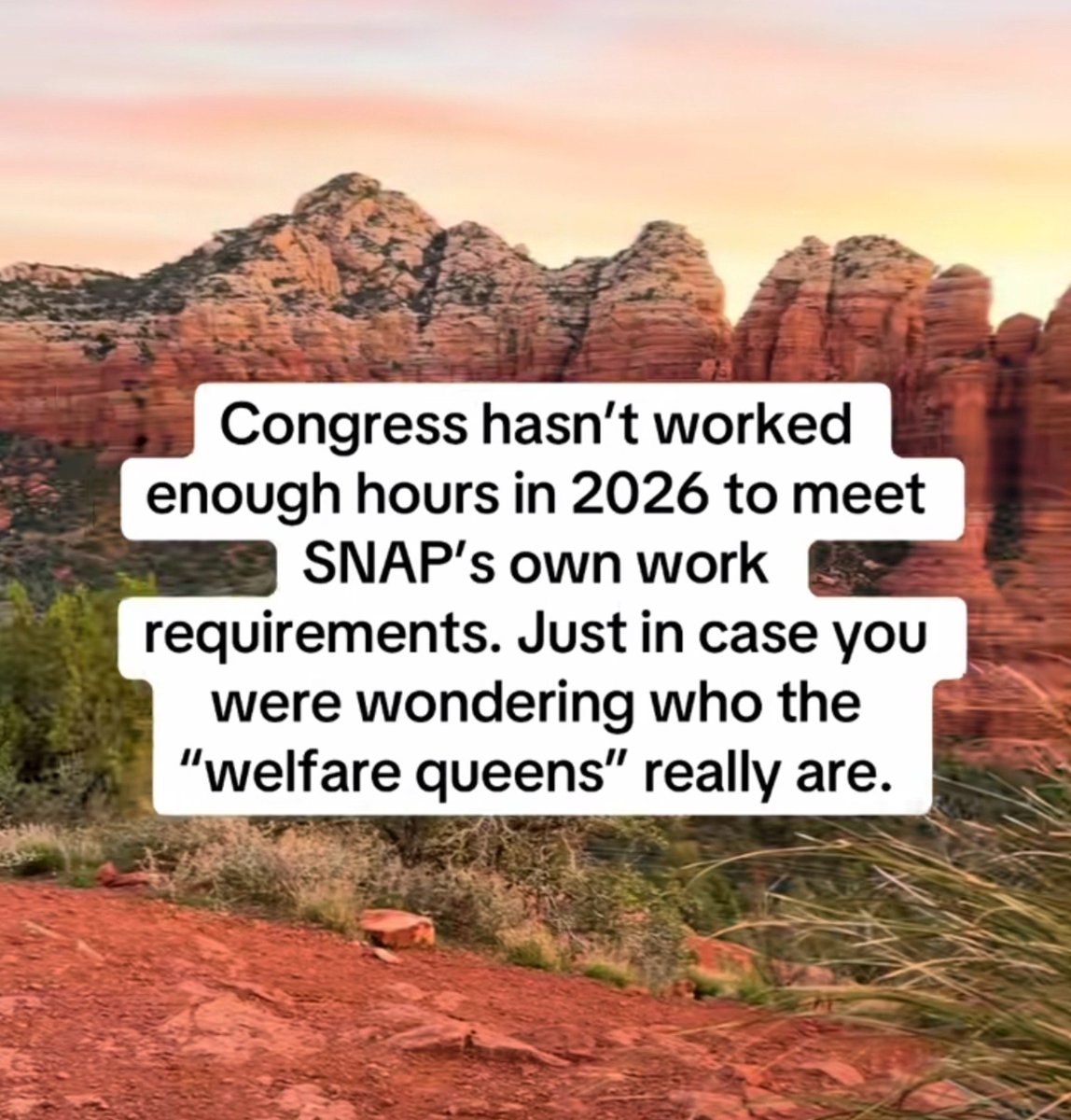
As their bosses, We, The People just can’t afford these congress members anymore.
We can’t afford to pay their salaries, healthcare, housing allowances and food allowances.
We're going to have to let most of them go.
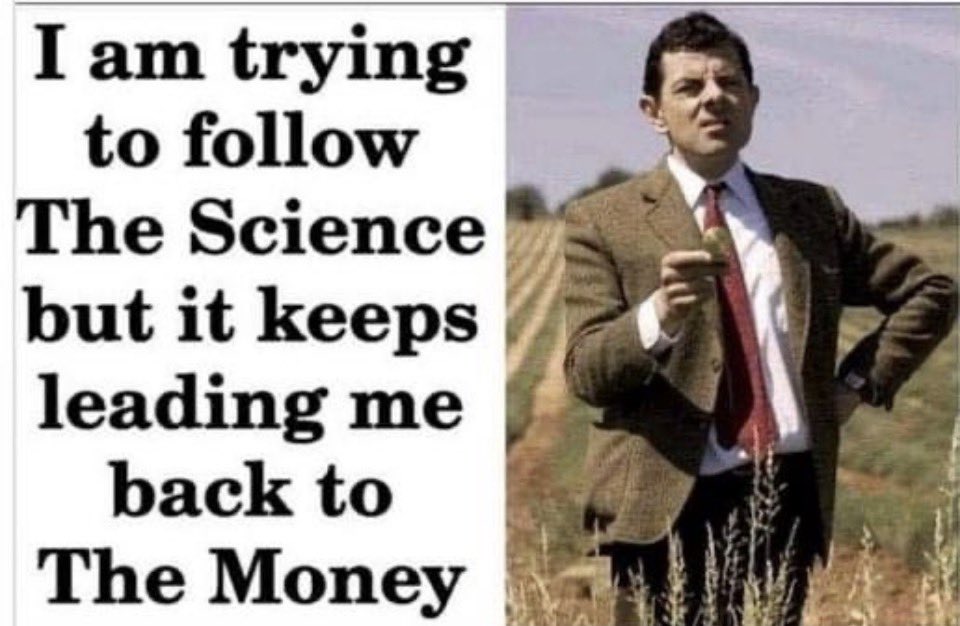
FOLLOW THE MONEY — ESPECIALLY WHEN IT SITS BEHIND “PEER REVIEW”.
A 2024 JAMA study examined 1,962 US physicians who reviewed papers for The BMJ, JAMA, The Lancet and The New England Journal of Medicine.
Between 2020 and 2022:
• 1,155 reviewers — 58.9% — received at least one industry payment.
• Total payments reached US$1.068 billion.
• US$64.18 million comprised general payments, including US$34.31 million in consulting fees and US$11.80 million in non-CME speaking fees.
Most payments were research funding connected with the reviewer or their institution. The study did not prove that any reviewer was paid for a review or that a particular publication was corrupted.
But peer review remains largely opaque: reviewer conflicts are rarely disclosed publicly, and the authors could not determine whether particular financial relationships were relevant to the papers reviewed.
That concern sits alongside the documented history of scientific ghostwriting. Litigation records examined in PLOS Medicine showed how commercial publication planners produced manuscripts, recruited academic “authors”, placed articles in medical journals and shaped messages to promote benefits and downplay harms.
A Cochrane review of 75 papers found that industry-sponsored drug and device studies were more likely than independently sponsored studies to report favourable efficacy results and conclusions.
There is a considerable body of literature in this area. I co-authored Chapter 16 of the International Handbook on Whistleblowing Research, in which we addressed funding, ghostwriting and scientific misconduct within the broader context of corporate fraud, evidence and whistleblower incentives.
I am not alleging that any reviewer or journal identified in the JAMA study engaged in misconduct. The point is that financial influence, hidden authorship and undisclosed evidence are recognised research-integrity risks. They are not speculative concerns.
This does not make every industry-funded study false. But when one side can fund research, shape manuscripts, finance expert relationships and influence the information pipeline while dissenting researchers lack comparable money and access, the public does not receive a level contest of evidence.
“Safe and effective” must therefore never become a marketing slogan immune from scrutiny, particularly where adverse signals remain unresolved or material data are unavailable.
Public safety requires transparent funding, identifiable authorship, disclosed reviewer conflicts, independent replication, access to underlying data and proper investigation of adverse events.
Science must be tested. It must never be purchased, ghostwritten or protected from challenge.
Sources:
Nguyen et al, JAMA (2024).
Adriane J Fugh-Berman, ‘The Haunting of Medical Journals: How Ghostwriting Sold “HRT”’ (2010) 7(9) PLOS Medicine e1000335.
Andreas Lundh et al, ‘Industry Sponsorship and Research Outcome’ (2017) Cochrane Database of Systematic Reviews, Issue 2, MR000033.
Tom Faunce, Kim Crow, Tony Nikolic and Frederick M Morgan Jr, ‘Because They Have Evidence: Globalizing Financial Incentives for Corporate Fraud Whistleblowers’ in International Handbook on Whistleblowing Research (Edward Elgar Publishing, 2014) 381–404.
Something about this subject inspires a deep fury within me and I hope it does you too. That the CDC even now would push out such propaganda with no basis in science is an outrage because it divides families, spreads lies, and robs people of the joy of observing new life. There are words for this and I leave you to fill them in.
The Cruelty of Cocooning https://t.co/2jPKJmZPj3 via @epochtimes
@MayorKeller Albuquerque is a dump lately! There is trash on EVERY street! What gives?? Please get clean up crews on this. I pick up trash everything I walk my neighborhood but it piles right back up. Prosecute litterers and get crews out cleaning!
This had never occurred to me until last night when I had quite a visceral reaction as that Scream 7 ad aired at the very beginning of the game, while my 3-year-old was still cuddled up against me pre-bathtime.
I'm also completely on board.
I’m reading Mere Christianity by C.S. Lewis, and I came across a fascinating idea I’ve never heard presented before.
Lewis doesn’t state it directly—only its implication—but for his conclusion to hold, it must be inferred.
It appears in the chapter “The Cardinal Virtues,” on the final two pages.
Lewis distinguishes between performing a just or temperate act and actually being a just or temperate person. A poor tennis player might hit a great shot occasionally, but that doesn’t make him a good player. We all agree on that. Therefore, isolated acts of obedience don’t make one virtuous, character is revealed in consistency.
From there, Lewis argues that God wants more than mere obedience. Obedience matters, but God cares far more about our character. He wants us to become people who naturally produce obedient behavior.
Then comes the part I've been contemplating for the last few days.
Lewis notes that we might assume virtues are needed only for this life, because in heaven there will be nothing to quarrel about (so no need for justice) and no danger (so no need for courage). But he adds that while God won’t refuse entry to heaven for lacking certain qualities, heaven offers no further opportunity to develop them. As a result, we will never attain the “deep, strong, unshakable kind of happiness” God intends.
The inference that struck me is this: we may have only our time on earth to become the people God intends us to be. This life forms our capacity for joy, virtue, and glory. Heaven fulfills it but does not expand it through suffering.
In heaven there are no trials to forge bravery, self-control, patience, humility, resilience, integrity, gratitude, or joy in the midst of hardship. Those qualities are shaped here, not there.
So here's the unsettling question: once we die and enter eternity, is our development finished? Is this life our only chance to become the best version of ourselves?
If so, it’s sobering. All the time wasted scrolling Instagram reels or behaving poorly without seeking growth would carry eternal consequences.
I should live each day with urgency, taking massive strides toward becoming the man God intends. The day I die, the work ends. My capacity for joy and virtue can no longer grow.
I’m not sure if this idea is theologically sound. Maybe it's not. I’d love some insight from theologians who could explain why it might not hold.
But if this life truly is our only training ground, delay is far more dangerous than I ever realized.
That thought alone makes me want to live with far greater urgency than yesterday.
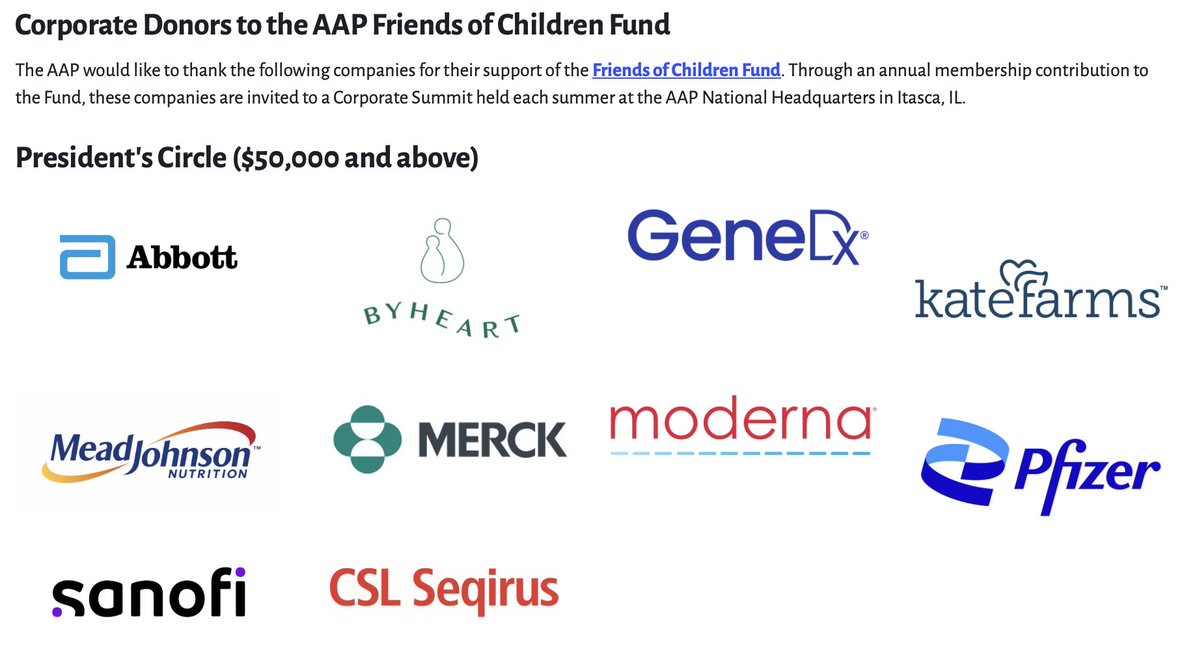
Everyone understands that the American Academy of Pediatrics is a trade group right? They are a doctors union. They exist to get doctors paid more. AAP is not a hospital, or a clinic, and does not treat children. They are partners of pharmaceutical companies, and get their funding from the people who sell drugs. They have ceased showing up to give their input to the federal government on vaccine policy, because they do not want to answer hard questions from Kennedy's HHS. They are now suing HHS for not supporting all of their medical products, and practices, in their entirety. Yet at the same time apparently they are expecting the Department of Health and Human Services to keep writing them checks.
Reiterating... the AAP is a Trade Organization.