We still have some tickets left for our 1950s Afternoon Tea Dance, with music by our brilliant singer Rachel Mercer on Sat 18th July, as part of our hall's 70th Birthday Celebrations. Join us?
Swiss farmers planted flowers between their crops and watched pest damage drop by over half. The UK is now running the same trial across 15 farms. The reason this works is embarrassingly simple.
A Swiss study on winter wheat found that fields with wildflower strips had 40 to 53% fewer leaf beetle pests than fields without. Crop damage dropped 61%.
The mechanism is simple. Wildflowers feed hoverflies, lacewings, parasitic wasps, ladybugs, and ground beetles. Those insects eat the aphids, beetle larvae, and caterpillars that farmers would otherwise spray for. A few meters of wildflowers hosts an unpaid pest control crew that would jump at the chance to whoop some aphid ass.
In apple orchards where no insecticides had been used for five years, plots with wildflower alleyways had 9.2% damaged fruit. Control plots without flowers had 32.5%.
The UK is now running a five-year trial across 15 farms placing 6-meter flower strips through the middle of fields, not just at the edges, because the beneficial insects can't reach the center of a large field otherwise.
This works the same way in a backyard vegetable garden as it does on a commercial farm. Plant native flowering species near your tomatoes, beans, and squash. The pests still show up, but the predators show up too.
Study doi: 20151369
Oh no! Mum's remodelling again.
Bob gets up and helps for about 4 seconds before going back to sleep.
They are starting to flap and will soon be 'helicoptering' - making short up and down flights. Stay tuned!
#nature#birds#Cumbria
Look what’s been built in Cardiff for swifts. My niece sent me these photos and said the structure was alive with birds. Heartening to see. It’s shaped like a swift in flight I think. Other towns have created similar swift nest sites including Exeter. Thank you for caring.
Smells a dead mouse from a mile away. Eats anthrax for breakfast. Prevents epidemics just by existing.
The turkey vulture — the most important bird nobody respects.
THE NOSE:
→ Best sense of smell of any bird on Earth
→ Can detect ethyl mercaptan (decomposition gas) from 1+ mile
→ Gas companies add the same chemical to natural gas lines
→ Turkey vultures have circled gas leaks — engineers follow them
THE STOMACH:
→ Stomach acid: pH ~1 (nearly pure hydrochloric acid)
→ Destroys anthrax, botulism, cholera, hog cholera
→ Eats diseased carcasses that would otherwise spread epidemics
→ Essentially a flying biohazard disposal unit
THE BALD HEAD:
→ No feathers = bacteria can't get trapped when eating carrion
→ UV sunlight sterilizes the bare skin
→ Same reason vultures sunbathe with wings spread (UV sterilization)
THE FLIGHT:
→ Soars for hours without flapping (uses thermals)
→ Distinctive "wobbly" flight with wings in shallow V
→ Can cover 200 miles per day searching for carrion
WITHOUT VULTURES:
→ In India, vulture populations crashed 99% due to a cattle drug
→ Result: rotting carcasses, feral dog explosion, rabies epidemic
→ Tens of thousands of human deaths attributed to vulture decline
Respect the cleanup crew.
You need them more than they need you.
I'm fuming to read this! 🤬
Year in and year out this kind of crap happens in the summer, when most birds are already breeding, not just with Swifts, but with all birds! 😒
Birds and their nests are protected by law, but the law is clearly inadequate and is riddled with loopholes that councils, builders, farmers... anyone really, can exploit. 😡
Yet still some wonder why the UK is the most nature depleted place on earth...
https://t.co/q2grIPa3g5
At the bottom of your local river, mostly out of sight, sits one of the best water filters in the natural world. It's also one of the most endangered animals on the continent.
Freshwater mussels are certainly not glamorous. They look like rocks, they barely move, and they spend their long lives, often decades, buried in the streambed doing one thing: filtering water.
A single mussel pulls 8-10 gallons through its body a day, stripping out algae, sediment, bacteria, even heavy metals and traces of pharmaceuticals. A healthy bed does it at a scale that's hard to believe.
Along one stretch of the Upper Mississippi, the mussels filter more than 14 billion gallons a day, dozens of times what the nearby sewage plant handles.
And North America is the mussel world capital. Nearly 300 species live here, close to a third of every freshwater mussel species on Earth, more than any other continent.
Here's the part that should be a bigger headline: around 70 percent of those species are imperiled: already extinct, endangered, threatened, or heading that way, hit by dams and pollution harder than almost any other group of animals we have.
The hopeful part is that they respond to our conservation efforts. Biologists are breeding mussels and restocking rivers by the tens of thousands, and the water clears behind them.
Breakfast time on nest 2. Sound up to hear the squeaky Bobs!
Wee Bob at the back will learn to wait till the others have had their fill then sneak round for a share. Older siblings, eh?
#FoulshawOspreys#Nature#Cumbria
I have several driveway alarms dotted around the hospital grounds, opens pens etc, that are all set to make a different sound, so that I can be woken and quickly locate a new self-admitting visitor during the night.
Some cock-a-doodle-do, some bark, some play a tune, some sound like an air-raid warning.
This poor little boy is Luca, and he's suffering from fluke, an internal parasite which is very painful.
Flukey hedgehogs try to run from the pain, so when he self admitted he couldn't bare to stay still in one pen, but continued racing round, setting off all the alarms.
So at 2am this morning I was woken to a madhouse cacophony of dogs barking, cocks crowing, while a brass band played along to an earthquake warning siren!🤪
I eventually found poor Luca in a feeder. He's very sick, but reasonably well nourished and hydrated so I could start treatment straight away this morning.
Right now, dear little Luca is now having his first pain-free sleep for the longest time.
Fluke is often contracted from contaminated drinking water, so please keep all water containers clean, and refresh the water daily using tap water only.
Glyphosate has no place in our gardens and growing spaces 🛑- so sign and share Garden Organic’s petition today to ban this dangerous herbicide for amateur and urban use 👉 https://t.co/mHwbHgXOVT.
#GrowersAgainstGlyphosate#GardenOrganic
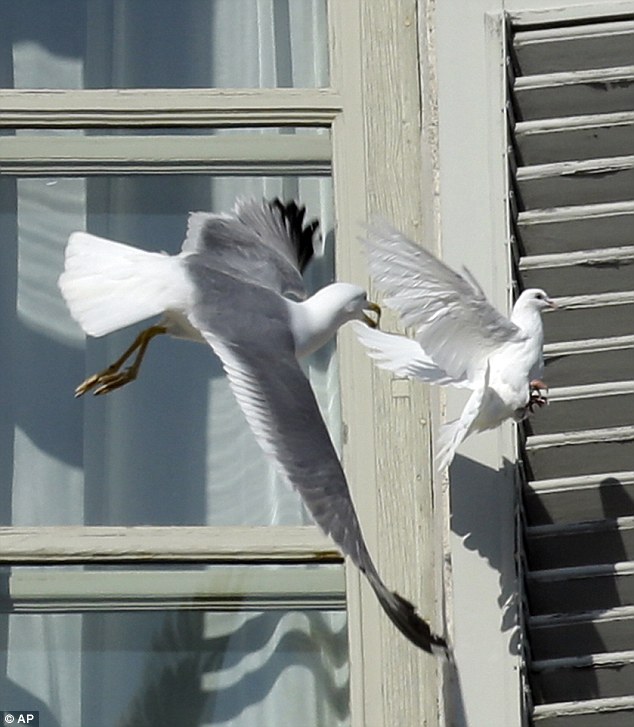
A "dove release" at a wedding or funeral is a death sentence for the birds.
The white "doves" sold for releases aren't doves. They're domestic white pigeons bred to be small and pretty, with no survival skills outside a coop.
The cheaper DIY versions (Ringneck Doves, King Pigeons) can't even find their way home. Nearly all of them die within days.
Even professional releases with trained homing pigeons lose birds every time. Hawks take them in the air. Cars hit them when they land exhausted. They collide with windows. There are lots of ways it can go sideways for them.
Rehabbers pull them in with broken wings, raging trichomoniasis, and bodies so emaciated they can't stand. One described a release pigeon whose throat infection had hardened so completely it distorted the shape of his skull.
There is no version of this where the birds "fly away and live happily ever after." That's the marketing. The reality is a domestic animal traumatized or killed for a 15-second photo.
Young White-tailed Eagle 'disappears' from grouse shooting estate in North York Moors National Park.
Police think its disappearance is 'suspicious'. No shit.
https://t.co/ZIDGCyW54B
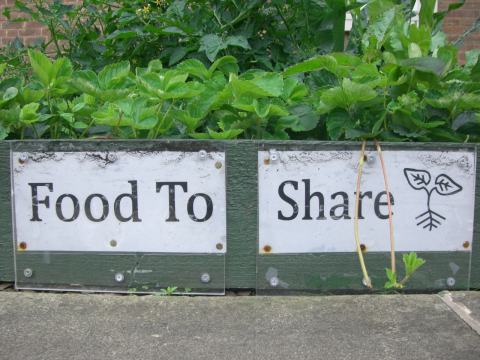
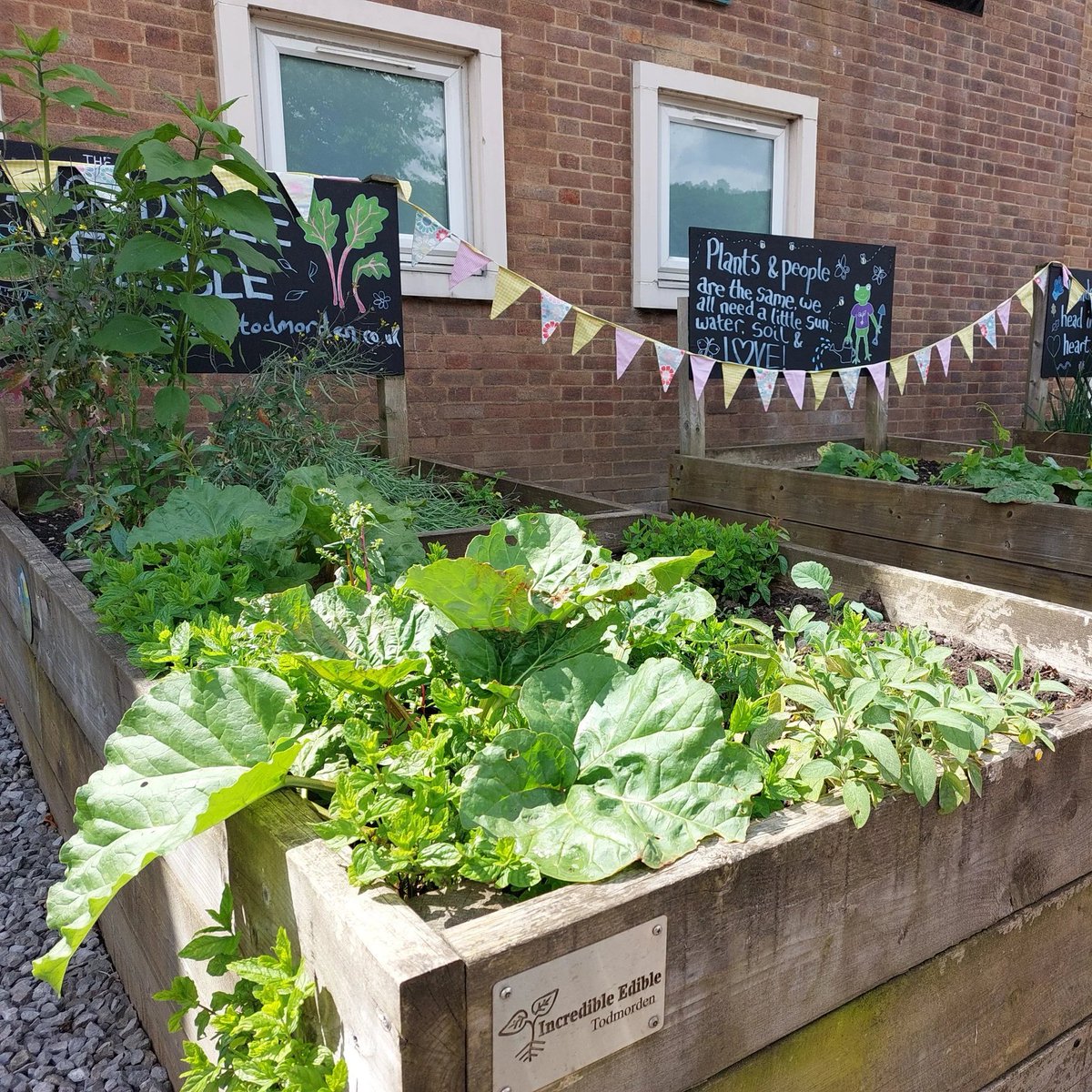
In 2008, a group of friends in a small Yorkshire town decided to start planting food in unused public spaces.
The town is Todmorden, population about 15,000, tucked into a valley between Burnley and Halifax. The group is Incredible Edible Todmorden. Their motto is "if you eat, you're in."
Today the railway station beds grow herbs. The fire station is surrounded by fruit trees. The canal towpath is lined with edible plantings. The forecourt of the local police station has been transformed into what's now called "possibly the finest and greenest looking police station in the UK," with a small library of crime novels installed for good measure. Everything is free to harvest.
They have no paid staff, no buildings, and no public funding. They've operated this way for almost two decades. Their guiding principles: "believe in the power of small actions," "kindness underpins everything we do," and "it's sometimes better to ask for forgiveness, not permission."
Over the years they've added a Tool Library, a Makery, and little free libraries scattered around town. They host visitors from around the world (they call it "vegetable tourism"). Their gardening Sundays have grown from four or five people to forty or fifty.
The model has been replicated in over 700 projects worldwide and continued to spread.
For the first time in over 400 years, there is a beaver dam in #GlenAffric! 🦫 The ultimate example of their ecosystem engineering, #beaver dams create deeper pools, slow the flow of water, improve water quality, and provide rich habitats for #wildlife such as fish, frogs, otters and birds.
Hey Dad, thanks for the fish!
Bob has just finished breakfast. Still waiting on egg 2 which is quite overdue. Sometimes eggs haven't been fertilised and don't hatch. Time will tell.
#FoulshawOspreys#Nature#Cumbria
We're hiring an Enforcement Investigator to join our Development Management team to investigate alleged breaches of planning control and gather evidence to decide if breaches have occurred. Liaising with landowners, developers, parish councils, and the public, you will give advice, gather information, and communicate outcomes.
You will be a great communicator and an able negotiator. Experience of investigations within a regulatory or legislative framework is desirable. A full UK driving licence is essential.
You will also understand the importance of sustaining the future of the National Park’s spectacular living and working landscape, rich built and cultural heritage, and its diverse natural environment.
Closing date: midnight on Sunday 14th June
For full details and to apply, please visit our webiste
#lakedistrictjobs #disabilityconfident #nationalparkjobs
A bricklayer in East Yorkshire has spent 35 years putting up barn owl nest boxes on weekends. This year, the region saw 308 owlets hatch.
His name is Robert Salter. He's 56 and does bricklaying full time. In 1990, he saw a piece on the news about a man in Lincolnshire installing barn owl boxes, and decided he'd do the same. He started with five.
He now has more than 350 boxes scattered across fields, farms, outbuildings, and trees in East Yorkshire. Every June, he takes four weeks off from bricklaying and visits them with his wife Sue. Scrambling up ladders, ringing chicks, cleaning boxes, repairing the ones the weather got to. He's a licensed bird ringer for the British Trust for Ornithology.
In 2024, the region ringed 95 owlets. In 2025, the count was 308. The Barn Owl Trust says that nationally, this year was "pretty poor" for barn owl breeding, but east Yorkshire is the exception, and it's the exception because of one man with a ladder.
The barn owl population in the UK was estimated at 4,000 pairs in the mid-2000s and crashed to roughly 1,000 by the early 2010s. The species is still recovering.
Most of conservation is one person who refuses to give up.