Norah Borus Chelagat (born June 7, 1995) was an exceptionally brilliant Kenyan computer scientist and academic prodigy, who hailed from Moiben, Uasin Gishu County.
Before 2019, she had achieved national celebrity status in Kenya due to her academic excellence.
Norah was the last-born child of highly accomplished professionals. Her father, Professor Peter Borus, is a prominent polio specialist and researcher at the Kenya Medical Research Institute (KEMRI). Her mother, Dr. Dinah J. Borus, is a graduate-educated agronomist who worked with the Ministry of Agriculture.
Chelagat attended Precious Blood Girls High School, Riruta, one of Kenya's top-performing national schools, and in the 2013 Kenya Certificate of Secondary Education (KCSE) examinations, she emerged as the best-performing female candidate in Nairobi County and was ranked 4th overall nationally.
Following her spectacular results, she joined the prestigious Equity Bank African Leadership Programme in 2014, a selective pipeline designed to mentor Kenya's brightest minds for global impact.
While her excellent national grades traditionally would have directed her toward a medical degree in Kenya, Norah chose to follow her passion for technology and secured a scholarship to Stanford University in California, entering in late 2015.
At Stanford, she proved her academic capability by enrolling in a demanding co-terminal program, which allowed her to fast-track her studies, graduating with a First Class Honours degree in Engineering while simultaneously finishing a Master’s Degree in Computer Science, specializing in Artificial Intelligence and Machine Learning.
Norah was heavily involved in tech-for-good initiatives, collaborating with Stanford's CS + Social Good group to build an SMS platform for Sanergy, a company scaling hygienic sanitation solutions in Kenyan informal settlements.
Aside from programming, she was an active vocalist, part of the Stanford Center for African Studies, and loved mentoring youth by teaching nine-week coding camps in Nairobi during her summer breaks.
In June 2019, a video emerged online that Norah had recorded detailing her life abroad. In it, she spoke candidly about feeling deeply disconnected in the United States.
"Before Stanford, I had never gone out of Kenya," she expressed.
She mentioned that while people on campus were nice, she deeply missed Kenya, the food, and the distinct warmth of the people. She remarked on a unique feeling of security she felt back home that was missing in the U.S.: "There is a certain feeling you get while in Kenya... like people are waiting for you."
Few days before Friday, June 14, 2019, Norah uncharacteristically dropped out of touch.
Because Norah was a highly active student, she was a vocalist, a mentor, and heavily involved with the African Studies Center. Dropping out of contact or missing planned gatherings completely during Commencement (Graduation) Weekend, when campus life was intensely social, immediately raised red flags for those close to her.
As an international student who relied heavily on messaging apps (like WhatsApp) to stay connected with both her campus friend groups and families back home in Kenya, suddenly going "dark" and failing to respond to repeated texts, phone calls, or knocks on a dormitory door gave a primary reason her friends to contact residential advisors, and campus police.
The Stanford University Police Department entered Norah Borus's room on Friday afternoon, June 14, 2019, for a
welfare check.
Following protocol when an occupant does not respond to repeated knocks, university officials and police officers utilized a master key to enter her private residence hall room at Kimball Hall.
Inside her room, officers discovered the 24-year-old Norah lying completely lifeless, and deceased after consuming poison.
The following day, Chief Magistrate Lucas Onyina granted prosecutors' request to hold Kang’ethe at Nairobi Area Remand and Allocation Prison (Industrial Area) rather than a local police station, ruling he was an extreme flight risk.
On the night of September 1, 2024, Kenyan authorities handed Kang’ethe over to agents from FBI Boston’s Violent Crimes Task Force and Massachusetts State Police, who escorted him on a flight back to Boston. Two days later, he was arraigned in Suffolk Superior Court and ordered held without bail.
In April 2026, Superior Court Judge Mary Ames granted prosecutors' request ordering Kang’ethe to provide a buccal DNA swab for forensic testing ahead of his trial, which was scheduled for January 2027.
Under Massachusetts law, a conviction for first-degree murder carries a mandatory sentence of life in prison without the possibility of parole.
On February 7, 2024, police officers unlocked Kang’ethe’s cell around 5:00 PM and escorted him, barefoot, into a standard anti-crime office with minimal supervision. Kang’ethe, who was on a U.S. Interpol Red Notice, was wanted in the U.S. for the first-degree murder of his girlfriend, Margaret Mbitu, and for leaving her body inside a car at Boston’s Logan International Airport.
Kang’ethe had fled Massachusetts for Kenya in late October 2023 after allegedly committing the murder. Rather than lying low, he frequented Nairobi nightlife and was arrested by detectives on January 29, 2024, while leaving a nightclub in Westlands.
Kevin Kang’ethe’s January 29, 2024 arrest happened after a tipster recognized him from wanted posters on social media, leading to an undercover police operation at a nightclub in Nairobi's Westlands/Parklands area.
After the police trail went cold for three months, a member of the public alerted Kenyan authorities that a man at a popular Nairobi nightclub resembled photos of Kang’ethe circulating on social media.
An undercover officer tracked him down at the club and casually struck up a conversation with him to confirm his identity without spooking him.
Within hours, detectives positively identified him under the active U.S. Interpol Red Notice and moved in to arrest him late Monday night (spilling into the early hours of Tuesday, January 30, local time) as he left the busy Westlands establishment.
According to court testimony from Nairobi prosecutors, Kang’ethe was arrested while still carrying items belonging to his late girlfriend, Margaret Mbitu, including her driver's license, a Bank of America debit card, and a Visa card.
Following his capture, detectives took him to Muthaiga Police Station and arraigned him at the Milimani Law Courts on January 31, where a judge approved a 30-day detention order while extradition proceedings were prepared.
Just one week after the judge ordered him held for 30 days at Muthaiga Police Station, Kang’ethe walked out of custody on February 7, 2024.
According to records, officers allowed him out of his cell into a private office to meet with a visitor claiming to be his lawyer while on-duty officers attended a separate station briefing. Kang’ethe walked out of the station, jumped onto a passing matatu, and vanished.
The escape was treated as a coordinated inside job. Four on-duty police officers at Muthaiga were arrested and interdicted, two senior officers were reassigned, and detectives detained the purported lawyer alongside several of Kang’ethe’s relatives for aiding the breakout.
Immediately after bolting from Muthaiga Police Station on February 7, 2024, Kang’ethe visited a barber shop to shave his signature beard so he wouldn't be recognized. He ditched his old phone and acquired a brand-new mobile phone and SIM card to stay off police radar.
Detectives from the Directorate of Criminal Investigations (DCI) placed his known associates and family under heavy surveillance, arresting his cousin (a practicing lawyer) on February 9, followed by his brother and his brother's girlfriend on February 12. Because Kang’ethe kept calling relatives from different numbers to arrange a safe house and border-crossing help, investigators narrowed his movement down to Kajiado County.
Kang’ethe showed up on the night of Tuesday, February 13, at the home of a distant cousin in the Embulbul area of Ngong. Tired of ongoing police pressure on the wider family, and wanting him to face justice, relatives quietly alerted authorities that he was at the house.
A multi-agency DCI team surrounded the Embulbul home late that night and arrested him without incident. When officers searched him, they recovered the brand-new mobile phone, a charger, a jumper, and a bunch of keys. After brief booking at Ngong Police Station, a heavily guarded six-vehicle convoy, and rushed him along Ngong Road straight to DCI Headquarters on Kiambu Road.
On November 18, 2026, U.S. Immigration and Customs Enforcement (ICE) and the Department of Homeland Security (DHS) stated that Ayan Ahmed Aidid, a Somali national, and the wife of Democratic-Farmer-Labor (DFL) member-elect for District 14A in the Minnesota House of Representatives, Abdi Daisane, crossed the U.S.-Mexico border illegally on foot near San Ysidro, California, on April 2, 2023.
According to the two U.S. federal government agencies, Ayan Ahmed Aidid entered the U.S. illegally on foot near the San Ysidro Port, where she was apprehended by the U.S. Customs and Border Protection four miles west of the San Ysidro Port of Entry, and later released into the country under the Biden administration without legal status.
According to reports, Abdi Daisane, the newly elected Democratic-Farmer-Labor (DFL) member of the Minnesota House of Representatives (District 14A), campaigned unsuccessfully for a seat in Somalia's federal parliament (the House of the People of the Federal Republic of Somalia) during the 2020–2021 election cycle.
In his October 2021 campaign video, Daisane introduced himself as a Somali citizen born in Mogadishu in 1988, seeking to represent the Jubbaland region. Daisane had become a naturalized U.S. citizen in 2014.
Abdi Daisane also serves as the CEO of Blooming Kids Child Care Center in St. Cloud, Minnesota, a facility that has received nearly $7.9 million in state and federal subsidies since 2018.
Blooming Kids Child Care Center was licensed at 1209 W. Saint Germain Street in St. Cloud since January 1, 2018. It has a license capacity of 113 children.
According to payment records, the center received $7,290,607 through Minnesota's Child Care Assistance Program (CCAP) between 2018 and 2025. CCAP is a state-run program subsidizing childcare for low-income families that has faced broader statewide scrutiny over fraud.
According tonews reports, Blooming Kids received nearly $600,000 ($598,251.62) through the federally funded Child and Adult Care Food Program (CACFP) starting in late 2019/2020, with claims during the 2019–2022 period routed through Partners in Nutrition.
Partners in Nutrition, a nonprofit intermediary, paid an $18.5 million civil settlement to the State of Minnesota over allegations that it knowingly defrauded federal child nutrition programs during and after the COVID-19 pandemic.
The $18.5 million civil settlement resolved allegations that Partners in Nutrition submitted false monthly claims to the Minnesota Department of Education for unserved meals between October 2020 and February 2022.
Partners in Nutrition sponsored dozens of legitimate daycares alongside fraudulent pop-up meal sites across Minnesota. While fraudulent sites listed in the Attorney General's lawsuit (such as Mind Foundry Foundation and Multiple Community Services) routed roughly $54 million through Partners in Nutrition using fake attendance rosters, Blooming Kids used the same nonprofit intermediary to process its own daycare meal claims during that same pandemic window.
However, a spokesperson for the Minnesota Attorney General's Office confirmed that Blooming Kids Child Care Center is not among the sites under investigation in connection with the Partners in Nutrition fraud scandal.
Neither Blooming Kids nor Abdi Daisane was named as a defendant in the state's civil lawsuit or settlement against Partners in Nutrition.
Once Okuo gained a victim's trust, he manufactured urgent financial emergencies. He typically claimed that he desperately needed money wired to specific accounts so he could officially leave the military, secure travel documents, and return to the United States to marry them.
Beyond romance scams, the syndicate diversified into government fraud. They hijacked the identities of real Massachusetts residents to illicitly collect state pandemic unemployment assistance benefits.
Florence served as the primary financial link and transfering operative. Acting entirely on Okuo’s orders, she utilized her library of fake passports and three aliases to open nearly 10 bank accounts across Boston. Her job was to catch the incoming money, quickly withdraw it in amounts just under $10,000 (approx. 1.3 million shillings) to trick federal regulators, and funnel the clean cash back into their luxury lifestyle.
Together, their network successfully defrauded victims out of more than $4 million (approx. 516 million shillings) before the FBI intercepted their operations.
Relevant federal agencies caught wind of the plot when Musau began making rapid, large cash withdrawals across various Boston banks. Investigators flagged her for frequently pulling cash from the same accounts multiple times on a single day.
Once the FBI began monitoring the suspicious accounts, they cross-referenced the documentation used to open them. They discovered that the three separate aliases Musau used to navigate society all shared biometric or behavioral links back to her and Okuo's residential base.
In March 2021, after gathering extensive digital communication logs and bank surveillance footage, the FBI and local law enforcement executed coordinated arrests. Federal agents raided their shared upscale residence in Canton, Massachusetts, arresting both Mark Arome Okuo and Florence Mwende Musau.
Following the March 2021 FBI raid, both individuals were formally arraigned in the U.S. District Court for the District of Massachusetts.
Rather than facing a full trial and a maximum exposure of up to 30 years in prison, Florence pleaded guilty in June 2021 before U.S. District Court Judge Allison D. Burroughs.
Okuo initially remained in custody and was indicted further in October 2021. In January 2023, he pleaded guilty to wire and bank fraud conspiracy. Crucially, his plea included an admission to obstruction of justice after federal investigators proved he had instructed cooperating witnesses to lie to prosecutors.
In January 2023, Judge Allison D. Burroughs sentenced Musau to 44 months (nearly 4 years) in federal prison. This was paired with 30 months of supervised release. She was also ordered to pay approximately $957,000 in restitution and forfeit $350,000 along with a Lexus SUV.
In April 2023, Okuo was sentenced to 55 months (over 4.5 years) in federal prison, followed by 3 years of supervised release. He was hit with a mandatory order to pay $1.1 million (approx. KSh 148 million shillings) in full restitution to the victims he defrauded
On January 31, 2023, U.S. District Court Judge Allison Burroughs sentenced a Kenyan woman, Florence Mwende Musau, to 44 months (nearly 4 years) in federal prison followed by 30 to 36 months of supervised release. The court stripped her of her illicit assets, ordering her to pay $957,000 (approx. 124 million Kenyan Shillings) in victim restitution and forfeit her luxury Lexus SUV alongside $350,000 (approx. 45.2 million shillings) in liquid cash.
Florence Mwende Musau is a 38-year-old Kenyan woman who was born and raised in Kenya. She pursued her higher education in Nairobi, where she attended the Technical University of Kenya (TUK).
According to official court and immigration documents, Florence Mwende Musau traveled from Kenya to the United States in 2018, initially entering the country on a B2 tourist visa. She later transitioned her legal status to acquire a U.S. employment authorization document, which provided her with a work permit. Upon securing her work authorization, she settled in Canton, Massachusetts, a suburb located south of Boston.
U.S. federal court records show that shortly after establishing her life in Massachusetts, her lifestyle was defined by a rapid transition into significant luxury. Florence acquired and maintained a high-end Lexus SUV, which served as her primary mode of transportation.
Her day-to-day lifestyle involved managing immense personal wealth, culminating in excess of $350,000 (approx.45.2 million shillings) in cash and liquid assets directly in her possession.
Mwende did not live under a single legal name; instead, her lifestyle relied on navigating society through at least three distinct aliases. She possessed and routinely utilized counterfeit passports matching these fake identities.
Her routine activities included managing and actively maintaining nearly 10 separate bank accounts across Boston and its surrounding suburbs, using her falsified identity documents to smoothly bypass traditional banking security protocols.
Mark Arome Okuo (sometimes spelled Okuowa) was a 41-year-old Nigerian man and the romantic partner of Florence Mwende Musau.
His domestic lifestyle was centered in a shared residence in the affluent suburb of Canton, Massachusetts. He lived there alongside his romantic partner Florence Mwende Musau.
His routine lifestyle involved heavy interaction with digital networks where he engineered fictitious online personas. In private text communications recovered by federal agents, Okuo referred to the American women he targeted as "mugu," a Nigerian slang term translating to "fools".
Okuo’s physical lifestyle relied on navigating society through four distinct fake aliases. To sustain these personas, he possessed and routinely utilized counterfeit passports matching each false name.
Okuo's routine daytime activities involved visiting multiple local banks in and around the Boston area. He managed more than a dozen bank accounts opened with his fake passports. To maintain his cash-heavy lifestyle without triggering alerts, he meticulously restricted his cash withdrawals to amounts strictly under $10,000 (approx. 1.3 million shillings) to evade federal anti-money laundering detection.
Mark Arome Okuo introduced Florence Mwende Musau to the illicit operation, with federal investigations proving that Musau acted directly on the instructions of her Nigerian boyfriend.
According to U.S. federal court records, the duo ran a highly organized, multi-layered enterprise between 2018 and early 2021.
Okuo operated as the "frontman" who targeted lonely or elderly American men and women on social media and dating sites. He engineered fake personas, most frequently pretending to be a U.S. Army Soldier deployed in the Middle East or Africa.
Rather than relying on physical autopsy measurements, the FBI leaned heavily on a psychological profile claiming Kaiser suffered from manic depression and bipolar disorder during his final 96 hours in Nairobi, a diagnosis largely supplied by Nairobi psychiatrist Dr. Frank Njenga, who had never clinically treated Kaiser.
The Kenya Conference of Catholic Bishops (KCCB), Kaiser’s family, and human rights groups rejected the FBI report, pointing out that Kaiser had bloody finger marks inside his trouser pockets, severe arthritis in his hands, and no fingerprints on the shotgun.
Following the December 2002 election of President Mwai Kibaki, the new government fulfilled a campaign pledge by opening a public judicial inquest in Naivasha in August 2003.
After hearing testimony from 111 witnesses over four years, Senior Principal Magistrate Maureen Odero rejected the FBI report as "seriously flawed, superficial and lopsided" and formally ruled on August 1, 2007, that Father Kaiser was murdered by unknown persons.After hearing testimony from 111 witnesses over four years, Senior Principal Magistrate Maureen Odero rejected the FBI report as "seriously flawed, superficial and lopsided" and formally ruled on August 1, 2007, that Father Kaiser was murdered by unknown persons.
The Kenya Human Rights Commission (KHRC) formally accused psychiatrist Dr. Frank Njenga of fabricating a false mental-illness report to mislead the FBI and ordered him to apologize to Kaiser’s family and the Mill Hill Missionaries.
Magistrate Odero ordered police to investigate parish catechist Francis Kantai (who admitted lying to the FBI and vanished after the murder) and three Kenya Wildlife Service rangers (Samuel Kortom, Joseph Kupasar, and Daniel Suya) linked to a missing high-powered rifle at Mara Serena.
Kantai worked closely with Father Kaiser at Sacred Heart of Jesus Parish in Lolgorian (Ngong Diocese). The inquest highlighted several red flags regarding his conduct:
During the inquest, Kantai personally admitted under oath that he had lied to FBI agents during their initial 2000–2001 probe.
Kantai testified that Sunkuli had previously tried to recruit him into a plot against Kaiser, including an alleged plan to stage a plane crash at Metakwar in Kilgoris, because Kantai knew the priest's daily movements. However, the magistrate noted that his overall account and behavior before the murder were inconsistent and evasive.
Immediately after Father Kaiser’s body was discovered in August 2000, Kantai vanished from the parish for a period, which the court pointed to as deeply suspicious.
The three men served as game rangers at the Maasai Mara National Reserve. The inquest linked them to potential murder weapons and ambush attempts.
Around the exact time Father Kaiser was killed, a high-powered rifle and a magazine went missing from the Mara Serena armoury under circumstances involving Kortom, Kupasar, and Suya.
Magistrate Odero emphasized in her ruling that the missing armoury weapon was a high-powered firearm similar in caliber and impact to the weapon used to inflict the fatal wound on Kaiser, and its disappearance was never properly explained.
Testimony at the inquest also pointed toward uninvestigated ambush plots in the Trans Mara/Maasai Mara region involving game wardens and local associates who had clashed with Kaiser over his human rights advocacy.
Although Magistrate Odero ordered the Commissioner of Police and the Attorney General to open fresh, targeted criminal investigations into Kantai and the three rangers, no arrests or prosecutions ever materialized, leaving the case officially unsolved.
Father John Anthony Kaiser was born on November 29, 1932, in Perham, Minnesota, USA, to a devout Catholic farming family, and attended Saint John's Preparatory School.
Between 1950-1954, he studied for two years at St. John's University in Collegeville, Minnesota. In 1954, he enlisted in the United States Army, where he served as a paratrooper and advanced to the rank of Sergeant.
Between 1956-1960, Kaiser went to Saint Louis University and graduated in 1960 with a Bachelor of Arts in English Literature. Immediately after completion of his university education, he joined St. Joseph's Missionary College in Mill Hill, London, England, to study theology, graduating in 1964, and joined the Mill Hill Missionaries.
After he was ordained as a Roman Catholic priest in St. Louis, Missouri in 1964, Kaiser was immediately assigned to missionary work in Kenya.
Between 1964–1984, Kaiser served for 20 years in the Diocese of Kisii in western Kenya, focusing on education, healthcare, and rural parish development, before he was transferred to the Diocese of Nakuru in 1984, and later the Diocese of Ngong (including Sacred Heart Parish in Lolgorian, Trans Mara), where he worked closely with marginalized communities and documented land grabbing.
Between October 1993 and December 1994, Father John Kaiser served as volunteer chaplain to roughly 10,000–30,000 mostly Kikuyu farmers violently evicted from Enoosupukia.
Following the 1992 multiparty elections, local politicians framed Kikuyu smallholders in Enoosupukia (Narok District) as outsiders destroying a vital water catchment forest.
In October 1993, hundreds of armed raiders, backed by game wardens, Administration Police, and local officials, attacked Enoosupukia. Over 20 residents were killed, and homes, schools, churches, and the local trading center were burned to the ground.
Thousands of survivors fled down the escarpment to the Catholic Church compound at Maiella (Maela) Trading Centre near Naivasha, living in makeshift plastic-sheet shelters.
After he was reassigned to the Ngong Diocese in 1993, Kaiser volunteered as camp chaplain. He used his pickup truck to haul privately purchased food and supplies, celebrated Mass among the tents, and documented deaths from exposure and disease, at least 22 residents, half of them children, died by early 1994.
On January 5, 1994, Naivasha District Officer Mohamed Hassan led over 20 police officers into the camp to demolish shelters, shut down the camp’s makeshift school and clinic, and block church and NGO relief trucks.
Kaiser repeatedly wrote blistering letters to United Nations Development Programme (UNDP) officials, including representative Kilian Kleinschmidt, accusing the UN of appeasing President Daniel arap Moi’s government instead of protecting displaced families.
In the early hours of December 24, 1994, timed to minimize international media scrutiny over the Christmas holiday (they knew Kenyans were busy getting ready to celebrate Christmas), Administration Police and KANU youthwingers surrounded and stormed Maela camp.
Security forces tore down tents, sorted displaced families by their supposed ancestral districts, loaded them onto government lorries, and dumped them by roadsides in Central Province, such as Kiambu, Murang’a, and Nyandarua, rather than returning them to their Enoosupukia farms.
When Kaiser arrived and confronted officers to stop the forced evictions, police arrested him, beat him severely, and drove him away before dumping him in the bush outside town.
Following the raid, church authorities transferred Kaiser to Lolgorian Parish in Trans Mara. He chronicled the Maela atrocities in a manuscript, adding his famous warning: "If I disappear from the scene, because the bush is vast and hyenas are many, [know] that I am not planning any accident, nor, God forbid, any self-destruction."
Kaiser testified that the Enoosupukia attacks were carried out by organized, well-trained raiders rather than ordinary Maasai neighbors. He also named local administrators, such as Naivasha District Officer Mohamed Hassan (also referred to in reports as Mr. Osman), who led Administration Police and KANU youthwingers in locking Kaiser in a shack and bulldozing the Maela camp on Christmas Eve 1994.
Immediately after Kaiser named President Daniel arap Moi and senior ministers at the Akiwumi hearings, his reference to Moi was struck from the official transcript, and Special Branch intelligence officers began actively trailing his movements.
Security officers interrogated Kaiser regarding his open threat to invoke the jurisdiction of the International Court of Justice (ICJ) / The Hague against the Kenyan government for state-sponsored ethnic cleansing.
In mid-1999, two Maasai schoolgirls from Kaiser’s Trans Mara area, 14-year-old Florence Mpayei and Ann Sawayo, came forward alleging that Julius Sunkuli (then Minister of State in the Office of the President and Kilgoris MP) had repeatedly raped them. Mpayei alleged Sunkuli had fathered her child and offered money for an abortion, which she had refused.
Kaiser sheltered the girls and brought them to Nairobi to meet the Federation of Women Lawyers (FIDA-Kenya) to file formal criminal and civil complaints.
Despite affidavits and evidence submitted to authorities, the Attorney General did not charge Sunkuli. Instead, armed police stormed the Nairobi safe house where the girls were hiding, and Sunkuli publicly accused Kaiser of hating him "like poison."
On November 2, 1999, the Kenya Department of Immigration abruptly declared Kaiser a "prohibited immigrant," claiming his work permit had expired in June 1999, and ordered him to report immediately for deportation.
Recognizing a pattern used against government critics, Kaiser went underground, taking refuge in the Diocese of Kisii where he had served for 20 years.
Following widespread local media outcry and direct intervention from U.S. Ambassador Johnnie Carson and Bishop Colin Davies of Ngong, the government backed down and issued Kaiser a new work permit.
In March 2000, the Law Society of Kenya (LSK) awarded Kaiser its annual Human Rights Award for his courage at the Akiwumi Commission and his defense of the two schoolgirls, calling him "a study in courage, determination and sacrifice on behalf of the weak, oppressed and downtrodden."
By August 2000, Kaiser was compiling additional documentary evidence for the Akiwumi records and was scheduled to travel to The Hague within three weeks to present testimony against senior Kenyan officials. Simultaneously, the court hearing involving Florence Mpayei’s allegations against Sunkuli was set to begin within a week.
On the night of August 23–24, 2000, while driving back from Nairobi with sensitive files in his pickup truck, Kaiser was intercepted near Morendat junction on the Naivasha–Nakuru highway and shot in the back of the head at close range with a shotgun. His body was discovered at 6:00 AM on August 24.
Both Kenya’s chief government pathologist and independent pathologists sent by the Catholic Church concluded during the post-mortem that Kaiser was shot in the back of the head from a muzzle distance of roughly 3 feet (0.91 m), making self-infliction physically impossible.
Less than a week after Kaiser’s murder, just days before the scheduled court date, Florence Mpayei abruptly withdrew her rape complaint against Julius Sunkuli.
In April 2001, the FBI, which was invited by President Daniel arap Moi’s government, released an 81-page report concluding that Kaiser committed suicide.
Between 1995 and 1998, Kaiser compiled detailed records of the Enoosupukia and Maela evictions. He shared evidence with human rights groups, opposition politicians, and U.S. diplomats, and began preparing a dossier to seek accountability against President Daniel arap Moi’s administration at the International Court of Justice / The Hague.
Despite eyewitness affidavits implicating Ntimama (then Minister for Local Government and MP for Narok North) in inciting the Enoosupukia attacks that killed over 20 people and displaced tens of thousands to Maela, the police and Attorney General took no criminal action against him.
In 1990s Kenya, private criminal prosecutions against sitting Cabinet ministers were routinely thwarted, either dismissed at the preliminary leave stage by magistrates or taken over by the Attorney General via a nolle prosequi, termination notice, and quietly dropped. Both the private criminal bid and the local reparation suits were blocked without Ntimama ever standing trial.
Ahead of and after the December 1997 general elections, fresh ethnic clashes erupted in parts of the Rift Valley (including Trans Mara/Gucha borders and Laikipia) and Coast Province. Kaiser documented victims' accounts, putting him at odds with local power brokers, including area MP and Cabinet Minister Julius Sunkuli.
After deadly, politically motivated ethnic clashes had erupted around both the 1992 multiparty elections, in the Rift Valley, Western, and Nyanza, and the 1997 elections, notably the Likoni clashes at the Coast, followed by retaliatory violence in Molo and Laikipia in early 1998, churches, civil society groups, opposition leaders, and foreign donors accused the Moi government of orchestrating the violence to displace opposition-leaning voters and demanded an independent probe instead of internal police reviews.
President Daniel arap Moi established the Judicial Commission of Inquiry into Tribal Clashes in Kenya, chaired by Court of Appeal Judge Akilano Molade Akiwumi, on July 1, 1998. The commission was tasked to determine the origins, immediate triggers, and underlying historical or political causes of all ethnic clashes since 1991.
In early 1999, Father John Kaiser named President Daniel arap Moi and key Rift Valley power brokers, including Cabinet Ministers William ole Ntimama and Nicholas Biwott, as being behind the ethnic clashes and forced evictions.
Because his evidence directly implicated the sitting head of state and senior ministers, his appearance turned into one of the most contentious hearings of the entire inquiry.
For nearly a month, Kaiser attended the commission hearings ready to testify, only to watch his name repeatedly drop down the witness list whenever it reached the top.
Law Society of Kenya (LSK) counsel Harun Ndubi formally objected to the delay, prompting Chairman Justice Akilano Akiwumi to stand down another witness so Kaiser could finally take the stand in February 1999.
Kaiser directly blamed the sitting president for orchestrating and failing to stop the state-backed ethnic violence in the Rift Valley. His reference to Moi caused an immediate uproar and was subsequently expunged from the official commission record.
Kaiser testified in detail about the October 1993 Enoosupukia massacre and the eviction of over 20,000 mostly Kikuyu residents. He accused Ntimama of inciting the violence under the pretext of protecting a water catchment area.
Kaiser implicated Biwott among the senior Rift Valley politicians fueling and financing the 1991–1993 clashes. Lawyers representing both Moi and Biwott cross-examined Kaiser aggressively, trying to have his testimony thrown out as hearsa.
On November 4, 2026, the British Columbia College of Nurses and Midwives (BCCNM) placed temporary practice restrictions on a registered nurse, Lori Chern, strictly prohibiting her from meeting with or treating patients in her own home, conducting house calls at a patient's home, meeting patients at her private clinic, office, or any other unsupervised location.
Lori is only allowed to practice at Dr. Helmcken Memorial Hospital and Princeton General Hospital, where she is employed by Interior Health. Any nursing work outside of those two facilities is strictly prohibited.
The British Columbia College of Nurses and Midwives (BCCNM) placed restrictions on Lori Chern’s practice to protect the public after determining there was enough initial evidence (a prima facie case) to support allegations of sexual misconduct and professional boundary violations in her private practice.
According to BCCNM, in August 2026, a male patient filed a formal complaint regarding an appointment at Lori's home through her private business, RN Collaborate. The complainant, alleged that he booked an appointment to Lori for a routine medical assessment and paperwork required by the Royal Canadian Mounted Police (RCMP).
A local pharmacist gave him Lori's contact details and referred him to her private wellness business, RN Collaborate, in Kamloops. When he reached out, Lori instructed him to come to her home for the assessment.
According to the man's account, during the blood pressure check, Lori sat right next to him on the couch while taking his blood pressure, caressed his arm and complimented his physique telling him that regular sexual activity was important for a man's health: "sex was very important for a man to regulate himself and be in good health," Lori said.
She then offered to have sex with him, stating that if it occurred while she was taking his blood pressure, it would be considered part of her "nursing care." He declined her offer.
She then told him he could text or call her outside of work if he changed his mind. Lori went a step further and sent him follow-up text messages after the appointment.
The patient stated that he left the appointment and waited for Lori to submit his medical report, but he never received the completed RCMP medical paperwork. Lori told the patient it was because "her MSP number was not working."
After failing to get his medical report, on August 6, 2026, the man went directly to the nursing regulator (BCCNM) with his complaint and text message screenshots.
Once the BCCNM received the man's complaint on August 6, 2026, the regulator launched a preliminary review that led to temporary practice restrictions three months later.
The BCCNM's inquiry committee reviewed the patient's written account along with the text message screenshots he submitted. Investigators concluded that the text messages "largely conformed" to the man's version of events.
Under British Columbia's Health Professions and Occupations Act, the inquiry committee determined that the evidence established a prima facie case, meaning enough initial evidence on its face to support the claim, and concluded that the allegations were not "manifestly unfounded or exaggerated."
The committee ruled that allowing Chern to continue seeing patients in private, unsupervised settings posed a significant risk of harm to the public while the full investigation was underway.
On November 4, 2026, nearly three months after receiving the complaint, the BCCNM issued its public Summary Protection Order, banning Lori from treating clients through her private business (RN Collaborate) and restricted her license strictly to her supervised hospital jobs at Dr. Helmcken Memorial Hospital and Princeton General Hospital until a formal disciplinary decision is reached.
A 56-year-old former Pembroke Pines DMV examiner was arrested on November 16, 2026, and faces 360 charges in connection with an alleged driver's license fraud scam.
Lynnette Stitt Williams, worked with First Driving School Corp., and processed licenses for unqualified applicants, including undocumented immigrants, who paid a set fee and were sent directly to her to skip standard appointments.
According to investigation reports, the unqualified driving license applicants paid a fixed price to the driving school so they could skip the normal DMV line, bypassed the required tests, and went straight to Lynnette's desk who would hand them a license.
Normally, anyone getting a license has to book an appointment, wait in line, get assigned to a random clerk, and pass vision, written, and driving tests. These applicants bypassed that entire normal process.
Instead of getting a random DMV worker who might reject their fake paperwork, the driving school gave them Lynnette Stitt Williams's name as their inside contact. They walked straight up to her desk, and she approved them.
Instead of passing the required tests or showing valid proof of legal status and residency, applicants paid a flat fee to the driving school, went straight to Williams at the DMV, and walked away with an official state driver's license.
Investigators say she bypassed the mandatory road/driving tests that applicants are normally required to pass.
Rather than verifying real proof of address or legal eligibility, she accepted fake addresses and reused utility or cable bills.
Licenses tied to the scam were revoked. Florida Chief Financial Officer announced on November 18, 2026, that the state worked with the DMV to revoke the driver's licenses issued to undocumented immigrants through the scam.
On June 23, 2025, at around 1am, Irene’s caregiving agency grew heavily alarmed when she missed her mandatory Sunday logging reports, a task the disciplined mother never skipped. After failing to reach her by phone, the agency alerted the West Midlands Police.
Officers arrived at the Winson Green address in the dead of night and forced entry into the home, discovering Irene's body hidden in the kitchen.
Walsh was present at the scene when officers broke in. Instead of surrendering, he launched into a violent frenzy, resulting in four separate charges of assaulting emergency workers before he was successfully subdued, hospitalized, and taken into custody.
David Walsh was arraigned shortly after his arrest in late June 2025. He faced charges of murder alongside four counts of assaulting emergency workers during his apprehension.
On February 24, 2026, during his appearance at Birmingham Crown Court, Walsh denied murder but pleaded guilty to manslaughter on the grounds of diminished responsibility. Due to psychiatric evaluations confirming his severe clinical conditions (paranoid schizophrenia, autism, ADHD), the prosecution accepted the lesser plea.
Final sentencing took place on May 21, 2026, at the Birmingham Crown Court. Presiding judge Mr. Justice Wall KC sentenced David Walsh to life imprisonment. Walsh was ordered to serve a mandatory minimum of 12 years before he can be considered for parole. The judge strongly condemned the act, labeling it a "brutal and motiveless" attack.
Irene’s family, alongside the broader Kenyan Diaspora, expressed profound grief mixed with immense anger. Their chief complaints targeted systemic neglect in the UK healthcare and immigration structures.
The family stated publicly that Irene's death was entirely avoidable. They observed that the care agency possessed full knowledge of Walsh's psychiatric instability, unprescribed state, and history of volatility, yet failed to protect her.
Relatives strongly complained about the practice of sending a single woman on a grueling, two-week live-in shift with a dangerous patient. They noted that relying on a retrospective report log meant she could only be saved after it was too late.
In an emotional statement, her relatives lamented the cruel timing of her death, which left four children completely motherless and "without their map or breadwinner" just seven days into the UK after a years-long family reunion.
Irene, had spent two grueling years working in the UK under tough "live-in" conditions to finance the visa sponsorships for her teenage twin sons.
After navigating intense bureaucratic and financial hurdles, the twins finally stepped off the plane in England in mid-June 2025. They had only spent exactly seven days together as a reunited family in Nottingham before she left for her fatal two-week shift in Birmingham.
Because Irene was a migrant worker on a skilled sponsorship visa, her sudden death left her children in a precarious legal and financial state. They were stranded in a foreign country without access to public state funds, forcing the Kenyan Diaspora Community to launch urgent fundraising campaigns to cover her funeral costs and secure basic daily essentials for the orphaned siblings.
In a moving tribute, Irene Wanjiru Mbugua's children expressed their profound heartbreak, writing;
"It's so sad that you got snatched from us in such a cruel manner. We are so lost without you and we pray for grace to face each day mum, your beautiful smile and hearty laughter will be missed. Please just remind us on how to join the dots because we don't have a map yet. Rest easy, you remain in our hearts forever.
Irene Wanjiru Mbugua was a 48-year-old Kenyan caregiver and a devoted single mother of four who migrated to the United Kingdom to build a secure, prosperous future for her family. Originally from Mataara in Gatundu North, Kiambu County, she dedicated her life to providing for her children, balancing the demanding responsibilities of her profession with her unwavering commitment to her household. Her journey to the UK reflected her resilience and determination to overcome challenges, her sacrifice, love, and hard work, positively, deeply impacted her community both at home, and abroad.
Wanjiru grew up within a close-knit, community-oriented family, maintaining strong ties with her siblings, including her brother Gilbert Mbugua. She was the sole provider and bedrock for her four children, including a set of teenage twin boys.
Wanjiru entire lifestyle was structured around the goal of relocating her children to England. Her eldest son was the first to join her, settling in Nottingham. After years of separation and multiple visa applications, her twin sons finally arrived in the UK in mid-June 2025.
Irene migrated to the UK in 2023 via a private health agency under the skilled worker visa sponsorship program. Her job in the UK involved specialized, highly demanding care for individuals with severe mental and physical disabilities. She worked strenuous live-in shifts, which required her to temporarily reside in patients' homes across the West Midlands, away from her primary residence in Nottingham. She is recognized by peers as a gentle, exceptionally patient, and deeply empathetic professional.
David Walsh was a 35-year-old British national whose life was defined by severe psychiatric disorders and a history of erratic behavior. In June 2025, he was living a highly isolated life on Markby Road in Winson Green, Birmingham, where he required intensive, full-time caregiving assistance due to his profound mental health conditions.
Walsh lived on Markby Road in Winson Green, a residential area of Birmingham. Because of his inability to function independently, his lifestyle was entirely reliant on live-in care agencies providing staff to manage his daily life.
Weeks prior to June 2025, Walsh completely disengaged from medical professionals and ceased cooperating with his psychiatric treatment plan. He suffered from severe underlying conditions, including paranoid schizophrenia, autism, ADHD, and depression.
Alongside stopping his medical treatments, court findings revealed Walsh began using Illicit stimulant. The combination of unmedicated paranoid schizophrenia and heavy stimulant abuse created an extremely volatile, highly dangerous psychological state.
Irene Mbugua was placed at Walsh's Markby Road home for a intense, continuous two-week live-in shift. At 6.11pm, on June 21, 2025, Irene sent a text message to a work colleague. At this point, she was completely alone inside the property managing Walsh, who was in a highly unstable psychiatric state after unprescribing himself from his medication and using Illicit stimulant.
Just 19 minutes after her text, local neighborhood CCTV cameras captured audio of prolonged, agonizing screams echoing from inside Walsh's house before cutting out into total silence.
Court and forensic evidence established that Walsh turned on Irene in a "brutal and motiveless" outburst. He strangled her before repeatedly striking her in the face and head with a brick. The post-mortem examination later confirmed she suffered catastrophic blunt force trauma, including a brain bleed, fractured ribs, and a fractured skull.
Following the murder, Walsh stripped Irene's body and hid her semi-naked corpse underneath a sofa located in his kitchen. Rather than alerting emergency services, Walsh stole Irene’s personal credit cards. Throughout Sunday, June 22, he went on a routine shopping spree, using her stolen cards to buy items at a local grocery store and a JD Sports branch.
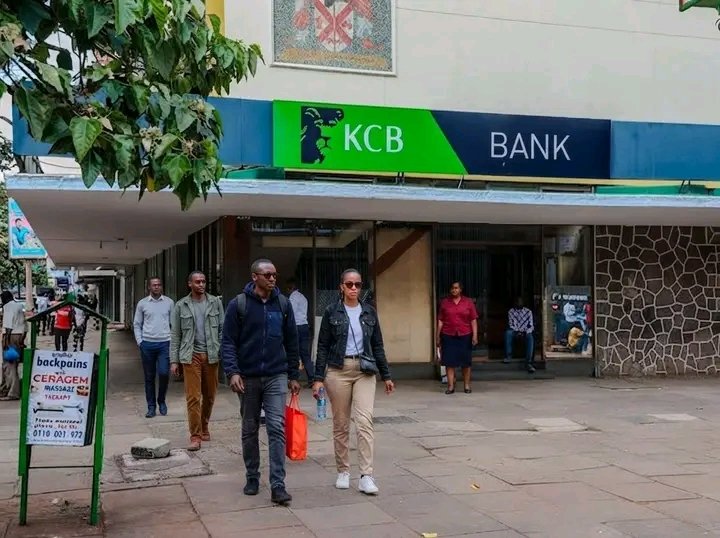
KCB realized that fighting this solely as a civil case wasn't enough, because the papers Foxcapital brought to court were completely fake. To fight back, KCB Group CEO Paul Russo personally handed over the entire file to the DCI Banking Fraud Unit to kick off a criminal investigation, on August 25, 2026.
Instead of waiting out a slow commercial court battle, KCB launched a preemptive strike by filing an emergency criminal complaint with the DCI Banking Fraud Unit. The bank wants the DCI to expose the forgery immediately, allowing it to dismantle the court's freezing order before any financial damage occurs
By initiating a criminal investigation, KCB is attempting to prove to the High Court that the entire foundation of Foxcapital's lawsuit is built on forged records.
The DCI is treating this as a highly sophisticated syndicate. They are currently auditing KCB's secure email servers, printing logs, and network metadata to determine a critical fact:
Did a rogue employee extract real templates and forge their managers' names, or did Foxcapital use an outside cyber-fraud specialist to build realistic bank letterheads from scratch?
Was Foxcapital too clever by half?
Does the evidence point to a classic "Ghost Billion" bank scam?
When a transaction leaves zero digital footprint in the global banking network, relies on forged international documents, and is completely disowned by the sending bank, it is undeniably a scam. High-stakes financial fraud relies heavily on smoke and mirrors, but the hard data quickly exposes the truth.
On November 28, 2025, Foxcapital claimed that it expected a massive inward remittance of €978.68 million (Sh147.86 billion) from the British company Bay Bionics Ltd through UBS Switzerland.
Foxcapital executives went to KCB's Sarit Centre branch and corporate headquarters, Nairobi, demanding that the money be credited to their Euro account.
The bank reviewed its systems, SWIFT gateway, they found absolutely no record or proof that this money ever arrived. A SWIFT is the secure international messaging system that banks use to safely send money to each other across borders. A bank cannot put money into your account if they haven't actually received it from the other side. Since no money arrived, they refused to update the account balance.
When KCB forwarded the paperwork to UBS Switzerland for authentication on August 13, 2026, UBS Switzerland specifically stated that the alleged €978.68 million (Sh147.86 billion) transaction, payment instructions, and cross-border transfer details did not originate from UBS Switzerland.
UBS confirmed that the documents provided by Foxcapital, including the purported SWIFT MT103 international payment messages, were not genuine: they were completely fake. UBS had never processed, approved, or authenticated any component of the alleged multibillion-shilling remittance.
Instead of backing down, Foxcapital began presenting what they claimed were KCB's own internal communications to prove the bank was lying.
On April 17, 2026, Foxcapital showed KCB executives an internal tech report. Foxcapital claimed the bank's own Head of Compliance, John Ndegwa, had signed a document admitting that a computer glitch accidentally trapped their money inside the bank's system. The internal tech report claimed that KCB’s Head of Compliance looked into the system, found the money, and admitted it was stuck.
On May 18, 2026, Foxcapital produced another document, an internal AML/CFT Clearance certificate, allegedly signed by KCB's Anti-Money Laundering Compliance Manager, Chanya Kombo, to claim their money had been thoroughly vetted and were legally clean.
When KCB Bank's top leadership reviewed these documents internally, they discovered that its compliance managers had never authored or signed them. What surprised the bank most was that the papers referenced authorizations by a 'Head of IT Security'—a position KCB officially states does not even exist within its corporate structure.
When confronted with these papers in court, KCB corporate leaders sounded the alarm. Both Ndegwa and Kombo filed sworn legal affidavits flatly denying that they ever authored, reviewed, or signed those clearances. KCB insisted the paperwork was an outright fabrication designed to swindle a multi-billion-shilling payout from the lender.
Realizing that KCB corporate headquarters would never willingly release Sh147.86 billion based on these contested documents, Foxcapital shifted its strategy. They hired lawyer Philip Nyachoti and filed High Court Commercial Suit No. E533 of 2026 to legally compel KCB to hand over the money.
By rushing to court, Foxcapital got a temporary legal order that forced KCB to freeze and protect the money. If KCB didn't obey, the bank bosses could be arrested for defying the judge. This clever trick used the court to make the fake transaction look real before the bank had time to prove it was a scam.
The High Court's "interim preservation orders" command KCB Bank not to move, trade, or touch the €978.68 million. But since the bank’s systems show the money never arrived, KCB is effectively forced to legally isolate and lock down "zero".
The real threat is that if Foxcapital can convince a judge that the money is there based on those forged papers, the court could eventually order KCB to release it. If that happens, KCB Bank would have to pay Sh146.3 billion out of its own real cash reserves to satisfy a fake transaction.
Although detectives combed Lesoipa’s compound and surrounding areas, her body was never recovered.
Despite the missing remains, prosecutors charged both Waithera and Gakinya with murder at the Milimani Law Courts in Nairobi, accusing them of killing her between December 2018 and July 2019. Both pleaded not guilty and were released on a KSh 2 million bond.
In a bizarre courtroom twist in November 2021, a defense lawyer shocked High Court Judge Daniel Ogembo by claiming he had received a WhatsApp call from Lesoipa herself, allegedly saying she was still alive two years after being declared dead. Prosecutors and investigators dismissed the claim as a distraction while the criminal and succession battles dragged on through the courts.
To the court, it was clear that once Lesoipa vanished, a multi-sided tug-of-war erupted over her KSh 100 million fortune:
John Hari Gakinya (The Lawyer), fought in court to be confirmed as executor of the November 2018 will. Outside court, he took physical possession of her Toyota Prado using a separate forged vehicle sale agreement dated October 1, 2018, and later sold the car to a third party (Shadrack Njamura Ndungu).
While Lucy Waithera Njuguna (The Confidante), positioned herself as a primary beneficiary under the forged will. She held onto Lesoipa's passport, ATM cards, and phone, while attempting to cash out the Nakuru house through the KSh 10.2 million sale to Pastor Musembi.
Driver John/Joseph Wanjohi who was listed as a beneficiary even gave investigators further conflicting accounts, claiming he had dropped Lesoipa off at Jomo Kenyatta International Airport, directly contradicting Waithera’s claim that Lesoipa had died at MP Shah Hospital.
The Directorate of Criminal Investigations, the Attorney General, and legal representatives for Lesoipa's family in Belgium intervened to freeze the succession, block the asset sales, and place the KSh 100 million estate under the Public Trustee pending the outcome of the murder trial.
Murder suspects, co-accused Lucy Waithera Njuguna and Nakuru-based lawyer John Hari Gakinya remain out on bail while facing joint murder charges in the High Court (docketed under Republic & another v Gakinya & another, Criminal Case 66 of 2025).
In a ruling delivered on October 24, 2025, the High Court permitted prosecution witness Faith Njambi Macharia to testify virtually via secure video link from Ontario, Canada, allowing the prosecution to continue presenting evidence from abroad.
In that same October 2025 ruling, documents reviewed by Superb Tips Kenya Analysts show that the court granted an application by Shadrack Njamura Ndungu for the immediate release of Lesoipa’s detained Toyota Land Cruiser Prado (registration KBP 298E). However, the court strictly prohibited him from selling, transferring, or parting with the vehicle until both the murder trial and the succession dispute are concluded, ordering that it remain available for court inspection.
The parallel civil battle over her properties in Nakuru and Samburu (Nakuru High Court Succession Cause No. 40 of 2019) remains frozen and under active litigation.
On October 23, 2025, the High Court at Kibera issued further case directions in the related estate dispute (Estate of Dysseler Mireille Lesoipa). Court filings reiterated formal findings from the Civil Registration Department and Forensic Document Examiners confirming that the death certificate and will submitted to make Gakinya the executor were forgeries.
Dysseleer Mireille Lesoipa was a Belgian national who in 1993, at the age of 36, left her life in Belgium after falling in love with a 21-year-old Kenyan man Emmanuel Lesoipa, a young Samburu traditional dancer 17 years her junior.
According to reports, Mireille arrived on the Kenyan Coast in 1993, when Emmanuel, originally from Lenkonen village near Maralal in Samburu County, was working as a traditional Samburu cultural dancer performing for tourists at the coast when the two met and fell in love.
The couple formalized their marriage in 1995 and settled in Lonkoben village, roughly 20 kilometers from Maralal in Samburu County. Mireille fully embraced Samburu traditions, language, and daily life, earning immense affection from locals who nicknamed her "Laila wa Samburu."
Mireille became known across Maralal for her philanthropy, frequently helping neighbors and taking two young Kenyan girls under her wing to support their education and upbringing.
During their marriage, Mireille and Emmanuel accumulated substantial wealth across Samburu County. Their assets included huge herds of livestock, reportedly numbering in the thousands of cattle, several parcels of land in Maralal, Loosuk, and Ngweta, commercial vehicles, and a prominent shopping complex in Maralal town.
Alongside her physical properties in Kenya, she maintained significant cash savings across local bank accounts at KCB as well as an international account in Belgium.
In 2004, when Mireille was 47 years old and Emmanuel 32 years old, roughly after nine years of marriage, the relationship broke down, and the couple divorced, because they could not have children together.
The end of their marriage triggered a protracted legal battle over their shared assets, particularly the lucrative Maralal township shopping complex. According to court records as reviewed by Superb Tips Kenya Analysts, the matrimonial property dispute dragged through the High Court in Nakuru for years as Emmanuel's health declined, eventually culminating in the court-ordered sale of the Maralal property in late 2017.
Following Emmanuel's death in 2017, Mireille felt she had little left keeping her in Samburu, and relocated to Nakuru County, where she purchased a quiet villa in the upscale Milimani estate with plans to spend her retirement teaching French.
Shortly after moving to Nakuru in 2018, Mireille met and befriended Lucy Waithera Njuguna, a local woman who quickly became her closest confidante and daily companion. Investigators later noted that Mireille trusted Njuguna deeply, so much so that, Waithera had access to her original passport, ATM cards, mobile phone, and property documents.
For her legal and property affairs in Nakuru, Mireille relied on local advocate John Hari Gakinya (of Hari Gakinya and Company Advocates), who was also reportedly linked to Waithera.
Between December 2018 and mid-2019, Dysseleer Mireille Lesoipa had an estimated net worth of at least KSh 100 million.
Mireille Lesoipa was last accounted for at her home in Blankets Estate, Mwariki, Nakuru, between December 01, 2018, to December 11, 2018. Shortly after this date, lawyer John Hari Gakinya took possession of her Toyota Prado.
Passport stamps later recovered from her confidant Lucy Waithera Njuguna purported to showed Mireille traveling to India on December 12, 2018, and returning on June 30, 2019. However, Kenyan Immigration Department records disproved the claim that she traveled to India for medical treatment.
Court records as reviewed by Superb Tips Kenya Analysts show that Mireille's mobile phone signals, digital footprint, and bank account activity ceased entirely after June 2019.
Roughly four months after her bank activity stopped, in October 2019, Nakuru-based lawyer John Hari Gakinya filed succession proceedings at the High Court in Nakuru seeking control of Lesoipa's KSh 100 million estate. The filing included a death certificate claiming Lesoipa had died of HIV/AIDS complications at MP Shah Hospital in Nairobi on July 15, 2019, and was cremated at Kariokor.
When detectives from the Directorate of Criminal Investigations (DCI) checked the records, MP Shah Hospital confirmed Lesoipa was never admitted nor died there. Confronted with this proof, her close friend Lucy Waithera Njuguna changed her story, claiming Lesoipa had died during medical treatment in India, a claim immediately disproven by Immigration Department travel logs.
DCI document examiners analyzed three separate wills presented in the succession battle and testified in court that Lesoipa’s signatures were forged. In February 2021, High Court Justice Teresia Matheka froze the succession case after detectives presented proof of the fraud.
In the primary will, the October 2018 will, advocate Gakinya presented in Nakuru High Court Succession Cause No. 40 of 2019, the lawyer named Gakinya himself as the sole executor of her estate.
The second forget will, the November 2018 will, listed Dysseleer Mireille's cash held across three KCB bank accounts in Kenya and an international account at Banque Internationale à Luxembourg (Suisse) in Belgium, alongside real estate. However, investigators noted that Gakinya omitted her Toyota Land Cruiser Prado (KBP 298E) and her Nakuru house from the will's schedule of assets, because he and Waithera were already quietly transferring and selling those items off the books.
To make the forged third will look legitimate and tied to Mireille's Samburu roots, the third will, backed by a questionable letter from a Samburu chief, named seven beneficiaries:
• Lucy Waithera Njuguna (her Nakuru friend and hairstylist)
• John Hari Gakinya (the lawyer who drafted and filed the petition)
• John (or Joseph) Wanjohi (Lesoipa's driver)
• Ntalie Lenolkiok (a resident from her former Samburu community)
• Ramato Tilia Lenkiok (Ntalie's child, listed specifically for education support)
• Elizabeth John Leramat Lebiite (also listed for education support)
• Daniel Moen
Even before the court could rule on the succession, investigators found that the suspects had already moved to liquidate her assets. Waithera allegedly leased out Lesoipa's Milimani residence to a private company to collect rent and sold a KSh 20 million property to a Mombasa-based gospel musician and pastor.
The Mombasa pastor caught up in the saga is Pastor Anthony Musembi Kivuthi, a prominent Kenyan gospel artist and preacher formerly affiliated with Bishop Wilfred Lai’s Jesus Celebration Centre (JCC) in Mombasa.
Pastor Anthony Musembi Kivuthi and his wife, Maureen Nduku, entered into a sale agreement with Waithera to buy the property for KSh 10.2 million.
When Directorate of Criminal Investigations (DCI) Serious Crimes Unit detectives uncovered the alleged murder and forgery plot in February 2020, they questioned Pastor Musembi to establish whether he was an innocent buyer or was helping Waithera conceal the asset. Police placed a caveat on the property and instructed the couple to stop making further installment payments.
The High Court later voided the sale agreement because Waithera had no legal authority to sell a missing person's property. The court ordered Pastor Musembi and his wife to vacate the premises and pay accrued rent to the estate.
In February 2020, DCI officers arrested Waithera after they found her in possession of Lesoipa's original passport, mobile phone, assorted bank ATM cards, and copies of the falsified death certificate.
In March 2020, detectives arrested advocate Gakinya after discovering he was driving Lesoipa’s Toyota Prado and had allegedly used it as collateral to secure a KSh 2 million loan.
Saudi Arabia’s Ministry of Human Resources and Social Development has officially confirmed that the bilateral technical annex signed with Kenya on November 12, 2026, applies strictly to domestic workers and private drivers, rather than professional sectors like healthcare, education, or construction.
In a statement issued on November 17, 2026, Saudi authorities clarified the scope of the agreement following announcements by Kenyan Labour Cabinet Secretary Alfred Mutua regarding 293,600 multi-sector job opportunities.
The agreement only regulates the hiring of domestic workers (such as house helps and homestead cooks) and private drivers.
The annex focuses on reducing recruitment costs, mandating pre-departure training, and strengthening protections for both workers and employers.
Drivers, house helps, and domestic cooks can apply based on active employer demand, provided they go through government-licensed recruitment agencies and official verification platforms rather than applying directly.
Because all domestic worker visas in Saudi Arabia are issued through the government's Musaned platform, Kenyan applicants cannot apply directly to Saudi families. Instead, placement follows a regulated agency-to-agency process:
You must register with an agency licensed by Kenya's National Employment Authority (NEA) that partners with approved Saudi recruitment offices. Avoid individual brokers operating solely on WhatsApp or Facebook.
Under the new technical annex, applicants must complete pre-departure orientation and skills training (such as NITA certification) before traveling.
Before departure, ensure your employment contract is registered on Musaned with clear terms on salary, rest days, and working hours.
Under Saudi regulations and the recent bilateral pilot agreement, employers cover visa, airfare, and primary recruitment expenses, so applicants should be cautious of agencies demanding exorbitant upfront fees.
Later in 2021, Ameer Cajee was detained by Swiss police in Zurich when he tried to access safe-deposit boxes containing hardware crypto wallets. Swiss prosecutors seized the devices, placed Ameer under house arrest in May 2022 before releasing him on bail, and opened formal money-laundering proceedings against both brothers.
In February 2026, an investigation reports tracked Raees and Ameer Cajee back inside South Africa. They were traced to a residence inside the ultra-exclusive, gated Zimbali Estate on KwaZulu-Natal's North Coast, as well as properties and holiday spots in Umhlanga and Johannesburg.
When journalists and legal process servers attempted to reach them at Zimbali to deliver High Court summonses, they were blocked at the gates by private security guards.
Africrypt was an unregulated, centralized cryptocurrency investment platform that lured wealthy South Africans, and attracted international clients abroad, including investors in the Middle East and overseas network with impossible returns.
Founded in 2019 by teenage brothers Ameer and Raees Cajee, the scheme combined Ponzi-style payouts with deliberate security gaps and a pre-planned international escape. Later investigations and court filings as reviewed by Superb Tips Kenya Analysts put verified investor losses closer to $40 million–$50 million (roughly R200 million to R700 million at the time or approximately 5.19 billion to 6.49 billion Kenyan Shillings).
The brothers marketed Africrypt as an AI-driven crypto trading firm capable of generating massive profits, promising some clients up to 10% returns per day or a minimum return of five times their initial investment.
Rather than running public ads, the Cajees targeted high-net-worth individuals, businesspeople, and celebrities in South Africa. They urged clients to keep the investment a secret, creating an aura of exclusivity that drove word-of-mouth referrals.
Clients were instructed to deposit South African rand into Africrypt's corporate bank account at First National Bank (FNB), which the brothers used to buy crypto across exchanges. Instead of holding each client's crypto in separate, auditable accounts, all funds were pooled together under the brothers' direct control.
Investors were given access to an online portal showing rapid, fictional growth in their balances. Early withdrawals were paid using money from newer deposits, a classic Ponzi structure, to build trust and convince victims to reinvest larger sums.
On April 13, 2021, COO Ameer Cajee emailed investors claiming the platform, wallets, and nodes had been breached by hackers. He explicitly urged clients not to contact police or lawyers, warning that legal action would "delay the recovery process".
Digital forensics later as reviewed by Superb Tips Kenya Analysts revealed that admin sessions remained active for 72 hours after the supposed hack. The brothers drained the pooled FNB accounts and routed the Bitcoin through dark-web tumblers and mixers (such as Wasabi Wallet) to scramble the transaction trail before fleeing to the UK and Dubai.
Investigations noted that seven days before the collapse, the Cajees revoked their own employees' access to Africrypt's back-end systems and servers so no one inside the company could see the accounts being emptied.
According to investigation records, as reviewed by Superb Tips Kenya Analysts, before pulling the plug, the brothers secured Vanuatu citizenship and passports to ensure they could travel internationally even if South African authorities flagged their local passports. They paid roughly $130,000 (approximately ZAR 2.2555 million South African rand or 16.8714 million Kenyan shillings) each to obtain citizenship and passports from the Pacific island nation of Vanuatu.
Shortly after emailing investors about the supposed hack on April 13, 2021, they flew out of Johannesburg on first-class Emirates tickets, costing nearly R600,000, ($34,582.13 USD or KSh 4.5 million ) . Because of COVID-19 travel restrictions on flights from South Africa to the UAE, they spent 14 days in the Maldives before landing in Dubai.
After Africrypt collapsed and the brothers fled to Dubai, they convinced him a Dubai-based businessman, Michael, to co-launch a second crypto fund, resulting in what he described in February 2026 court filings as a "second heist" and a R300 million loss(approximately $17.3 million USD or 2.25 billion Kenyan Shillings).
In February 2026, Gerhard Botha confirmed he was attempting to serve High Court papers on the Cajees at their Zimbali Estate residence on behalf of a single investor claiming roughly $50 million in total losses (approximately 867.5 million South African rand or KES 6.489 billion Kenyan shillings).