$MIST
Milestone Pharmaceuticals (MIST) has entered its commercial phase with the U.S. launch of Cardamyst, now available through retail pharmacies. Cardamyst is approved for the conversion of acute symptomatic PSVT to sinus rhythm in adults and offers a self-administered, non-invasive alternative to emergency-department IV therapies, representing an important shift in how these episodes can be managed.
Commercial execution is underway, with a national sales force deploying in mid-February 2026. While early prescriptions may be modest ahead of full deployment, this sets up a clear revenue inflection as cardiologists and electrophysiologists adopt outpatient use and payer coverage expands.
Milestone is also positioning Cardamyst for growth beyond the U.S. through an accepted EMA Marketing Authorization Application, opening the door to European commercialization and a broader addressable market.
Importantly, Cardamyst is not a one-indication asset. Milestone is advancing label-expansion programs, including AFib with rapid ventricular rate and pediatric PSVT, which could significantly expand the drug’s clinical and commercial footprint.
With regulatory risk largely removed, MIST is now an execution story driven by prescription uptake, ex-U.S. progress, and indication expansion. As these catalysts unfold, valuation will increasingly be shaped by commercial performance rather than development milestones.
$SLS Sellas owns the trademark for NeuVax (via merger). NeuVax was successful in the p1 and p2 clinical trials. NeuVax and GPS may look similar on the surface, both are peptide based cancer vaccines given after patients achieve remission, but biologically they are very different. NeuVax targeted HER2, which is essentially a tumor marker that breast cancer cells can down regulate or bypass without losing their ability to survive. When HER2 expression drifted or disappeared, the immune system had nothing left to recognize, and the cancer escaped. WT1, the target of GPS, is fundamentally different. WT1 is not just a surface marker; it is a core oncogenic transcription factor that leukemia cells depend on to live and proliferate. AML cells cannot simply “turn off” WT1 to evade immune attack without killing themselves, which makes WT1 a true biological choke point rather than a cosmetic antigen.
This matters because WT1 is also expressed in more than 90% of AML cases and directly correlates with minimal residual disease and relapse risk. In other words, WT1 marks the very cells responsible for recurrence. That gives GPS a much cleaner and more universal target than NeuVax ever had. Importantly, GPS Phase 2 data did not just show immune activation, it showed fewer relapses and longer survival compared to expected outcomes, suggesting that WT1 directed immunity may actually control residual leukemia in a clinically meaningful way.
REGAL further improves on the mistakes of NeuVax by enrolling a very high risk AML population in first complete remission, where relapse rates are high and the potential benefit of immune maintenance is greatest. NeuVax failed in part because it treated broad, lower risk populations where many patients did not need the vaccine to do well. By contrast, REGAL is designed to test whether targeting WT1 can truly change outcomes in the group most likely to relapse. That does not guarantee success, cancer vaccines remain high risk, but it explains why GPS has a credible scientific basis that NeuVax never had.
Sometimes you have to fail before you win! GLTA
$AXSM Axsome goes from being a seller asking for a deal, to a partner choosing among bidders. The brilliance of HT.
HT’s strategy with AXS-05 is a masterclass in value creation and timing. Rather than rushing into an EU partnership for Auvelity, Axsome has deliberately chosen to wait for the most powerful inflection point in the franchise: approval of AXS-05 for ADA, now under Priority Review. This indication alone represents a huge market, with massive unmet need and no safe, effective oral standard of care. Upon approval, AXS-05 will dominate the U.S. ADA market due to its clean safety profile, no black box warning, no mortality signal, combined with competitive pricing and favorable payer dynamics. That profile doesn’t just win scripts; it defines the category.
What makes this even more impressive is how HT managed expectations. Despite receiving Priority Review, Axsome publicly stated they were expecting a standard review, a textbook example of underpromising while positioning the company to overdeliver. That disciplined messaging kept speculation in check, preserved credibility, and allowed the regulatory upside to speak for itself. By waiting for ADA approval, HT is fundamentally reshaping the negotiating leverage. Auvelity alone is a strong MDD asset. Auvelity plus AXS-05 for Alzheimer’s agitation is a multi-indication, multi-billion-dollar CNS franchise. Post-approval, “Axsome goes from being a seller asking for a deal, to a partner choosing among bidders”. That shift enables meaningfully higher upfront payments, better royalties, and potentially co-promotion or retained regional rights.
Operationally, the timing is just as smart. Axsome already has the U.S. commercial infrastructure to launch AA efficiently while generating real-world safety and efficacy data. Partnering earlier would have capped upside and transferred value prematurely. Waiting ensures any global partnership reflects the true value of what HT has built.
@koolkaryn You have less than 11 million people, you can afford it. We have 348 million people, we can’t afford to give them all healthcare, except congress, we give them healthcare.
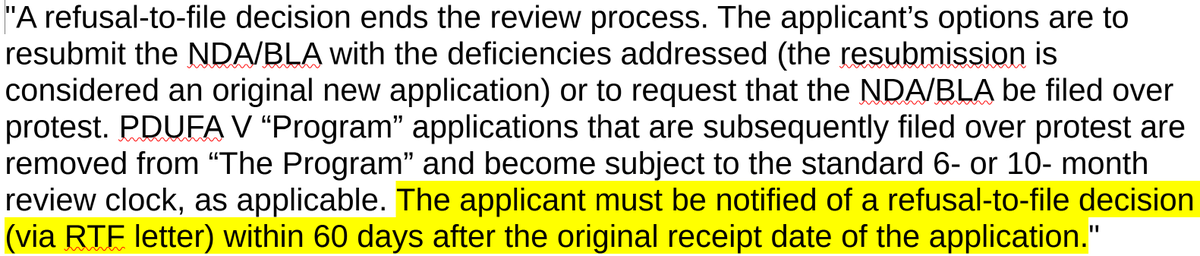
$AXSM AXS-05 for ADA sNDA. FDA 21 CFR 314.101 indicates that if an RTF is issued, the formal RTF letter will be sent after the 60-day review concludes. If the sNDA is accepted, the formal notice will occur via the 74-day letter. Axsome said they filed the sNDA in Q3, sixty days after the end of Q3 was Friday. Based on this timeline, the sNDA was likely accepted by the FDA.