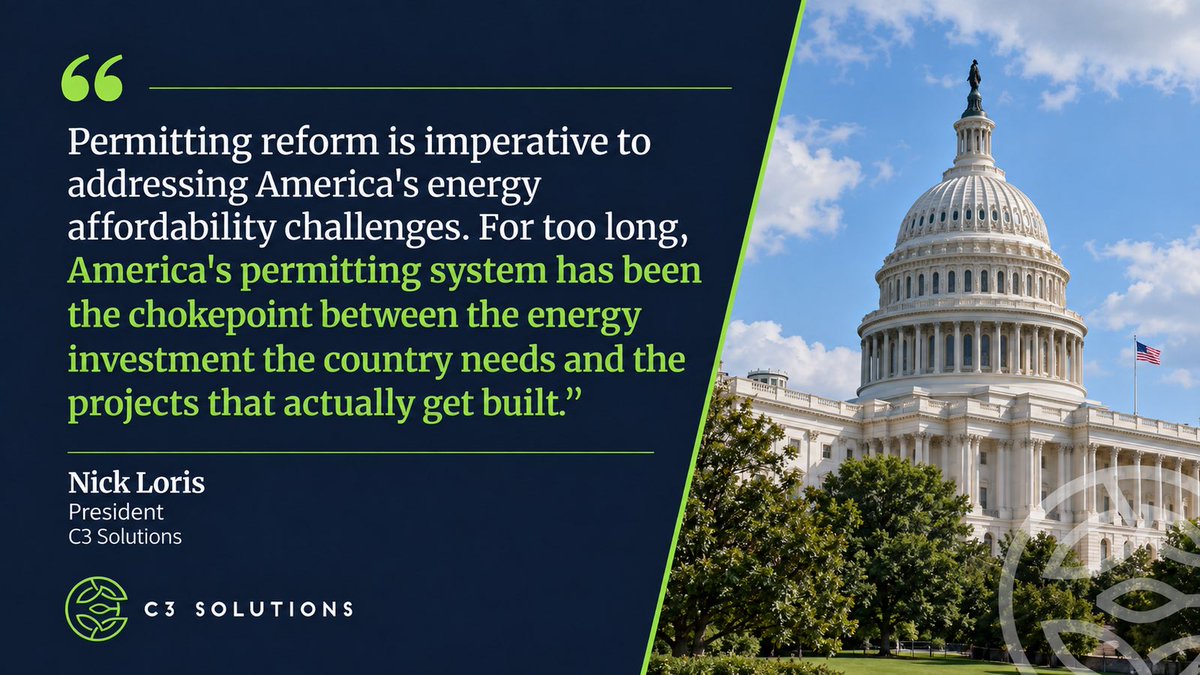
With Congress addressing permitting reform, C3 Solutions President @NiconomistLoris responds about why this is so important for affordability & American innovation.
America’s permitting system has too many veto points.
Even after years of review, projects can still be blocked by overlapping federal and state authorities.
New at @C3Journal: @megan_jenkins17 and @smithtjosh explain how Congress can fix this.
China dominates critical minerals. But does that justify Washington's growing push for subsidies, price floors, and stockpiles?
David Kemp argues that the threat is real, but more limited than many assume.
A thoughtful new essay @C3Journal:
https://t.co/ZY4zpRObLF
History has repeatedly demonstrated that price controls don’t work—and can ultimately harm the very consumers they are intended to protect.
C3 Solutions President @NiconomistLoris spoke with @FoxNews about why Texas Gov.-elect Gina Hinojosa’s proposed electricity rate freeze could backfire on Texans.
Read the full story at the link 👇
“Pass the permitting bill…[stopping] a transmission line or a gas pipeline in our country has become not just an artform. It’s become a giant business model.” -Interior Secretary Doug Burgum. He’s right. Here’s how the Senate’s permitting plan, #BAAJA, takes on that challenge🧵
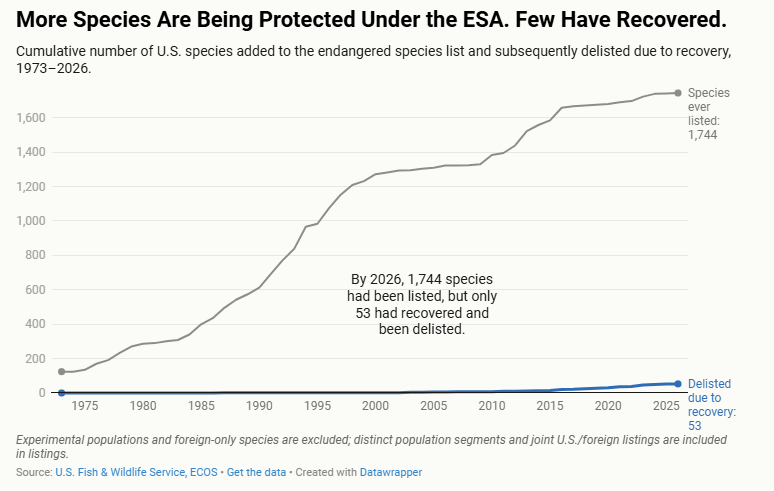
Since the Endangered Species Act was enacted, only 3% of the species listed have recovered and been delisted.
That needs to change. The act should protect species when they need it, but should offer a clear path to reduce federal regulations and delist species as they recover.
Recovering endangered species can be a long and difficult process. A new bipartisan bill could help change that.
New at C3 Journal:
https://t.co/QfENShwGKu
Texas Gov.-elect Gina Hinojosa says she will declare a "high-cost emergency" and freeze residential electricity rates within an hour of taking office.
The plan clashes with Texas' competitive energy market, where over 100 retail providers compete for consumers under a deregulation law.
Nick Loris, president of @C3Journal, warns the freeze could leave suppliers unable to adequately provide power.
Full story here https://t.co/f4jvG2PvCe
@C3Journal Thank you to @c3solutions for inviting me to share these views at their recent excellent summit, and for the opportunity to write them down!
Only a 4 min read, a record for me. No excuse not to read it.
2/2
https://t.co/JZ8rC81MLh
"We aren’t likely to see a Green New Deal for the Lone Star State."
@jneeley78 on what's next for energy policy in Texas after the blue wave.
https://t.co/IQ3HElcBAT
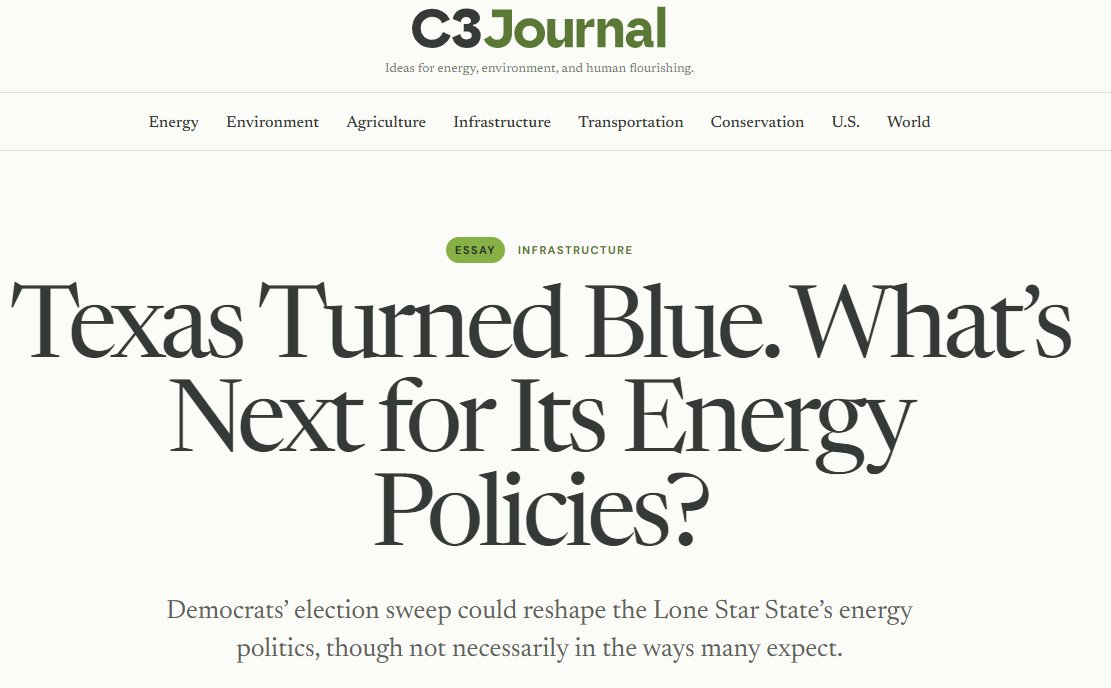
Texas turned blue. What will that mean for its energy policies?
"We aren’t likely to see a Green New Deal for the Lone Star State," says @jneeley78
https://t.co/Kc2KLHsPO9
Texas just turned blue. Democrats’ election sweep there could reshape the Lone Star State’s energy politics, though not necessarily in the ways many expect.
New essay by @jneeley78 for @C3Journal:
Healthy forests need active management not one-size-fits-all rules.
The federal Roadless Rule restricts road construction and timber harvesting across millions of acres of national forests.
Repealing it could give local forest managers more flexibility to reduce wildfire risks and restore forest health while preserving existing environmental reviews.
“If we have any hope of cutting energy costs and creating more good-paying jobs to help hardworking New Mexicans support their families, then we need to be able to build big clean energy projects in a matter of years — not decades.”
That’s a quote from New Mexico’s senior US Senator, @SenatorHeinrich in his latest article discussing BAAJA and the benefits for his constituents- this applies to everyone who benefits from big infrastructure projects across the country too.
full article below ⬇️
Big tech investments in energy infrastructure could help lower electricity costs but only if the rules get it right.
As data centers and other large electricity users drive up demand, their investments could help pay for new infrastructure and spread costs across more customers. But utility regulations can determine whether those savings actually reach consumers.
Take Google’s investment in Arkansas: its agreement with Entergy includes commitments tied to the infrastructure needed to serve its new facilities, raising important questions about how those payments benefit existing ratepayers.