Drawing on case studies from established and emerging international fashion centres, chapter 2 by @TaylorBrydges et al. investigates how digital technologies are transforming the field of fashion at different scales and in different geographic contexts. @atlejh @brian_hracs
PhD Opportunity: I am looking for students interested in researching the spatial dynamics of creative work. If you want to come work with me at the University of Southampton let me know! https://t.co/ys7Sas49WN
To combat unemployment, poverty and inequality many urban centres are trying to grow their cultural and creative industries. In chapter 8 Drummond & Snowball focus on policies for CCI clustering in a rural / small town context in South Africa. @CE_Africa
https://t.co/4nUpilMPou
Speaking of curation its really cool to see the backgrounds behind speakers at online conferences. I have seen some carefully placed vinyl, concert tickets and 'Rough Trade' bags so far. I might need to retool my office shelf before speaking tomorrow! @PauwkeBerkers @drjohaynes
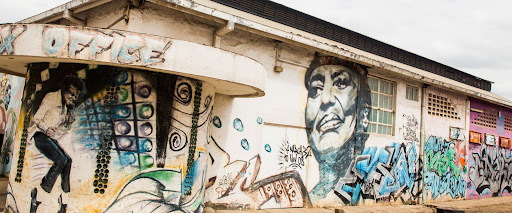
Chapter 7 considers the emergence of creative hubs in East Africa. Wangusa et al. profile cases in Nairobi, Dar es Salaam & Kampala to show how hubs are shaped by unique local ecosystems & contribute to sustainable development. @CE_Africa@HECreativEcon
https://t.co/4nUpilMPou
Next up my colleague @TimoKoren is sharing his excellent research on nightclubs in Amsterdam and what they tell us about many things including social inequalities and music genres! @PauwkeBerkers @hesmondthing @drjohaynes @YoshaW
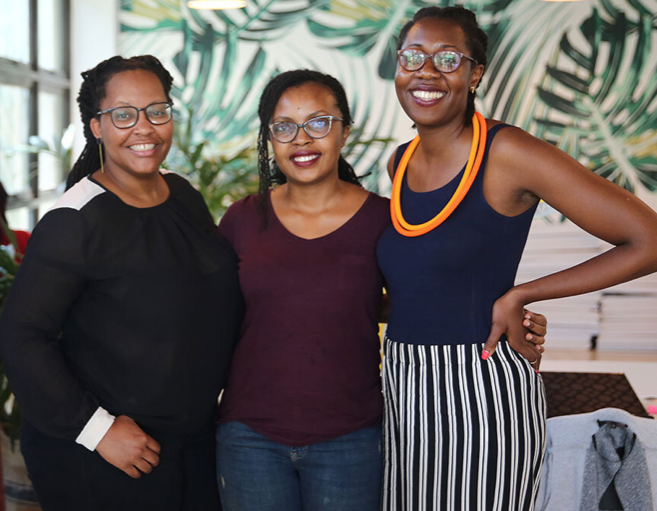
Chapter 4 examines the importance of finance in supporting CCIs in Kenya. With traditional commercial financing models not working Njuguna et al. explore the initiatives @HEVAFund uses to support young female creatives. @CE_Africa@HECreativEcon
https://t.co/4nUpilvewW
Chapter 10 shows how electronic dance music was introduced in Stockholm. Jansson & Gavanas use pioneers, space & resistance to show how time & space-specific processes curate our understanding & experience of specific subcultural expressions @brian_hracs
https://t.co/RR2JcZb88K
In East Africa, networks, institutions and supports are lacking and many creatives are sole traders. In chapter 3 Burton et al. explore how visual artists construct sustainable livelihoods both through art & for art. @CE_Africa@HECreativEcon@england_le
https://t.co/4nUpilvewW
In Chapter 9 @HECreativEcon@england_le@brian_hracs show that beyond ‘connecting producers and consumers’ cultural intermediaries in Africa provide a range of supports and services that enable & sustain creativity including space & training. @CE_Africa
https://t.co/RR2JcYTxhc
In Chapter 8 Capdevila analyzes the translation process of coworking practices from an urban setting, Barcelona’s metropolitan area, into rural areas in Catalonia. @brian_hracs @JanetMerkel
@AnitaFuzi@england_le @TaylorBrydges
@atlejh
https://t.co/RR2JcZb88K
As someone interested in sustainable fashion, learning about how woman in rural Kenya rear silkworms to contribute to ‘green textile’ production was fascinating! More about the brand & social enterprise @ToshekaDesigns in our Project Report. @CE_Africa
https://t.co/TyQ9qGAII3
In Chapter 7 Avdikos & Dragouni introduce a novel conceptual framework of cultural heritage value that considers economic AND socio-cultural impacts of the heritage and museums sector on places and user communities. @brian_hracs@thecityspeaker @atlejh
https://t.co/RR2JcYTxhc
For 8 years the 2nd week in October was always CCE week & a highlight of my academic year. Here are some memories of Uppsala, Berlin, Amsterdam, Florence, Seville, London, Stockholm & Basel while we look forward to resuming regular travel! @CCEBasel @atlejh @TaylorBrydges
One of the best fieldwork tours was at The Spier Arts Academy - a mosaic & ceramics apprenticeship program in Cape Town. This case highlights why funding, training, networking & work experience are crucial to sustainable arts-related careers. @CE_Africa
https://t.co/TyQ9qGSjzB
Accessing business support & finance is often a challenge for creatives in Africa. But @HEVAFund (Kenya) is a great example of innovative financing models & the importance of creative intermediaries (Full profile in Project Report) @CE_Africa@england_le
https://t.co/TyQ9qGSjzB
In Chapter 6 Judith Nyfeler draws on case studies of two Swiss fashion firms to explore the ways in which technologies and constraints serve as sources of creativity. @brian_hracs @atlejh @TaylorBrydges @mariannadovidio
https://t.co/RR2JcZb88K
In Chapter 5 Merkel & Suwala use cases studies of network managers in technology parks and hosts of shared workspaces in Berlin to examine intermediary practices, community-building and creative urban milieus. @JanetMerkel @brian_hracs@AnitaFuzi
https://t.co/RR2JcZb88K