Psychiatry holds the legal power to detain you and drug you against your will. It holds that power on the basis of diagnoses with no objective test and no confirmed mechanism of disease. That authority did not come from medicine. Psychiatry has institutional authority, pharmaceutical funding, and legal protection. What it does not have is rigorous science.
"I was just immediately very, very horrified that this was allowed to happen to me without my consent, because PSSD is not even in the drug labels. There's no warning beforehand."
Lauren Friedman (@lololizzle) explains that there still aren't any warnings about PSSD in the USA.
"It’s just like a full nervous-system injury, in which, basically, all the best parts of humanity are taken from you."
PSSD sufferer Lauren Friedman (@lololizzle) describes the devastating impact of the condition in a recent interview with Isabel Brown (@theisabelb).
There is a silent epidemic of Post-SSRI Sexual Dysfunction (PSSD) plaguing Generation Z today that virtually NO ONE is talking about -- causing a complete and permanent loss of sex drive, sensation, and emotional connection for the rest of your life. 💔
Lauren is just one of countless young women struggling with the condition, which doctors in America today are still incredibly reluctant to diagnose -- despite our culture's willingness to prescribe antidepressants to anyone with minimal symptoms.
Today, she's speaking out, warning other young women like her that your Zoloft prescription may not be harmless after all... despite PSSD being completely ABSENT from any warning labels on SSRI drugs themselves 👀
Thirty years after CCHR sued the FDA for the Prozac files, SSRI side effects are still not fully disclosed.
CCHR was the only organization to fully press for disclosure of the suppressed SSRI evidence both through FOIA and by suing the FDA. It would still take another 12 years before the internal safety data that CCHR had fought to expose finally came to light.
More than 35 years ago, the FDA already possessed substantial evidence that SSRIs could trigger severe adverse effects, including agitation, suicidal ideation, and violence. Internal company documents from the 1980s, clinical trial data, and a rapidly growing volume of adverse reaction reports already pointed to these risks long before the drugs became household names.
Through persistent Freedom of Information Act requests and litigation against the FDA itself, CCHR obtained and publicized critical safety data that regulators and manufacturers already held.
If a mental health industry watchdog could uncover and document these risks, the mental health industry handing out the drugs like candy had every opportunity to do the same—and act on it.
To this day, many psychiatrists and defenders of psychiatry’s ignorance of drug risks claim they “didn’t know” about these dangers. But the data has been there all along for anyone who cared to listen to the patients or press for the facts.
In the 1980s, when Prozac, the first SSRI, came on the market, CCHR began receiving hundreds of case reports of people experiencing severe side effects. These reports, which started accumulating in the late 1980s, described agitation, suicidal ideation, violence, and other serious adverse reactions. If CCHR was receiving this many reports, the psychiatric industry was certainly receiving them too—but took no action. CCHR, on the other hand, responded to these alarming consumer reports by filing a Citizen Petition seeking to remove the drug from the market and pressing the FDA for greater scrutiny of the emerging safety signals.
This pressure contributed to the FDA’s decision to convene its Psychopharmacological Drugs Advisory Committee (PDAC) for a public hearing on 20 September 1991. Dozens of patients and family members gave firsthand testimony describing how Prozac had triggered suicide attempts, completed suicides, and acts of violence. Despite this powerful evidence, the majority of the panel—many of whom had financial ties to pharmaceutical companies and were granted conflict-of-interest waivers—chose to ignore the witnesses. The committee voted that there was no credible evidence linking the drug to suicidality or violence and recommended no changes to the label. (It would take another 13 years for the FDA to finally add safety warnings on SSRIs for suicidal ideation — the black-box warnings — which the American Psychiatric Association protested against.)
Following the hearing, CCHR continued its efforts by submitting a broad FOIA request in June 1992 for all FDA records concerning Prozac, including the clinical trial data submitted by the manufacturer, the New Drug Application files, and the individual adverse-reaction reports. When the agency’s response proved incomplete, CCHR sued. In Citizens Commission on Human Rights v. FDA (45 F.3d 1325, 9th Cir. 1995), the Ninth Circuit largely upheld the FDA and Eli Lilly on the adequacy of the search and most withholdings, but remanded on the individual adverse-reaction reports, which the agency conceded were not exempt.
The largest volume of material kept from public view was protected under FOIA Exemption 4 as trade secrets or confidential commercial information—Lilly’s internal clinical-trial analyses, data tables, and strategic memos. Those documents later surfaced through product-liability discovery and a 2004 leak to the British Medical Journal. They included a November 1988 Lilly report showing that 38% of Prozac patients experienced new “activation” symptoms (agitation, anxiety, insomnia) versus 19% on placebo, internal compilations indicating higher reported rates of suicide attempts and hostility compared with older antidepressants, and company discussions from the 1980s acknowledging these risks and considering how to limit their impact on labeling and prescribing. Psychiatrists and clinical researchers employed by or contracted to the company were directly involved in generating, reviewing, and interpreting the safety data that the company treated as confidential and that only later emerged through litigation.
Had Exemption 4 not been invoked, that internal safety data would have been available to the general public years earlier. The same internal safety data was leaked anonymously to the British Medical Journal in December 2004.
The psychiatric-pharmaceutical industry failed to act then, just like they are failing to act today, dismissing PSSD, and other well documented SSRI side effects as anecdotal while patients continue to be injured by these drugs.
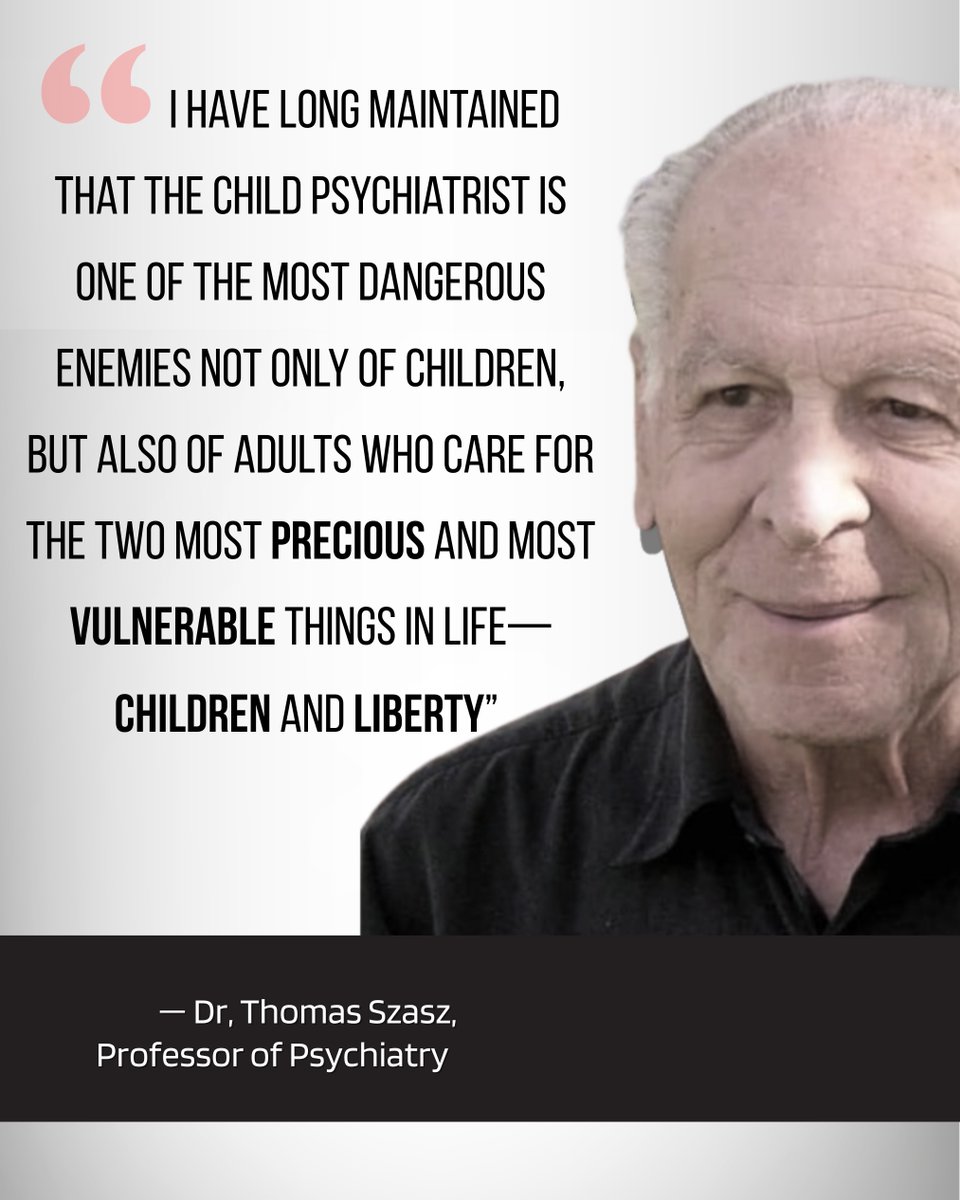
"When will we recognize and publicly identify the medical criminals among us? Or is it the very possibility of perceiving many of our leading psychiatrists and psychiatric institutions in this way precluded by the fact that they represent the officially ‘correct’ views and practices. Is it precluded because they have the ears of our lawyers and legislators, journalists and judges? Or is it precluded because they are control the vast funds, collected by the state through taxing the citizens, which finance an enterprise whose basic moral legitimacy we should call into question?” - Thomas Szasz, Professor of Psychiatry
Parents Need Better Information about Psychiatric Drug and Hospital Risks and to be warned against companies that forcibly transport “troubled” teens to residential treatment facilities and wilderness camps. Distressed families pay $2,000–$4,000, and sometimes a consultant fee of up to $10,000 more, to have children taken from bed at night and driven across state lines, even when the child is of consenting age, and locked in abusive programs thousands of miles from home.
The practice is known as “gooning.”
About 40,000 children, including some from Canada, are held in U.S. behavioral facilities. The U.S. behavioral market was valued at $92.14 billion in 2025 and is projected to reach $132.46 billion by 2032. One study put youth treatment spending at approximately $12 billion.
By 2015, 82% of residential facilities still used seclusion and restraints. At least 145 children died of preventable causes in residential centers over three decades; at least 62 died from asphyxiation or restraint injury. https://t.co/CCqI4Y7rN9
Psychiatric drugs and violence - Without systematic toxicology and psychotropic drug history data, policymakers cannot measure how often these drugs were present or spot patterns that warrant study. https://t.co/VSIqbzQoVw
2/5 The top prescriber in Illinois prescribed psychiatric drugs to nearly 4,000 Medicaid children in one year. More than 15 children every working day. Six years running. $203,711 in ADHD reimbursements alone.
1/5 In 2023, Medicaid spent $1.78 billion prescribing psychiatric drugs to nearly 3 million children across 32 states. 270,000 were under five. Not one of those drug classes has FDA approval for children under five.
Alberta court just signed off on a $7.5m Paxil birth-defect payout.
- GSK still won’t say the drug did it.
- Lawyers still take their cut.
- The kids still have the defects.
- Same old Paxil routine.
- Settle. Deny. Move on.
If the evidence was that weak, they wouldn’t keep writing the cheques.
https://t.co/T36KT6ui9A
If only the FDA had acted in the public interest rather than the psycho- pharmaceutical interests when they knew the damage these drugs cause... more than 30 years ago
I often wonder how different the SSRI antidepressant story might have been if the @FDA had acted differently in 1991.
At the time of the 1991 FDA hearing on the emergence of suicide and violence with antidepressants, Prozac had the HIGHEST number of adverse-event reports submitted to the FDA’s National Adverse Drug Reaction Reporting System, according to Alan Gelberg, then Acting Chief of the Surveillance and Data Processing Branch at CDER.
Then listen to the conflict-of-interest waivers read at the beginning of the hearing for committee members with financial ties involving antidepressant manufacturers. 😳
The advisory committee ultimately voted unanimously, 10-0, that the evidence did not support a conclusion that antidepressants caused the emergence or intensification of suicidality or violent behavior. I still wonder if they listened to the families who came forward and told their stories during the open public hearing.
WHAT IF the FDA did their job and had required warnings in 1991?
WHAT IF doctors and patients had been alerted to these potential serious harms from the beginning?
Would antidepressants have been prescribed so freely over the next 35 years?
We’ll never know.
But here we are today, 35 years later, living with the consequences of an overmedicalized culture and decades of widespread antidepressant prescribing.
Watch the conflict-of-interest waivers and the final vote from the 1991 FDA hearing. 👇
Imagine teaching an entire generation that discomfort is a disease before they're old enough to tie their shoes.
Then act surprised when they can't handle adulthood.
https://t.co/Sr6Lg9iXM5
Look at the financial conflicts of the 1991 FDA Psychopharmacologic Drugs advisory committee members at the end of video. Majority had ties to makers of antidepressant products.
There was no voice representing the public on this committee then. Fast forward, I spent the last 9 years as consumer Rep on this same committee. I was often only NO vote.
All young women who are considering taking an antidepressant should be shown this graph, and informed about the pregnancy complications associated with taking antidepressants.
"And for some people, man, it's doing this weird thing where it doesn't just kill their sexual feeling, like they no longer orgasm, but they don't have any sexual desire anymore, like ever."
@joerogan once again mentions the speech by PSSD sufferer Lauren Friedman (@lololizzle).
There's only one true mental disorder: the compulsive need to classify everybody that you find different, weird, disturbing, unpleasant, or difficult - and to derive some kind of perverse satisfaction when you find just the right label.