📈The CCWM Approach to Risk Management
In times of heightened market uncertainty and geopolitical tension, we want to share insights into one of the key tools we use to help manage portfolio risk for our clients. At Client Centric Wealth Management, we use our proprietary CCWM S&P 500 Index Swing Trade Indicator as part of our comprehensive portfolio management approach. This systematic, data-driven tool is designed to identify potential inflection points in the market cycle—signaling when conditions may warrant reducing exposure (Risk-Off Signal) or when opportunities may be emerging (Oversold Signal). You can see the indicator demonstrated on the chart attached, going back to 2018. This is an indicator built by our team, back-testing hundreds of technical metrics and data points in coordination with Artificial Intelligence.
While we're closely monitoring the current geopolitical situation, we remain focused on what we can control: relying on data and listening to what the collective market research is communicating.
If you are unsure what to do with your portfolio if you manage it yourself or dissatisifed with your current portfolio manager, please don't hesitate to reach out.
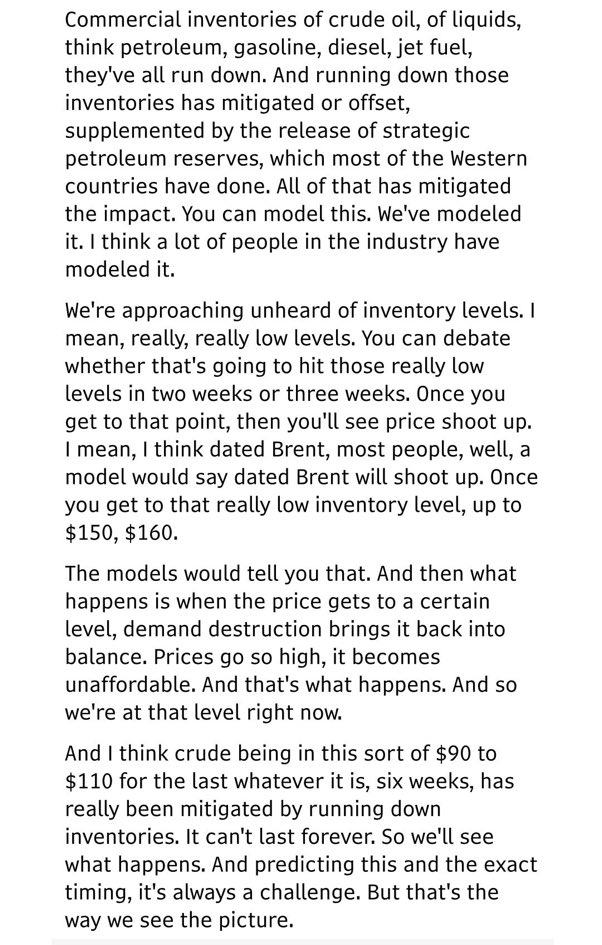
Everyone should read what Senior Vice President of Exxon Neil Chapman says about the oil price surge coming in 2-3 weeks
The next wave of the energy shock is approaching fast
If inflation accelerates, it's more likely to lead to rate hikes than to cuts. Luckily, rates are rather neutral at this point, so they would have room to raise rates. The problem is the cause of inflation, and raising rates won't fix anything; it will just hurt consumers even more than they already are. The second issue is that the federal debt that has to be refinanced in the next 12 months is enormous.
📈Inflation isn't done. It's reaccelerating.
CPI (3.8%) and PPI (6%) are both turning higher after a long stretch of stability, and producer prices are leading the move.
What producers pay today, consumers pay tomorrow.
A thread on why the next price shock may already be in motion 🧵
Energy and food pass through fast — weeks to a couple of months — because they're commodity-driven with thin margins and minimal processing between producer and shelf. Where this can be delayed is when government and corporate reserves are released and suppress prices, as is occurring now and in 2022. Once those reserves stop being tapped, that's when the price levels could spike, and the full scarcity of energy supply is realized.
Manufactured/core goods are slower, more like the one-to-two-quarter window, since there are inventory buffers, contracts, and margin cushions in between.
Services and shelter have slightly different dynamics but still have some correlation with PPI, though not as explicitly as the other two groups.
That all said, macroeconomic data points shouldn't be taken as the primary catalyst when making an investment decision. Earnings are amazing, price action is unquestionably positive, liquidity is historically high, and momentum is more than strong. Additionally, sentiment levels being as negative as they are should challenge anyone's pessimism as historically consistent contrarian signals.
Watch the data, rely on price action, and have a process.
And the market is starting to hedge.
The TIPS / 7–10Y Treasury ratio is testing resistance and its 2022 highs — showing investors are rotating into inflation-protected bonds over nominal ones.
That's the bond market's real-time vote on where inflation is going. The vote is growing towards higher.
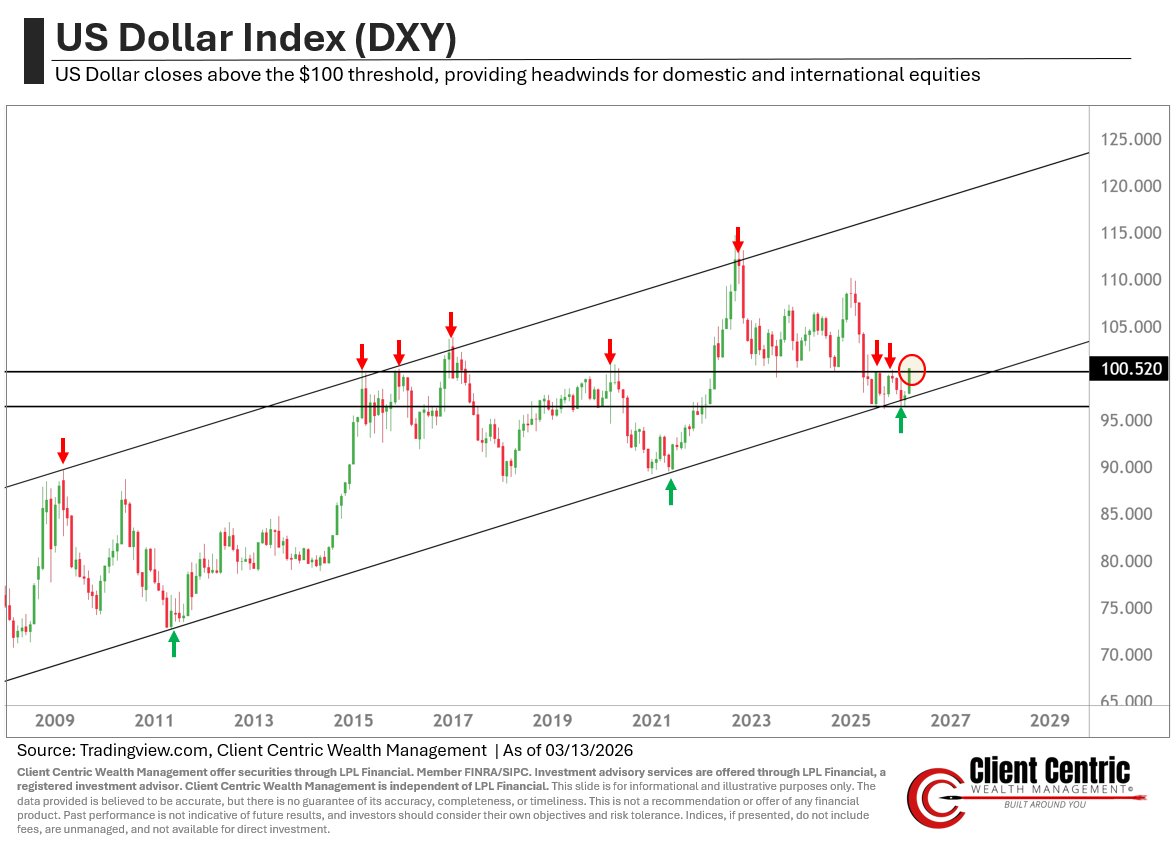
Why does $100 on the $DXY matter?
It's been a critical support/resistance level for over a decade. When the dollar is above it → headwinds for stocks (domestic & international).
Today the DXY crossed back above $100 after bouncing off long-term uptrend support.
History says pay attention. 📊
#DXY #MacroMonday #Markets
Hate to break it to folks but Trump can’t just call this conflict off. Iran will not stop and the possibility for diplomacy has sailed its course. If refineries and pipelines are targeted this is just the beginning. The straight of Hormuz is not the risk.
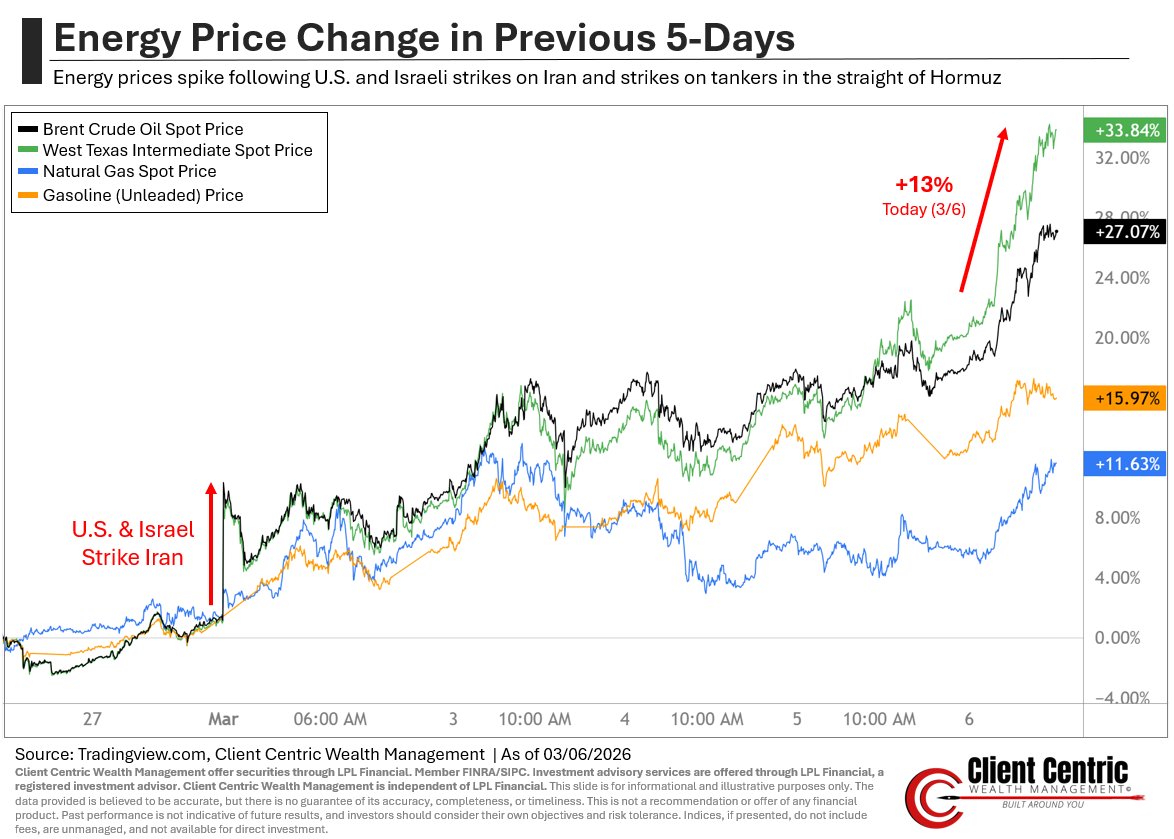
🛢️📈HISTORIC SPIKES IN ENERGY
In the fog of war and endless propaganda from all sides, it's tough to know what's really happening in Iran. That's why I trust markets over agenda-driven news.
At evening open, WTI and Brent crude surged, with both now up over 15% today—building on Friday's sharp move. Natural gas is spiking, too.
Markets are screaming: the situation is deteriorating fast, with strikes on Iran and tanker attacks disrupting the Strait of Hormuz. If the major refineries are attacked in the Gulf States, this is only the beginning.
ECONOMY ON WEAK FOOTING COMPARED TO THE 2022 ENERGY SHOCK
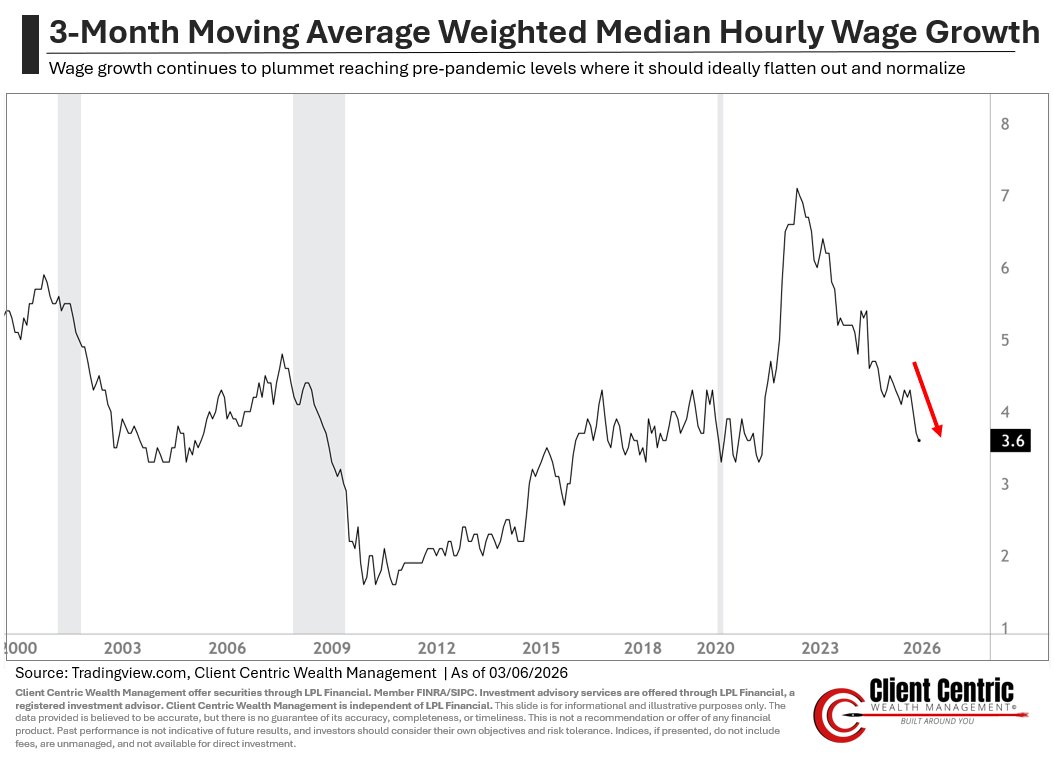
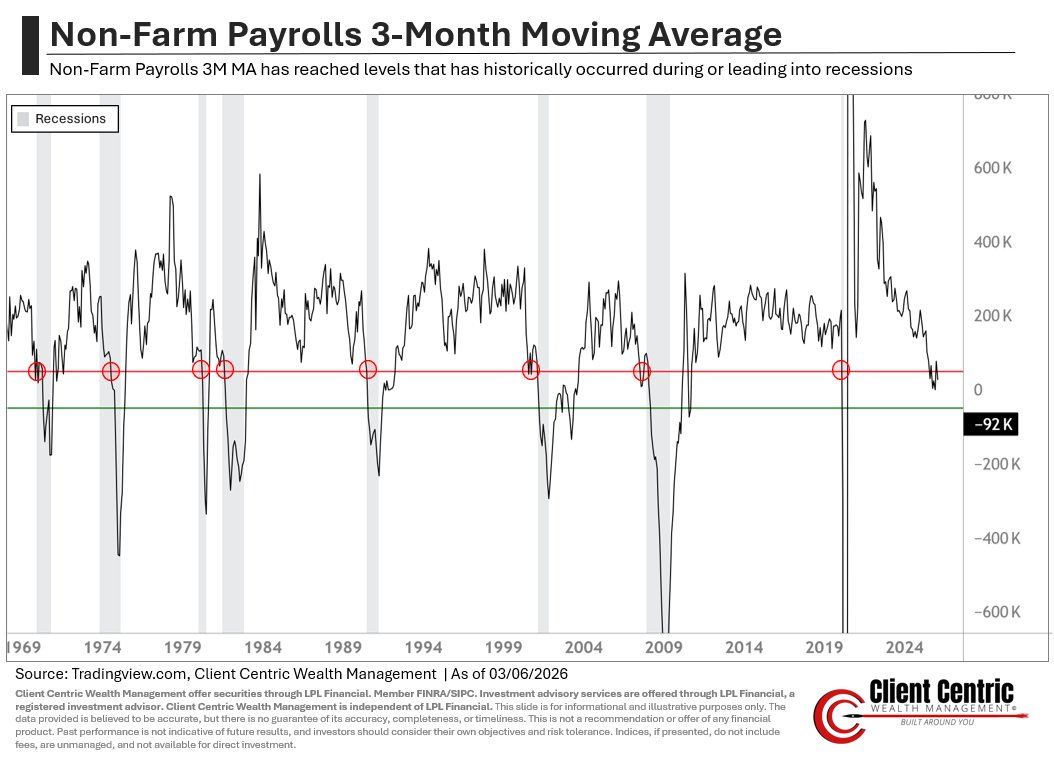
This energy shock, amid a weakening labor market, slowing wage growth, shrinking purchasing power, and depleted consumer savings, is not going to fare well for consumers if it is long-lasting. The duration of elevated energy prices is everything for consumers and, by extension, the economy and the market.
The Macro picture shouldn't determine your portfolio positioning; that should be left to what the market is communicating, but it can provide us with context for where we are in this cycle. The fundamental structure of this economy is rapidly evolving and will look different from historical precedent.
Keep your composure, stay disciplined, and have a process.
The risks here are massive, and surprisingly, the S&P 500 index is only down 1.6% YTD. WTI is up 13% today alone and 33% since last week. The only thing that matters is containing damage to energy infrastructure in the Gulf states. 20% of the world's oil and natural gas is in the middle of a tender box with matches being tossed around.
This environment requires composure, perspective, and process.
🔋📈ENERGY BREAKING OUT
Brent Crude breaks out above its $80 resistance level, which it has failed to breach since 2024, and above the downward resistance trendline in place since 2022.
Since February 27th
🛢️Brent Crude is up +20%
🛢️West Texas Intermediate Crude is up +20%
🛢️Natural Gas is up +4.5%
⛽️Unleaded Gasoline is up +14%
The significant questions
1) Can the US wipe out all Iranian military assets and capabilities in a timely fashion, and/or will the US deploy significant ground troops to secure the coast of Iran and the Straight of Hormuz?
2) Will Iran destroy energy infrastructure in the Gulf states and wipe out desalination plants, crippling global oil supply and water resources for the region?
3) If European powers get involved (UK, France, and Germany), will Russia and China increase their involvement?
4) Will the White House back away from this conflict due to political cost heading into the midterms, while risking looking weak on the global stage?
There are plenty of unknowns, conflicting theories, and information, and that's why we maintain our focus on what markets and our proprietary technical indicators are telling us, as the collective knowledge will provide more information than any one source.