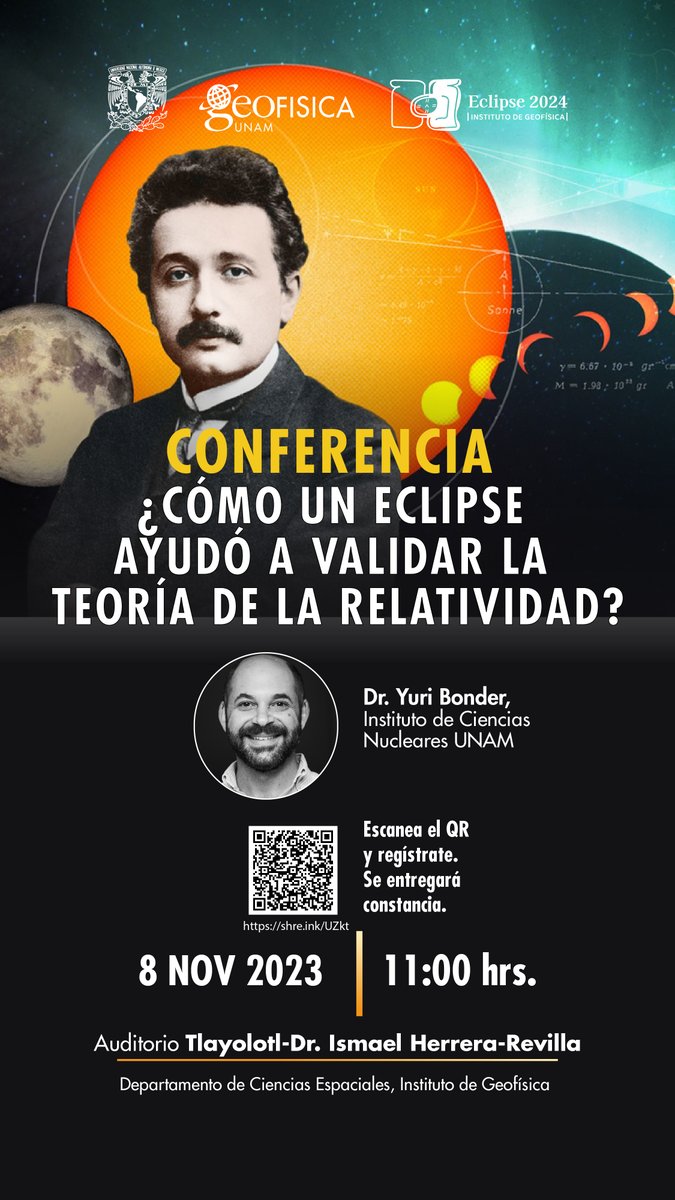
Somos investigadores en el Departamento de Ciencias Espaciales, Instituto de Geofísica, UNAM, dedicados a acercar la ciencia al público en general. ¡Disfruta!
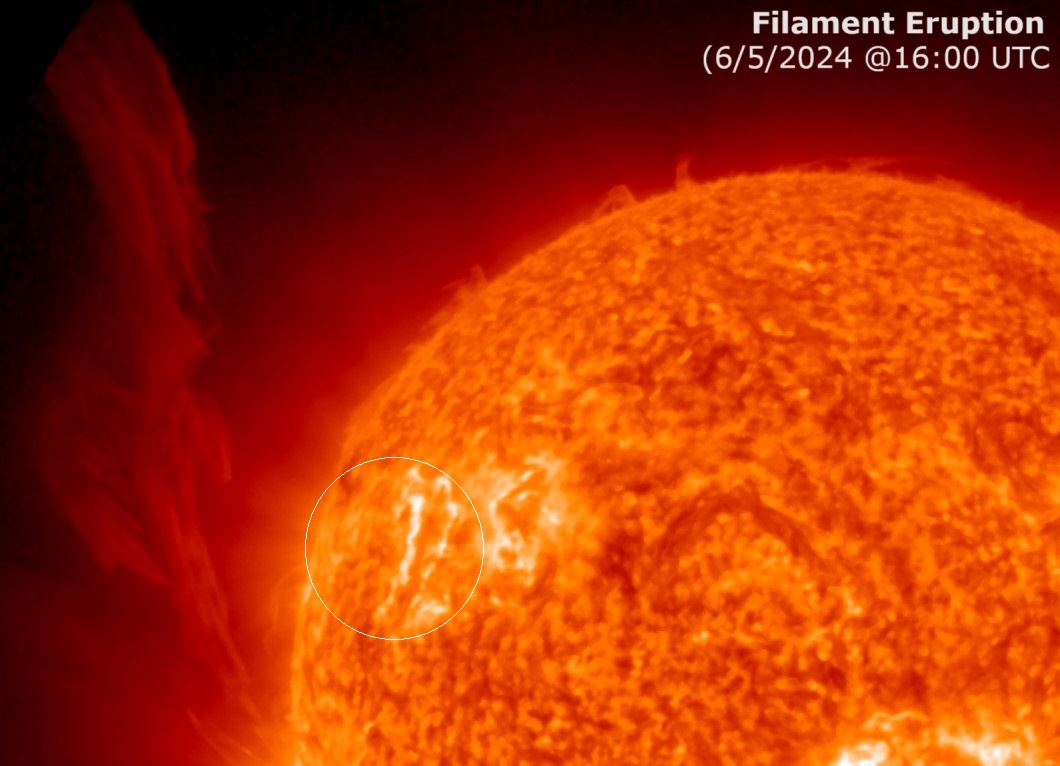
A filament located in the northeast quadrant erupted beginning at 16:00 UTC (Jun 5). This will likely fling a stream of plasma into space, however the trajectory should be mostly off the Sun-Earth line. More details to follow if necessary. https://t.co/aqK4Q6XLqw
SOLAR STORM MAY IMPACT EARTH FRIDAY:
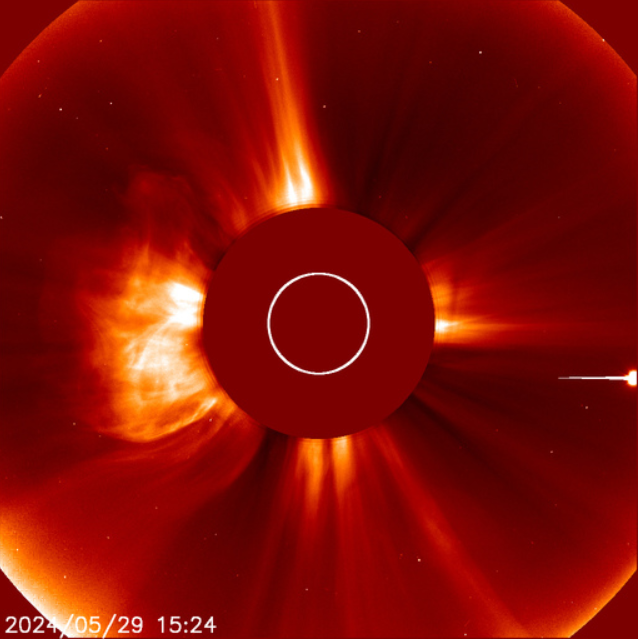
Earth may be grazed by a coronal mass ejection sometime Friday as infamous Active Region 3697, (formerly 3664) continues to impress with high activity. This afternoon saw yet another X-class solar flare and impressive coronal mass ejection which appears wide enough that a portion of it could be Earth-directed. If so, we could see minor (Kp=5, G1) or moderate geomagnetic storm (Kp=6, G2) levels late Friday.
In the first picture, this NOAA/SWPC model run indicates that Earth may be grazed by the far flank of the CME late in the Zulu day on the 31st. Notice the increase in the green traces representing the near-Earth environment in the plasma density and radial velocity curves. The two large blue circles on the far left side represent top-down views of the heliosphere's density and velocity as if you were looking down from above the Sun. The Earth is the small green circle. Notice the extent of the large red crescent in the model output--this is the CME.
The second picture is a picture of the CME in NASA's SOHO coronagraph imagery--the Sun's intense light is blocked out by an occulting disk so that the solar storm can be seen admist the Sun's corona, or outer atmosphere.
#spacewx @spacewxwatch
Sunspots belonging to old AR 3664 are now turning into view from off the southeast limb. We will get a better look at what remains of the flare producing machine during the next 24 hours. Only minor C-Flares have been detected since the X2.9 solar flare early this morning.
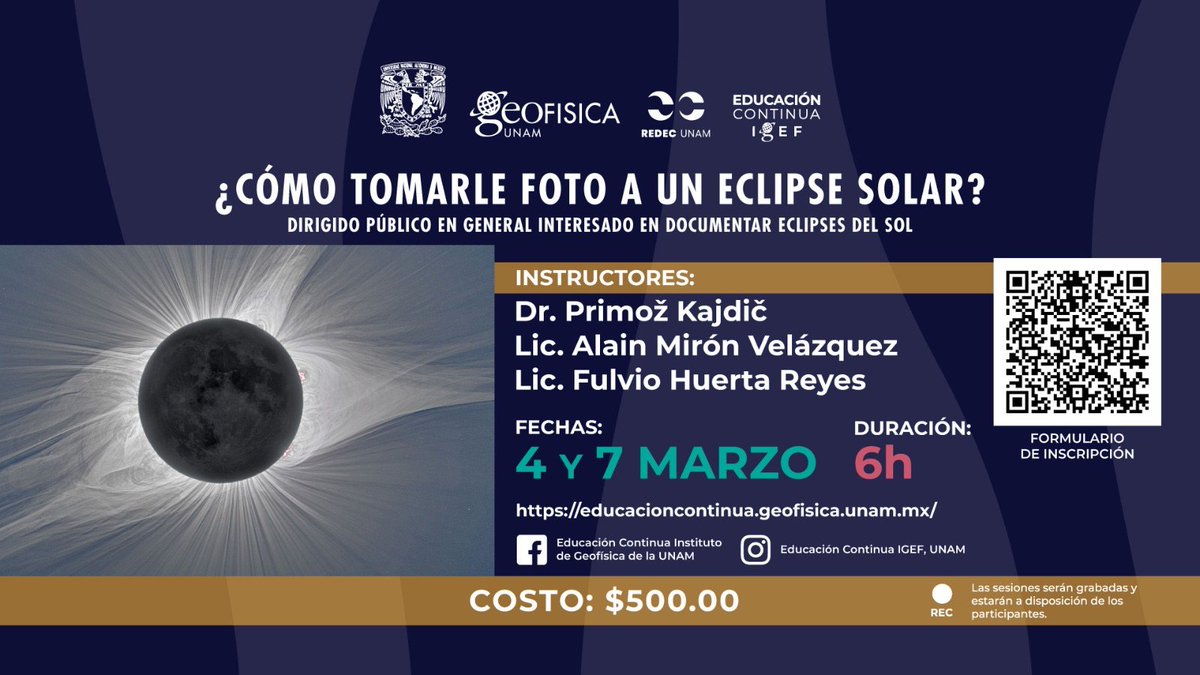
🇪🇸 El día 28 asiste al seminario del Dr. Primoz Kajdic con el tema del eclipse solar, presencial o por FB y TY. Para obtener constancia, regístrate en: https://t.co/OUXc5qHchW.
#eclipse2024@KarenCiencia@mariodeleow@GenteConCiencia@CRCiencia
https://t.co/bKOy5F2qiC
Un #SclipseSolar es un fenómenos de naturaleza espectacular y mucho más que esto. En el pasado, las se han realizado descubrimientos científicos con la ayuda de los eclipses. !Para saber más, sigue el enlace¡
Sol #Mazatlan#Luna#ECLIPSE
https://t.co/5aK3ZwXq5m
Este 8 de abril, México será testigo de uno de los fenómenos naturales más extraordinarios: un eclipse solar. Conoce más del #GranEclipseMexicano2024 en voz del Dr. Primoz Kajdic, de nuestro Departamento de Ciencias Espaciales.
También puedes visitar:
https://t.co/w03C803LbZ
Historia en https://t.co/B4v7ZVxJKp: https://t.co/8HNkb22z2D
Video en YT @BlogSolar: https://t.co/XzrqiTfrov
Audio en Spotify: https://t.co/HaVCRxcgDp
Audio en https://t.co/BEh0oxyGls: https://t.co/57crA7wvbC
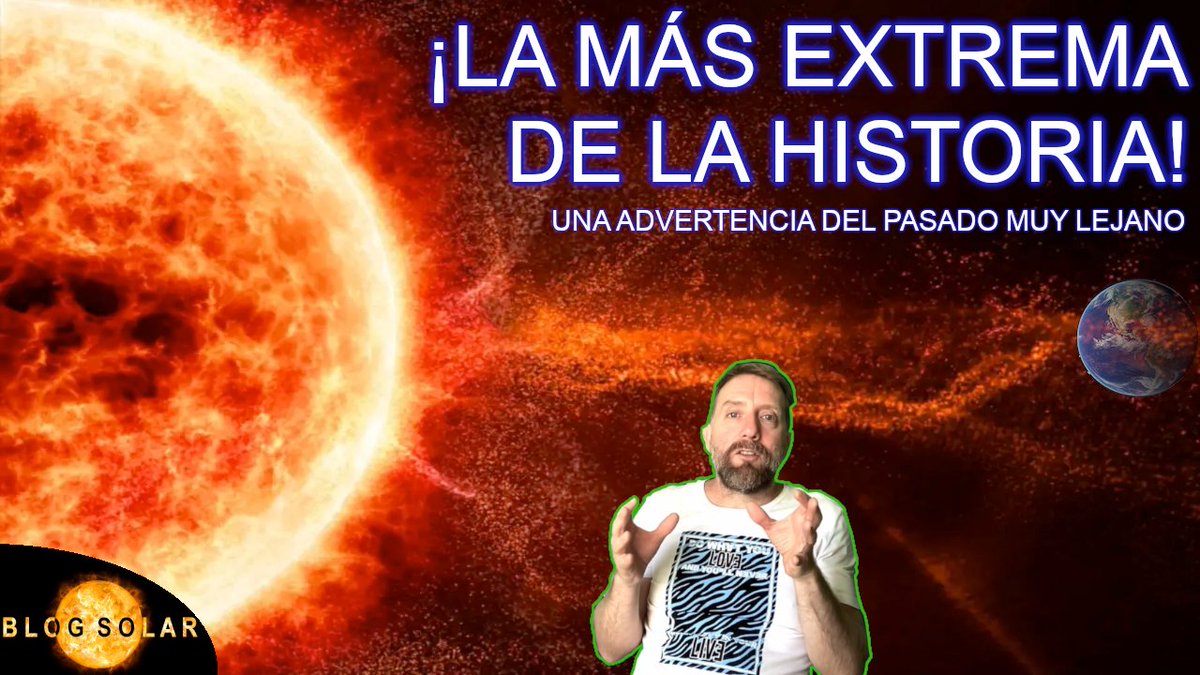
lecho de un río alpino en Francia. Esta tormenta resultó ser mucho más intensa que cualquier evento de este tipo jamás observado por la sociedad moderna. Afortunadamente, ya que en la actualidad, un evento de tal magnitud desencadenaría una serie de sucesos catastróficos.3/4👇
El reciente hallazgo de los científicos franceses se hizo posible gracias a los rayos cósmicos que provocaron un aumento repentino en el contenido de carbono-14 en los anillos de los árboles que hoy en día se encuentran fosilizados en el...
2/4👇
@ApuntesCiencia@cienciaplus
#Eclise14octubre#EcliseCienciasEspaciales
¿Sabes por qué ocurren los eclipses? ¿Has visto alguno? el 14 de octubre tendrás la oportunidad de ver un eclipse. Acompañanos a descubrir qué es un eclipse de la mano de nuestro experto, el doctor Primož Kajdič.