@TLRailUK@British_Airways: due to this delay we missed our outbound flight. We arranged alternate travel to our destination, but your support team told us our return flight is already cancelled and can’t be reinstated. This can’t be right, please advise how to get our return leg restored.
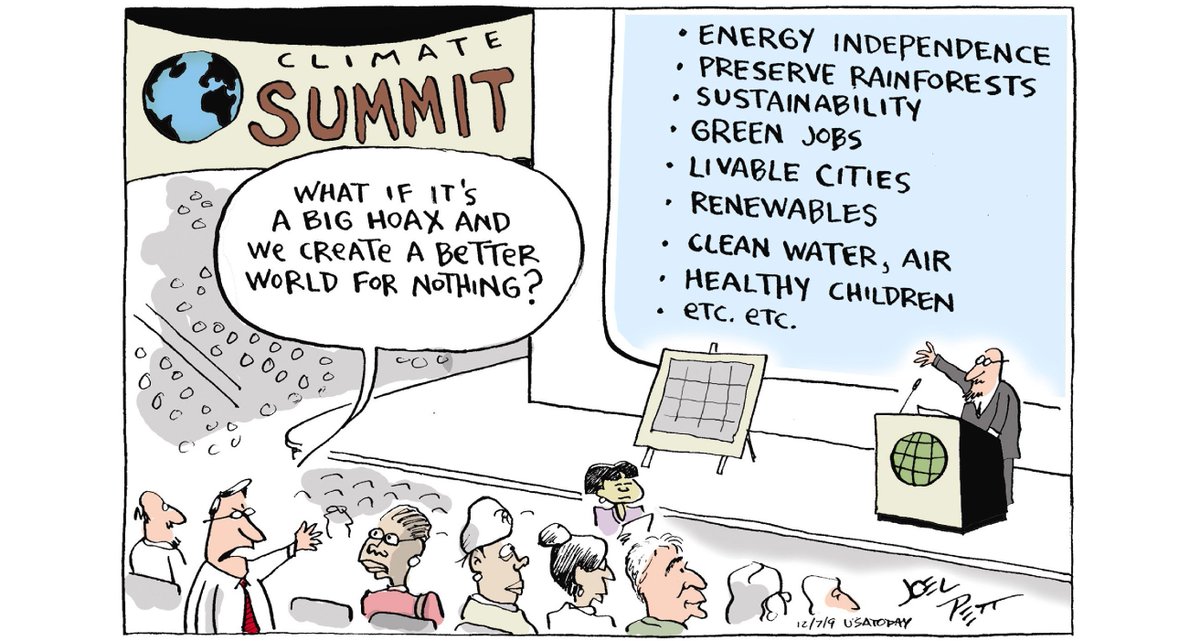
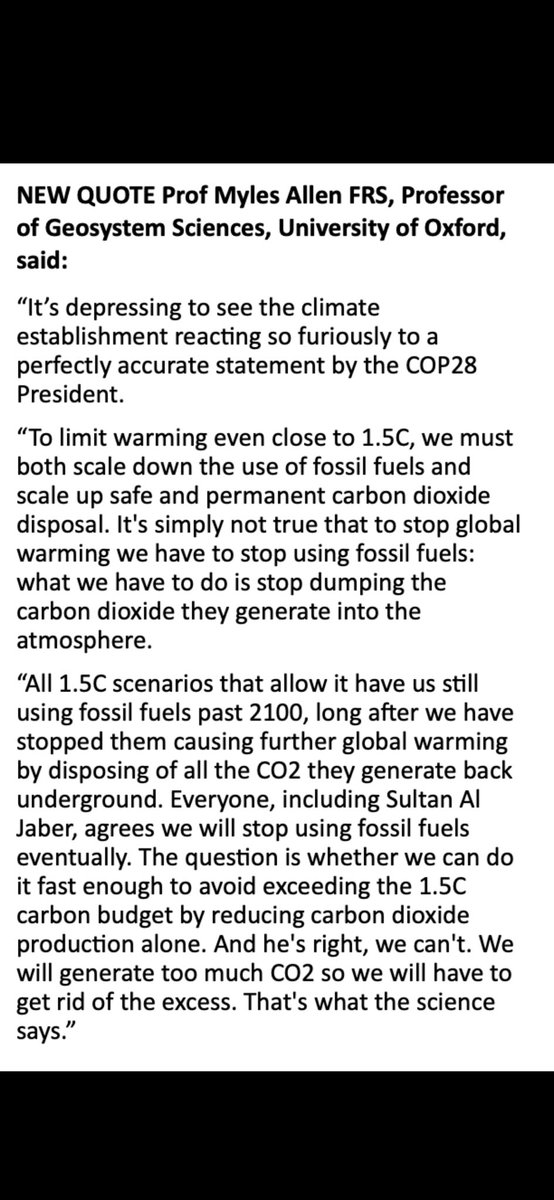
If we can scrub from the atmosphere all the carbon emitted by future fossil fuel consumption, plus all the carbon emitted after we almost certainly overshoot a 1.5 degree carbon budget, then yes, the @COP28_UAE President and my senior and very distinguished @UniofOxford@OxfordNetZero colleague Prof Myles Allen are right: no fossil fuel phase out is needed to achieve the aims of the Paris Agreement.
BUT mere analysts of economic, financial and political systems (like me) tend to think that this is pie in the sky thinking and is nowhere near possible. Further, it is being used to justify continued avoidable fossil fuel use. The fossil fuel lobby often making these arguments have no actual plan to scrub carbon at such scales so quickly. It would be almost impossible to do so and would cost vast sums even if it were possible (much more than decarbonisation and without the co-benefits of cleaner, safer and more productive societies).
And yes, we obviously do need to scale safe and permanent carbon disposal (part and parcel of net zero), but that is never going to happen at the scale needed to offset like for like currently avoidable fossil fuel emissions. The finite technoeconomic capacity we have to develop the means to scrub carbon needs to be focused on hard to abate emissions and then bringing us back to safe levels after we (probably) overshoot 1.5 degrees, not sustaining existing fossil fuel interests.
https://t.co/mQXFYxijLh
International Sustainability Standards Board chair @EmmanuelFaber has told @CBD_COP15 delegates it will be defining sustainability as “inextricably” linked to nature in its disclosure standards https://t.co/tSYFLD5Wsz
"In other words, sin stock exclusion does not lead to higher or lower returns in the portfolio, it does not penalise companies in the form of higher or lower valuations for their stocks and it does not force them out of business."
For @JoachimKlement, "the evidence in favour of exclusions remains limited and engagement is clearly the better approach than divesting from companies in certain sectors." https://t.co/hiBV1uQt2f
Reliance on #ESG ratings agencies or holding unified reporting standards as the silver bullet to address #greenwashing is head in the clouds thinking. A good piece by @EmmaWoollacott: https://t.co/XKYFr0UoHU
A very well written piece. The focus of #ESG disclosure should be to allow for capital allocators to conduct more useful and in-depth analysis leading to better opinions. ESG ratings with an end goal of generating a single figure score are not the answer. https://t.co/cYfLpl2kwH
Comment: "I’m pro-ESG, as it happens. But I have long argued it has an existential defect. Fix this and ESG can thrive," says Stuart Kirk. https://t.co/6enNdBI9gB
I've long maintained that institutional shareholders are more content to simply add their name to the long list of those backing engagement under organisations such as @ActOnClimate100 instead of actually doing any work themselves. Something the @FRCnews needs to look at. #ESG
@JoachimKlement I think one thing excluded in this data is the quality/relevance of the ESG resolutions themselves. Whilst I appreciate this is entirely subjective, there are some that don't seem to entirely have a clear purpose,
objective or proposition (eg Follow This at BP’s upcoming AGM).
Slightly late to the party with this one, but this letter by @Shiva_Rajgopal and @rgeccles really highlights well the importance of shareholder rights in their ability to hold management accountable and therefore positively effect change: https://t.co/lpE32OqBtm #ESG