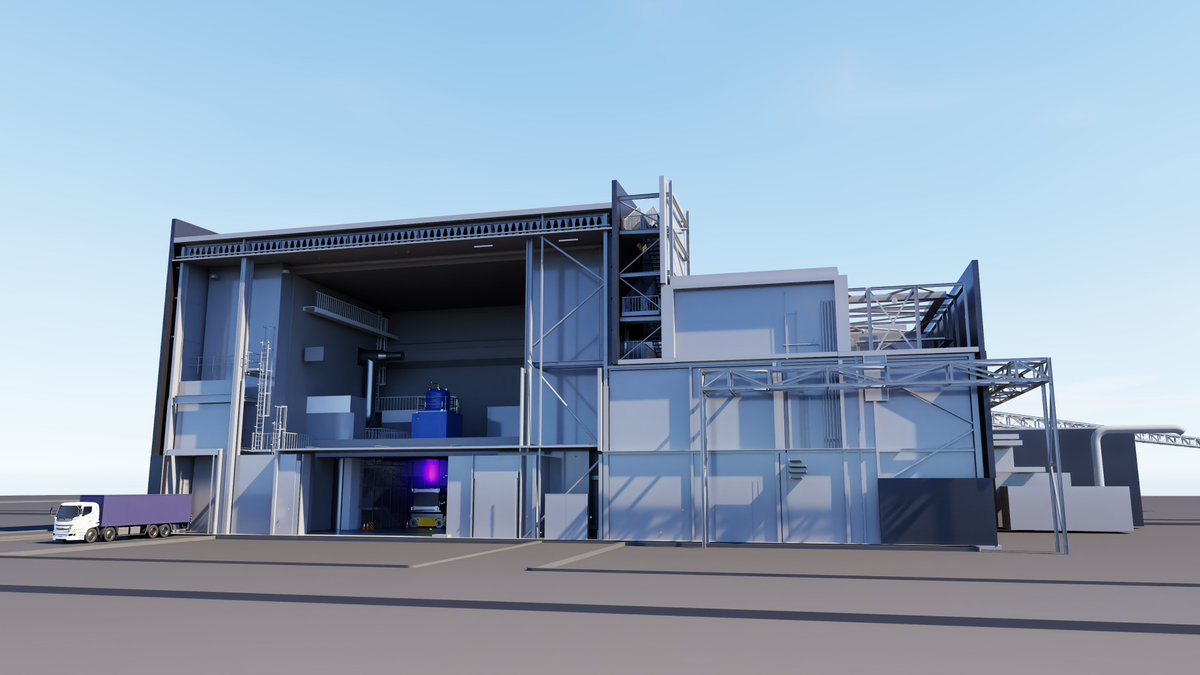
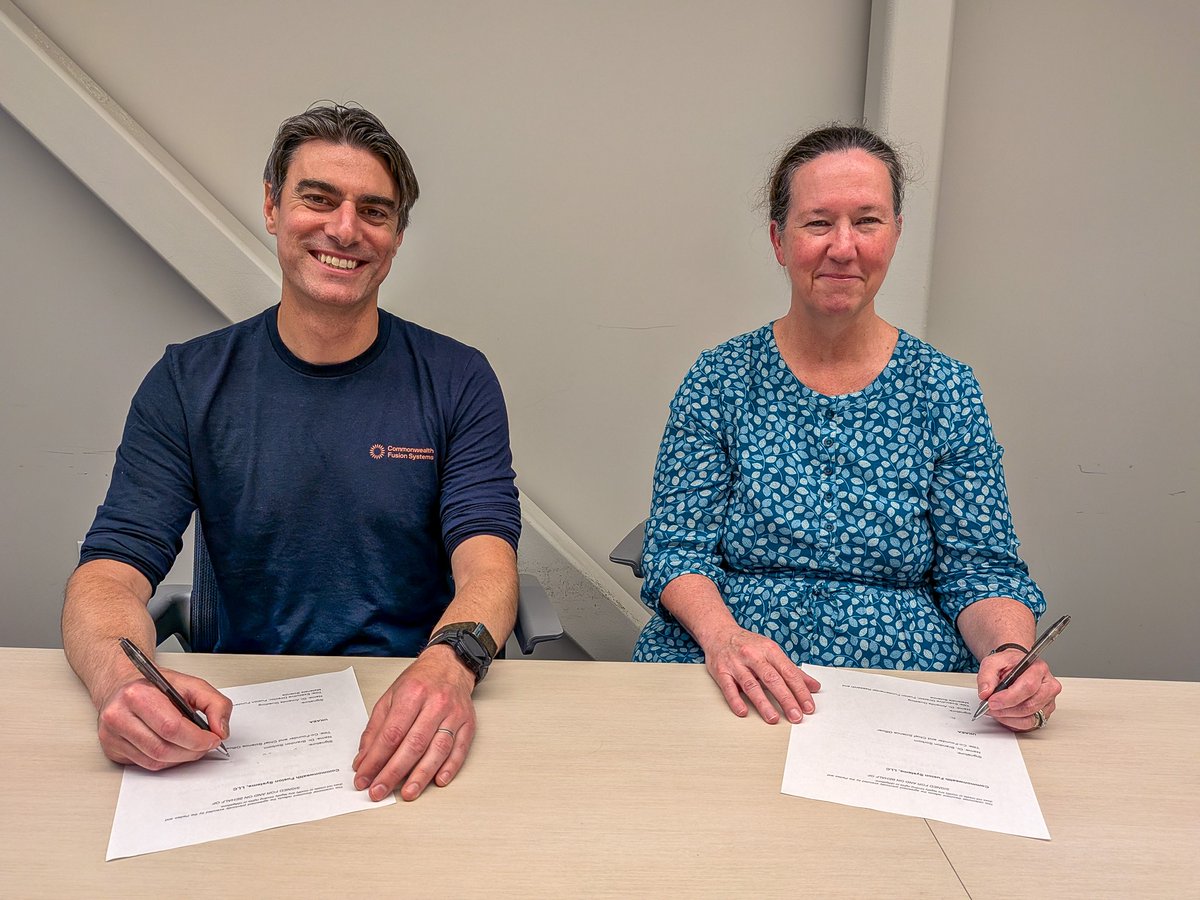
In its 250 years, America has created some of the most influential innovations in human history. Now, almost 60 years after putting a man on the moon, we’re on the cusp of bringing a star to Earth. Here at CFS, we believe fusion energy, the safe and plentiful energy of the stars, is the next historic innovation America introduces to the world. And it’s coming soon… 🇺🇸
#America250 #independenceday #Americaninnovation #FusionEnergy #Energy #FusionComingSoon
It’s time for a new six-month update from our CEO and Co-founder @BobMumgaard. Here at Commonwealth Fusion Systems, we’re now firing up more and more support systems for our SPARC tokamak in anticipation of a moment we call DDR — that’s dry dress rehearsal, not Dance Dance Revolution.
Dry dress rehearsal will exercise all the supporting hardware that surrounds the tokamak itself, like cryogenics to cool SPARC’s magnets, the power system to supply those magnets’ electricity, and the radio-frequency (RF) system to help heat the plasma. It’s all the necessary equipment that’ll enable us to confine and control SPARC’s superhot plasma so we can generate net fusion energy, an achievement called Q>1.
“We operate the entire plant, just minus the tokamak,” Mumgaard says.
In the video, Bob also discusses how dry dress rehearsal is occurring in parallel with SPARC assembly, and shares other recent progress:
⚡️The publication of five peer-reviewed papers setting the physics foundation for our ARC power plant and showing how we’ll use SPARC to inform the ARC design
⚡️Our application to connect our first ARC plant to the electricity grid in Virginia
⚡️Our work in Singapore, Korea, Japan, the United Kingdom, and Europe to ensure fusion is successful globally
Watch the video to hear from Bob and see the latest look inside our SPARC facility and magnet factory.
#FusionEnergy #Energy #SPARC
This @eni–@UKAEAofficial work is a healthy sign of where things are headed in commercial fusion: integrated systems that fusion companies can buy as a unit instead of doing the work themselves to find, validate, and connect components. This is a sign of a maturing industry and strengthening supply chain.
The UK Atomic Energy Authority (@UKAEAofficial) today announced that Commonwealth Fusion Systems (@CFS_energy), will be the first international company to participate in UKAEA’s flagship Lithium Breeding Tritium Innovation programme (LIBRTI).➡️ https://t.co/jUMXryAR8j
The @UKAEAofficial has established a program to test technology that’s crucial for producing fusion fuel — and CFS will be the first organization to take advantage of it. Today, we announced this new collaboration with the UKAEA’s Lithium Breeding Tritium Innovation (LIBRTI) program.
Here’s what it’s about. Our ARC power plants will fuse deuterium and tritium, two forms of hydrogen, to produce fusion power. Deuterium can be extracted from seawater, but tritium needs to be manufactured. This collaboration will help us demonstrate the engineering approach to produce and extract tritium during plant operation.
In our ARC power plants, fusion will produce neutrons that collide with atoms of lithium in a part of the plant called the blanket, and that collision produces the tritium we can extract and feed back into the machine as more fusion fuel. Simply put, we’ll need to make enough to replace what we use.
The physical process involved here is well understood through calculations, computer simulations, and real-world experiments. LIBRTI will let us verify that this tritium production and extraction technology works in a realistic, at-scale engineering mockup. Some of the LIBRTI program’s advantages over earlier facilities include the number of neutrons it’ll produce, a configuration that enables our blanket to fully surround the neutron source, and its size — we’ll bring in tons of our blanket material, called FLiBe, a mixture of lithium fluoride and beryllium fluoride, for our tests.
Our goal is to demonstrate net tritium production, a key part of bringing fusion energy’s benefits to the world. The LIBRTI program is a prime example of a purpose-built test facility that’ll help deliver those benefits faster.
#FusionEnergy
We’re live with our second AMA (as me anything) on Reddit — this time a Q&A with four physicists who co-authored the five peer-reviewed papers that lay the physics foundation for our ARC fusion power plant.
These papers, published in June, show our confidence in the soundness of our ARC plant’s key physics, showing that if we build it, the machine will produce about 1.1 gigawatts of fusion power that we can convert into 400 megawatts of net electricity for the grid. The papers directly address challenges like plasma disruptions and heat exhaust. The papers build the foundation for all the engineering, design, and cost optimization work that we’ve begun.
#FusionEnergy #AMA #Physics
“I don’t believe fusion would happen without welders. Welding is basically materials science practiced in reality."
– Lex Palmer, CFS Welding Engineering Manager
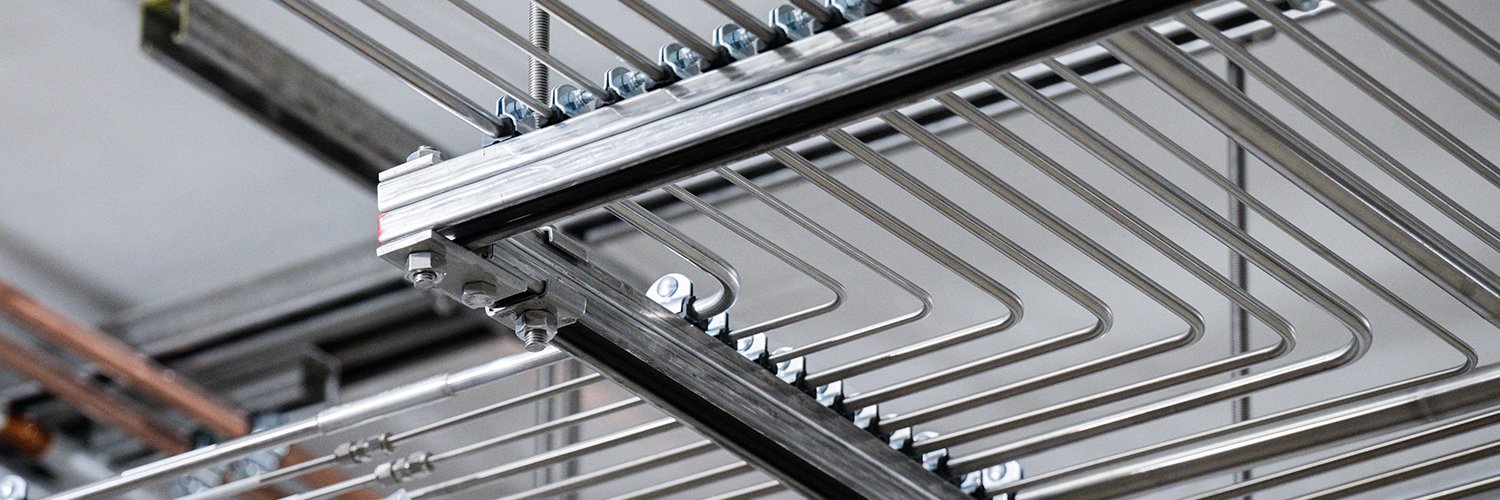
Commercial fusion energy is an entirely new industry, and developing the world's first fusion power plants begins with physics and engineering. But a lot of the work involved is a new application of existing expertise. Making our SPARC fusion demonstration machine is a chance for pipefitters, electricians, and welders to apply their skills and knowledge to a tremendously important new energy technology.
The payoff will be massive and historic. Adds Elle Allen, CFS R&D Project Manager: "When I think about humanity's energy needs over the next 100 years — this won't just fill that. It will fill humanity's energy needs over the next 10,000."
Thanks to @CleanEconProj and Future in Bloom for including us and our team in your film, IGNITION.
#FusionEnergy #Energy
This week, we released “IGNITION: The Future of Fusion,” a short documentary from Future in Bloom about the race to unlock fusion.
Thank you to everyone who joined us, our cohosts @ClearPathAction, and the @AtlanticCouncil for hosting.
Watch “Ignition”: https://t.co/mpFlLaJCyF
It’s time for our second Reddit Ask Me Anything (AMA) — only this time it’s more of an Ask Us Anything. From 9:30–11:30 a.m. ET on June 30, four of our physicists will answer your burning questions on our five new peer-reviewed papers about the plasma physics basis of our ARC fusion power plant. Check below for the link to the AMA.
Here’s how AMAs work. You can start asking your questions now by heading to Reddit’s r/fusion forum where we announced the AMA yesterday. Redditors will upvote and discuss the questions they’re most interested in, and we’ll answer them on June 30. The focus is on the five new papers, but we’ll be able to answer some other fusion physics questions, too.
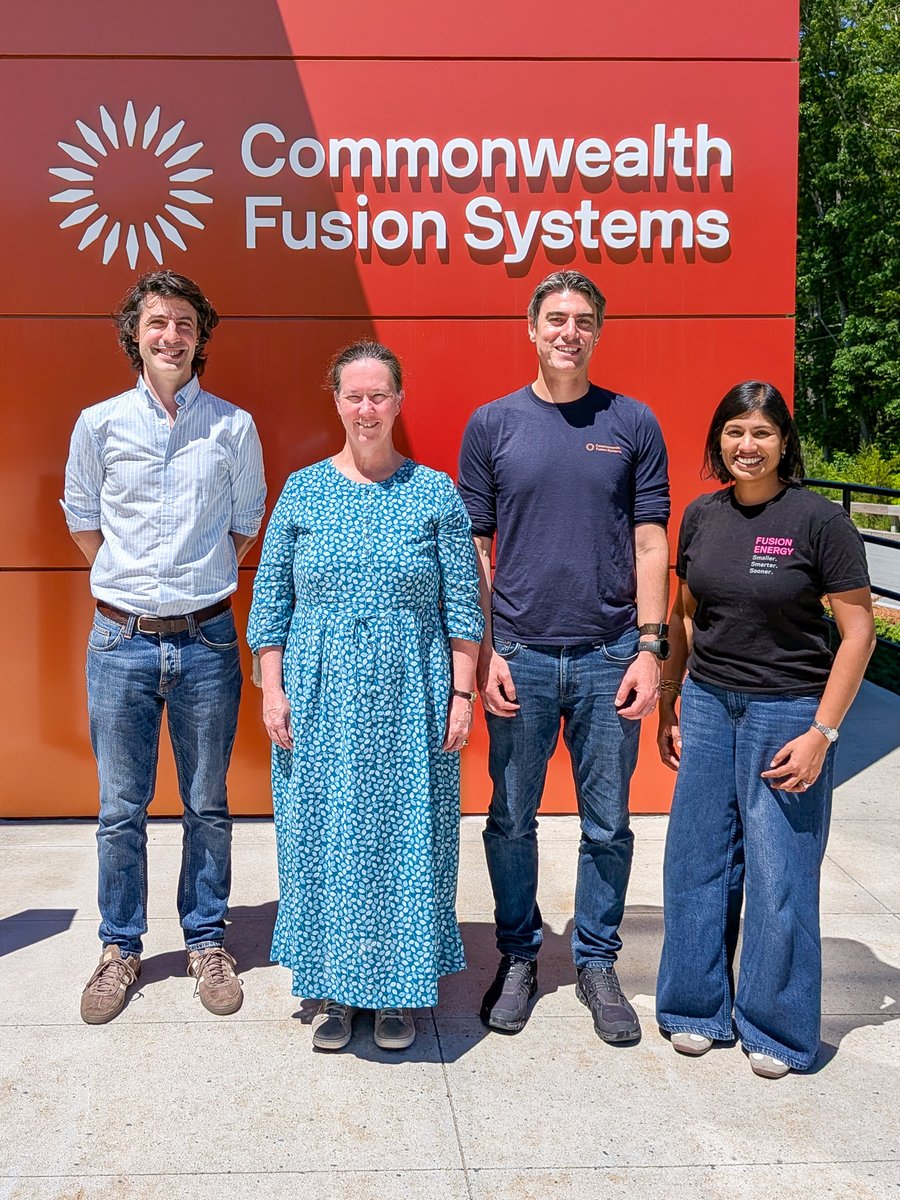
All four CFS physicists in the AMA are authors of the papers: Alex Creely — the one in the photo here — along with Ryan Sweeney, Tom Body, and Jon Hillesheim.
These papers show our confidence in the soundness of our ARC plant’s key physics, showing that if we build it, the machine will produce about 1.1 gigawatts of fusion power that we can convert into 400 megawatts of net electricity for the grid. The papers directly address challenges like plasma disruptions and heat exhaust. The papers build the foundation for all the engineering, design, and cost optimization work that we’ve begun.
#FusionEnergy #Energy
So how do you confine a superhot, 100M°C fusion plasma? With superstrong magnets, of course. 🧲
We've now installed three of the 18 toroidal field (TF) magnets needed for our SPARC fusion demonstration machine. TF magnets are one of the three major magnet types we'll use in SPARC (the others being the poloidal field and central solenoid magnets) to corral the plasma once the machine is operating.
Because plasma is made up of charged particles, it responds to a magnetic field. It's a technique refined over dozens of earlier tokamaks built around the world that manage this highly energetic cloud of particles that's hotter than the center of the sun.
#SPARC #Magnets #FusionEnergy
We’re glad to see the Materials Database for Fusion (MatDB4Fusion) launch with a strong public-private international steering committee. This database from @cleanaircatf is designed to gather fusion-relevant information for various materials, like how well they handle proximity to plasma — fusion’s high-temperature fuel — or the effects of the neutrons that fusion produces. Here at CFS, we hope to help MatDB4Fusion provide easier and more reliable access to critical fusion materials data both to researchers and fusion machine developers.
Announcement: https://t.co/Wgna55CoWY
#FusionEnergy
"One of the nice things about this technology is that when you look at the fundamentals behind it, there's not a lot of barriers to scaling..."
That's CFS Chief Science Officer and Co-founder @BrandonSorbom chatting with @Reuters' @TimoGard about fusion's future in a rapidly changing energy landscape. In a world with rising demand for electricity, fusion offers a clean, near limitless, and steady power source.
But for the world to properly benefit from fusion it also needs a clear and economical path to the grid, and to scale. Since CFS' founding that path has always been inseparable from our mission. Watch the interview to learn more about how we think about the economics of scaling our technology.
https://t.co/AD1JnvsRIW
#FusionEnergy #Energy
“When you look back historically on people who’ve made really big promises about fusion that haven’t come to bear, it is often because they haven’t published and they haven’t gone through the rigor and the peer review” –@BrandonSorbom@CFS_energy just did both—publishing five peer-reviewed papers laying the physics groundwork for ARC, its fusion power plant targeting 400 MW on the grid in the early 2030s.
https://t.co/PgW1TYikcy
“Support from the government would be essential … otherwise we fall into the trap we’ve fallen into many times before, where the U.S. seeds innovation with an 's' and then cedes it with a 'c'.”
–CFS Chief Commercial Officer Rick Needham, speaking at @BloombergNEF this year, explains the United States is on the cusp of commercializing fusion, but that without government support, the country runs the risk of watching other countries that invest in its development and deployment reap the benefits of this world-changing technology.
#FusionEnergy #Energy