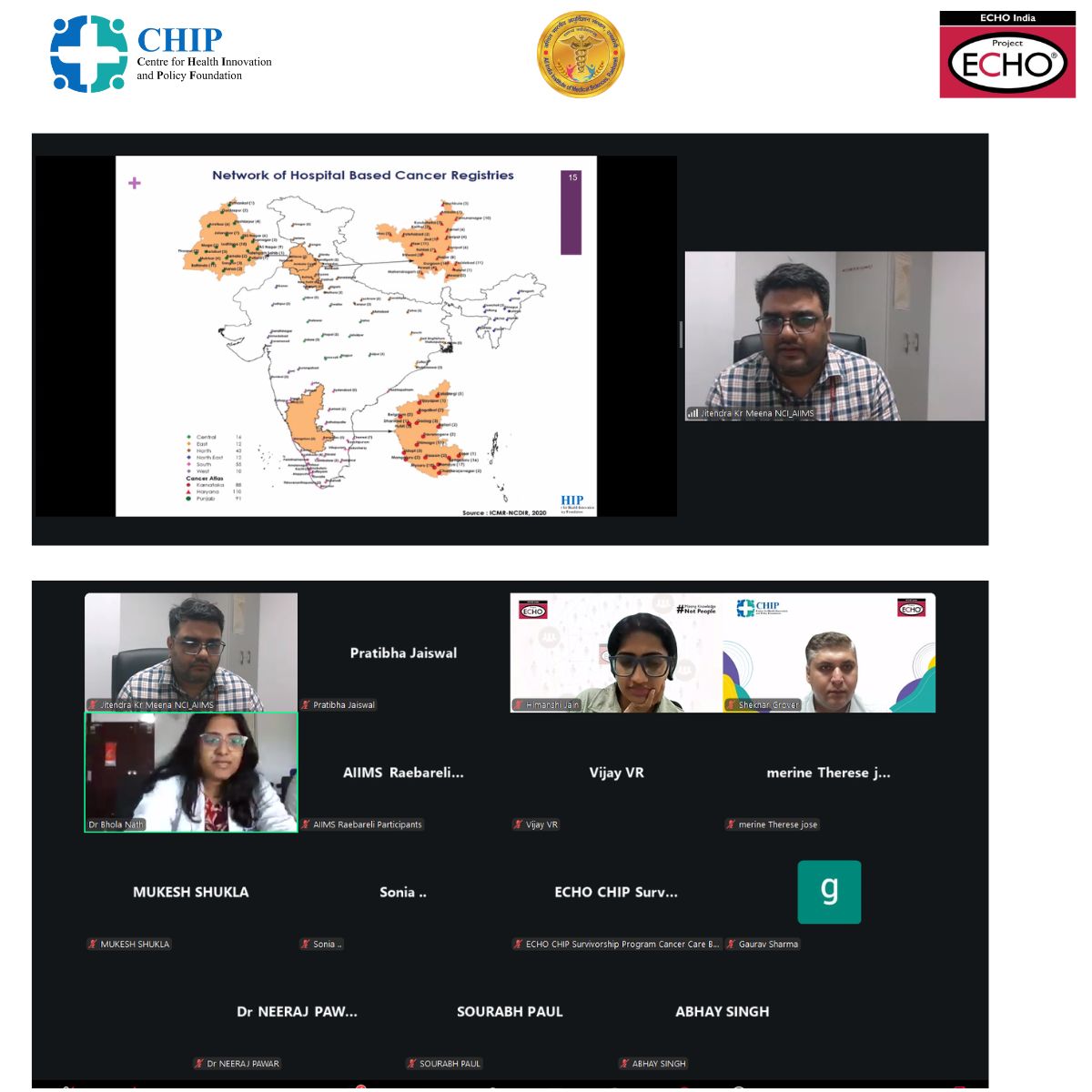
A meaningful beginning to strengthening Cancer Survivorship Care in India. On 20 July 2026, we successfully concluded the inaugural session of the ECHO CHIP Cancer Survivorship Programme – Cancer Care Bharat for Medical Officers at AIIMS Raebareli.
My sincere gratitude to Prof. Ravi Mehrotra for his visionary leadership, ECHO India for their collaboration, and all the participants for their enthusiastic engagement.
@StopCancerDoc
We were privileged to have Dr. Jitender Kumar Meena, Associate Professor, NCI-AIIMS, deliver a foundation-setting session on Introduction to Cancer Survivorship, highlighting the growing need to address the long-term physical, psychological, and social needs of cancer survivors.
🦷 National Public Health Dentistry Day 2026
19 June 2026
This year’s theme, “Integrate to Elevate: Oral Health as a Pillar of Public Health,” highlights the importance of embedding oral health within broader healthcare systems and community health initiatives.
What is SCIMITAR-SA, and how can stakeholders get involved?
SCIMITAR-SA is a research programme working across Bangladesh, India and Pakistan to improve tobacco cessation support for people with severe mental illness.
#SCIMITARSA#MentalHealth#TobaccoControl#NIHR#SouthAsia
We are delighted to share a special invitation from Professor Simon Gilbody as we gear-up for the SCIMITAR-South Asia Annual Meeting 2026, to be held in Colombo, Sri Lanka, from 6-8 July 2026.
National Cancer Survivors Day 7 June
Today, we celebrate the strength & resilience of cancer survivors worldwide.
Survivors may face long term physical, emotional, social & financial challenges. Women & childhood cancer survivors often have unique needs requiring lifelong support
A healthy environment means a healthier future.
Women and children are especially vulnerable to air pollution, second-hand smoke, and environmental hazards. Smoking and smokeless tobacco remain major preventable causes of cancer.
✅ Oral Cancer Screening
✅ Tobacco Cessation Awareness
✅ Breast Cancer Awareness
✅ Women's Health Education
Together, we are building a healthier, tobacco-free future. @StopCancerDoc@sharda_uni
Together, we can create a healthier future by exposing the truth behind tobacco and nicotine addiction. Awareness is the first step toward prevention and healthier lives. @StopCancerDoc#worldnorobaccoday#WNTD2026
This World No Tobacco Day, let us “unmask the appeal” by spreading awareness about the harmful effects of cigarettes, vaping, hookah, smokeless tobacco, and nicotine products.
Choose Health. Choose Freedom. Choose Life.
DYK: 'Ever-married status may serve as a useful social indicator for cancer risk stratification and prevention.'
While the study highlights a significant statistical correlation, researchers and public health experts emphasize several crucial points to avoid misinterpretation: Correlation vs. Causation: The study does not suggest that marriage itself is a biological "cure" or a direct preventative measure for cancer. Social & Behavioral Factors: The disparity is likely driven by social and behavioral pathways. Married individuals often benefit from stronger social support systems, economic stability, shared healthier habits (e.g., diet, exercise), and more consistent engagement with healthcare (screening, timely medical attention). Selection Bias: Experts note that healthier individuals—or those with more social resources—may be more likely to marry in the first place, which is a factor the researchers acknowledged. Targeted Prevention: The authors conclude that marital status is a useful "social stratifier" that public health officials can use to identify populations that may need more targeted outreach, cancer education, and access to screenings.
Marriage and Cancer Risk: A Contemporary Population-Based Study Across Demographic Groups and Cancer Types. https://t.co/S8LkYwOoAS