Today, https://t.co/zUEKXhpoTl, in collaboration with five other organizations, released an open letter to the Prime Minister giving him credit for letting provinces like Alberta experiment with health care reform. Read the letter below or on our website, here: https://t.co/mA7p84Ku4S
@iedm_montreal@CDNConstFound@ConsumerChoiceC@CHPI1@MLInstitute
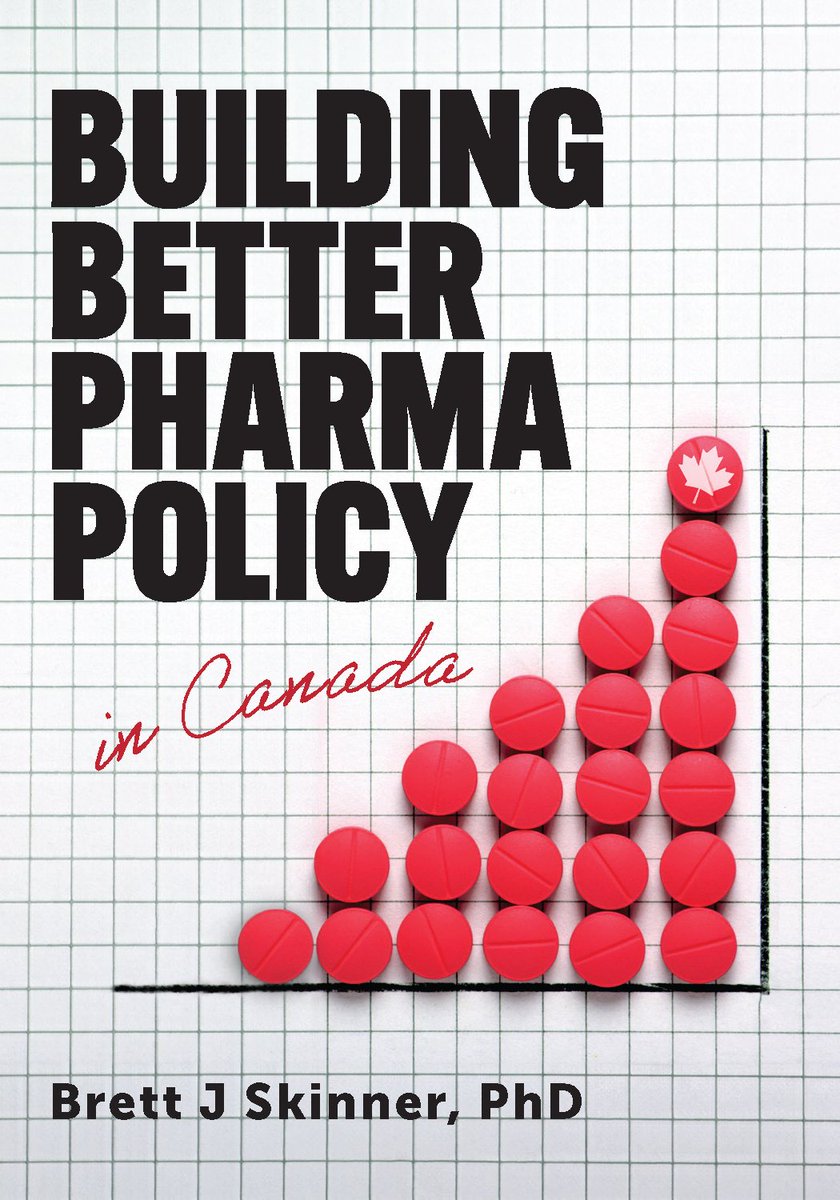
If you are part of the health policy community you might want to check out a new book, Building Better Pharma Policy in Canada. The book examines the unintended consequences, opportunity costs, and the impact on patients, taxpayers, innovation, and trade relations – caused by misguided pharma policies.
Building Better Pharma Policy in Canada, is available at https://t.co/TAeVSOiU56, https://t.co/ejfXCJfBje, Google Play, Apple Books, the Friesen Press Bookstore, and others.
https://t.co/4qIbP2VyZW
https://t.co/OCw7RhZgNz
Access to new medicines in Canada, Europe, and the United States: Study finds less availability and longer waits for Canadian patients https://t.co/3ZYyc5qClv
National pharmacare is not necessary. It will be bad for patient access and costly for taxpayers.
In this Toronto Star opinion CHPI CEO Brett Skinner identifies several inconvenient facts, ignored by pharmacare advocates:
- People in the lowest income deciles who fall in the gaps between private and public insurance are eligible for public safety-net coverage at zero or very low deductible costs, and deductibles are capped at 3-7% of higher incomes.
- More is spent by households on tobacco and alcohol than is spent out-of-pocket on prescription drugs.
-The real insurance gap is caused by formulary exclusions. Not all drugs are covered under existing drug benefit plans and programs. If a patient’s prescribed medication is not listed on the formulary, then they are exposed to 100% of the cost as an out-of-pocket expense.
-National pharmacare will not fix this problem, because it would be modeled on existing public formularies which cover far fewer new drugs compared to private plans in Canada and take much longer to do so.
-Under national pharmacare, drug expenses currently paid for by private sector businesses will be shifted onto taxpayers. The new tax burden would be significant.
https://t.co/77tV1OLkRL
#pharmacare #cdnhealth #cdnpoli
Dr. Nigel Rawson in the Hill Times: The Patented Medicine Prices Review Board (PMPRB) has demonstrated such dysfunction and bias it should be disbanded. https://t.co/2EQT7IT6IW
NEW STUDY - Evaluation of the PMPRB regulatory performance on price review for new patented drugs in Canada, 2008-2021. Nigel SB Rawson, PhD and Brett J Skinner, PhD. #healthpolicy#cdnpoli https://t.co/oNh99dIFmj
CHPI's Yanick Labrie co-authored a new study suggesting that Quebec could save over $7 million annually if patients with HER2+ breast cancer received subcutaneous administration of Herceptin® at local community service centres (CLSCs) rather than receiving it intravenously in hospitals. https://t.co/oJniQHyGtm #cdnpoli #Healthcare
Cancer is the leading cause of death in Canada, but public drug plans cover only 11% of new cancer drugs, Canadians wait 1,835 days for coverage, and sales of new cancer drugs are only 1.3% of national health expenditure: new study. #cdnpoli#cdnecon https://t.co/oJniQHyGtm
New study: Economic burden of cardiomyopathy $5 billion/yr. Patented drugs account for less than 1%. As first line therapy pharmaceutical innovation offers opportunity to avoid downstream hospital cost, productivity loss, mortality. #cdnhealth#cdnpoli https://t.co/oNh99dIFmj
Cancer is the leading cause of death in Canada, but public drug plans cover only 11% of new cancer drugs, Canadians wait 1,835 days for coverage, and sales of new cancer drugs are only 1.3% of national health expenditure: new study. #cdnpoli#cdnecon https://t.co/oJniQHyGtm
New study: Economic burden of cardiomyopathy $5 billion/yr. Patented drugs account for less than 1%. As first line therapy pharmaceutical innovation offers opportunity to avoid downstream hospital cost, productivity loss, mortality. #cdnhealth#cdnpoli https://t.co/oNh99dIFmj
"the Patented Medicine Prices Review Board – Canada’s federal drug-price regulating agency – has sought to impose lower drug costs when new pharmaceuticals are introduced here. But the main achievement of that crusade is that fewer new medicines are now available to Canadians." CHPI's Nigel Rawson in the Globe and Mail. https://t.co/eHc1y1eLfc
Is it time to retire the patented medicines price regulator? Recommended read from CHPI's Nigel Rawson and John Adams in the Financial Post: https://t.co/SkSiU8dsrU. #pmprb#cdnhealth#cdnpoli