"Disagreement is inevitable, but disrespect is unacceptable. What are you doing today to approach others who complement your perspective, rather than confirm it, and let them know you value them?
#johnmaxwell#personalgrowth#motivation#perspective"
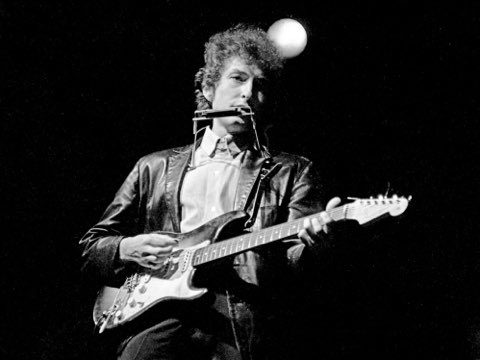
In 1964, on a folk tour around England, Bob Dylan considered quitting.
He said,
“I play these concerts, and I ask myself: ‘Would you come see me tonight?’ and I have to truthfully say: ‘No, I wouldn’t come...'"
Burnt out and ready to quit playing music, Dylan asked himself,
What kind of concert he would want to see.
"Rock," he realized. "I’d rather see me do rock.”
A little over a year later, in June 1965, Dylan recorded his first rock song, "Like A Rolling Stone."
And a month after that, at the 1965 Newport Folk Festival, he famously plugged in an electric guitar and performed "Like A Rolling Stone" for the first time.
The folk enthusiasts in the crowd booed and yelled things like, “Get rid of the electric guitar,” and, “We want the old Dylan!”
Dylan shrugged off the boos. Because he loved the music he was playing.
"Now," Dylan said shortly after Newport, "when I ask myself, would I wanna come hear this tonight? I gotta say, I would. I dig it. You know? I really dig it. I don't think about quitting any more."
Takeaway 1:
Close to burning out and quitting, Dylan reoriented around his personal musical tastes and preferences.
Tim Ferriss talks about orienting your creative output around your personal tastes and preferences—not the audience’s—as a strategy for creative longevity.
Because making things you yourself like is “energy additive," he says. And if you get energy from what you are doing, you are more likely to do it over a long period of time. And if you do it over a long period of time, well, that’s better than being a burnt-out musician who once had some enthusiastic folk fans back in the early 1960s.
Dylan initially built an audience with his folk music. He knew he was going to get booed and screamed at for taking his music in a new direction.
But he also knew that denying one’s own creative tastes and preferences in favor of the audience’s is energy-depleting. And that “doing something that is even slightly energy-depleting,” Ferriss continues, “over time, that is going to compound in a way that is very problematic.”
Takeaway 2:
The initial reaction to Dylan’s new rock sound was split.
Not everyone was booing. It was said that he “electrified one half of the audience, and electrocuted the other half.”
It’s one of Rick Rubin's great maxims:
“The best art divides the audience.”
He says,
“If you put out a record, and half the people who hear it absolutely love it, and half the people who hear absolutely hate it, you’ve done well. You're pushing boundaries.”
- - -
“In the end, you are the only one who has to love it. This work is for you.” — Rick Rubin
Follow @bpoppenheimer for more content like this!
Shortly after Steve Jobs returned as the CEO of Apple in 1997, he met with Jony Ive, Apple’s Senior VP of industrial design.
Apple had 40 products on the market.
“Jony, how many things have you said no to?” Jobs asked.
Ive was confused.
“You have to understand,” Jobs said,
“There are measures of focus, and one of them is how often you say no.”
“What focus means,” Jobs taught Ive, “is saying no to something that you—with every bone in your body—think is a phenomenal idea, and you wake up thinking about it, but you say no to it because you're focusing on something else.”
Jobs walked up to a whiteboard and drew a 2 x 2 grid. On top, he wrote “Consumer” and “Professional.” Down the side, “Portable” and “Desktop.”
Four products—meet Apple’s new radically focused product line, Jobs said.
After that meeting, over the next two decades, Jobs and Ive—focused on making a few high-quality products while saying no to everything else—transformed a dying, near-bankrupt company into one of the most valuable companies in the world, worth over $2.9 trillion.
Takeaway 1:
The philosopher Marcus Aurelius pointed out that the focus of doing less “brings a double satisfaction.”
You get the satisfaction of having fewer things to do. And…you get the satisfaction of doing those fewer things at a higher level.
You get “to do less, better.”
During Steve Jobs’ first visit to Jony Ive’s design studio, he looked around, and then he said, “Fuck, you’ve not been very effective, have you?”
It was clear to Jobs that Ive was full of ideas and potential he wasn’t able to execute or fulfill under Apple’s previous leadership.
In the Jobs era of “doing less, better,” Ive was very effective.
Some products he designed include: iMac, iPod, iPhone, iPad, Apple Watch, and AirPods.
Takeaway 2:
Even though he slashed the product line down to four products, Jobs loved to have and hear ideas.
“Steve used to say to me,” Ive said, “and he used to say this a lot, ‘Hey, Jony, here’s a dopey idea.’ And sometimes they were: really dopey. Sometimes they were truly dreadful.
But sometimes they took the air from the room, and they left us both completely silent.”
It made me think of what Jerry Seinfeld identifies as the ultimate skill of the artist: “taste and discernment.”
“It’s one thing to create,” Seinfeld says. It’s one thing to have ideas.
“The other is you have to choose. ‘What are we going to do, and what are we not going to do?’” What are we going to add to the product line, and what are we not going to add?
“This is a gigantic aspect of [artistic] survival,” Seinfeld continues.
“It’s kind of unseen—what’s picked and what is discarded—but mastering that is how you stay alive.”
- - -
“Everything just got simpler. That’s been one of my mantras—focus and simplicity.” — Steve Jobs
Follow @bpoppenheimer for more content like this!
I was deeply disappointed and even disturbed by this week's speech from the throne.
Instead of economic stability, we were given a plan that promised free money to everyone who would lay down their liberties for the paternalistic protection of Trudeau. https://t.co/WmzezoR5rn
Congratulations to my friend, long-time colleague, Erin O’Toole on winning the @CPC_HQ leadership. More than ever, our country needs a strong, united @CPC_HQ ready to form government. Laureen and I send best wishes to you and Rebecca as you lead our great party forward.
Alberta aid package or no..rejecting this long planned project that has met every environmental/consultative requirement and will creat up to 7000 jobs will be devastating to the energy sector and national unity. https://t.co/3AjcUIKiAd




![bpoppenheimer's tweet photo. Shortly after Steve Jobs returned as the CEO of Apple in 1997, he met with Jony Ive, Apple’s Senior VP of industrial design.
Apple had 40 products on the market.
“Jony, how many things have you said no to?” Jobs asked.
Ive was confused.
“You have to understand,” Jobs said,
“There are measures of focus, and one of them is how often you say no.”
“What focus means,” Jobs taught Ive, “is saying no to something that you—with every bone in your body—think is a phenomenal idea, and you wake up thinking about it, but you say no to it because you're focusing on something else.”
Jobs walked up to a whiteboard and drew a 2 x 2 grid. On top, he wrote “Consumer” and “Professional.” Down the side, “Portable” and “Desktop.”
Four products—meet Apple’s new radically focused product line, Jobs said.
After that meeting, over the next two decades, Jobs and Ive—focused on making a few high-quality products while saying no to everything else—transformed a dying, near-bankrupt company into one of the most valuable companies in the world, worth over $2.9 trillion.
Takeaway 1:
The philosopher Marcus Aurelius pointed out that the focus of doing less “brings a double satisfaction.”
You get the satisfaction of having fewer things to do. And…you get the satisfaction of doing those fewer things at a higher level.
You get “to do less, better.”
During Steve Jobs’ first visit to Jony Ive’s design studio, he looked around, and then he said, “Fuck, you’ve not been very effective, have you?”
It was clear to Jobs that Ive was full of ideas and potential he wasn’t able to execute or fulfill under Apple’s previous leadership.
In the Jobs era of “doing less, better,” Ive was very effective.
Some products he designed include: iMac, iPod, iPhone, iPad, Apple Watch, and AirPods.
Takeaway 2:
Even though he slashed the product line down to four products, Jobs loved to have and hear ideas.
“Steve used to say to me,” Ive said, “and he used to say this a lot, ‘Hey, Jony, here’s a dopey idea.’ And sometimes they were: really dopey. Sometimes they were truly dreadful.
But sometimes they took the air from the room, and they left us both completely silent.”
It made me think of what Jerry Seinfeld identifies as the ultimate skill of the artist: “taste and discernment.”
“It’s one thing to create,” Seinfeld says. It’s one thing to have ideas.
“The other is you have to choose. ‘What are we going to do, and what are we not going to do?’” What are we going to add to the product line, and what are we not going to add?
“This is a gigantic aspect of [artistic] survival,” Seinfeld continues.
“It’s kind of unseen—what’s picked and what is discarded—but mastering that is how you stay alive.”
- - -
“Everything just got simpler. That’s been one of my mantras—focus and simplicity.” — Steve Jobs
Follow @bpoppenheimer for more content like this!](https://pbs.twimg.com/media/FzeinZYWYAEzlYI.jpg)





