#Dementia currently costs the Australian economy between $16 and $18 billion per year. NeuRA, @brainfoundoz, and @CHeBA_UNSW are among those raising the alarm over rising dementia rates and the broader impact of #neurological conditions. @Healthcarechan
https://t.co/oS9Imm7QkL
🦷 New research in @TheLancet links the oral microbiome to cognitive decline, with CHeBA’s Co-Director Prof Henry Brodaty providing expert comment. Certain bacteria are linked to better #cognition, while others could signal early #dementia risk.
🔗https://t.co/PUyD2KE9SY
🧠 This week is Brain Awareness Week.
With 2 in 5 Australians facing a #braindisorder, proactive steps toward better #brainhealth are essential. CHeBA and @brainfoundoz are offering free expert-led webinars on brain health, risk factors & prevention.
🔗 https://t.co/EcfBHqgY27
🔦 EMCR Spotlight: Dr Danit Saks
This month, CHeBA’s Dr Danit Saks is featured in @UNSWMedicine’s EMCR Spotlight for her pioneering research into #CADASIL - a rare genetic small vessel disease linked to stroke and vascular cognitive impairment.
🔗https://t.co/q40uWpBC7b
🧠 How can social connections protect your brain?
As part of Brain Awareness Week 2025, hosted by the @brainfoundoz, CHeBA’s Dr @samtani_suraj, will explore latest research on #dementia risk factors & practical tips to improve your #brainhealth.
🔗 https://t.co/EcfBHqgY27
🎧 Professor Henry Brodaty was interviewed by @abcsydney Radio National's Kathleen O'Connor, discussing how CHeBA's #MaintainYourBrain trial can delay #dementia and why the results may underestimate the benefits.
🔗https://t.co/L5r5CFOS1J
We're pleased to share that CHeBA’s Dr Matt Lennon has received The Royce Simmons Foundation Project Grant by @DementiaAus Research Foundation to investigate genetic & clinical mapping for future treatments of vascular cognitive impairment & dementia. 👏🔗 https://t.co/ySs0mgPO58
🚨 We're #hiring! Join CHeBA’s research team 🧠
Passionate about #dementia research? Join the Memory and Ageing Study 2 (MAS2) team in Sydney. Check out these exciting opportunities:
📋 Research Assistant (Administration)
🔍 Research Officer
🔗 https://t.co/olav7RPczw
🔦 Researcher Spotlight: Tiffany Chau 🧠
Research Officer Tiffany Chau played a key role in the coordination of #MaintainYourBrain trial - the world’s largest online lifestyle intervention study led by CHeBA.
🔗 Learn more here: https://t.co/vLoHLkr2Sr
🔬 Meet Our Researcher is back🧑🔬
We’re excited to relaunch #MeetOurResearcher, spotlighting the brilliant minds driving #dementia prevention and healthy brain ageing research at CHeBA.
First up: Associate Professor @SReppermund.
🔗 https://t.co/tlzzXNkARS
🔑 Prevention is key
The evidence is clear - lifestyle changes can improve #cognition and offer new hope for prevention of #dementia.
🔗 Read more here: https://t.co/vLoHLkqv2T
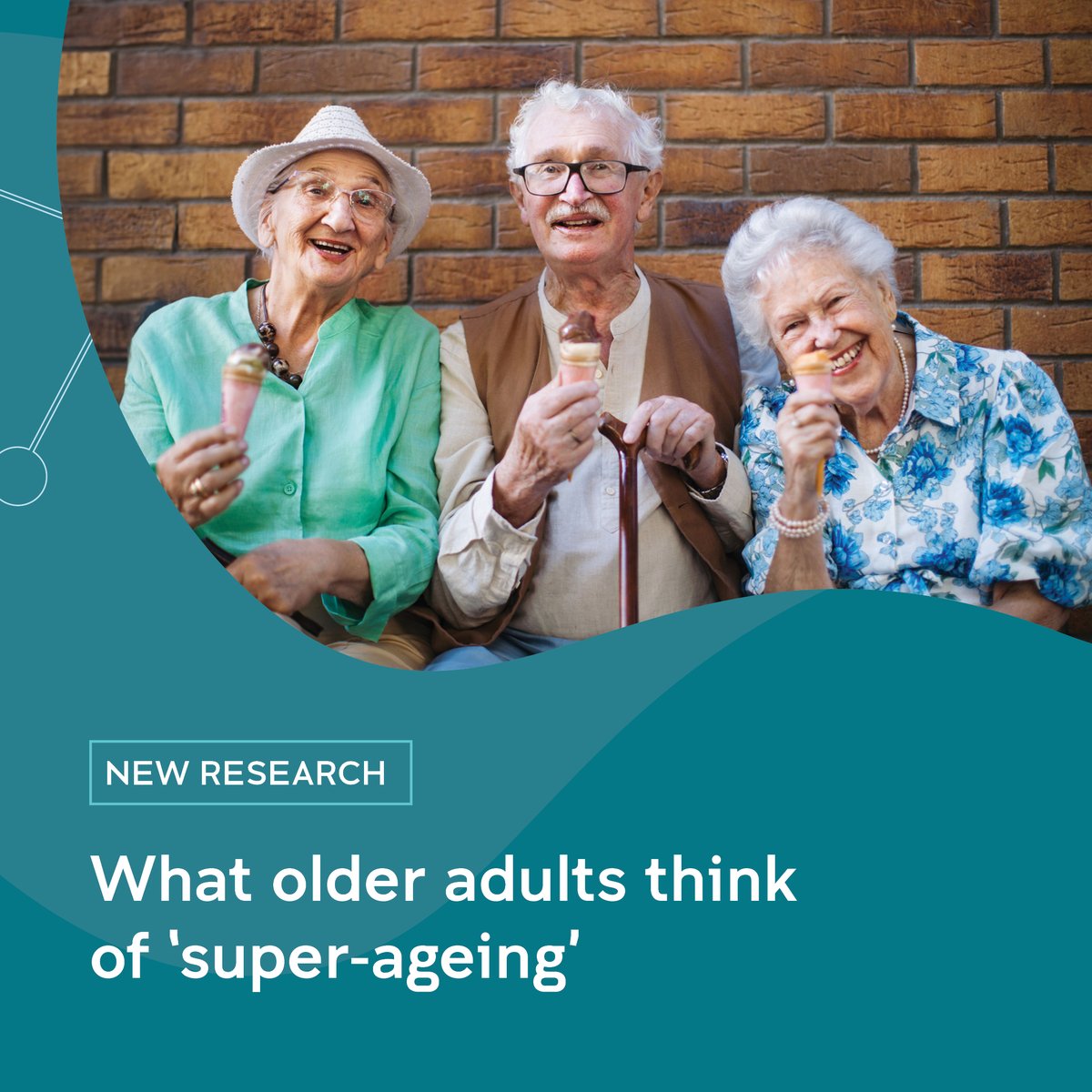
For the first time, CHeBA researchers have explored the perceptions and attitudes of community members aged 65 to 101, revealing insights into what they see as the key elements of super-ageing - with #positiveattitude rating highly.
🔗 Read more: https://t.co/5ZvMtNP7IZ
As we age, aches and pains are expected - but what about #memoryloss? 💭CHeBA Co-Director Prof Henry Brodaty joined @philclark6 on @abcsydney’s Nightlife to discuss research showing that brain training, a healthy diet & exercise can boost brain function.
🔗https://t.co/tcM2Bm45PI
STUDY: FIRST TIME STROKE SURVIVORS HAVE SUBSTANTIAL IMMEDIATE AND ACCELERATED LONG TERM-COGNITIVE DECLINE New evidence points to vascular risk factors exerting impact on cognitive function years before stroke onset
SEGMENT
Filmed in Sydney | January 2025
New evidence from the Centre for Healthy Brain Ageing (CHeBA) @CHeBA_UNSW@UNSWMedicine indicates that older adults who experience a stroke for the first time will have substantial immediate and accelerated long term-cognitive decline.
Stroke is a leading cause of disability and dementia globally, with projections indicating a continued rise in both prevalence and burden. The new research, published in October 2024 in JAMA Network Open @JAMANetworkOpen, looked at finding out exactly how a stroke impacts a person’s cognitive abilities.
Stroke occurs when blood flow to part of the brain is blocked or reduced, causing damage to brain cells. Previous research from the Centre has shown that more than a third of stroke survivors’ ability to think, remember and make decisions is significantly disadvantaged after stroke, with clear deficits in cognition or vascular dementia present.
Vascular dementia, the second most common type of dementia, is caused by reduced blood flow to the brain. The research, led by biostatistician and Research Associate Jess Lo @jeslo_syd, addressed many unanswered questions about this dementia type, which is yet to be studied as extensively as Alzheimer’s disease.
“Although we do experience changes to our brain functioning over time and as we age, certain medical conditions can potentially speed up these changes, which may lead to cognitive impairment or dementia,” says Lo.
The research analysed data from 14 studies that followed community dwelling older adults without a history of stroke or dementia, with an average age of 73 over many years, tracking their health and cognitive abilities. The studies, part of the CHeBA-led international Cohort Studies of Memory in an International Consortium (COSMIC), span 11 countries including Australia, Brazil, France and the US.
With data from 20,860 participants, the researchers identified people who experienced their first stroke during the study period.
The research also found that individuals who had a history of diabetes, hypertension, high cholesterol, cardiovascular disease, depression, smoked or were APOE4 carriers exhibited significantly faster cognitive decline before any stroke.
Senior author on the paper and Co-Director of the Centre for Healthy Brain Ageing (CHeBA), Professor Perminder Sachdev @sachdevps , said that this global collaborative study highlights the significant and lasting negative impact of stroke on brain cognition.
“Our findings can help clinicians better plan for the ongoing needs of stroke survivors who are at risk of disability and a lower quality of life,” said Professor Sachdev.
@AUHealthJournal Segment Produced & published by AUDIENCED
Get your interviews captured across Australia https://t.co/mlk5MPl9oY
🎙 CHeBA Co-Director Professor Henry Brodaty spoke with @SBSNews on how lifestyle changes could delay the onset of #dementia.
"We know that 45 percent of the risk of dementia is caused by environmental factors, things that we can do something about."
🔗https://t.co/aIjKtAh52U
A call to action for #dementia prevention 📢
CHeBA Advisory Committee Chair, Ita Buttrose AC OBE, highlights that even a one-year delay in the onset of dementia could reduce cases by 10%—that’s 40,000 fewer Australians living with dementia each year.
🔗 https://t.co/vLoHLkr2Sr
In case you missed it 📺 CHeBA Co-Director Professor Henry Brodaty joined James Glenday & @bridgeyb on @abcnews to discuss the #MaintainYourBrain trial. Professor Brodaty tells News Breakfast the trial "could be the slip, slop, slap of brain health."🧠💪
🔗https://t.co/pO0DsvJY3j
@SBSNews has featured our world-first trial and spoke with #MaintainYourBrain participant, 82yo Paddy Goldsmith, and her husband Geoff.
Paddy says the trial has helped them stay mentally sharp and active as they age.
🔗https://t.co/l5sMSb7uBo
Podcast alert🎙
CHeBA's Prof Henry Brodaty joins @normanswan and Dr Preeya Alexander on @abcsydney's Health Report to discuss the #MaintainYourBrain trial—its focus on personalised coaching, key results and potential to delay the onset of #dementia.
🔗https://t.co/j9OWEsWb8e