Routine milk spectra could help identify dairy cows with greater heat resilience while revealing the biology behind how cattle cope with heat stress. https://t.co/7TbDDaqByV
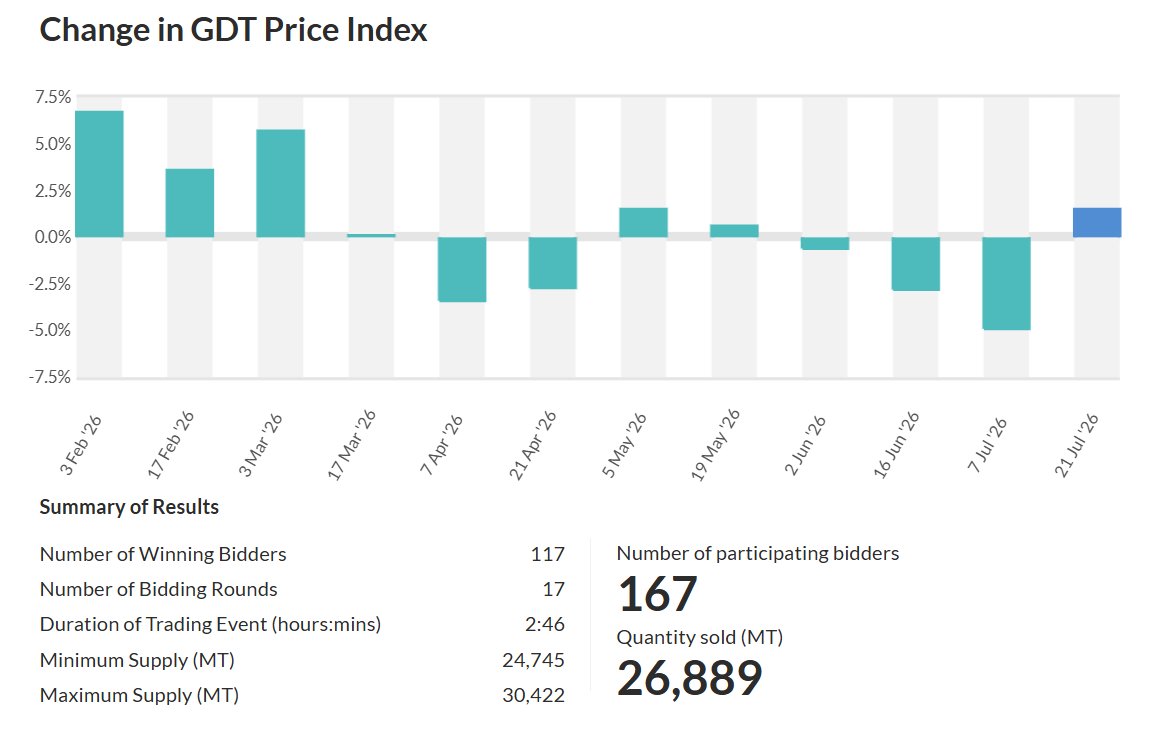
🚨 #NOW | Has the decline in the dairy market come to a halt?
#GlobalDairyTrade #408 closed with a +1.5% increase, bringing the average price to US$ 3,815/MT.
📈 Is the recovery beginning...
or is this just a breather after the previous sharp correction? 🤔
IMPOSING ADDITIONAL DUTIES TO OFFSET CANADIAN DISCRIMINATION AGAINST THE COMMERCE OF THE UNITED STATES WITH RESPECT TO DAIRY
Proclamations
July 20, 2026 https://t.co/rmqlZTK1xk
The mercury is rising and hot summer conditions are taking a toll on cows across the country. High temperatures are causing milk output and component levels to fall with important implications for the milk market. Spot milk availability has tightened up in most areas and manufacturers that want to get their hands on extra volumes find themselves paying a premium. As component levels dip in the heat, cream has tightened up as well. This phenomenon has driven cream multiples up, especially in the Central part of the country. Class I demand remains understated as most institutions are on summer holidays, which is helping to mitigate tension in the system. https://t.co/xyDq3vCUcg
The beef-on-dairy boom is saving producer margins, but it’s also swelling the U.S. milking herd and driving a bearish commodity market for the second half of 2026, reports Dairy Herd Management: https://t.co/sQTYksjUX2
#milkproduction#USdairy
After decades in a legislative blind spot, new federal guidance finally opens the H-2A visa program to dairy farmers, offering critical relief amid rising border enforcement. https://t.co/w2QKrgn3qs
Netherlands #dairy farmers have started to get paid to get rid of dairy cows under a new government cow-reduction scheme designed to cut ammonia, greenhouse gas #emissions and manure production: https://t.co/LGYMCIzUg6
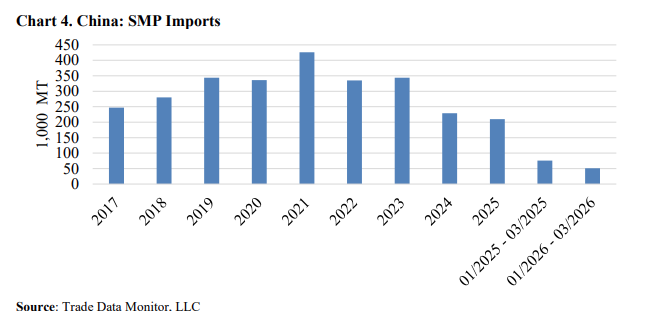
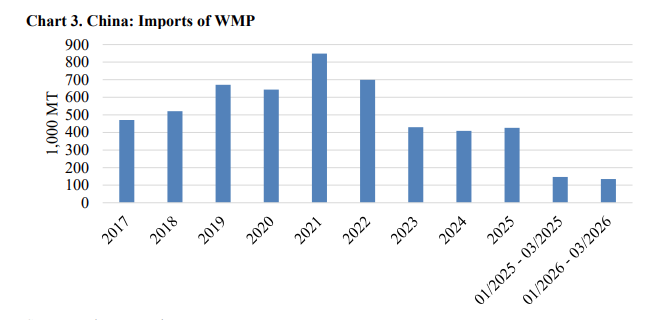
China’s dairy sector continues to adjust under ample domestic milk supply, with production expected to remain broadly stable in 2026 as processors shift milk toward higher-value products such as butter and cheese. Weak retail demand and reduced use of reconstituted milk weigh on whole milk powder consumption, while foodservice and bakery expansion support steady growth in butter and cheese use. Post forecasts imports of WMP and SMP to decline due to weaker demand, while butter imports remain broadly stable and cheese imports increase to meet demand for higher-quality products. Whey demand remains firm, supported by feed and food applications, with China continuing to rely on imports despite short-term fluctuations
WMP Consumption in 2026 to Decline Amid Reduced Reconstitution Use and Weak Downstream Demand
Butter Consumption in 2026 to Continue Growing Due to Foodservice Demand and Product Upgrading
https://t.co/E7kdYChCQD
Screwworm confirmed in Texas calf, Zavala County, June 3, 2026 (USDA/TAHC).
Quarantine established in infested zone; animal movement restricted.
Milk/dairy: Localized quarantines may force short-term milk dumping on affected farms if processing access is limited. Texas, a top dairy state, could see modest supply dips and slight price increases. National impacts minimal if contained quickly.
Beef: Reduced Mexican imports and minor herd effects like treatment costs could tighten supplies modestly, supporting mildly higher prices. No major shortages expected with rapid response.
Sterile fly releases and inspections underway for eradication. Past outbreaks in Mexico showed production losses and higher costs, but containment limited damage. US preparedness suggests regional, temporary effects with national markets adjusting smoothly
Highly pathogenic avian influenza (#BirdFlu) H5N1 has resurfaced in #Idaho#dairy#cattle, with federal officials confirming five new infected herds in mid-April — the first detections in the state since December 2025.
https://t.co/ouzJJszAAe
Inching Closer: New World Screwworm Now 52 Miles from Border
With more than 2,000 active cases in Mexico and new detections just miles from the Rio Grande, USDA officials stress preparedness starts with awareness. https://t.co/SxZmf3uwWJ
As fed cattle weights hit historic highs, a surplus of fat trim is creating an unprecedented need for lean blending beef, pushing cull cow values to new records. https://t.co/vQLpYQG1do