🐂 COF: Spring supply hole—or cattle delayed?
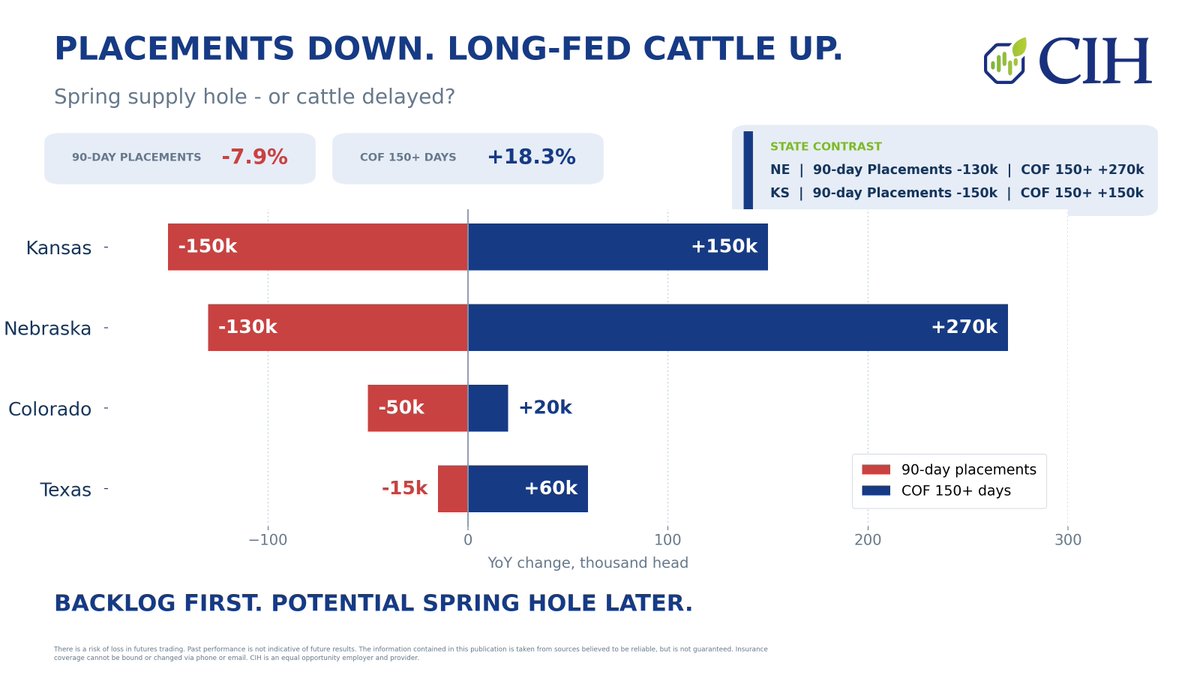
The bullish read: 90-day placements are down 7.9% YoY, pointing to fewer spring finishers. Retention and a smaller feeder supply could keep placements soft.
The counterpoint: COF is still +0.7%, while cattle on feed 150+ days are up 18.3%.
The state data make the tension clear:
📍 Nebraska: 90-day placements −130k | COF 150+ +270k
📍Kansas: 90-day placements −150k | COF 150+ +150k
Are placements lower because feeders are scarce—or because yards are full?
#cattle #beef
🐂 Cattle Slaughter — WTD
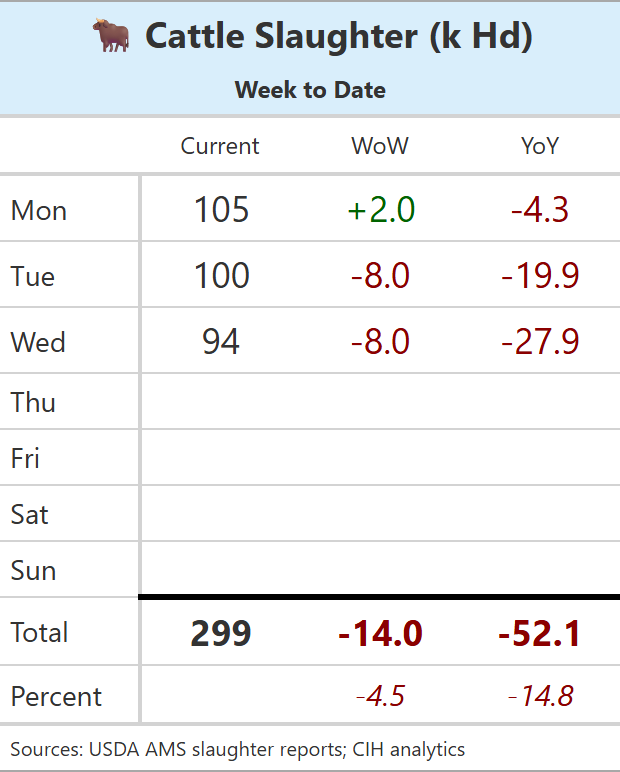
Through Wednesday, cattle slaughter is running 299k head, down 14k (-4.5%) WoW and 52k (-14.8%) YoY.
Monday started stronger WoW, but Tuesday and Wednesday both came in 8k head below last week.
🔎 With tighter cattle supplies and reduced packing capacity, the pace of slaughter remains an important piece of the cattle/boxed beef balance.
Does the kill pick up into the end of the week — or are we settling into a lower weekly run rate?
#cattle #beef #ag
@MeatBorsa that's the question! hole in the spring - or filled with heavier placements + feeders from Mexico? Is Apr too discount to Jun if there's a hole? Or not discount enough if we smooth out or fill the hole?
🐂 COF: Spring supply hole—or cattle delayed?
The bullish read: 90-day placements are down 7.9% YoY, pointing to fewer spring finishers. Retention and a smaller feeder supply could keep placements soft.
The counterpoint: COF is still +0.7%, while cattle on feed 150+ days are up 18.3%.
The state data make the tension clear:
📍 Nebraska: 90-day placements −130k | COF 150+ +270k
📍Kansas: 90-day placements −150k | COF 150+ +150k
Are placements lower because feeders are scarce—or because yards are full?
#cattle #beef
@Rob89935 well feeder supply outside feedlots was slightly higher in Jan and slightly lower in Jul...is it sustainable to continue to see lower placements? unless we are pulling more on the feeder supply by retaining more heifers than expected?
🚛 Diesel Hits Record High — Another Headwind for Cattle Producers
⛽ $6.53/gallon — up 74% from a year ago.
📈 The YoY increase has been exceeded only in 2022 since 2000.
Higher diesel prices mean higher costs to haul cattle, move grain, and transport beef.
🐂 With cattle feeding margins already under pressure, how much additional cost can the supply chain absorb — and who ultimately bears it?
#Cattle #Beef #Diesel #Ag
@sd1459 2 things to watch. Mexican imports - currently 1k/day with other ports opening soon. If we keep 1-2k/day then we're looking at 60-120k more feeders Oct-Dec. Placements - lower b/c we don't have the feeders or yards are too full? Latter meaning larger placements are coming...
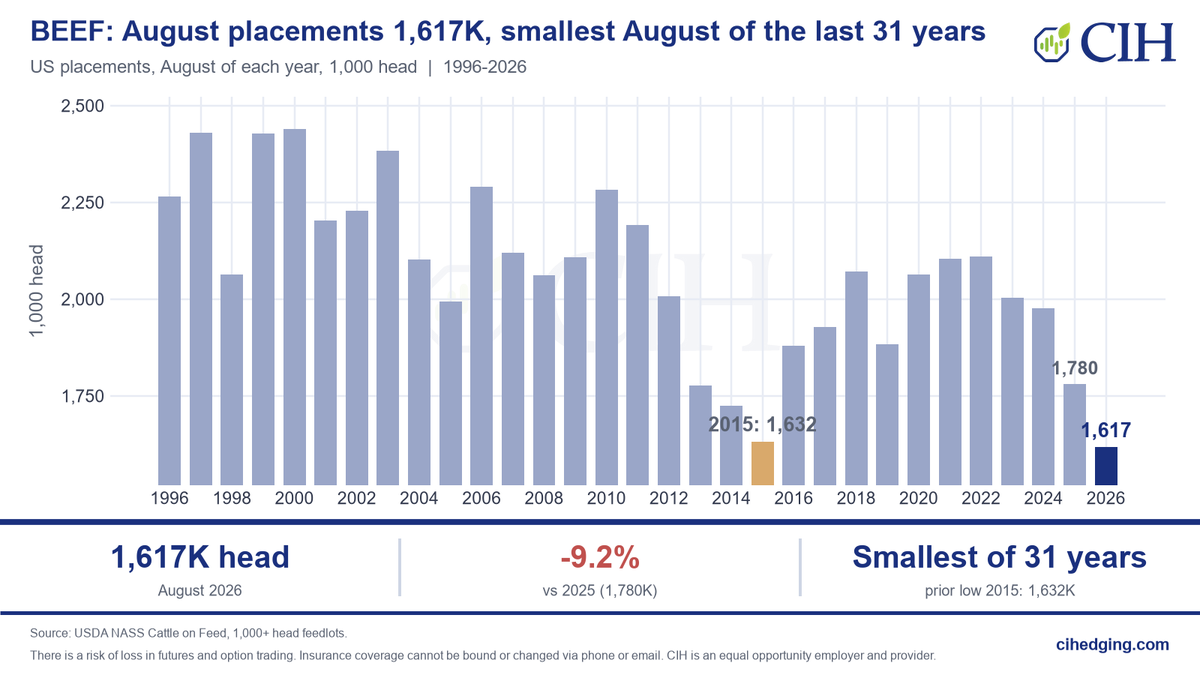
🐂 COF: August Placements Hit a 31-Year Low
📉 August placements totaled 1.617M head, down 9.2% YoY.
📊 The smallest August placements since at least 1996, falling below the previous low of 1.632M head in 2015.
With fewer cattle entering feedlots, what does this mean for fed cattle availability in early 2027?
#cattle #ag
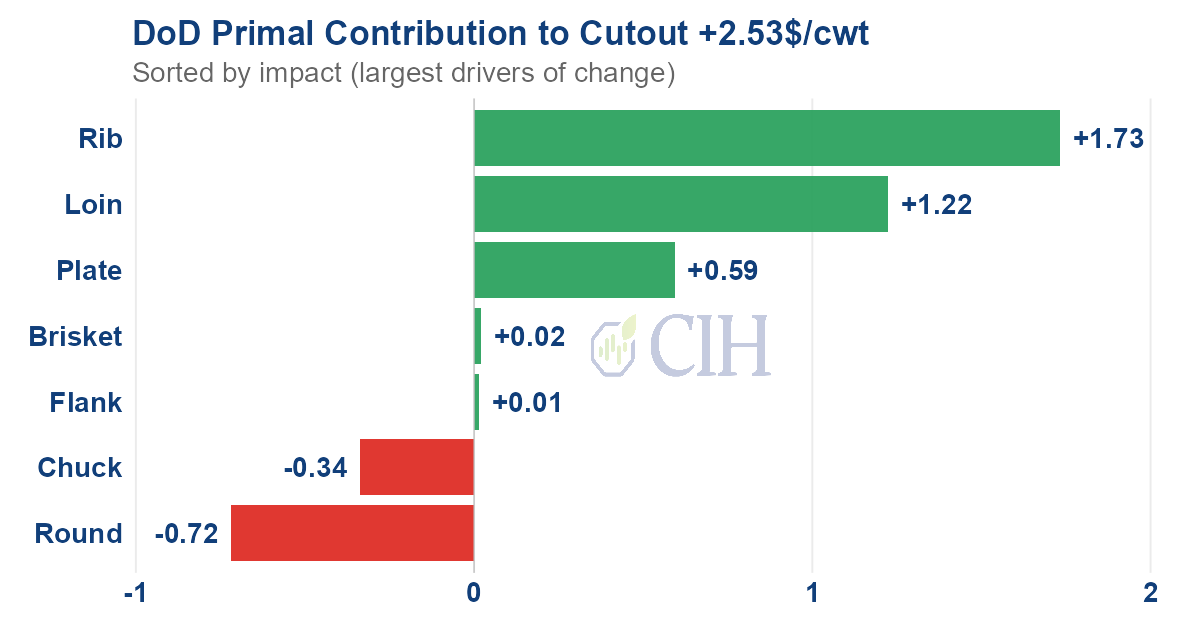
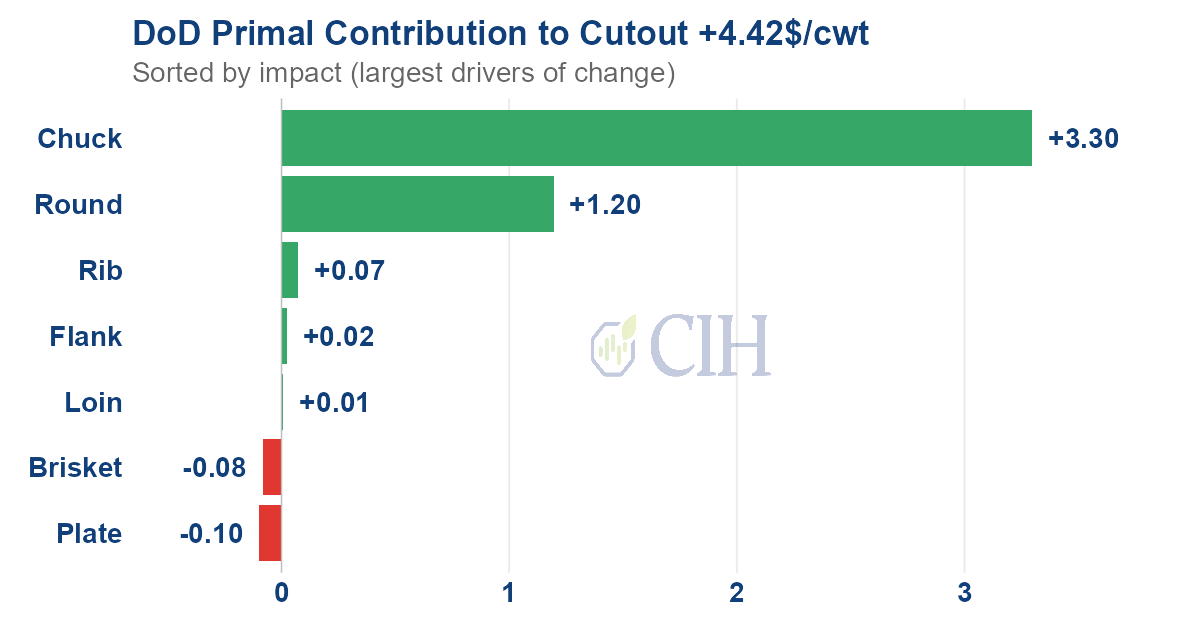
Choice Cutout +$4.42/cwt to $376.35
Chucks and rounds contributed the most to the increase - with retail ready chuck rolls + 16.5% DoD
50's trim continues to fall and is trading 45% lower YoY
90's trim rebounded after the sharp drop on Friday - trading back to $419.83 vs. $345.42 on Friday
#cutout #beef #cattle
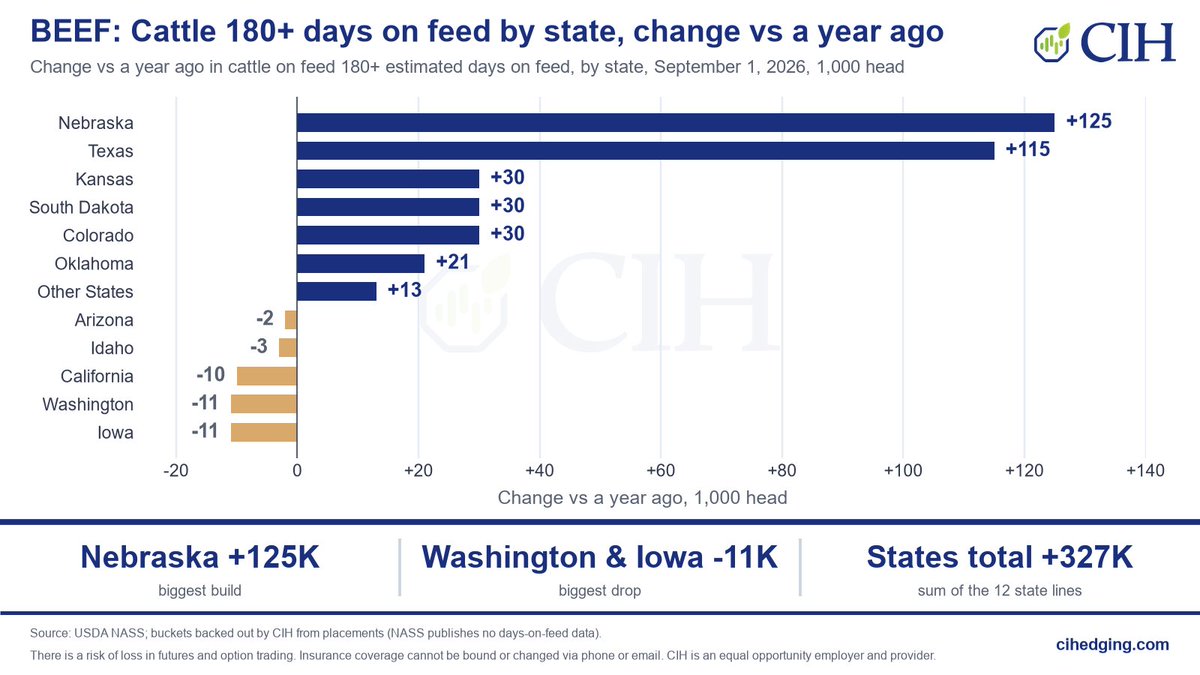
🐂 COF: Where are we adding days on feed?
While August placements fell to a 31-year low, our estimated 180+ day inventory tells another story.
📈 Nebraska: +125K head YoY
📈 Texas: +115K head YoY
📊 Combined, these two states account for +240K head of the increase.
With slaughter capacity already facing headwinds, how quickly can these cattle move through the system?
#cattle #ag
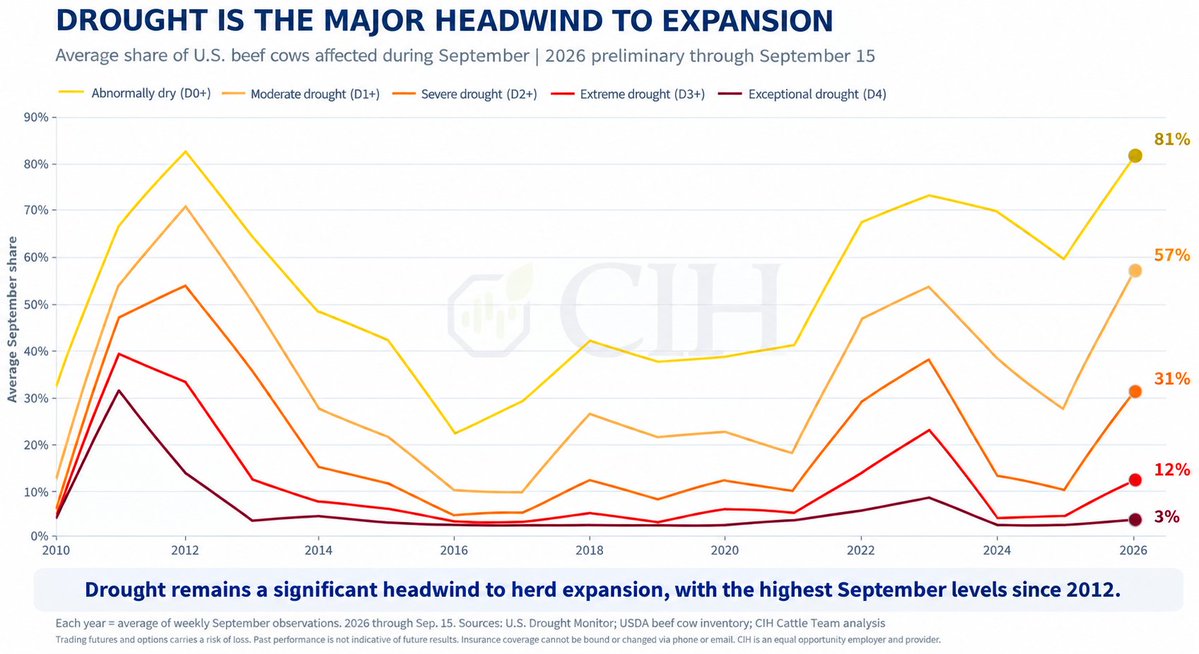
🐂 Herd Rebuilding: Drought Remains a Major Hurdle
🌵 81% of U.S. beef cows are in drought — up from 79% last week.
📊 The latest Cattle on Feed report showed fewer cattle entering feedlots, but that doesn't automatically mean more females are being retained.
🔎 Are producers beginning to rebuild, or is drought keeping the industry in a holding pattern?
Retention may be emerging. Meaningful expansion is another question.
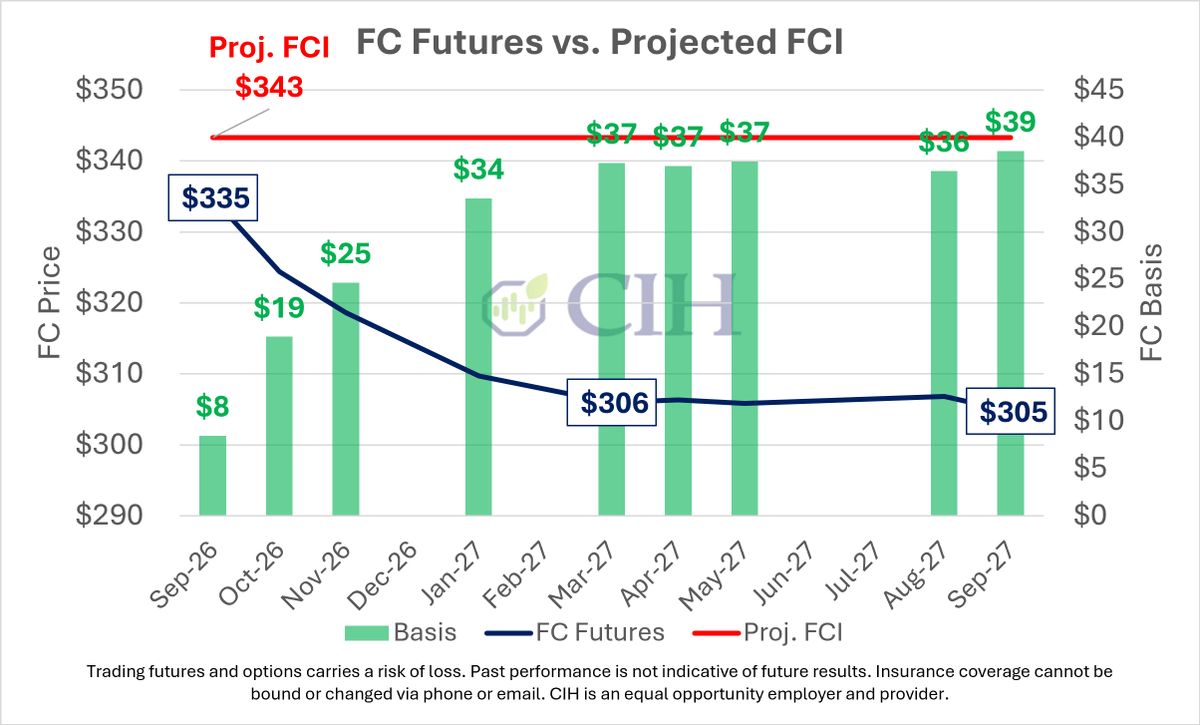
🐂 Cattle Feeding Economics: Pressure Mounting?
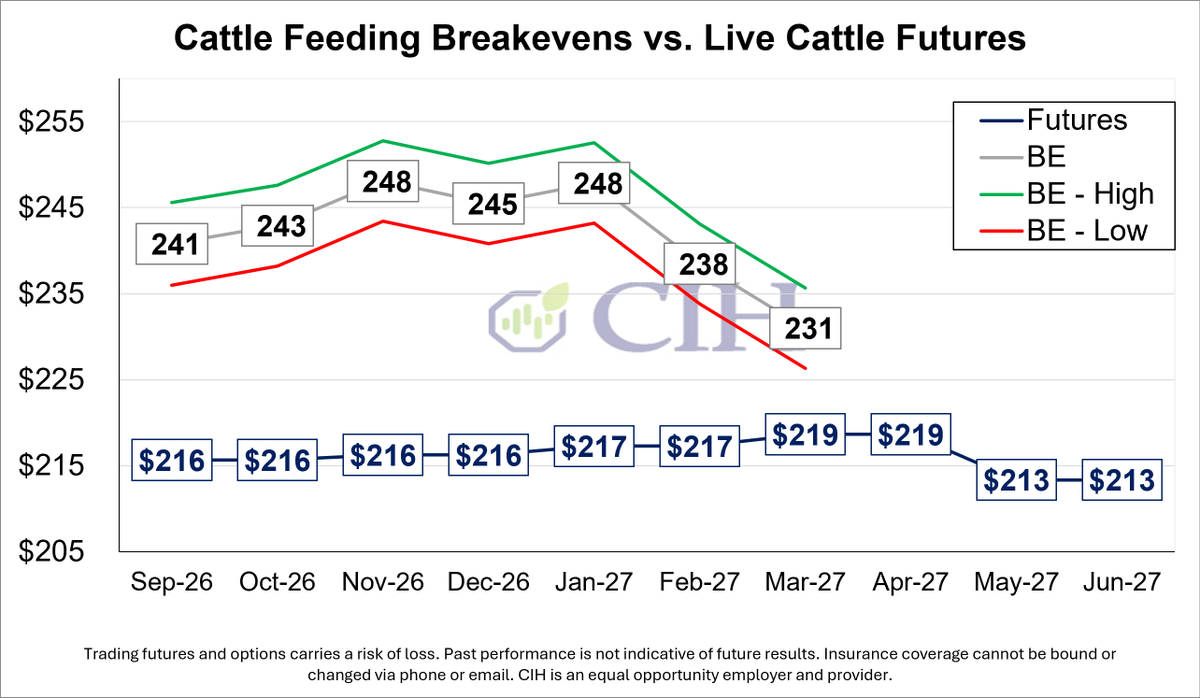
📉 Cattle futures have moved lower again. How are the underlying economics adjusting?
🔴 Live Cattle: Futures remain below projected feeding breakevens. How will this impact forward feeding decisions?
🟢 Feeder Cattle: After narrowing, the gap between projected cash values and deferred futures is widening again.
🔎 Will feeder cash prices adjust to futures, or will the disconnect persist? What does this mean for feeding margins and future placements?
🐂 Herd Rebuilding: Signs of Retention?
We've looked at the economics of retaining breeding females and the headwinds facing herd expansion. Now, what are receipts telling us?
📉 Heifers as a % of feeder cattle receipts are declining — a potential sign of increased retention.
🔎 Are producers retaining enough heifers to actually expand the breeding herd, or simply replacing cows lost to recent culling?
One more piece of the herd-rebuilding puzzle.
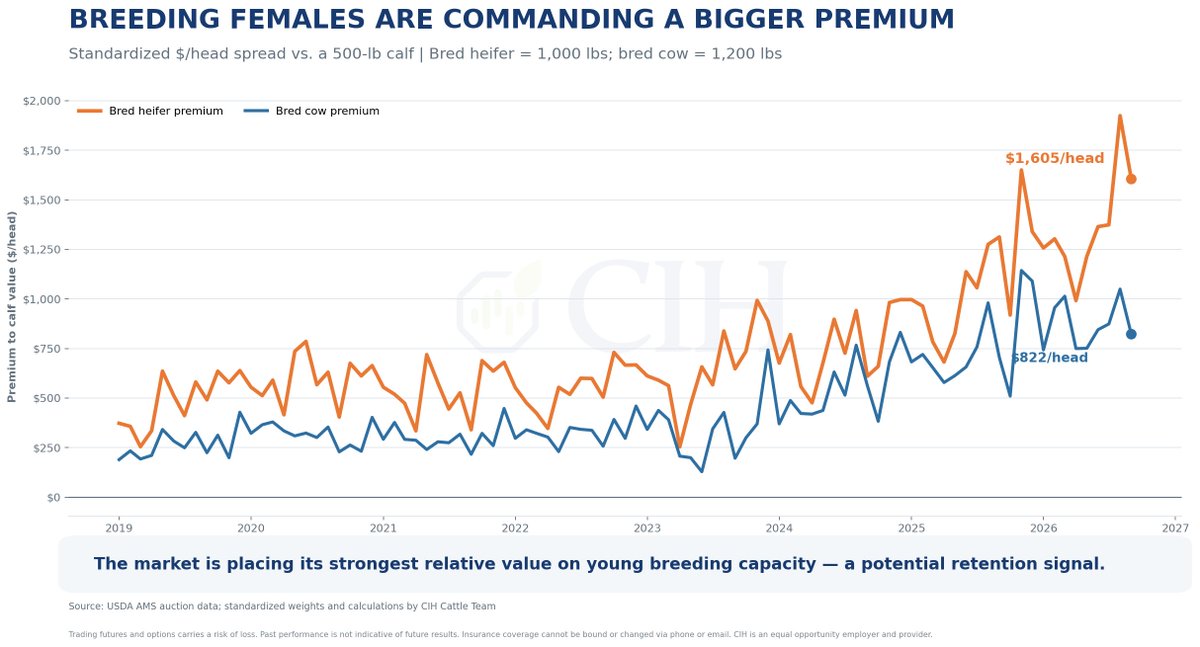
🐂 Herd Rebuilding: What Are Bred Heifers Worth?
The bred heifer–steer calf spread offers another way to track the economics of herd rebuilding.
📊 What does the spread measure?
The price premium of a bred heifer over a steer calf.
🟢 Widening spread → Stronger relative value for breeding females.
🔴 Narrowing spread → Weaker relative value for breeding females.
The key question: Is the growing bred heifer premium enough to overcome the headwinds to herd expansion — drought, financing costs, and the expense of developing replacement females?