Our planet is sending us signals.
Too wet. Too dry. Too hot.
But listen, listen again.
Do you hear something else?
This #WorldEnvironmentDay, we turn the volume up on the urgent signals the Earth is sending and how, together, we can act #NowForClimate.
📽 Open Planet
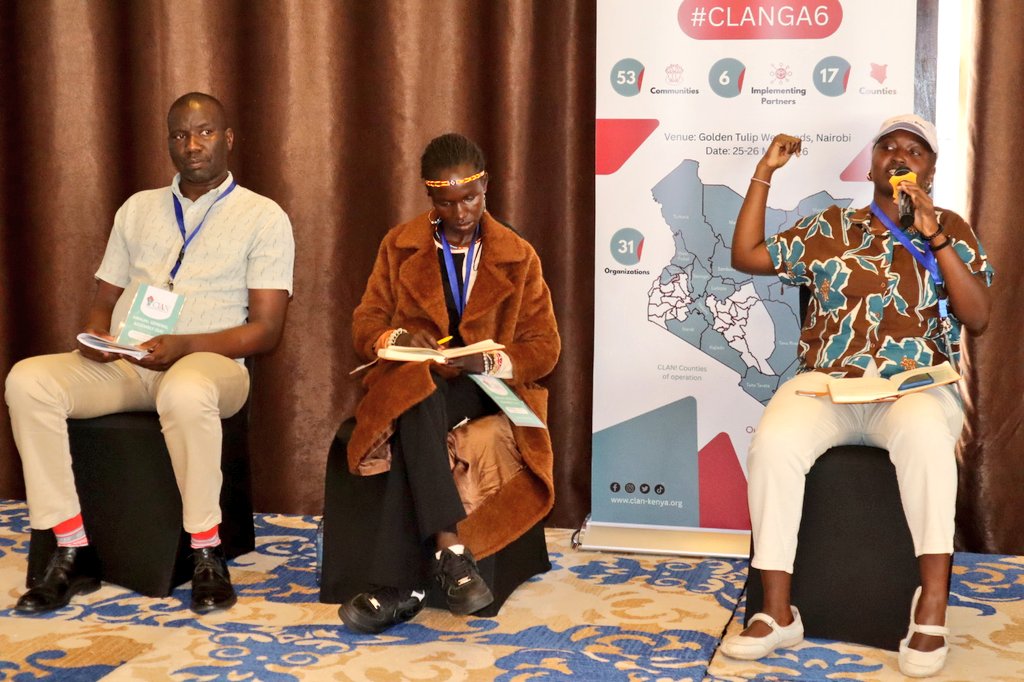
Day 2 of #CLANGA6 - President Dr.Ketemon celebrated the Title Deed victory for the Lokapel community and the registration of Mgeno. The Steering Committee (SC) strengthened governance.
Christopher Sanye: "The solution lies in blending customary practices with new inclusion policies and teaching communities about affirmative action to achieve consultative and culturally appropriate forums" #CLANGA6
In Kenya, men own 77% of the land, 20% is jointly owned, and only 3% is owned by women. Panel IV explored how to implement truly Gender-Responsive and Inclusive land governance. #CLANGA6
Naomi Kutto detailed the structural barriers: cultural biases, lack of resources, and the risk of losing land prevent women from ownership. She added that youth and women’s decisions on land are frequently not taken seriously, and they are often only involved "to fill numbers."
Virginia Sintanai highlighted that while women and youth are often isolated in land decision forums, their participation provides "value-added decisions." She stressed that despite being grouped as marginalized, women and youth face unique challenges that must be addressed.
While compulsory acquisition is legal, compensation is "better when you have the land title deed," noted Hambule stressing the urgency of registration. #CLANGA6
Panel III: Community Land Registration Challenges and Legal Protection Mechanisms Compulsory acquisition is a legal reality: the government can acquire land whether registered or not, a topic poorly understood by communities.
Paul Oling’a warned that community governing structures are often crippled by internal conflicts like clanism and personal interests, making the land registration process flawed. He noted that disputes can get so severe that people rush to court to stop the elections of CLMCs.
Panel II discussion was on Land Governance, Community Investments, and Emerging Land Conflicts. With increasing demand for community lands for infrastructure, mining, and green energy, the panel explored how communities are involved in these investments #CLANGA6
The biggest issue with carbon credit projects is the escalation of conflict due to scarce resources. Restrictive rules imposed by these projects limit how communities can use their land and manage resources.
Panel Session 1 on Carbon Regulations, Climate Change and Green Grabbing is live. Panelist Osman Abdille confirms that carbon projects aggressively target vast, mostly unregistered community lands in Sub-Saharan Africa, often ignoring customary rights.
She further added "Adjudication of community lands is the most expensive part of registration process. It is not financially sustainable to communities."
Eileen Wakesho: "Registration is important, but we must think about what happens after. Strengthening land governance is critical, as is inclusive governance," she stated, stressing the need to protect against elite capture and external exploitation. #CLANGA6
The 6th @CLAN_Kenya General Assembly is happening on 25th-26th May 2026 themed strengthening community land governance, inclusion and collective action.
Held a stakeholders meeting at Bungoma County Commissioner's office on community land registration. In attendance: the Ministry of Lands, MCAs from Chepyuk and Kaptama wards, the Council of Elders, DCC Bungoma and community members.
Did you know that women have only 64% of the legal rights that men hold worldwide? This #InternationalWomensDay2026 we honor the courage of indigenous women who are guardians of our land culture and biodiversity.
#IWD2026
https://t.co/XPsmVQaeEu
Ten young learners from Chepkitale took part in Mt. Elgon Conservation Week, exploring nature trails, Kitum Cave and Elkony Waterfall. For many, it was their first time inside the national park they've grown up beside.
https://t.co/9nmqRaYH8K