I used to be out all the time, doing stupid things and hurting people—especially those closest to me. I spent money on things I didn’t need and showed off what I owned, the clothes I wore, and my muscles. I wanted to impress people, even though I barely knew where I wanted my own life to go.
I didn’t have a steady job, and I gave very little thought to my future. At the same time, I knew my family couldn’t keep supporting me financially forever. Eventually, I would have to take responsibility. Back then, I just had no idea how.
Then, by chance, I met a young woman in a café. It was January, and it was cold outside. I often approached women I found attractive, and that day, I approached her. I asked her name and how she was doing, and told her I would like to get to know her. Then I asked, “Can I buy you a cup of tea?”
She looked sad and replied, “No, thank you. Please leave me alone.” When we eventually started talking, she told me she had just lost 10,000. I asked her how it had happened. Her answer was: “Trading.”
I knew the term, but I had never seriously looked into it. That day, we talked about it for hours. Afterward, we met every Sunday at the same café, and she taught me the basics. What began as a chance encounter gradually became something I spent time on every day.
You never know where or when you’ll meet someone who changes the direction of your life. I walked into that café without any idea that a conversation could mean so much to me. But after meeting her, my life began to change.
My priorities became clearer: earning money, enjoying life, staying healthy, and being there for my family. I stopped spending time with people whose company kept pulling me toward trouble. I wanted to meet thoughtful people who knew what they wanted from life—people I could learn from and have meaningful conversations with.
I’m deeply grateful to her. She introduced me to something that gave me a sense of direction at a time when I had very little. I still had to make my own choices and do the work, but that meeting was a turning point. When I say that she saved my life, that’s what I mean: she helped me see a future I wanted to take responsibility for.
Today, I love trading. I’m fascinated by making decisions, questioning them, and seeing how the market unfolds. To me, it feels like a competition. On the other side are people, including experienced professionals, trying to find an edge of their own. Everyone brings their knowledge, patience, and strategy. That challenge is what draws me in.
Wins and losses are part of it. I enjoy the wins, and I try to accept the losses without letting anger or disappointment take control. But the money is real. Behind my capital are hard work, time, and opportunities for my future.
I’ve experienced how painful that can be. In a single night, I lost 80,000—money I had spent months working for. Suddenly, the result of all that work was gone. Loving trading didn’t make that loss hurt any less.
I’ve seen many people walk away after major losses. I stayed. But I want to learn from my mistakes rather than repeat them out of pride. Continuing also means looking honestly at my behavior, protecting my money better, and taking a break when my head isn’t clear.
If I have children one day, I want to pass on what I’ve learned: how markets work, how to handle money, and how much responsibility comes with every decision. I also want to tell them about my mistakes, so they understand what those lessons cost me.
Maybe that will become something that lives on in our family—a legacy of knowledge, experience, and discipline. Something my children can build on without having to make the same mistakes I did.
I used to think that being a good trader meant always knowing what the market would do next. Experience taught me how much I still had to learn. A convincing chart can fail, a strong move can reverse, and confidence can become expensive when you stop questioning yourself.
These days, I focus on the decisions I can control: why I enter, how much I risk, and when I leave. I still feel excitement when a trade goes my way and disappointment when it doesn’t. The challenge is keeping those feelings from making my decisions for me.
I want to build a track record I can trust, even on difficult days. That means accepting a loss when my idea fails and having the patience to wait when there is no good opportunity. I’m still learning, but I want my progress to show in my decisions before it shows in my balance.
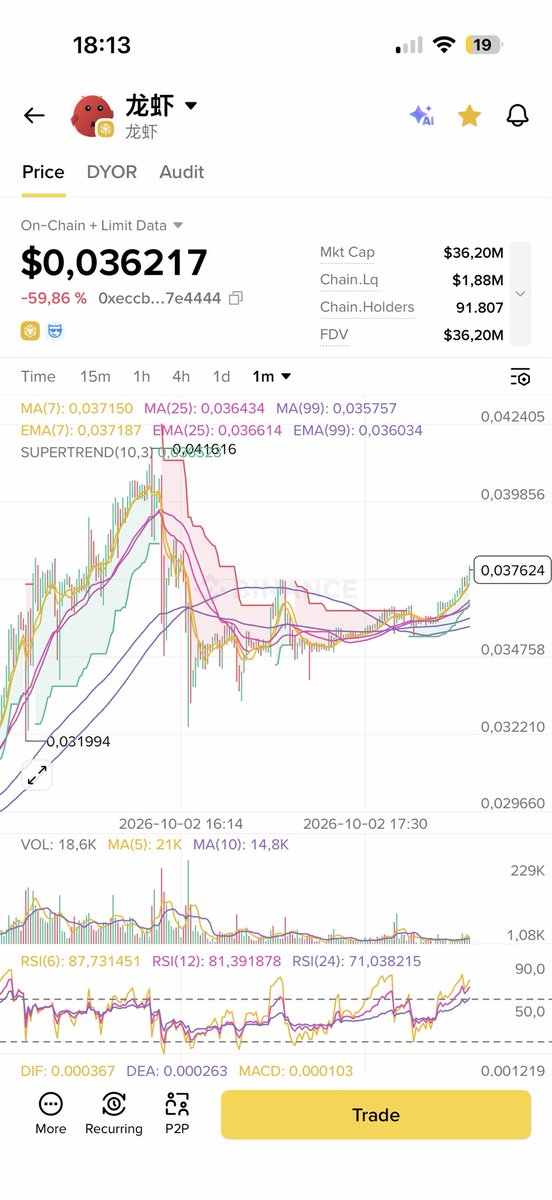
The fourth and final round my price target is 0.010. I’m holding my position and waiting to see how it plays out. My entry is at 0.028, with a stop-loss at 0.020.
I travel around Europe often and attend crypto and trading events, where I meet people from all walks of life. When we go out to a bar in the evening, I’m often asked why I don’t drink alcohol and choose water or Coke instead.
My answer is simple: I want to keep a clear head and remain aware of what I say and how I behave. Being drunk can lead you to do things that don’t reflect your values or say things you later regret. I want to protect my dignity and wake up the next morning feeling comfortable with how I carried myself.
Some people may criticize that choice, and that’s fine. I respect their freedom to drink, and I expect the same respect for my decision. For me, looking after my health is another reason to avoid alcohol. I don’t need it to feel confident, enjoy someone’s company, or have a good night.
I’m sharing a personal choice, not judging anyone else. I want to enjoy the evening, remember my conversations, and stand by every word I’ve said. That matters more to me than fitting in.
Be rich, but never talk about money. Be fit, but never talk about working out. Be sharp, but never mention books. You're a man. Neverrrrrrrrrr everrrrrrrrrr let excitement make you announce things prematurely. Stay low-key and move silently. Trust me, you'll never regret it.
Why do those with limited means lose money more easily in the crypto world? Because they simply cannot wait. The wealthy have 10 million in their accounts; they catch a market wave, make 10%—and that’s 1 million right there. Key Opinion Leaders (KOLs) have inexhaustible "ammunition": if they lose, they simply run a promotion and get right back in the game. But those with limited means have only 100,000. Even if they make 10,000, it doesn't plug the holes in their lives; so, they trade obsessively—and the more they trade, the more they lose. What truly breaks them isn't the market itself, but the pressure and anxiety of real life. They mistakenly believe trading is like clocking in at an office: that one must make money every day just to survive. Yet, the rhythm of the pros is never about winning every day; it is about fighting one major battle every three years and reaping a massive reward. When the trend arrives, they go all out; when the tide recedes, they hold their coins, wait, and hone their skills. The wise person keeps their tools concealed within, bides their time, and acts only when the moment is right. Falling into poverty through haste is like being struck by an incurable disease—only by adopting the mindset of the wealthy can one turn their fate around.
, I lost more than just money. I spent months working, trading, and building my way up to almost €80,000 and in a single night, it was all gone. Months of hard work, patience, and sleepless nights disappeared within hours.
But I didn’t give up. I’m rebuilding myself piece by piece. Today, I accept every loss and every mistake with gratitude instead of anger, because they taught me lessons that no profit ever could.
I learned that success isn’t measured by how much money you once had, but by how many times you’re willing to rise after losing it. Money can disappear and come back. Knowledge, experience, and discipline stay with you.
Maybe I’m starting small again today but this time, I’m not starting from zero. I’m starting with experience.