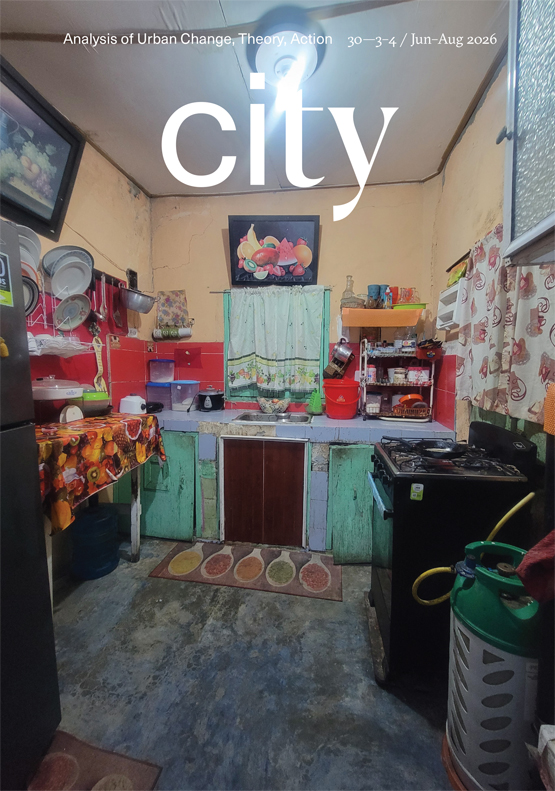
City 30.1–2 is out.
The cover takes us to La Llorada in Azoyú, Guerrero: an annual procession where two sides of a small city meet in the rain for a day of atonement, grief, joy, reconciliation, and wilful tears.
More from our 30th anniversary issue in the weeks to follow.
Reviews, City vol 30, issue 3-4: “Gentrification disguised as a progressive urban policy” by Clément Luccioni, on Yuca Meubrink’s Inclusionary Housing and Urban Inequality in London and New York City.
https://t.co/yi0ZANocnw
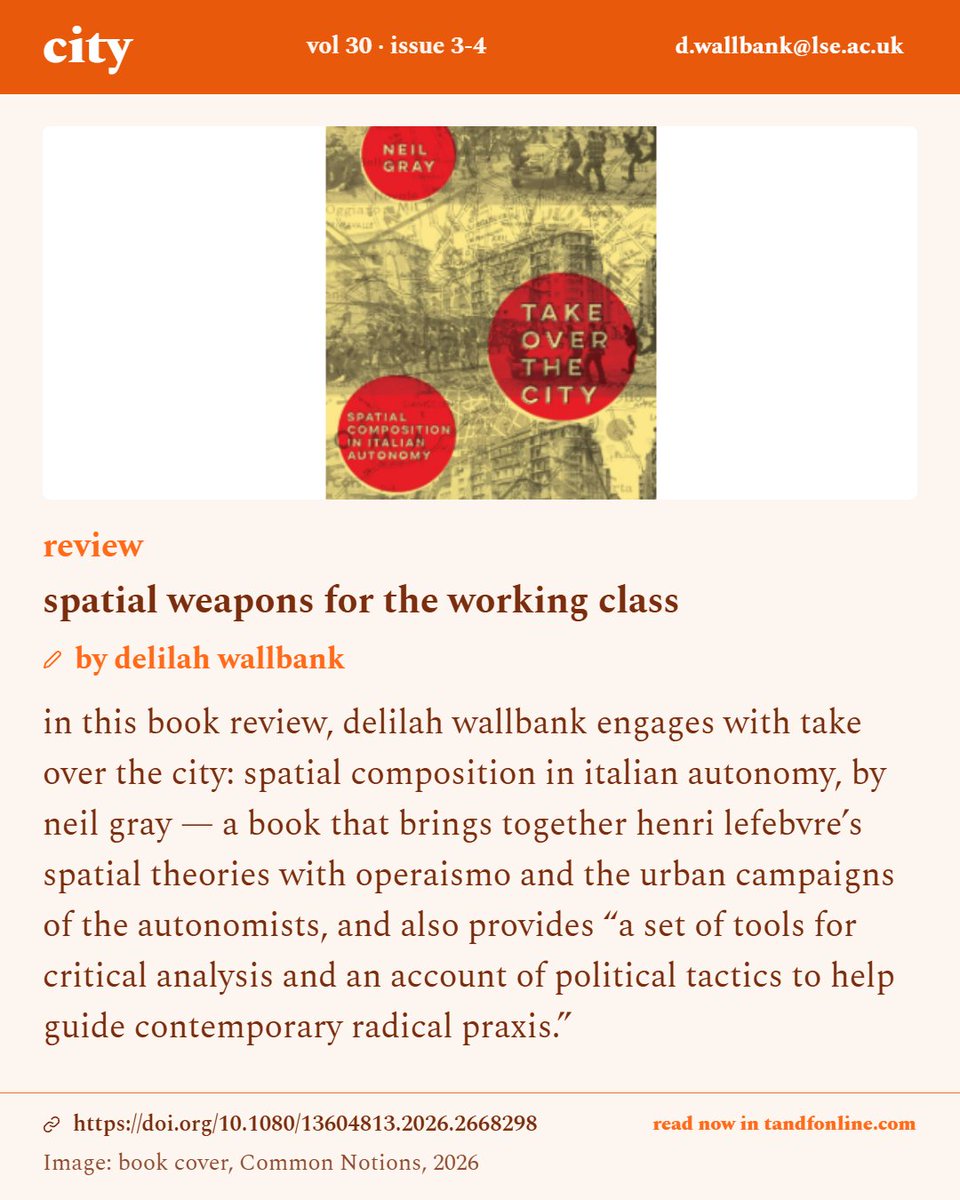
Reviews, City vol 30, issue 3-4: “Spatial weapons for the working class” by Delilah Wallbank, on Neil Gray’s Take Over the City.
https://t.co/ACd4Fcust7
Reviews, City vol 30, issue 3-4: “The time beneath the concrete” by Ammar Azzouz, on Nasser Abourahme’s The Time Beneath the Concrete.
https://t.co/Br0o0Gkzlz
Reviews, City vol 30, issue 3-4: “Urban verticality revisited: mapping Chongqing’s layered realities” by Weijie Hu, on Ali Cheshmehzangi’s City Walks in Chongqing.
https://t.co/nHiKV3Rt5T
Scenes Sounds Action, City vol 30, issue 3-4: “Municipal Kitchens: an exhibition re-imagining food as a public service in cities” by Hanna Baumann et al.
https://t.co/sOCyzdMBQ5
Aquí se ve cómo la policía de @PabloLemusN detiene arbitrariamente a Samuel, un repartidor de Rappi que estaba trabajando. No iba en la marcha. Pero Lemus necesita procesar gente para no soltar su narrativa. Quien debería ir a la cárcel es él.
Scenes Sounds Action, City vol 30, issue 3-4: “Rhythms of resistance: temporality, urban informality, and the production of China’s peri-urban landscape” by Shih-yang Kao & Xuefeng Wang.
https://t.co/4ISZbsInr1
Endowments and transnational networks: the urban politics of al-jam’iyyat al-khayriya in Kuwait
by Asseel Al-Ragam.
How charitable organisations shape urban development through Donation-Funded Projects.
https://t.co/8NhqHQT0G5
Who controls land at the edge of Tehran? Mashayekhi, Dianati & Vaghefi show how revolutionary charitable foundations negotiate land and development in Ozun Tapeh, blurring public/private and formal/informal.
https://t.co/reyGgW1SeG
Aid-driven urban commoning has limits. Harb, Dayekh, Atallah & Zoughaib show how nonprofit and faith-based actors rebuilt post-blast Beirut, and why sectarian, class and market boundaries constrain their projects.
https://t.co/5O3tKfaEqp
New in City: "Theorising the religion–city nexus" by Azadeh Mashayekhi & Hélène Thiollet. Religious institutions shape urban governance, from welfare to land and housing, in Beirut, Kuwait City and Tehran. https://t.co/MILzc9yELG
New in City: "Articulating the social forces of urban assemblages" by Natalia Martini & Torik Holmes. It articulates social practices as the social forces of urban assemblages, applied to homelessness and urban energy demand.
https://t.co/3Iho2Kurvc
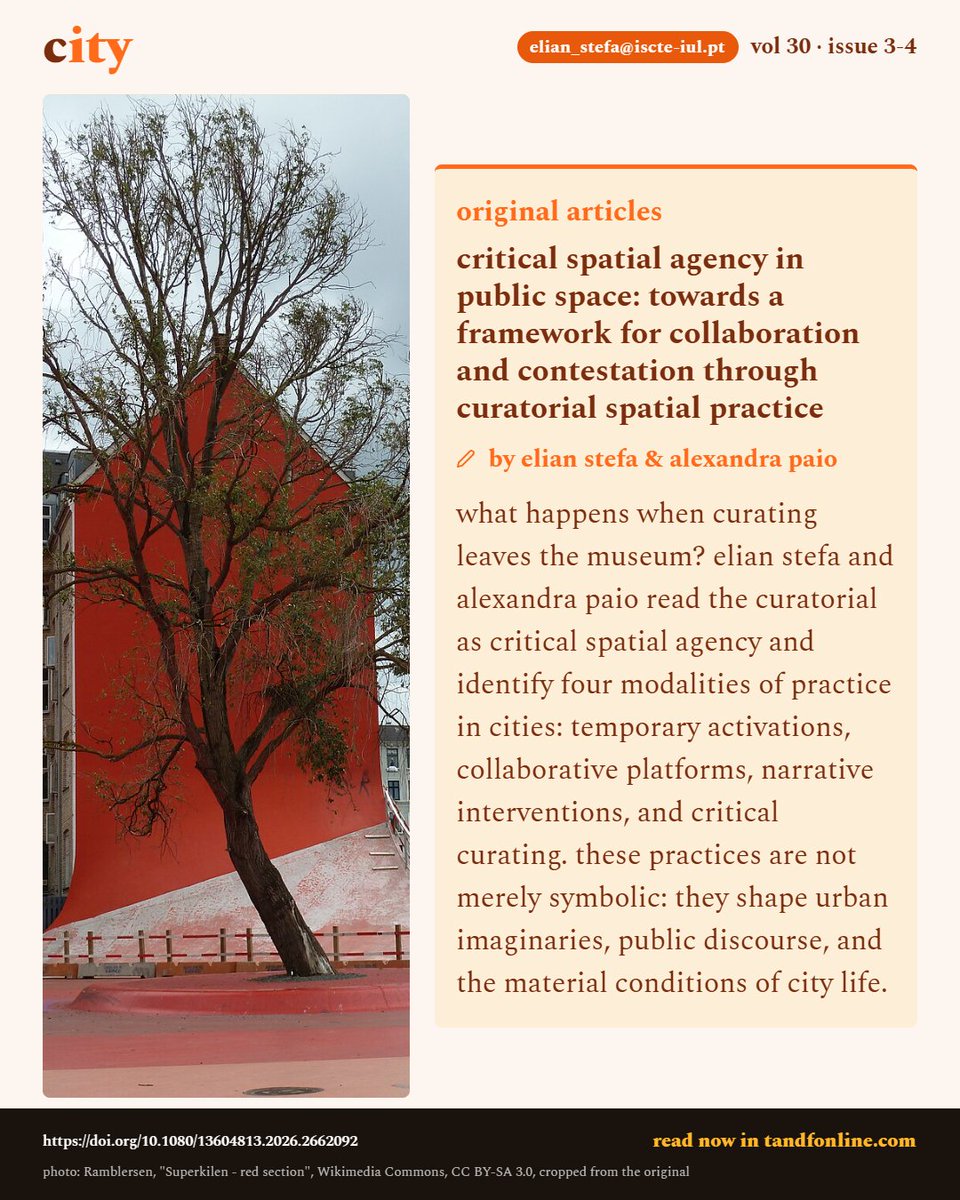
New in City: "Critical spatial agency in public space" by Elian Stefa & Alexandra Paio. Curatorial practice, read as spatial agency, shapes urban imaginaries and public life, mapped here through four modalities.
https://t.co/WyeJ0jn5NH
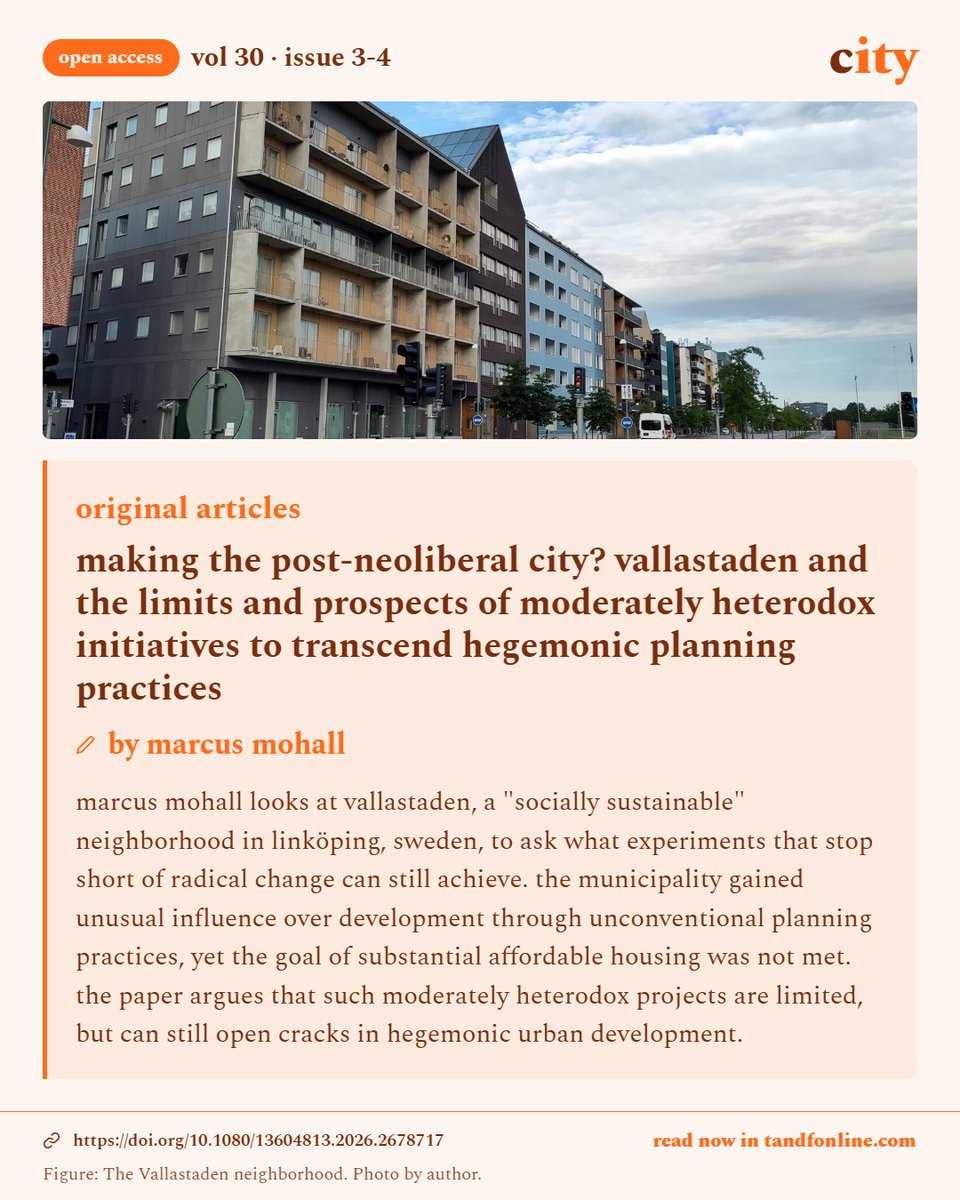
New in City: Marcus Mohall introduces "moderately heterodox" initiatives as a lens on planning experiments short of radical change, and shows how they can still open cracks in hegemonic urban development.
https://t.co/4tIu2fdgpc
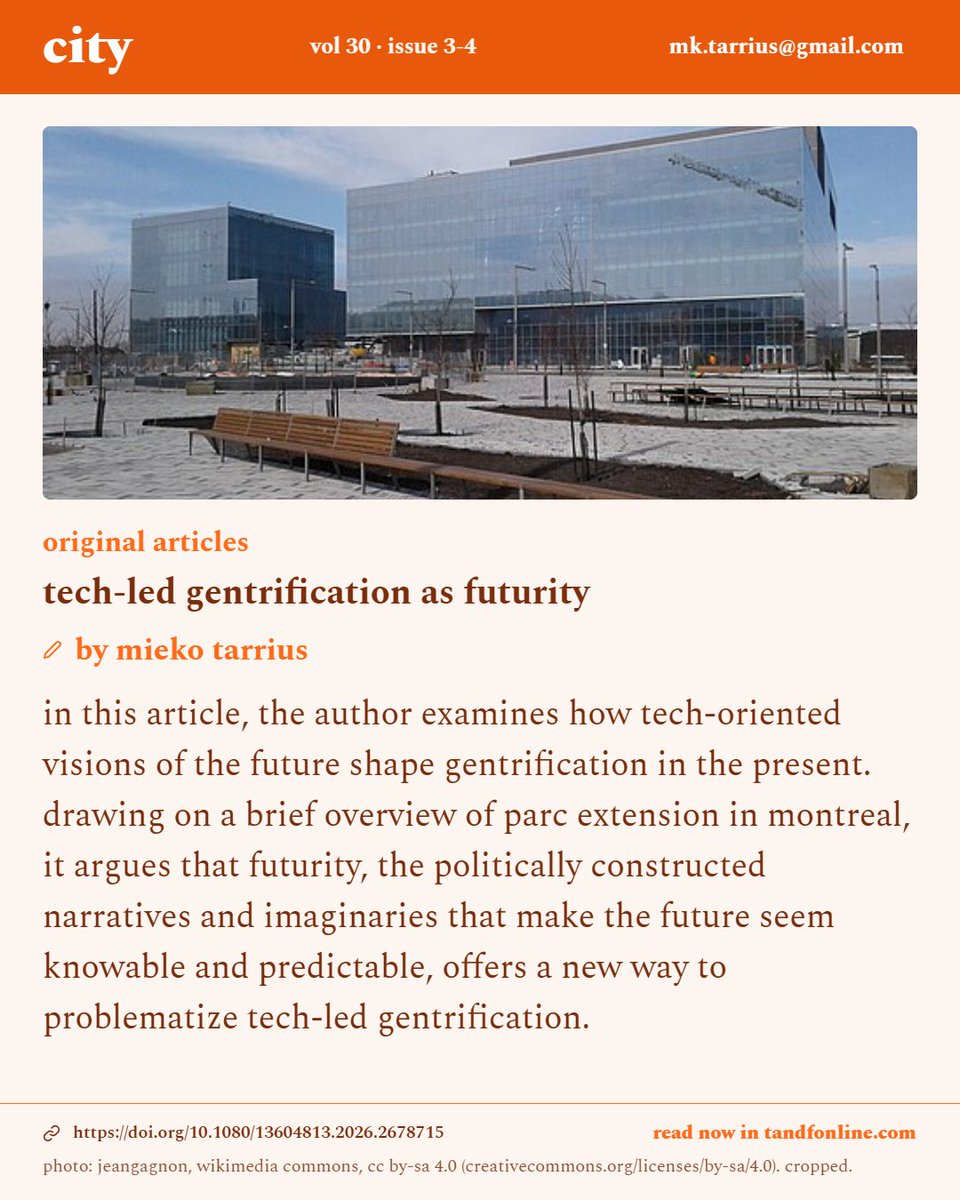
New in City: "Tech-led gentrification as futurity" by Mieko Tarrius. The article shows how narratives about tech-oriented urban "futures" shape gentrification in the present, with a look at Parc Extension, Montreal.
https://t.co/Z4rh3Wqcnv
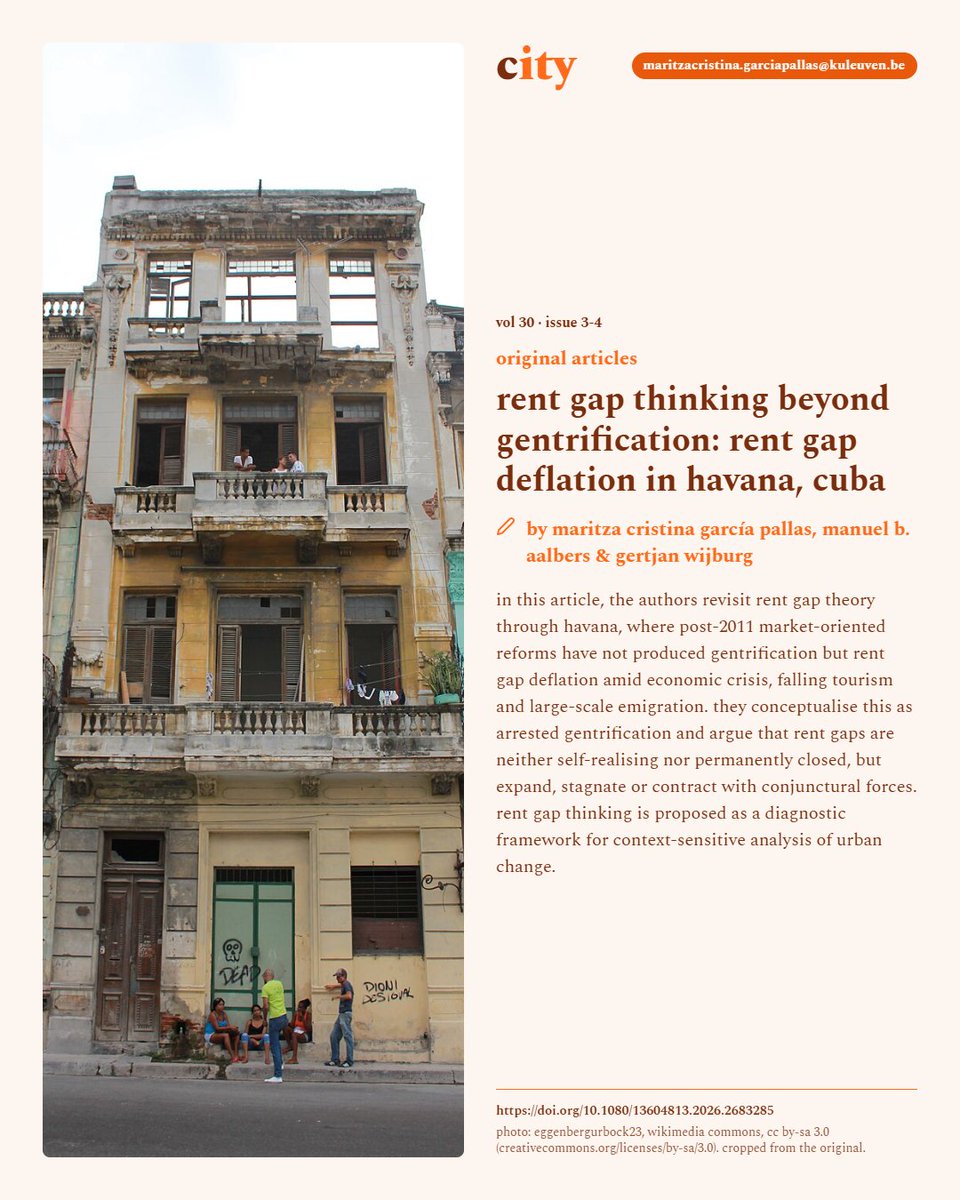
New in City: García Pallas, Aalbers & Wijburg revisit rent gap theory through Havana, where market-oriented reforms have not produced gentrification but rent gap deflation.
https://t.co/t8MlqWjmzU
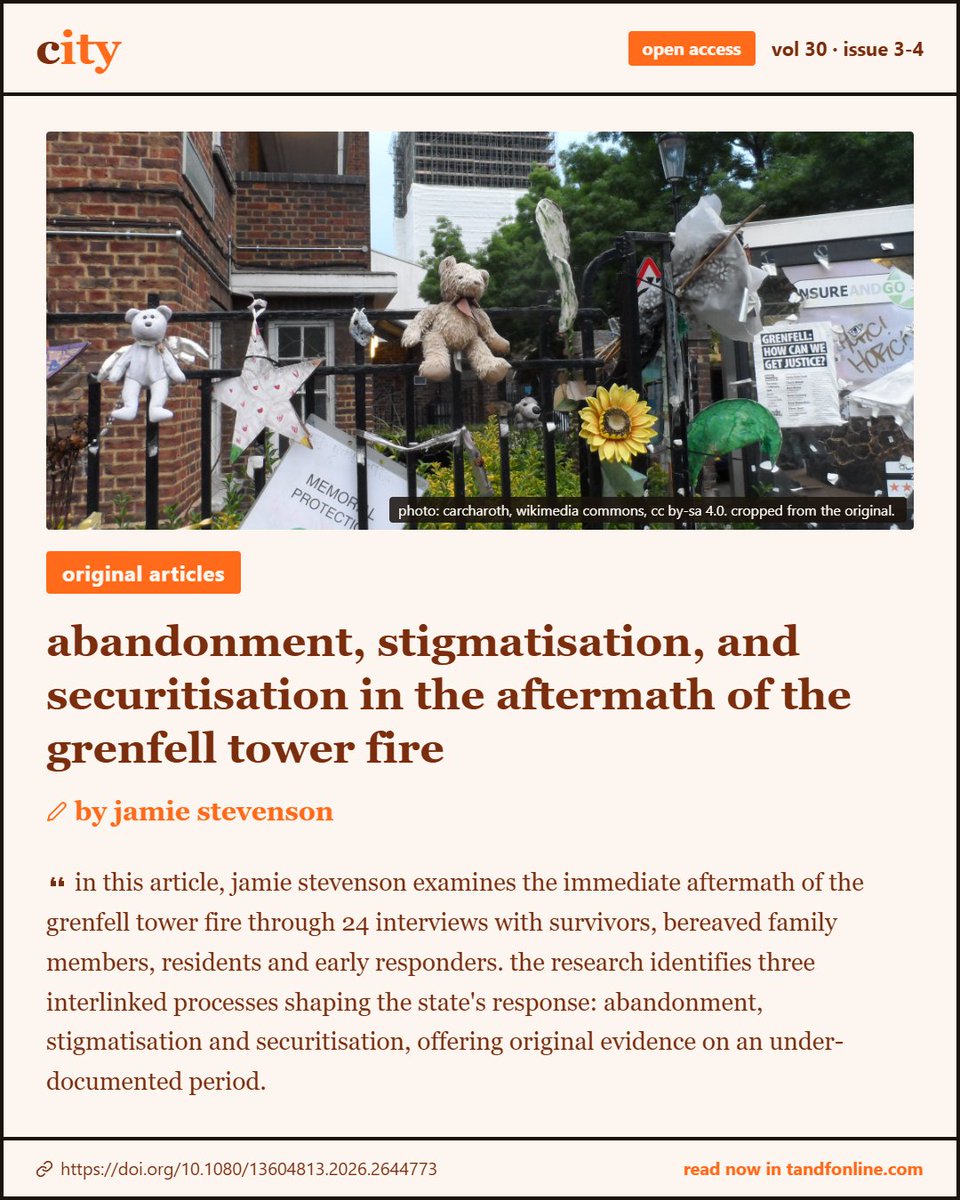
Jamie Stevenson draws on 24 interviews to examine the immediate aftermath of the Grenfell Tower fire and the state's response: abandonment, stigmatisation, and securitisation.
Link: https://t.co/mZpmFliOox
Keywords: Grenfell Tower, abandonment, stigmatisation, securitisation
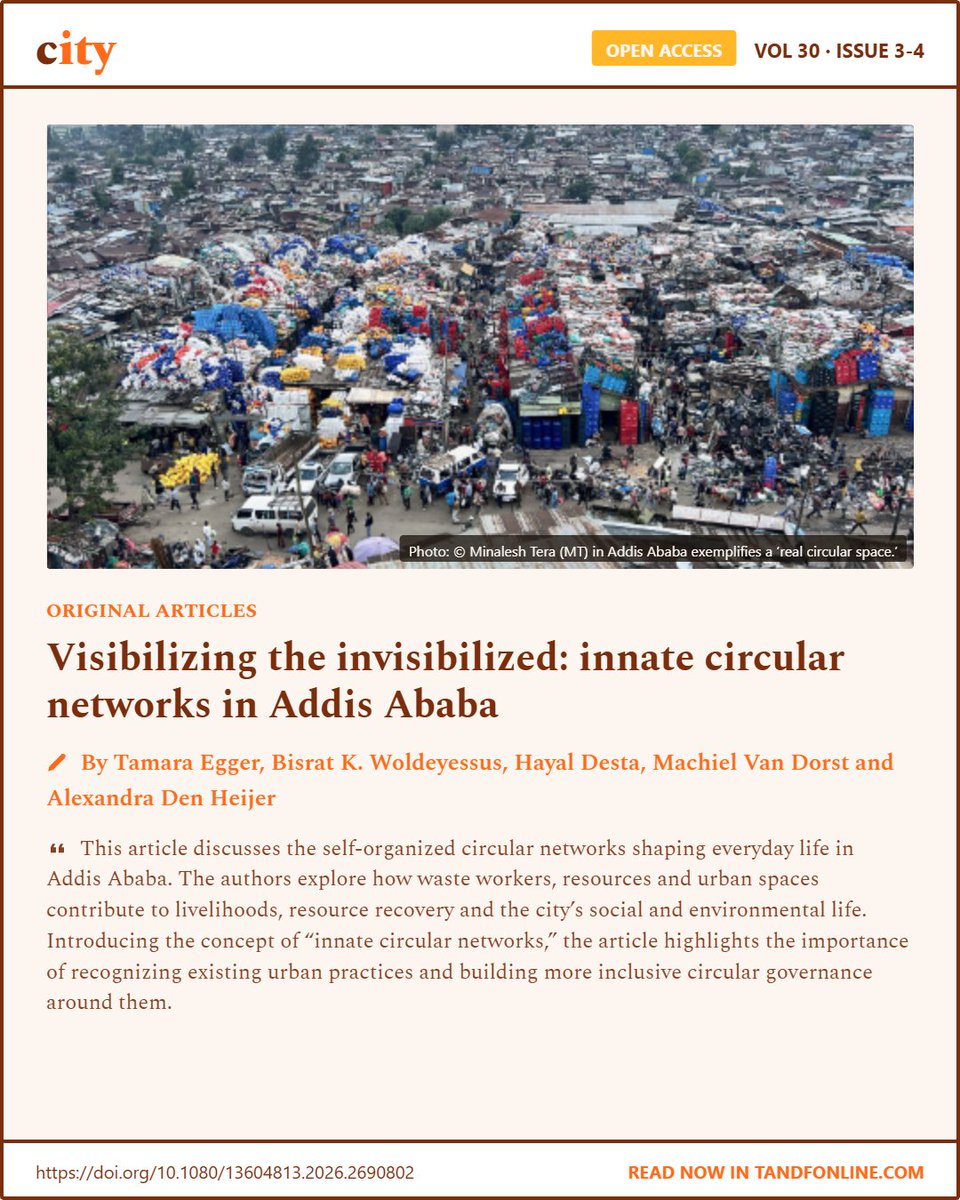
Visibilizing the invisibilized: innate circular networks in Addis Ababa
The research calls for more inclusive approaches that recognize existing urban practices.
read here:
https://t.co/xWTz3bwxTs
#CityJournal#UrbanStudies#CircularCities#AddisAbaba
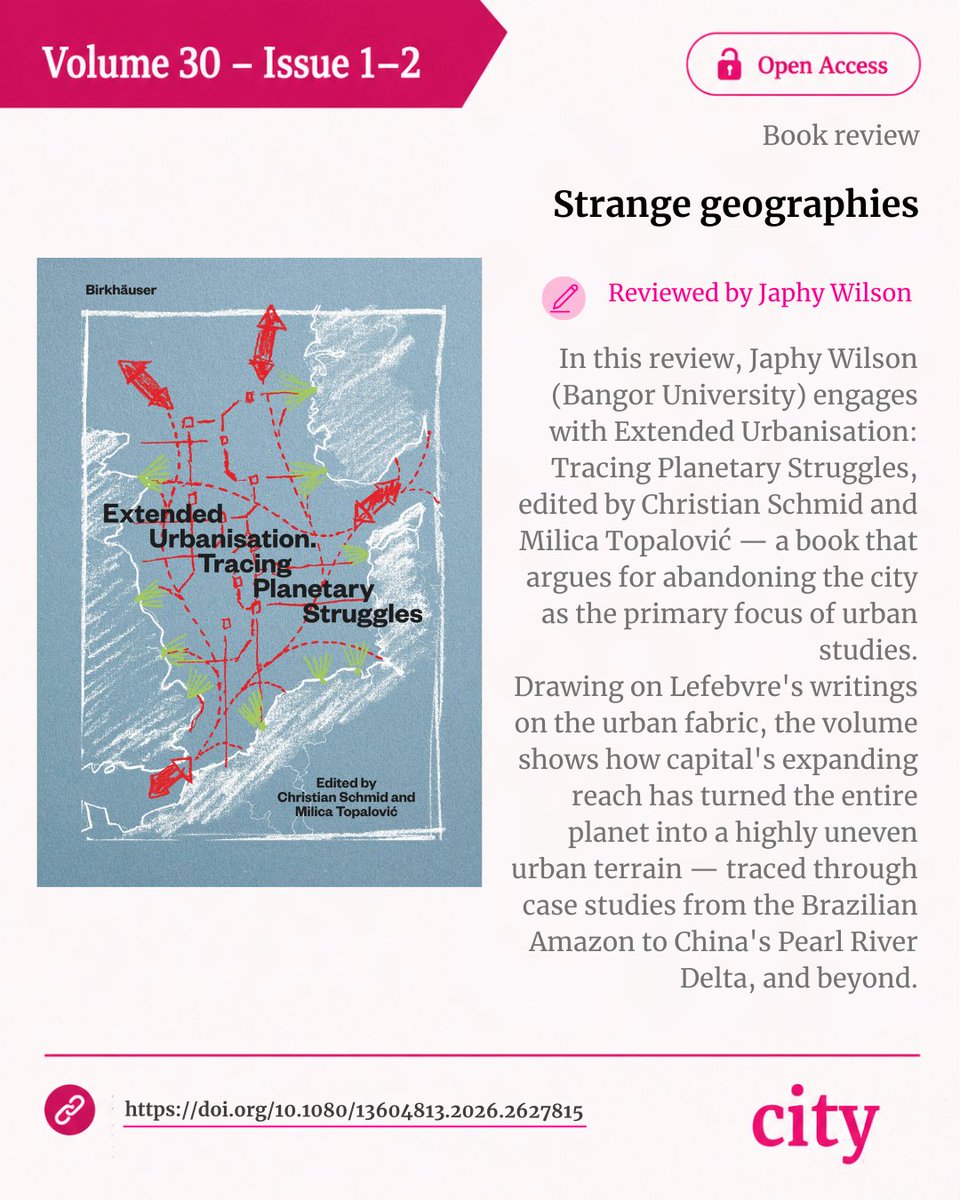
New review by Japhy Wilson: "Strange Geographies" explores how Extended Urbanisation: Tracing Planetary Struggles reimagines the entire planet as an uneven urban terrain, from the Amazon to the North Sea.
Read here:
https://t.co/wG8QobSCDG
#UrbanStudies