@Da7_Tech So you dislike him too, that’s a relief. I always thought everyone on Twitter liked him, and that it was just me, especially since Tibo interacts with him all the time.
This post may cause me problems and probably make some people here resent me, but I’m going to say it anyway because people should understand what is happening.
There are paid creators whose content consistently attacks Chinese open models, and the same three claims keep coming up: they are distilled from American models, your data is unsafe with Chinese companies, and they are benchmaxed.
On distillation, there may be some truth in specific cases, but the argument is usually stretched far beyond what the evidence supports.
American models were themselves trained on copyrighted human work, including books and culturally valuable material, without permission. This has already been documented with two major companies. So the knowledge inside those models cannot suddenly be treated as something those companies exclusively own.
The accusations also become ridiculous sometimes. People claimed Kimi K3 was distilled from Fable when Fable had been public for roughly two days. Are we seriously supposed to believe a model of that scale and capability was basically created by distilling another model for two days?
And reducing Chinese progress to distillation dismisses the work of researchers and engineers who have contributed heavily to this industry.
Then there is the privacy argument.
American companies store user data too, and they benefit from it. Use ChatGPT long enough and it builds memory about you. Cancel, come back months later, and that information will still be there. Your conversations also follow you between devices because the data is stored in the cloud.
So I do not understand why storing and using data becomes a unique crime when the company is Chinese.
If you are terrified of your data being held in China but completely comfortable with the same thing happening in America, that is not a privacy principle. It is a double standard.
You cannot praise memory, personalization and cloud features from one company, then use the same underlying behavior as evidence that another company is dangerous.
And then we get to my favorite accusation: Chinese models are “benchmaxed.”
The argument is that they are optimized to score well on benchmarks and therefore their numbers do not represent real-world performance.
American labs optimize heavily for benchmarks too. Every major lab knows the evaluations people watch. They train, tune and compare models around them. Benchmarks influence what gets shipped and how models are marketed.
So if a Chinese model gets a high score and your response is “benchmaxed,” you cannot turn around and use an American model’s benchmark score as proof that it is smarter.
This is exactly why I care far more about real use than leaderboards.
You can have a model like Opus 5 sitting on the top of major benchmarks, sometimes above Fable, Sol and Kimi K3, while in my own daily work it hallucinates more and performs worse than all of them.
If Chinese models are benchmaxed, American models are benchmaxed too.
That is why these three arguments do not convince me. Too often they are used selectively, and behind a lot of this rhetoric I see fear of Chinese competition.
China has cheaper energy, cheaper labor and extremely talented researchers. It has managed to remain competitive despite restrictions and limited access to the most advanced chips.
American companies, meanwhile, increasingly treat that competition as something existential rather than normal competition.
Use whatever works for you. Test the models yourself. Learn where each one is strong and where it fails.
Do not let anyone else do your thinking for you.
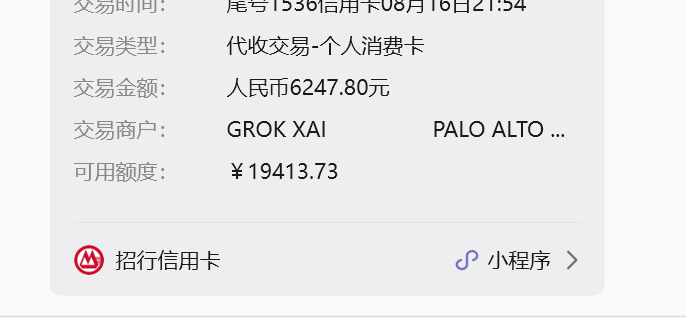
@Da7_Tech Just like Grok 4.5 before. Back then, GLM‑5.2, GPT‑5.5 and DeepSeek‑V4 all spent a long time troubleshooting one single bug, while Grok finished it in two minutes.