Watch this and one has to smile. This - in a world so filled with ugliness, charlatans and morons - is just a total delight, the reflection of two wonderful characters, HM the King and Sir David Attenborough, who represent service, duty, decency, wit, who more than ever have something to teach our society, and whom we are so lucky to have as our luminaries....
https://t.co/Xkm5oP9Ww8
In 1944, a Swiss engineer named Hans Hilfiker designed a clock for train stations. Sixty-eight years later, Apple put it on the iPad without asking. Switzerland sent them a $22 million bill. Apple paid.
The clock has a red second hand that sweeps the dial in 58.5 seconds, then pauses for a beat at the top of the minute. It waits for an electric signal from one master clock somewhere in the country before jumping forward. Every clock at every station shows the same second.
This kind of obsession runs through every Swiss train ride. Two crews drilled through 35 miles of solid Alps from opposite ends to build the Gotthard Base Tunnel. After 17 years and $12 billion, they met in the middle, 3 inches off. Vertically, the misalignment was under half an inch. It is the longest train tunnel on Earth, and the deepest, with up to 1.4 miles of rock overhead. Nine workers died building it.
Switzerland has more train track per square mile than any country in Europe. Nearly three times more than the European average. The Swiss ride more trains per person than anyone in the world except Japan. The average is 1,500 miles a year.
Punctuality runs on its own scale. Last year, 94 out of every 100 Swiss trains arrived on time. And in Switzerland, "on time" means "within 3 minutes of the schedule." Germany gives trains 6 minutes. France and Italy give 5. Use Germany's gentler rule, and 99 out of 100 Swiss long-distance trains arrived on time. Germany itself manages 62.
The trains have been fully electric for decades. Since January 2025, all of that electricity comes from clean energy, mostly from eight hydroelectric plants the railway owns. A long-distance Swiss train carries one passenger 60 miles on about half the electricity an electric car would use.
Scenery like that takes work. It takes a country that spends $18 billion on its trains in four years, powers them with Alpine water, drills 35 miles through solid mountain, and treats a 3-minute delay as a national failure. The view out the window is what's left over.
🚨 BREAKING: SpaceX filing IPO this week, aiming to raise $75 billion+
>biggest US IPO of all time
>surpasses all money raised by US IPOs last year combined
>filing may show xai losing money
>investors don’t care
>it’s elon
Individual investors getting 20%+ of shares (vs typical 10%). No standard 6-month lockup. Elon wants retail investors in.
we are so back
Remember all those asses who portentously started calling Kiev, Kyiv? Guess who always called it Kyiv? The Russians! Kyiv was the first capital of Russia. They are the SAME people. We took a side in a civil war. Rarely a good idea. Kiev is the English for Kyiv. Like Moscow is English for Mockba. Like Paris is English for Paree!
An absolute car crash interview for Labour MP, Nick Thomas-Symonds.
Attempting to defend the indefensible about Peter Mandelson but thankfully Nick Ferrari wasn’t having any of it. 🔥
🚨 HOLY CRAP! Sec. Scott Bessent is calling out Europe to their faces, on their own turf in Davos
"Just to be clear, Europe is STILL buying Russian oil!"
"Still. Still! 4 years later."
"They are financing the war against THEMSELVES." 💯
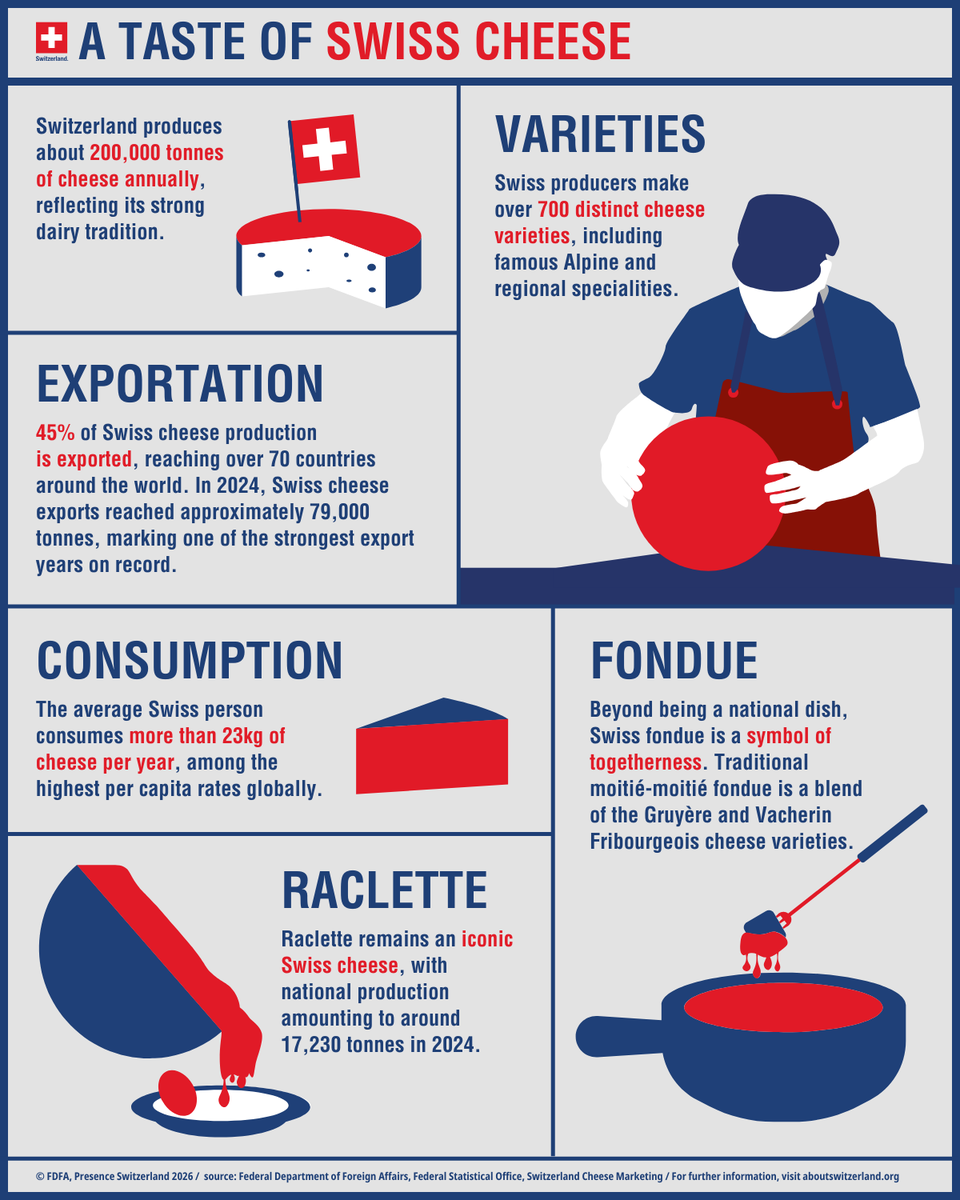
🧀 It’s #CheeseLoversDay! 🫕
Did you know that Swiss people consume more than 23 kilos of cheese per year?
🔎 Discover more fascinating Swiss cheese facts!
ℹ️ https://t.co/skF7jT6i6h
The 56th Annual Meeting of the World Economic Forum (@wef) is set to take place from January 19th to 23rd, 2026, in Davos, Switzerland. 🇨🇭
🔎 Learn more about the WEF, which brings together global leaders and experts to discuss and help shape agendas addressing the world’s most pressing challenges.
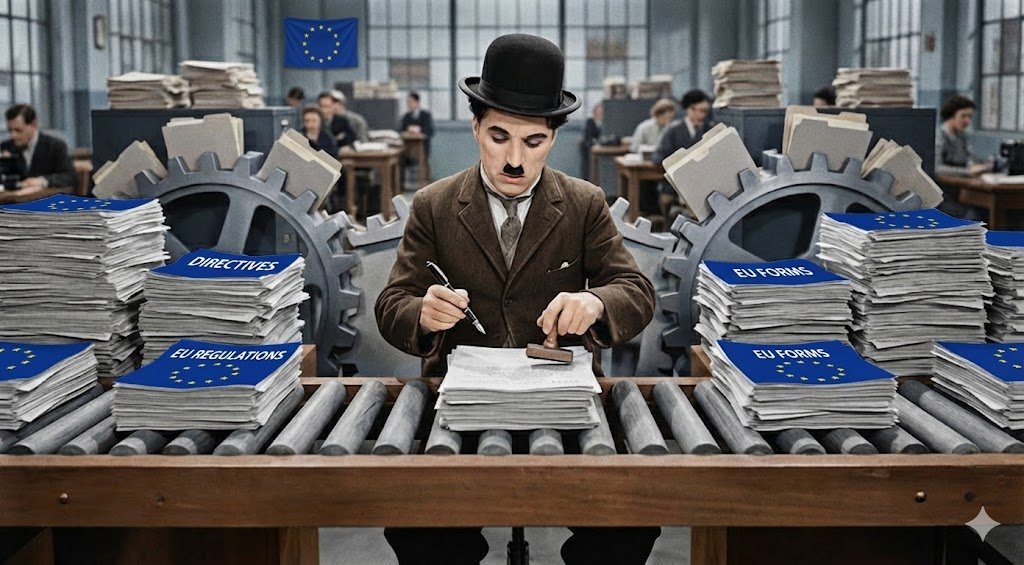
In Europe, overregulation has become a mafia business that milks the real economy like a parasite: it is a classic protection racket and extortion scheme masquerading as law.
Regulation is no longer about safety or standards; it is a shakedown where the price of existence is a perpetual tribute to a bureaucratic class that produces nothing.
The genius of the modern Western European state lies in its ability to turn non-productivity into a mandatory service. We have reached a point where it is more profitable to audit a factory than to run one. This parasitic class has created a labyrinthine legal structure so complex that no small business can navigate it without hiring "authorized" guides.
Regulations are the ultimate anti-competitive weapon. Large corporations love them because they have the "compliance departments" to absorb the cost. For the startup or the family business, a new EU directive is a death sentence delivered in a manila envelope.
Modern "values-based" regulation is the latest evolution of the protection racket. It forces companies to spend billions on purely performative reporting, diverting capital away from R&D and into the pockets of a "green" auditing cartel that trades in moral indulgences rather than actual environmental impact.
We are governed by people who have never had to meet a payroll or manage a supply chain. To them, a 500-page regulation is a "framework"; to the person on the ground, it is a chokehold.
The parasite has grown so large that it now believes it is the body, unaware that its own weight is what is dragging the entire structure into the dirt
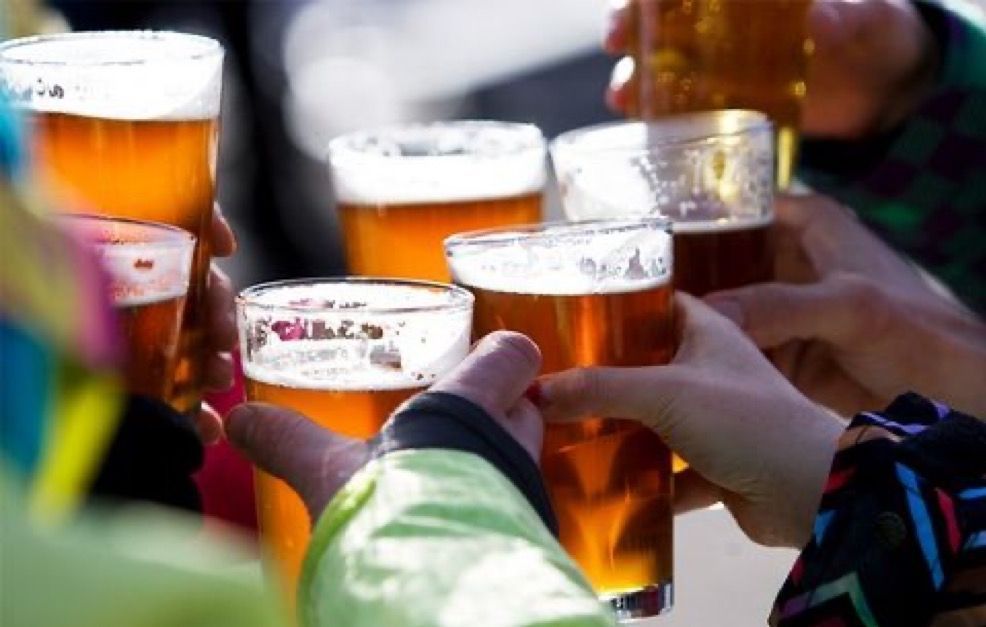
In the UK, a pint of beer carries both 20% VAT and around 56p in alcohol duty.
In Switzerland, the same pint carries 8.1% VAT and around 13p in alcohol duty.
Switzerland treats hospitality as a national economic asset, with the profession enjoying formal recognition and policy support from government bodies. In return, Swiss hospitality employs 4% of the national workforce, contributes up to 6% of GDP, creates community hubs, develops its people, and plays a central role in strengthening the economy.
It’s a Wednesday evening in Lucerne, Switzerland, and every restaurant and bar is full, no businesses are closed, the atmosphere is joyous, and the welcome and service are both first-class.
And it's a real-world example of how balanced taxation and government recognition can drive economic growth, skills development, and thriving communities.
#HospitalityFamily #HospitalityMatters #TaxReform #GlobalHospitality #Switzerland #LearningFromOthers #InspireMotivateLearn #imin
Europe doesn't have "a problem". It has THREE problems: 3 European nations are suffering from a severe "post-imperial hangover".
First, there is the United Kingdom, a nation that voted for Brexit to "take back control" only to realize it has completely forgotten how to drive.
The British identity crisis is like watching a retired lion try to adopt a vegan diet. They traded imperial confidence for an HR department’s sensitivity training. The land of Churchill is now governed by a sprawling "nanny state" bureaucracy that is more terrified of offending someone on X than it is of actual decline. The British police, once the envy of the world, now seem to spend more resources investigating "non-crime hate incidents" and painting their patrol cars in rainbow colors than solving burglaries. It is a nation desperately clinging to the aesthetics of tradition—the Royals, the pomp, the tea—while its institutions have been hollowed out by a progressive rot that makes a California university campus look conservative. They want the swagger of the 19th century but are paralyzed by the emotional fragility of the 21st.
Then there is France, the angry, chain-smoking aunt of Europe who refuses to admit she’s been unemployed for decades.
France’s hangover manifests as a permanent state of insurrection masquerading as "civic engagement." Their identity is split between a delusional elite who still think Paris is the capital of the universe and a populace that expresses its "joie de vivre" by burning down bus stops every Thursday. The French suffer from a Napoleonic complex without a Napoleon; they demand the living standards of a conquering empire while working a 35-hour week and retiring at an age when most Americans are just hitting their stride. They preach "Republican values" and aggressive secularism, yet the state has lost control over vast swathes of its own suburbs. France is essentially a beautiful, open-air museum where the curators are on strike, the guards are afraid of the visitors, and the management is busy lecturing the rest of the world on "grandeur" while the electricity bill goes unpaid.
Finally, we have Germany, the neurotic giant that has decided the only way to atone for its history is to commit slow-motion industrial suicide.
Germany’s post-imperial hangover is a moral autoimmune disease: the country is so terrified of its own shadow that it has replaced national pride with aggressive self-flagellation and recycling regulations. Their identity is built on being the "Moral Superpower," which practically translates to shutting down their perfectly functional nuclear power plants to burn dirty coal, all while lecturing their neighbors on carbon footprints. It is a nation of engineers who have engineered a society that doesn't work. The German spirit, once defined by efficiency and discipline, has mutated into a paralyzed bureaucracy where filling out the correct form is more important than the outcome. They are so desperate to avoid being "threatening" that they’ve become essentially a large NGO with an army that has broomsticks for rifles, terrified that showing any backbone might be interpreted as a relapse.
Suppose that once a week, ten men go out for beer and the bill for all ten comes to £100.
If they paid their bill the way we pay our taxes, it would go something like this:
The first four men (the poorest) would pay nothing.
The fifth would pay £1.
The sixth would pay £3.
The seventh would pay £7.
The eighth would pay £12.
The ninth would pay £18.
And the tenth man (the richest) would pay £59.
So, that’s what they decided to do.
The ten men drank in the bar every week and seemed quite happy with the arrangement until, one day, the owner caused them a little problem.
“Since you are all such good customers,” he said, “I’m going to reduce the cost of your weekly beer by £20.”
Drinks for the ten men would now cost just £80.
The group still wanted to pay their bill the way we pay our taxes.
So the first four men were unaffected.
They would still drink for free but what about the other six men?
The paying customers? How could they divide the £20 windfall so that everyone would get his fair share?
They realized that £20 divided by six is £3.33, but if they subtracted that from everybody’s share then not only would the first four men still be drinking for free but the fifth and sixth man would each end up being paid to drink his beer.
So, the bar owner suggested that it would be fairer to reduce each man’s bill by a higher percentage.
They decided to follow the principle of the tax system they had been using and he proceeded to work out the amounts he suggested that each should now pay.
And so, the fifth man, like the first four, now paid nothing (a 100% saving).
The sixth man now paid £2 instead of £3 (a 33% saving).
The seventh man now paid £5 instead of £7 (a 28% saving).
The eighth man now paid £9 instead of £12 (a 25% saving).
The ninth man now paid £14 instead of £18 (a 22% saving).
And the tenth man now paid £49 instead of £59 (a 16% saving).
Each of the last six was better off than before with the first four continuing to drink for free.
But, once outside the bar, the men began to compare their savings. “I only got £1 out of the £20 saving,” declared the sixth man. He pointed to the tenth man, “but he got £10!“
“Yeah, that’s right,” exclaimed the fifth man. “I only saved a £1 too. It’s unfair that he got ten times more benefit than me!”
“That’s true!” shouted the seventh man. “Why should he get £10 back, when I only got £2? The wealthy get all the breaks!”
“Wait a minute,” yelled the first four men in unison, “we didn’t get anything at all. This new tax system exploits the poor!”
The nine men surrounded the tenth and beat him up.
The next week the tenth man didn’t show up for drinks, so the nine sat down and had their beers without him.
But when it came time to pay the bill, they discovered something important – they didn’t have enough money between all of them to pay for even half of the bill!
And that’s how it works.
Tax them too much, attack them for being wealthy and they just might not show up anymore. In fact, they might start drinking overseas, where the atmosphere is somewhat friendlier.
For those who understand, no explanation is needed.
For those who do not understand, no explanation is possible.
Trump to Reporter:
"What, you have something to do with Switzerland?”
“He wants to buy a nice watch. He wants to buy a nice Rolex. We'll give Rolex some publicity."