These three days have been filled with current research and thought-provoking discussion. We want to thank our speakers and conference guests! Nyt on kuultu viimeinen #CLARe4 -konferenssin esitelmä. Kiitos puhujille ja konferenssivieraille! #ageingresearch#linguistics#vanhuus
#CLARe4 -konferenssin viimeinen esitelmä! Isabelle Buchstaller ja Johanna Mechler osoittavat tutkimuksellaan, että sosioekonomisella asemalla ja sen muutoksella voi olla yhteys yksilöiden puhepiirteiden muutoksiin. #CLARe4#sosiolingvistiikka
Plenary Sylvie Ratté points out some pros and cons of machine learning and natural language processing as ways to help study interaction in older age: for example, computers can distinguish more subtle changes in facial expressions than the human eye. #CLARe4#linguistics
According to Dagmar Bittner and Johannes Schröder, increase in pronoun use can be one of the first indicators of Alzheimer's Disease. #CLARe4#AlzheimersDisease
Barbara Mertins, Renate Delucchi, Holger Mertins, Carina Ilgner, Kim Meitner ja Judith Wulf huomasivat, että Alzheimerin tautia sairastavilla silmien liikkeet saattavat olla rajoittuneita ja hidastuneita, mikä on yhteydessä kognitiivisiin prosesseihin. #CLARe4#muistisairaudet
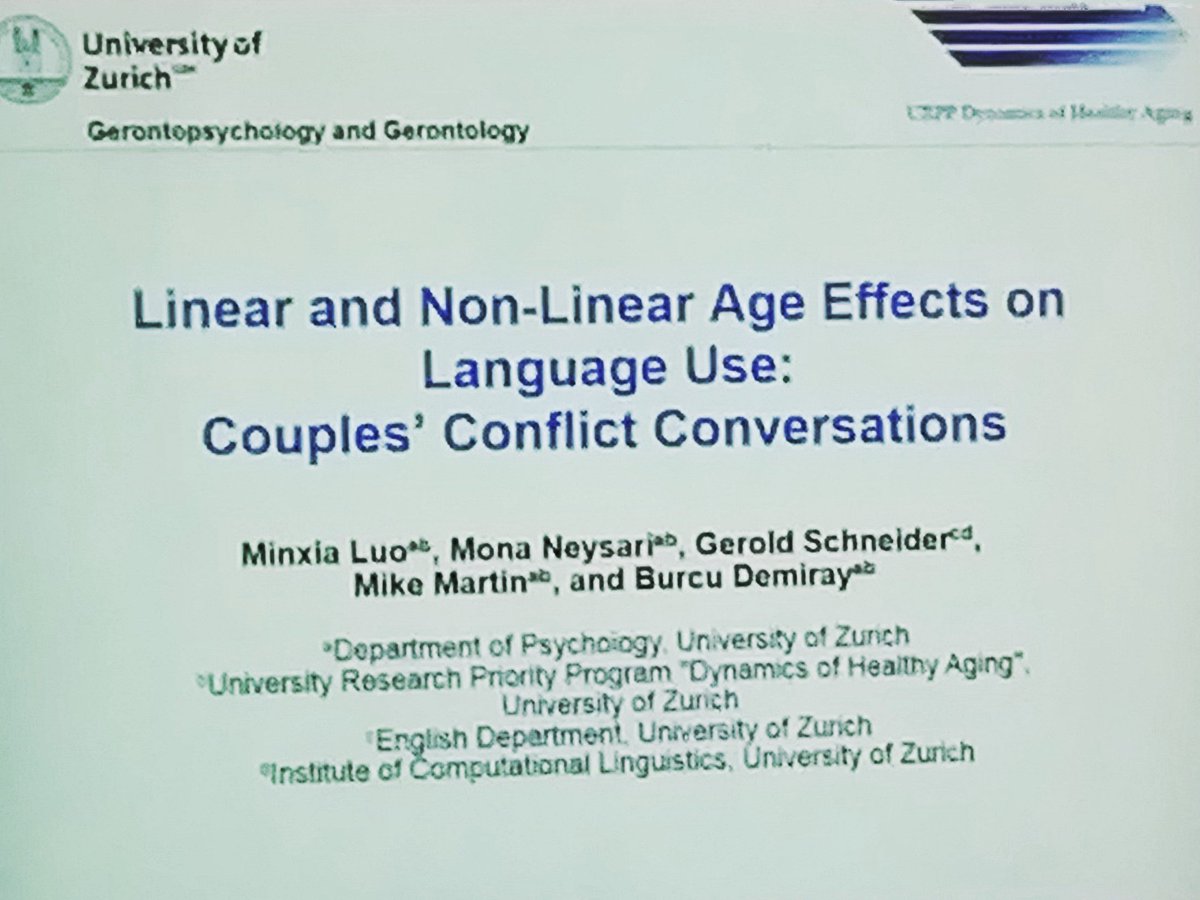
A study by Minxia Luo, Mona Neysari, Gerold Schneider, Mike Martin and Burcu Demiray suggests that until midlife, clause length continues to increase. After that, there is a decrease in clause length. #CLARe4#sociolinguistics#agingresearch
Svetlana Malyutina says that aging results in qualitative changes in comprehension, and that older people tend to rely more on good-enough processing. She raises the question whether this might be related to an aspiration to save cognitive resources. #CLARe4#ageingresearch
Christian Meier zu Verl and Christian Meyer say that in dementia care work, both professional and social touch are a part of the interaction between caregivers and residents.
#CLARe4#ageingresearch
Jolien Makkinga says internalized ageism can result in care home residents suffering from physical decline reinforcing negative stereotypes towards residents suffering from cognitive decline as they strive to reject the ageist stereotypes directed to them by caregivers. #CLARe4
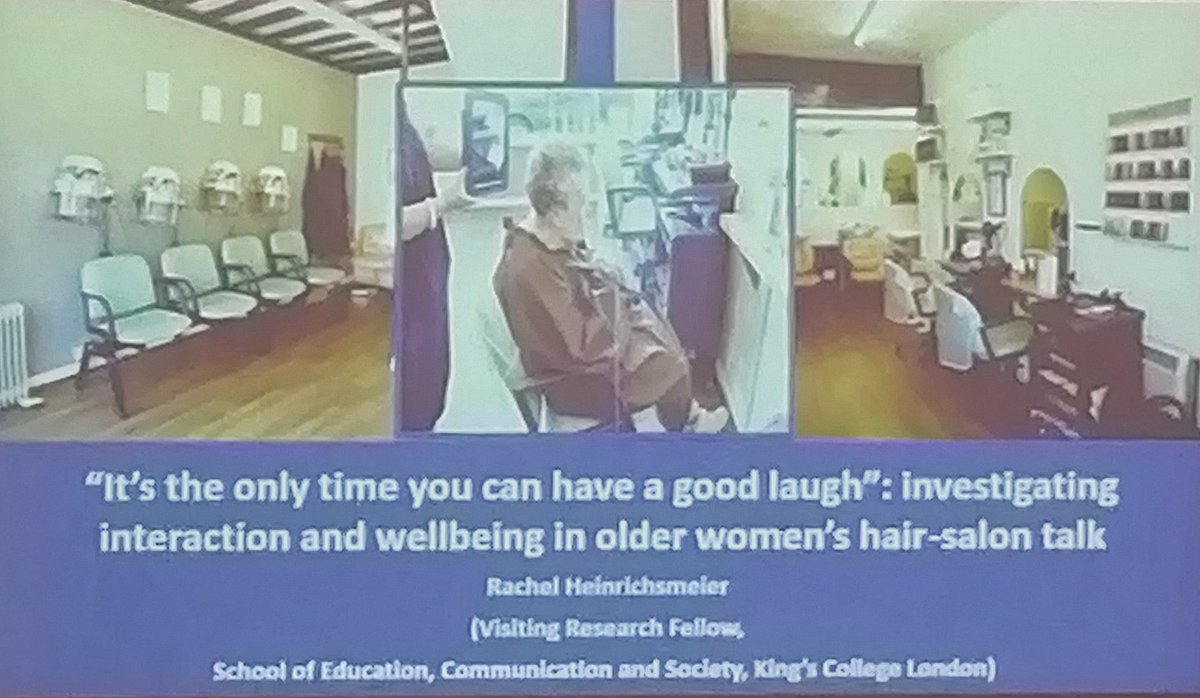
Rachel Heinrichsmeier says that in the current atmosphere dominated by negative discourse conserning ageing, humor and behavior that is considered age-inappropriate can help older people construct broader, more positive identities. #CLARe4#sociolinguistics#ageingresearch
Kolmas päivä on lähtenyt käyntiin! Agnieszka Kielkiewicz-Janowiak puhuu aikaan liittyvän indetiteetin vaikutuksesta sukupolvien väliseen kommunikaatioon. #CLARe4#sosiolingvistiikka
Julianne Gall's case study demonstrates that disfluencies do not simply increase with aging; some features might whereas others might decrease. #CLARe4#ageingresearch#linguistics
Caroline Beese et al.: "Does healthy aging differentially affect distinct language-specific processes?" As she points out, there is no easy answer, but more work could be done i.e. on syntactic complexity, information density and sentence and phrasal length. #CLARe4#linguistics
Minxia Luo, Gerold Schneider, Megan Robbins, Mike Martin and Burcu Demiray say that in contexts of real life, the effects that age has on language can be masked. #CLARe4#agingresearch#linguistics
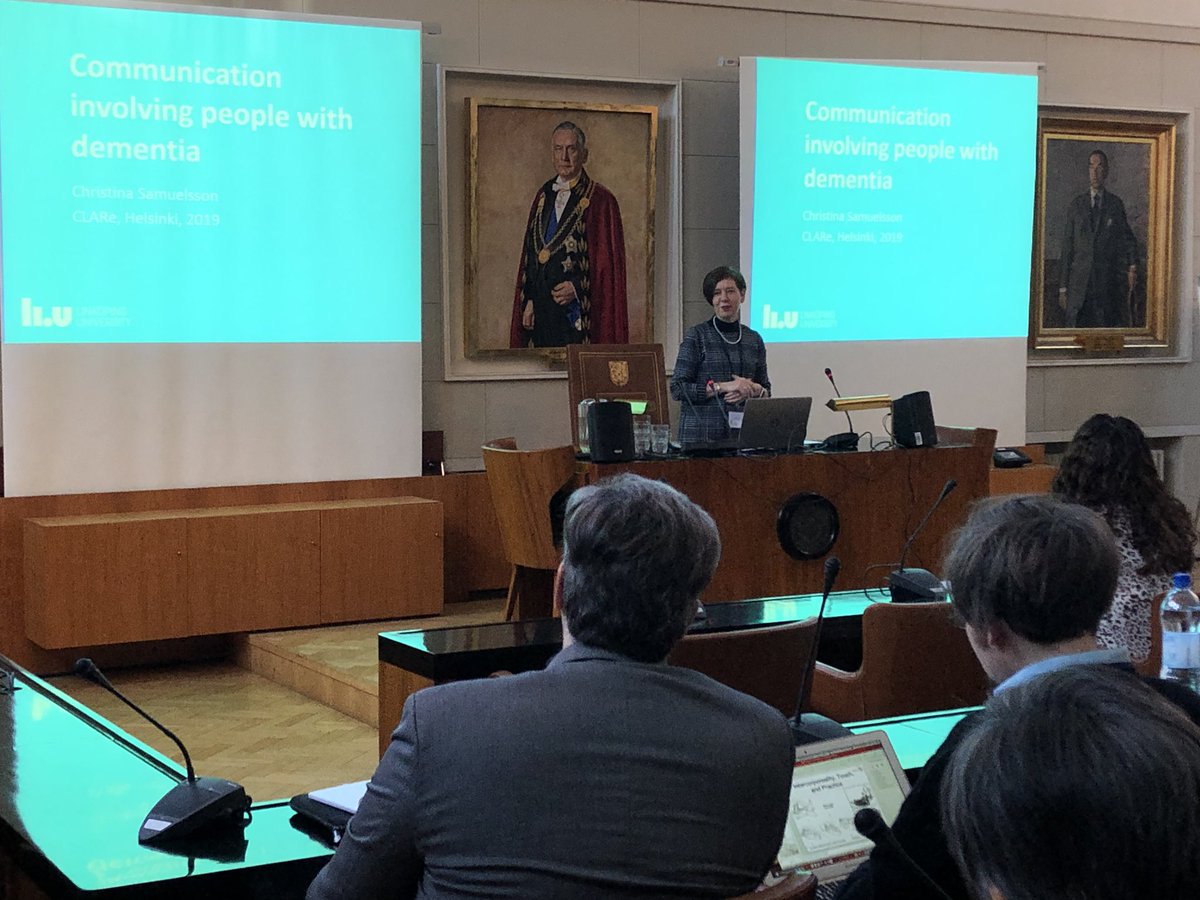
Did you know that over 50% of dementia cases are diagnosed as Alzheimer's Disease? Plenary Christina Samuelsson points out that some of the cases are misdiagnosed or the diagnosis is later changed.
#CLARe4#dementia#ageingresearch
Yoshiko Matsumoto points out that not only informative communication, but affective communication as well, can be a significant part of the care of dementia patients.
#CLARe4#sociolinguistics#dementia
Anna Charalambidoun tapaustutkimuksessa iäkkäämpien ihmisten keskuudessa selkeästi nuoriin ihmisiin liittyvällä terminologialla itseen tai muihin oman ikäisiin viitataan vain ikätoverien seurassa. #CLARe4#vanhuus#sosiolingvistiikka
Thank you for the first day of the conference and special thanks to the excellent speakers! Tomorrow morning the conference will continued by Plenary Christina Samuelsson. #CLARe4#ageingresearch#linguistics