In 2022, as the #ECE sector continued to face significant harm from the pandemic, 1,434,900 children received subsidies for child care — an increase of 8% from the year before. Read our new fact sheet analyzing the most recent CCDF participation data. https://t.co/C0esfyZ71i
1/ *NEW* Our latest blog discusses the federal attacks on child care and Head Start — and their harmful impacts for children, families, providers, and the economy. https://t.co/eigYlNjipq
1/ Recent news suggests that the Trump Administration will call for elimination of Head Start in their upcoming budget proposal. This will have devastating impacts for children, families, and the workforce. 🧵 https://t.co/lyadrGyq2E
Yesterday, the Trump admin shuttered five Administration for Children and Families regional offices.
This will make Head Start and child care services harder to find, less safe, and more expensive for children and families. https://t.co/zp49v8fH2M
Cutting 25% of HHS staff while asking the Department to take over programs from ED will lead to increased delays, inefficiency, and harm for programs the Department administers.
The additional layoffs announced yesterday for the Department of Health and Human Services will make it harder to administer programs that support early learning and wellbeing.
Children and families deserve better. https://t.co/gERJfS0e0X
To improve policy, we must address inequity. As Black History Month comes to a close, we’ve released a blog uplifting the ways Black women and their labor have shaped the child care sector, and why fixing the sector requires dismantling its racist roots. https://t.co/idtiu9ksEX
Today, @RepSylviaGarcia reintroduced the Dream and Promise Act, which would create a pathway to citizenship for DACA recipients, Dreamers, and more — potentially protecting 5M+ people. This bill charts a crucial path forward amid rising attacks on immigrant children and families.
In December, Congress passed a continuing resolution that included $500M #childcare funds.
Read @CLASP_DC’s analysis of the available state allocations and the need to center children, families, and providers as the appropriations fight continues. https://t.co/qpfohDo7HB
2025 will bring both opportunities and challenges as we continue fighting for a stronger child care system.
Hear directly from a parent, provider, advocate, and CCDF administrator about the progress that’s been made and some of the work yet to be done. https://t.co/ZiqQu2iUaK
Child care is unaffordable.
In our latest fact sheet, @RWilensky@alyssadfortner, and @CLASPShira lay out opportunities and policy recs to improve child care affordability within the confines of the current system. https://t.co/jeZbL11e5U
*NEW* Our latest fact sheets explore:
💵Increasing child care affordability
👩🏫Diversifying the provider workforce
✍️Simplifying the application
🗣️Improving information access
All within the existing child care program! Read more⬇️https://t.co/b5FPIJtAp2
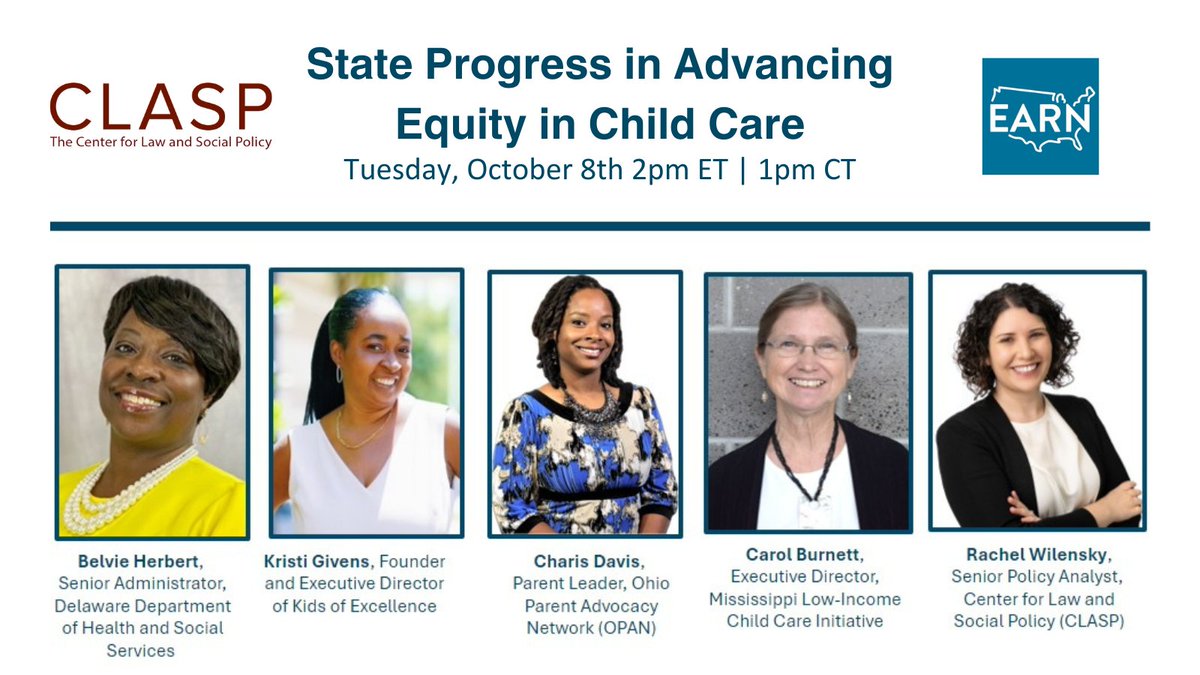
Tune in on 10/8 at 2pm for @CLASP_DC and @EconomicPolicy's @EARNetwork webinar on state progress in advancing equity in child care. Register here to join our fantastic panelists and moderator @RWilensky next week! ⬇️
https://t.co/1U86aMWZlu
COVID relief funding lowered child care costs for 1 million+ families. The final round of relief $$ expires today.
Providers, children, and families deserve a better-funded child care system that works long term. Learn about the impacts of this funding⬇️ https://t.co/oN0IW2bw0n
As the final COVID relief funding expiration date approaches, so does the need to improve access to affordable child care. Sustained, increased, and significant investment is key to creating a system that works for parents, providers, and the economy. https://t.co/WYFJblM3sQ
Child care access greatly affects families' economic security, yet this impact is not fully captured. With the U.S. Census Bureau's annual poverty stats release approaching, our new blog highlights this issue and explores gaps in the data. https://t.co/s2Jc3IQprV
There are so many critical updates included in the new #HeadStart final rule. Read about them and their implications in my latest blog for @CLASPChildCare.
The new Head Start final rule:
✅Increases Head Start teacher pay & benefits
✅Improves mental health supports for teachers & families
✅Improve quality and clarifies requirements across the program
Read more about the final rule in our latest blog: https://t.co/VSy66ekUTe
The evidence is clear: added investment in child care and early education helps more families access affordable care. Read more from @alyssadfortner and me about the tremendous progress states made with COVID emergency funding and what's at stake when it expires in September.
In one month, $15B emergency child care relief funds expire. In our latest blog, we look back on the incredible work this $$$ facilitated – documenting what we already know: robust federal investment is critical for more accessible and affordable care.
https://t.co/fHAFSjIDwl
Tri-Share is a cost-sharing model that divides the cost of child care between parent(s), employers, and the state.
Want to learn more about the policy, lessons learned, and what states might want to consider in exploring this model? Read the latest➡️ https://t.co/KiQ6qlY89D
In 2006, participation in CCDBG reached its peak. Since then, access to #childcare subsidies has decreased and fluctuated. What is impeding access to care? Who is most affected?⬇️
https://t.co/oP1QObcMAr
So excited this report & data are out in the world. When only 14% of kids are accessing the subsidies they are eligible for under state income limits, that's 86% of families struggling to find and afford care. Only sustained investment can help families access the care they need.
*NEW* Today, we released our “Child Care Assistance Landscape: Inequities in Federal and State Eligibility and Access” report - and the data is clear.
Far too many children who are potentially eligible to receive access to CCDF-funded #childcare do not. https://t.co/oP1QObcMAr