🎯 Helping accounting & finance pros pass the CMA exam in 16 weeks & on their 1st attempt 🌎 82,000+ accountants got their free CMA cheatsheet. Get yours too👇
🔴 Top 10 Professional Phrases
To Elevate Your Communication at Work👇
Effective communication is the key to success
But sometimes, the way we phrase things
Can make a big difference in how we’re perceived.
To sound more polished and professional
Here’s a list of top phrases to use on the job
Along with their less effective counterparts 👇
1️⃣"Thank you for bringing this to my attention."
Instead of: "Thanks for pointing that out."
This phrase shows appreciation and acknowledgment of the other person’s input.
2️⃣"Could you please clarify what you mean by...?"
Instead of: "What are you talking about?"
Asking for clarification politely can lead to better understanding without sounding confrontational.
3️⃣"I appreciate your patience."
Instead of: "Sorry for the wait."
This phrase focuses on the positive attribute of the other person, making the apology more gracious.
4️⃣"Let's explore some alternatives."
Instead of: "That won't work."
This approach opens the door to collaboration and problem-solving.
5️⃣"I look forward to our next steps."
Instead of: "So, what now?"
This phrase shows initiative and a forward-thinking attitude.
6️⃣"Can we schedule a time to discuss this further?"
Instead of: "We need to talk."
It sounds more professional and considerate of the other person’s time.
7️⃣"Your input is valuable to us."
Instead of: "We’ll think about it."
It makes the person feel appreciated and part of the decision-making process.
8️⃣"I will ensure this is taken care of."
Instead of: "I’ll get to it."
This phrase shows commitment and responsibility.
9️⃣"Let’s review this to ensure accuracy."
Instead of: "Check this."
It emphasizes the importance of accuracy and collaboration.
🔟"Could you provide more details on this?"
Instead of: "Explain this."
This request sounds more polite and shows a genuine interest in understanding.
—----------------------
Using professional language can enhance your credibility, foster better relationships, and improve overall communication in the workplace.
Small changes in how we phrase things can make a big impact on how we’re perceived and how effectively we collaborate with others.
What are some phrases you’ve found helpful in sounding more professional at work?
Share them in the comments below 👇
—---------------
Hi! I’m Nathan Liao, Founder & CEO of:
⭐ CMA Exam Academy dot com
- Pass the CMA exam on your first attempt!
- 16-week Accelerator program
⭐ CPE Flow dot com
- Are you a CPA/CMA?
- Earn your annual CPE credits
➕ Follow me for accounting & finance insights
Aiming for the September/October CMA window?
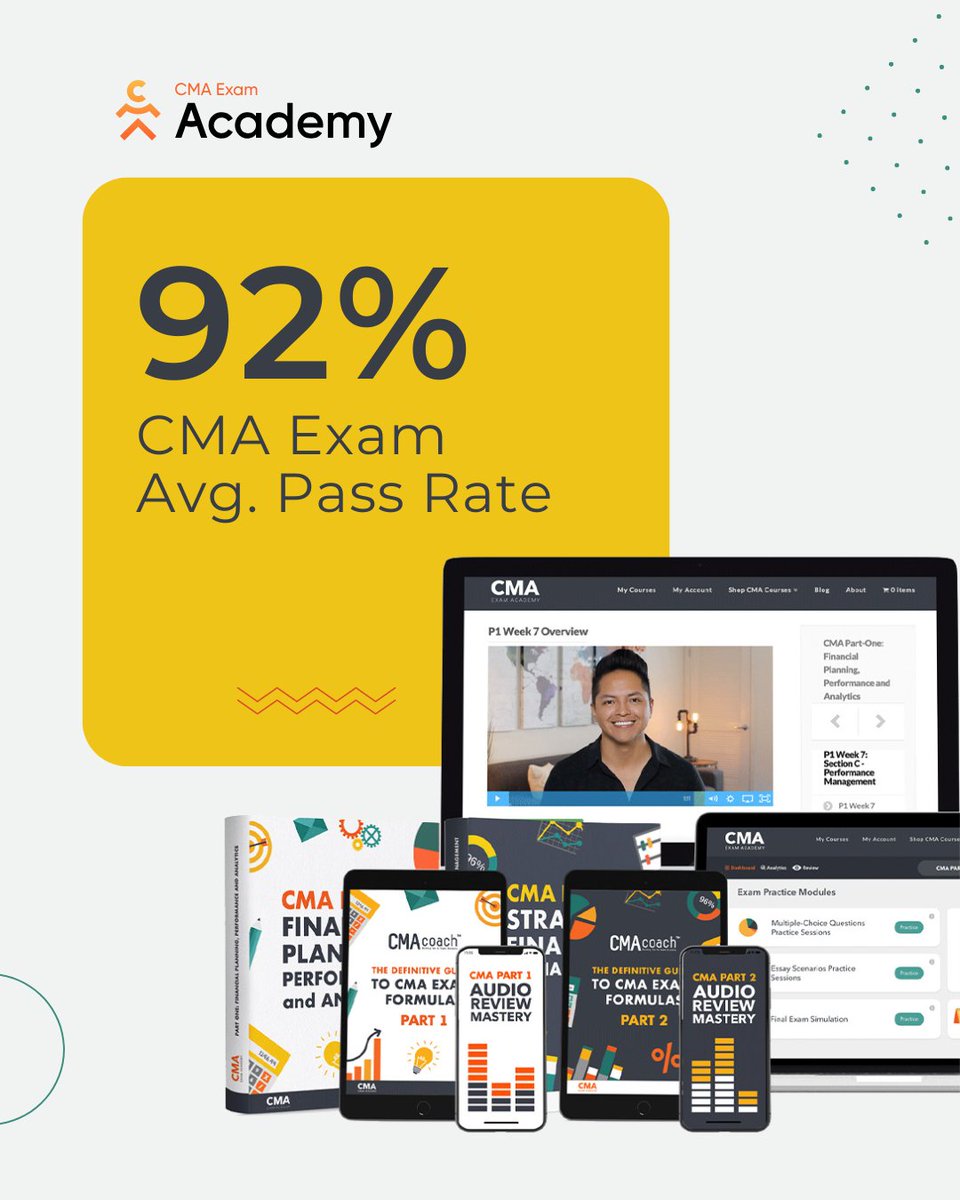
My program has a 92% average CMA exam pass rate, built on a structured 16-week plan that helps you prepare with consistency, not pressure.
💬 If you want to see whether this timeline makes sense for you, send me a message or comment below and we’ll schedule a quick call.
Asset Capitalization vs. Expensing
Which is the right treatment? 👇🏼
When it comes to financial reporting
One of the age-old debates we face is:
To capitalize or to expense?
It has real implications in the real world
Let's break it down
📌 Capitalization:
What: It involves spreading the cost of an asset over its useful life.
When: Typically used for assets providing future economic benefits.
Impact: Increases assets and equity on the balance sheet. Over time, as the asset depreciates, it affects the income statement by reducing profits.
Example: Company A buys machinery for $100k with a 10-year life. This cost is spread over the next 10 years as $10k depreciation expense annually.
📌 Expensing:
What: It involves immediately charging the cost against revenues in the current period.
When: Used for routine expenses or for items not yielding future benefits.
Impact: Directly decreases current year’s profits. No long-term balance sheet implications.
Example: Company B spends $5k on office supplies. This cost is immediately deducted from that year’s profits.
—---------------
Why Does It Matter?
1️⃣ Earnings Management:
Capitalizing stretches expenses over years, which can enhance current earnings. This could paint a rosy financial picture, whereas expensing provides a conservative view.
2️⃣ Financial Ratios:
Metrics like ROI and ROE can be significantly impacted based on the choice. Capitalizing boosts assets, potentially lowering ROI in the short term.
3️⃣ Tax Implications:
Expensing might offer immediate tax benefits compared to slow deductions through depreciation.
—---------------
The choice isn’t always black and white
Sometimes it's governed by regulations
But often it's up to management's judgment
👉 Did I miss anything? Comment below
—---------------
Hi! I’m Nathan Liao, Founder & CEO of:
⭐ CMA Exam Academy dot com
- Pass the CMA exam on your first attempt!
- 16-week Accelerator program
⭐ CPE Flow dot com
- Are you a CPA/CMA?
- Earn your annual CPE credits
➕ Follow me for accounting & finance insights
🚨Get Your CMA In Under 6 Months!
Sidharth’s Success Story 👇
I know how daunting the CMA exam journey is
Between mastering complex concepts
And juggling personal commitments
It's easy to feel overwhelmed and stuck
Imagine hitting roadblock after roadblock
With questions piling up and no one who can help
This frustration not only can slow your progress
It can also diminish your self-confidence
But what if I told you there’s a better way?
"Right off the bat, hats off to the best support when it comes to any confusing topic. I could always count on my questions being answered in time for me to progress, which allowed me to complete the certification in under 6 months. Thank you, Nathan and Team." - Sidharth Dhunna, CMA
CMA Exam Academy focuses on just ONE exam
It’s the reason we have a 92% avg pass rate
Join 82,000+ and download our CMA secrets PDF
The link is in my bio
—---------------
Hi! I’m Nathan Liao, Founder & CEO of:
⭐ CMA Exam Academy dot com
- Pass the CMA exam on your first attempt!
- 16-week Accelerator program
⭐ CPE Flow dot com
- Are you a CPA/CMA?
- Earn your annual CPE credits
➕ Follow me for accounting & finance insights
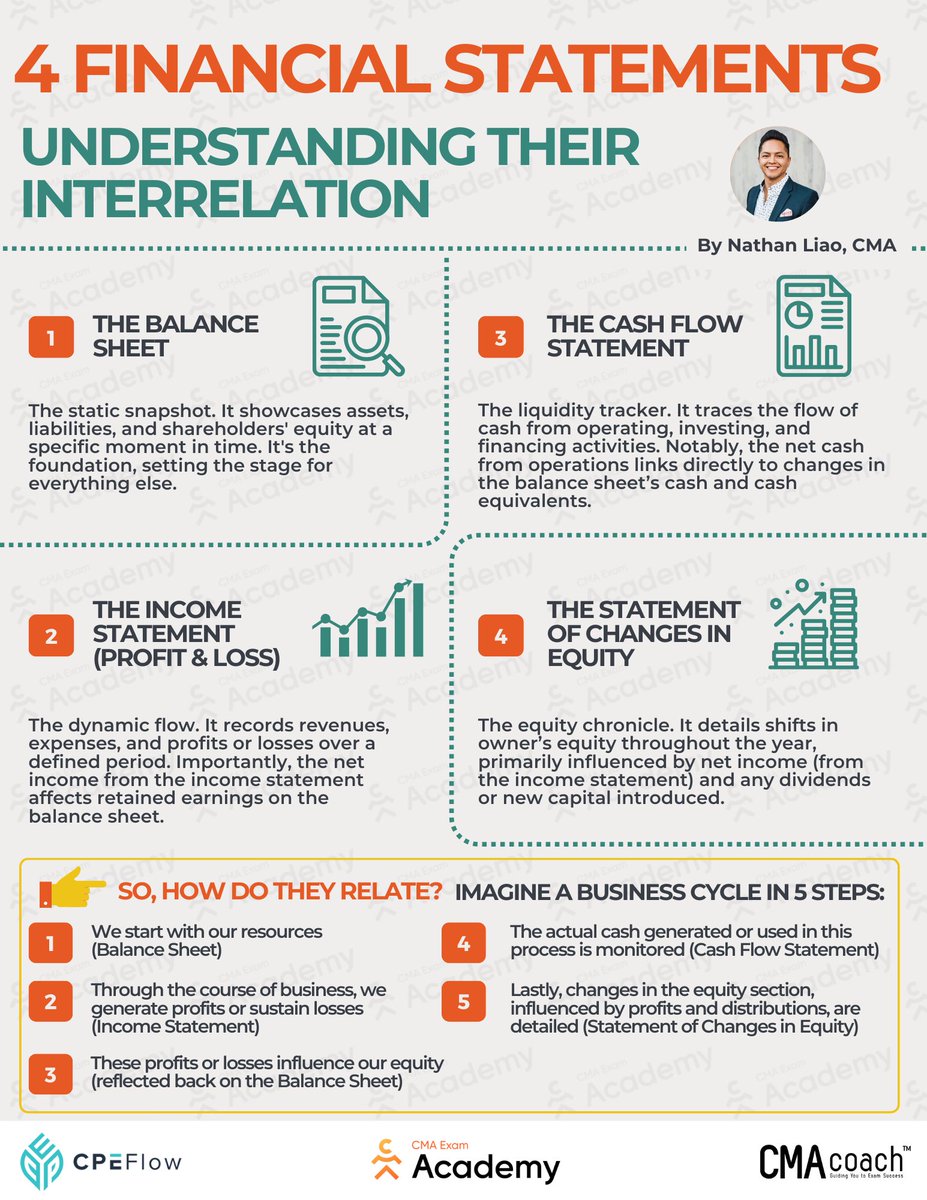
Top 4 Financial Statements
Understanding Their Interrelation 👇
Financial statements are quite intricate
One can easily get lost in the details
However, they harmoniously work together
To narrate a company's financial story
🔗 1. The Balance Sheet (Statement of Financial Position):
The static snapshot. It showcases assets, liabilities, and shareholders' equity at a specific moment in time. It's the foundation, setting the stage for everything else.
🔗 2. The Income Statement (Profit and Loss Statement):
The dynamic flow. It records revenues, expenses, and profits or losses over a defined period. Importantly, the net income from the income statement affects retained earnings on the balance sheet.
🔗 3. The Cash Flow Statement:
The liquidity tracker. It traces the flow of cash from operating, investing, and financing activities. Notably, the net cash from operations links directly to changes in the balance sheet’s cash and cash equivalents.
🔗 4. The Statement of Changes in Equity:
The equity chronicle. It details shifts in owner’s equity throughout the year, primarily influenced by net income (from the income statement) and any dividends or new capital introduced.
—---------------
So, how do they relate?
Imagine a business cycle in 5 steps:
1️⃣ We start with our resources (Balance Sheet)
2️⃣ Through the course of business, we generate profits or sustain losses (Income Statement)
3️⃣ These profits or losses influence our equity (reflected back on the Balance Sheet)
4️⃣ The actual cash generated or used in this process is monitored (Cash Flow Statement)
5️⃣ Lastly, changes in the equity section, influenced by profits and distributions, are detailed (Statement of Changes in Equity)
In essence, they're chapters of a single story
With each statement taking the story forward
—---------------
👉 Want to know more?
Supercharge your career with the CMA credential!
🌟 82,000+ accountants got my free CMA exam cheat sheet. Get yours too! (link in bio)
—---------------
Hi! I’m Nathan Liao, Founder & CEO of:
⭐ CMA Exam Academy dot com
- Pass the CMA exam on your first attempt!
- 16-week Accelerator program
⭐ CPE Flow dot com
- Are you a CPA/CMA?
- Earn your annual CPE credits
➕ Follow me for accounting & finance insights
Didn’t make the May/June window? That’s okay, now you have time to prepare the right way for September/October.
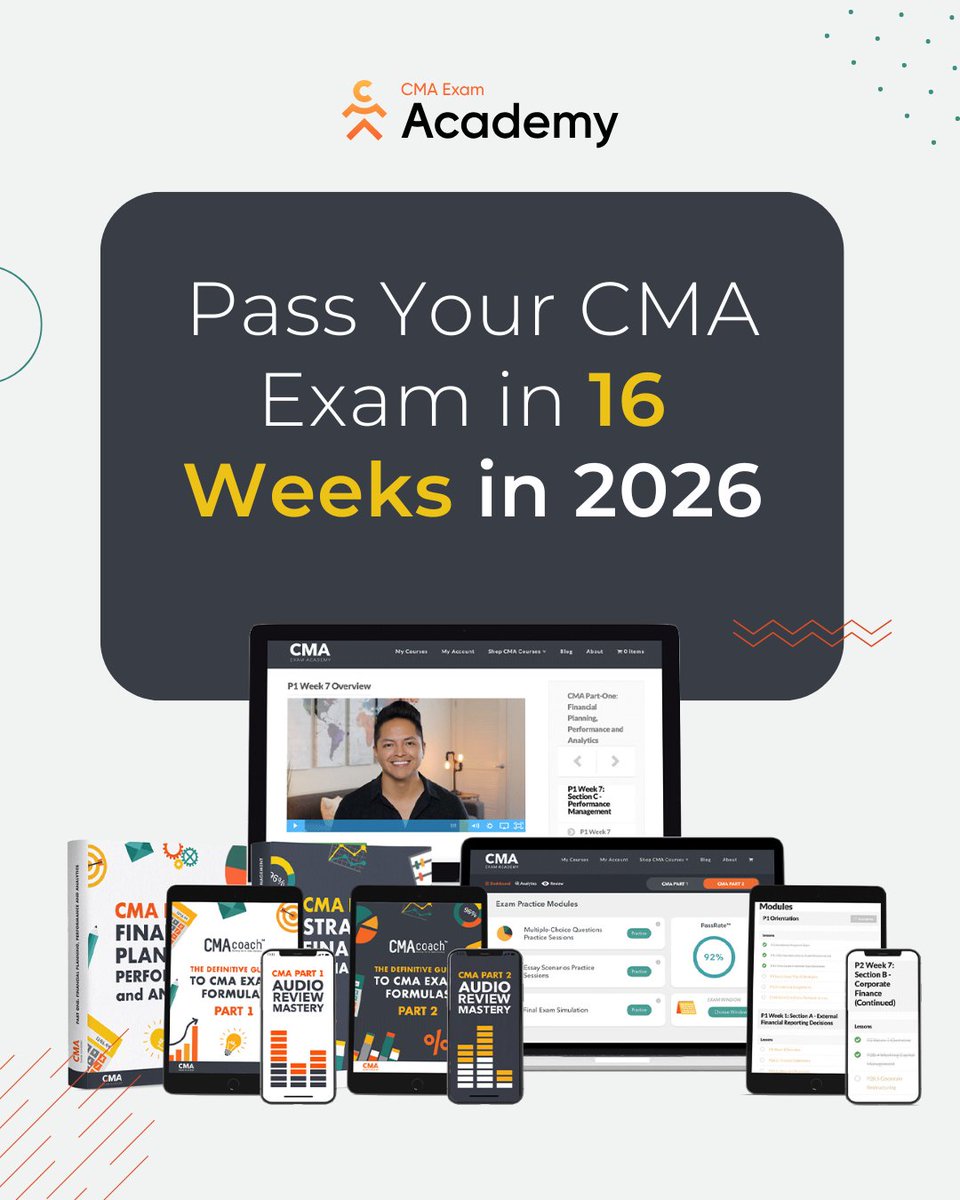
Starting now gives you the full 16 weeks to study with structure. And with a Pass or 100% Money Back Guarantee, you move forward knowing your effort is backed. 📘
💬 If you’re considering the September/October window and want to review your plan, send me a message or leave a comment and we can schedule a quick call.
Cash Flow Statement vs. P&L vs. Balance Sheet
They’re the Financial Trifecta
These statements work together to give you
A 360-degree view of your biz's financial health
1️⃣ Cash Flow Statement
This statement tracks the inflows and outflows of cash over a specific period. It tells you how much cash your business generated from operations, investments, and financing activities. It helps you understand how well you're managing your most liquid asset.
2️⃣P&L Statement
This one's all about your company's financial performance. It's like a report card that shows your revenue, expenses, and bottom line (net profit or loss) over a given period. The P&L Statement helps you assess your company's profitability and make informed decisions about pricing, cost control, and growth strategies.
3️⃣ Balance Sheet
This statement is like a snapshot of your company's financial position at a specific point in time. It showcases your assets (what you own), liabilities (what you owe), and equity (what's left over for the owners). The Balance Sheet helps you evaluate your company's financial stability, liquidity, and ability to meet long-term obligations.
—--------------------
Now, you might be wondering,
"How do these statements work together? 🤔"
1. P&L = Your profitability
2. Cash Flow Statement = Cash generated
3. Balance Sheet = Overall financial position
Together, they give you a comprehensive view
Of your company's financial health 📈
What's your take on these essential statements?
Share your thoughts in the comments below! 💬
—---------------
Hi! I’m Nathan Liao, Founder & CEO of:
⭐ CMA Exam Academy dot com
- Pass the CMA exam on your first attempt!
- 16-week Accelerator program
⭐ CPE Flow dot com
- Are you a CPA/CMA?
- Earn your annual CPE credits
➕ Follow me for accounting & finance insights
🎉 Celebrating CMA Exam Success!
Cindy's Inspiring Journey 🙌
There's nothing more rewarding
Than seeing my students succeed!
Cindy recently passed the CMA Part One exam
On her first attempt, and I couldn't be more proud!
Here's what she had to say:
"I am almost certain I would not have passed Part One on my first try without the Academy and the program. Having a tried and true accountability system kept me motivated and I was able to see light at the end of the tunnel. Huge thank you to Nathan and Team. On to Part Two!"
Preparing for the exam can be a daunting task
But with the right resources and guidance
It's absolutely achievable! 💪
To all the aspiring CMAs out there
Remember that you're not alone in this journey
Never give up on your dreams!
With the right mindset and resources
You too can achieve amazing things!
Rooting for ya!
—---------------
Hi! I’m Nathan Liao, Founder & CEO of:
⭐ CMA Exam Academy dot com
- Pass the CMA exam on your first attempt!
- 16-week Accelerator program
⭐ CPE Flow dot com
- Are you a CPA/CMA?
- Earn your annual CPE credits
➕ Follow me for accounting & finance insights
🚨 Top 5 Risks CFOs Need to Know
And how to mitigate them 👇
A Deloitte CFO Signals survey says:
42% of CFOs rank enterprise risk management
As their #1 priority, ahead of cost cuts and Gen-AI
The CMA exam covers how to identify these risks and what to do about them:
1️⃣ Business Risk — profit shortfalls
Internal or external events that drag actual earnings below plan, anything from high turnover to a sudden recession.
Mitigation: Build rolling scenario models that flex key variables (price, mix, demand) and link them to cash-flow forecasts so you spot gaps early.
2️⃣ Hazard Risk — natural or catastrophic events
Earthquakes, tornadoes, wildfires, or the unexpected exit of a key leader, events you can’t prevent but can plan for.
Mitigation: Transfer the exposure with tailored insurance and locate critical facilities away from high-hazard zones where feasible.
3️⃣ Financial Risk — credit, liquidity, markets
Debt service, covenant headroom, FX swings, or volatile markets that threaten solvency.
Mitigation: Define a clear capital-adequacy runway (cash + committed lines) and supplement it with straightforward hedges you can explain to the board in one slide.
4️⃣ Operational Risk — process, system, or people
Cyber breaches, production errors, control lapses, any breakdown inside the organization that creates loss or disruption.
Mitigation: Map mission-critical processes (order-to-cash, close-to-report), assign owners, and run quarterly tabletop drills to verify response plans.
5️⃣ Strategic Risk — wrong call at the top
Launching a product nobody buys, expanding into an unstable market, or mis-timing a technology bet.
Mitigation: Combine real-time competitive intelligence with disciplined stage-gate reviews so strategy pivots before capital is fully committed.
—-------------
Why this matters:
When you can label each risk and call out a first-line mitigation, board discussions shift from “What might hurt us?” to “How resilient are we?”
👉 Are there other risks you’d add to the list?
Share your insights below!
—---------------
Hi! I’m Nathan Liao, Founder & CEO of:
⭐ CMA Exam Academy dot com
- Pass the CMA exam on your first attempt!
- 16-week Accelerator program
⭐ CPE Flow dot com
- Are you a CPA/CMA?
- Earn your annual CPE credits
➕ Follow me for accounting & finance insights
Already sitting for the May/June CMA window or realizing you won’t make it this time? ⏳
If you didn’t get there, this is the perfect moment to reset and prepare properly for the September/October window.
A focused 16-week plan gives you the structure and time you need to walk in confident, not rushed. 📘
💬 If you’re thinking about aiming for September/October, send me a message or leave a comment and we can schedule a quick call to map out your plan.
🚨How to Read the Balance Sheet
Here’s an Easy Explanation 👇
So, I was chatting with a buddy over coffee
About how intimidating balance sheets can be
And it got me thinking - why don't we break it down
No fancy jargon, just straight talk?
1️⃣ The Stuff We Own (Assets)
This is the fun part. It's like taking stock of all the cool things in your garage:
- Cash: Self-explanatory.
The stuff in your wallet and bank account.
- Money owed to us:
You know, like when your friend borrows $20 and promises to pay you back.
- Inventory:
All the things sitting on our shelves waiting to be sold.
- The big stuff:
Buildings, machines, that sort of thing.
Having a lot of stuff is great, but make sure you can turn some of it into cash quickly if needed.
2️⃣ The Stuff We Owe (Liabilities)
Alright, this part's a bit less fun, but super important:
- Bills we need to pay:
Like that invoice from the supplier you've been meaning to take care of.
- Loans:
The money we borrowed to get things rolling.
- Taxes:
Yeah, can't forget about those!
Here's the thing - owing money isn't always bad. Sometimes you gotta spend money to make money, right? Just keep it under control.
3️⃣What's Left (Equity)
This is the "ours" part after we've paid everyone else:
- Profits we've saved up:
Like your rainy day fund, but for business.
- Ownership pieces:
Think of it as slices of the company pie.
The golden rule here? What we own equals what we owe plus what's truly ours.
If that doesn't add up, we've got some explaining to do!
You want to see your assets growing faster than your debts, and your slice of the pie getting bigger over time.
—---------------
So, what do you think?
Any part of the balance sheet that still seems like it's written in ancient Greek?
Drop a comment, and let's figure this out together!
—---------------
Hi! I’m Nathan Liao, Founder & CEO of:
⭐ CMA Exam Academy dot com
- Pass the CMA exam on your first attempt!
- 16-week Accelerator program
⭐ CPE Flow dot com
- Are you a CPA/CMA?
- Earn your annual CPE credits
➕ Follow me for accounting & finance insights
From Self-doubt to Success!
How Angelo earned his CMA👇
I know how hard it can be to find the right program to study for the CMA exams
Angelo was in a similar situation, searching for the most effective strategy to pass both parts of the exam on the first try
🔀 The Turning Point:
Angelo decided to place his trust in CMA Exam Academy, drawn by our comprehensive approach and personalized coaching methods. And let me tell you, that decision made all the difference.
💥 Transformation:
Through the Academy's focused coaching and effective techniques, Angelo successfully passed Part One and Two of the CMA exam. He was able to efficiently utilize both his time and resources, turning this venture into one of his most worthwhile investments.
💬 Testimonial:
After clearing both parts, Angelo stated, "CMA Exam Academy is exactly what you need to pass the CMA exams on your first try. No other courses currently available are so effective. Proud to have studied with you. One of the best investments—maybe the best—of time and money I have done in my life."
🔑 Takeaways:
Angelo's journey serves as a compelling example that selecting the right CMA review program can be a game-changer. It's not just about preparation; it's about efficient and effective preparation.
—---------------
👉 Ready to be our next CMA success story?
Join 82,000+ accountants and get your free CMA exam cheat sheet. Link is in my bio
—---------------
Hi! I’m Nathan Liao, Founder & CEO of:
⭐ CMA Exam Academy dot com
- Pass the CMA exam on your first attempt!
- 16-week Accelerator program
⭐ CPE Flow dot com
- Are you a CPA/CMA?
- Earn your annual CPE credits
➕ Follow me for accounting & finance insights
🚨 CEO vs COO vs CFO
How leadership roles differ in a company
While CEOs, COOs, and CFOs collaborate closely, each has a distinct focus and set of responsibilities.
Understanding their unique roles can help navigate corporate dynamics better.
Here's a quick breakdown:
🔹 CEO (Chief Executive Officer):
- Sets the strategic vision and overall direction of the company.
- Serves as the primary spokesperson, representing the company externally.
- Makes high-level decisions about policy and strategy.
🔹 COO (Chief Operating Officer):
- Manages daily operations and ensures smooth execution.
- Translates the CEO's vision into actionable plans.
- Oversees operational efficiency and effectiveness across departments.
🔹 CFO (Chief Financial Officer):
- Responsible for managing the company's finances.
- Oversees budgeting, financial reporting, forecasting, and financial strategy.
- Ensures regulatory compliance and manages financial risks.
Each role is essential for business success, yet uniquely focused.
✅ CEOs inspire and lead.
✅ COOs implement and optimize.
✅ CFOs plan and protect.
👉 Which role resonates most with you?
Let's discuss in the comments
—---------------
Hi! I’m Nathan Liao, Founder & CEO of:
⭐ CMA Exam Academy dot com
- Pass the CMA exam on your first attempt!
- 16-week Accelerator program
⭐ CPE Flow dot com
- Are you a CPA/CMA?
- Earn your annual CPE credits
➕ Follow me for accounting & finance insights
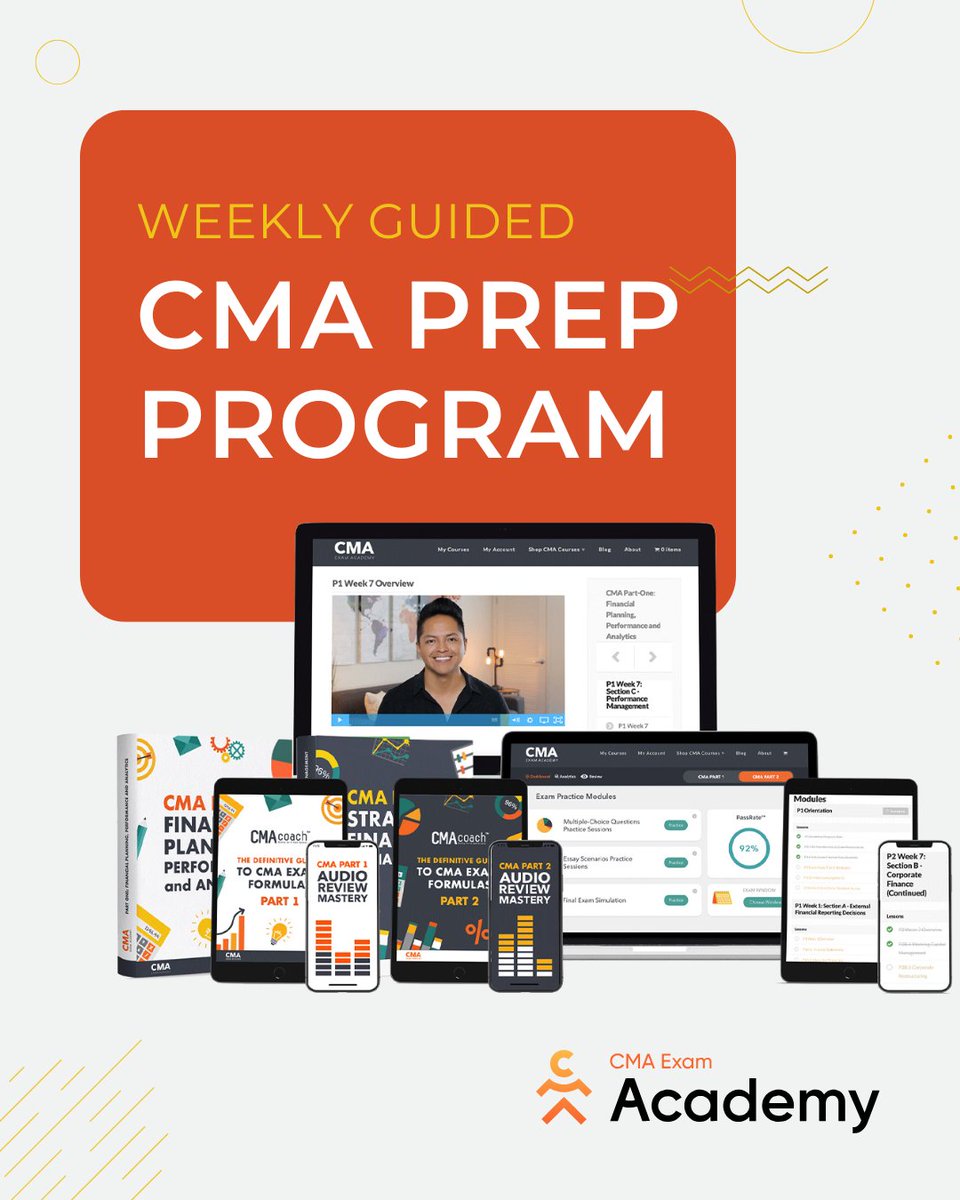
Tired of guessing what to study next for the CMA? 📘
With a Weekly Guided CMA Exam Program, you follow a clear week-by-week plan that keeps you organized, consistent, and moving forward with confidence, no wasted time, no confusion.
💬 If you’d like to see how this structure could fit into your schedule, send me a message or leave a comment and we can schedule a quick call to go over your questions.
🚨 CPA vs. CIA
Superhero Analogy for Kids 👇
In the world of public accounting
We have our very own superhero team:
The CPA (Certified Public Accountant) and
The CIA (Certified Internal Auditor)
Just like Batman & Robin, they work together
To protect the financial integrity of organizations
And ensure that everything runs smoothly
🦇 The CPA:
The Dark Knight of Financial Reporting
CPAs are the watchful guardians of financial statements. They possess a keen eye for detail and a deep understanding of accounting principles, much like Batman's detective skills.
CPAs ensure that financial reports are accurate, complete, and in compliance with regulations.
They are the go-to professionals when it comes to navigating complex tax laws and providing strategic tax advice to businesses and individuals alike.
🤖 The CIA:
The Trusty Sidekick of Internal Controls
While CPAs focus on external financial reporting, CIAs are the unsung heroes who work behind the scenes to strengthen an organization's internal controls.
Just like Robin, CIAs are always ready to assist their CPA counterparts in maintaining the integrity of financial systems.
They assess risks, evaluate internal processes, and recommend improvements to prevent fraud and errors. CIAs are essential in helping organizations operate efficiently and effectively by the book.
💪 The Perfect Dynamic Duo:
Together, They Fight Financial Crime
When CPAs and CIAs join forces, they become an unstoppable team in the fight against financial villains.
Their combined expertise and vigilance help protect organizations from fraud, waste, and abuse.
They work tirelessly to maintain the public's trust in the public accounting profession and ensure that financial information is reliable and transparent.
—---------------
So, the next time you encounter a CPA or CIA
Remember, they’re public accounting superheroes
They may not wear capes or masks
But their dedication and skills are essential
In keeping our financial systems safe and sound
👉 Share this post with kids… and adults!
—---------------
Hi! I’m Nathan Liao, Founder & CEO of:
⭐ CMA Exam Academy dot com
- Pass the CMA exam on your first attempt!
- 16-week Accelerator program
⭐ CPE Flow dot com
- Are you a CPA/CMA?
- Earn your annual CPE credits
➕ Follow me for accounting & finance insights
Passing CMA Part 1 w/ Confidence
How Brittanie Achieved Success 👇
The CMA exam requires more than just hard work
It demands the right set of tools and resources
Brittanie’s experience with CMA Exam Academy
Helped her pass the Part-One exam. Here’s how:
💥 Transformation:
With a mix of theoretical knowledge and practical application, Brittanie found her stride in the study process. The test bank, her favorite tool, played a crucial role in validating her understanding and readiness for the exam.
💬 Testimonial:
Brittanie reflects, "The study tools, lectures, and especially the whiteboard videos from CMA Exam Academy were instrumental in my preparation. The test bank was the ultimate tool that really put my knowledge to the test before the actual exam."
🔑 Takeaways:
Brittanie's success story shows that with the right resources and coaching support from certified CMAs, acing the CMA exam becomes totally doable instead of a daunting task.
—---------------
Want to be our next CMA success story?
👉 Comment ‘CMA’ below
I’ll DM you the 9 best strategies to ace the exam
—---------------
Hi! I’m Nathan Liao, Founder & CEO of:
⭐ CMA Exam Academy dot com
- Pass the CMA exam on your first attempt!
- 16-week Accelerator program
⭐ CPE Flow dot com
- Are you a CPA/CMA?
- Earn your annual CPE credits
➕ Follow me for accounting & finance insights
Top 7 Profitability KPIs
The Real Scorecard of Biz Success!
Ever wondered how successful a biz truly is
Beyond just the top-line sales figures?
Enter: Profitability Ratios
These ratios reveal a biz operational efficiency
Let’s break them down:
1️⃣ Gross Profit (GP) Margin Percentage:
It tells us how efficient production processes are. A 70% GP margin means 70 cents of every dollar in sales is GP.
Formula: (Gross Profit / Sales) × 100
Example: A company with $500,000 in sales and a gross profit of $350,000: (350,000 / 500,000) × 100 = 70%
2️⃣ Operating Profit Margin Percentage:
It tells us how well a company is managing its operating expenses.
Formula: (Operating Profit / Sales) × 100
Example: Same company has an operating profit of $200,000: (200,000 / 500,000) × 100 = 40%
3️⃣ Net Profit Margin Percentage:
It tells us the bottom line! How much of every sales dollar is pure profit.
Formula: (Net Profit / Sales) × 100
Example: With a net profit of $150,000: (150,000 / 500,000) × 100 = 30%
4️⃣ EBIT (Earnings Before Interest & Taxes):
Gauges operational profitability, excluding the effects of financial decisions and tax environments.
Formula: Net Income + Interest + Taxes
Example: If our company's net income is $130,000, interest $10,000, and taxes $10,000, then EBIT = $150,000.
5️⃣ EBITDA (Earnings Before Interest, Taxes, Depreciation & Amortization):
Zeroes in on operational cash flow, removing the impacts of financing decisions, tax environments, and accounting treatments of tangible and intangible assets.
Formula: EBIT + Depreciation + Amortization
Example: Add $20,000 in depreciation to our EBIT: $150,000 + $20,000 = $170,000.
6️⃣ ROA (Return on Assets):
It tells us the efficiency of asset usage. A 15% ROA means every dollar of assets generates 15 cents of net income.
Formula: Net Income / Average Total Assets
Example: With total assets averaging at $1,000,000: $150,000 / $1,000,000 = 0.15 or 15%
7️⃣ ROE (Return on Equity):
It tells us how well a company is reinvesting earnings to generate additional earnings.
Formula: Net Income / Average Shareholder's Equity
Example: Shareholder’s equity averages $500,000: $150,000 / $500,000 = 0.30 or 30%
—---------------
These ratios are crucial for finance professionals
They offer an insightful peek into biz performance
👉 Want to know more?
Supercharge your career with the CMA credential
🌟 82,000+ accountants got my free CMA exam cheat sheet. Get yours too! (link in bio)
—---------------
Hi! I’m Nathan Liao, Founder & CEO of:
⭐ CMA Exam Academy dot com
- Pass the CMA exam on your first attempt!
- 16-week Accelerator program
⭐ CPE Flow dot com
- Are you a CPA/CMA?
- Earn your annual CPE credits
➕ Follow me for accounting & finance insights
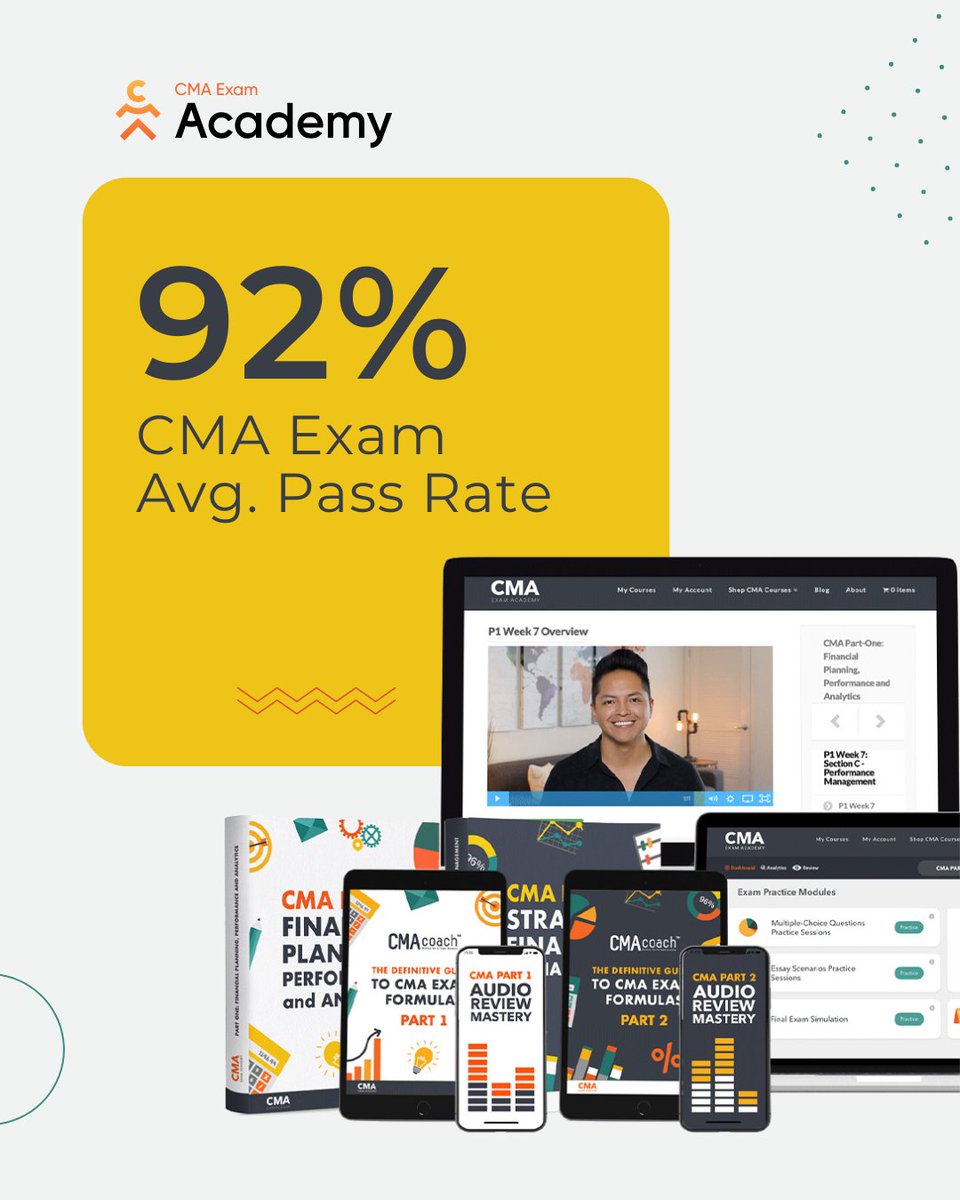
Looking for a CMA prep program with real results?
An average 92% CMA exam pass rate means you’re following a proven structure that helps you stay consistent, focused, and fully prepared on exam day.
💬 If you’d like to see how this approach could work for you, send me a message or leave a comment and we can schedule a quick call to go over your questions.
@fabiolauria92 That’s an interesting perspective.
The ability to turn existing data into actionable insights without heavy overhead is definitely valuable. At the same time, having a solid understanding of the fundamentals helps teams interpret and act on those insights effectively.
Appreciate you sharing your approach.
🚨15 Fundamentals of Data Analytics
Your Path to Data Superhero!
Your ability to turn raw data into actionable insights
Is nothing short of a superpower 💪
It begins with knowing the fundamentals:
1️⃣ Foundations of Data Analytics:
This lays the groundwork for your data analytics journey.
1. Introduction to Big Data
2. Understanding Data Types
3. From Data to Decision
4. The Strategic Value of Data
5. Business Intelligence Explained
2️⃣ Data Mining & Analytics Techniques:
Delve deeper into the methods and techniques that power data analytics.
1. Introduction to Data Mining
2. The Role of SQL in Data Analytics
3. Analytics Models and Types
4. Regression Analysis and Time Series
5. Simulation and Sensitivity Analysis
3️⃣ Visualization & Communication Of Data Insights:
It’s not just about crunching numbers; it’s about telling a story with your data.
1. Introduction to Data Visualization
2. Principles of Effective Data Visualization Design
3. Designing Tables, Charts, and Graphs for Data Presentation
4. Communicating Data Insights to Different Audiences
5. Limitations of Data Analytics
—----------------
Mastering these fundamentals will empower you to:
1. Make informed decisions
2. Drive strategic initiatives
3. Add immense value to your organization
Whether you're analyzing financial performance
Or exploring new market opportunities
The skills you gain here will be invaluable!
👉 Ready to master data analytics fundamentals?
Start your journey today: https://t.co/xTYLsPJAJk
—---------------
Hi! I’m Nathan Liao, Founder & CEO of:
⭐ CMA Exam Academy dot com
- Pass the CMA exam on your first attempt!
- 16-week Accelerator program
⭐ CPE Flow dot com
- Are you a CPA/CMA?
- Earn your annual CPE credits
➕ Follow me for accounting & finance insights