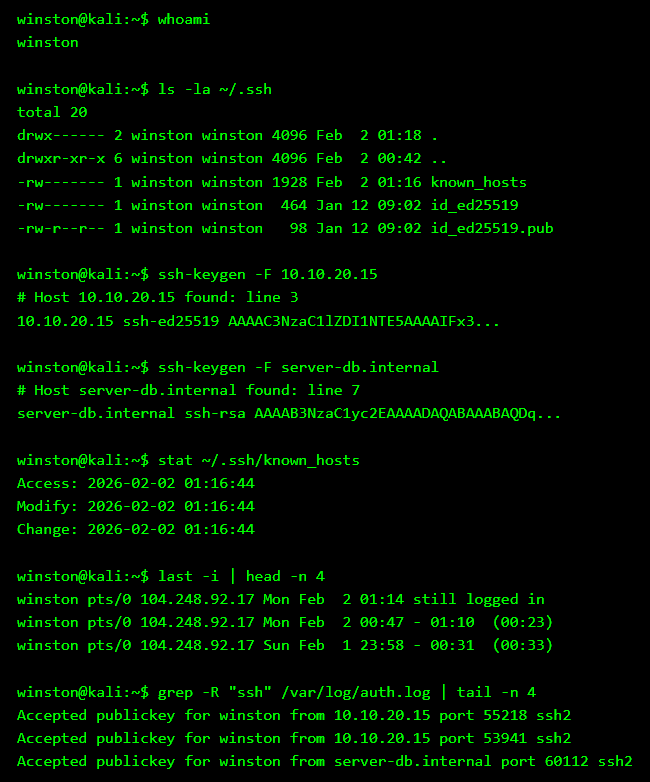
Linux records SSH trust in a quiet but powerful way. Every time a user connects to a new server, the system stores the server’s fingerprint in the known_hosts file. This file is not a log and is rarely cleared, which makes it a goldmine during investigations. Even if session logs are wiped, known_hosts still reveals where the user has connected before.
Attackers who move laterally across a network often forget about this file. They might delete command history, rotate logs, or remove binaries, but SSH trust entries remain unless deliberately scrubbed. Each entry ties a user account to a specific IP address or internal hostname, effectively mapping the attacker’s path through the environment.
In the terminal below, the investigator(me) inspects the .ssh directory and finds a recently modified known_hosts file. Using SSH tooling, specific hosts are queried and confirmed as trusted by the system. Timestamps align with login activity, and authentication logs corroborate successful SSH access to internal servers. Even without full session logs, the evidence shows where the user went, when they connected, and which systems were trusted exposing lateral movement attackers assumed was invisible.
Fuzzing lists - Part 1
Wordlists for few specific Funtions you can use for Specific Purpuses.
1. Email Providers
https://t.co/Bc9iG6ymuk
2. Username Wordlist
https://t.co/P8I99Dg8v2
3. NoSqli
https://t.co/qpa8NVsA2g
4. Common Fuzzing
https://t.co/pbC8yjeIpv
5. IIS
https://t.co/UctFdWNRSH
6. AEM
https://t.co/9Xhwp1QtMA
7. cgi-bin
https://t.co/FG0uEcbMeq
8. .Filenames
https://t.co/D9t7iCzMHS
9. wp-contents
https://t.co/BpgidrQE0M
10. ZIPs
https://t.co/6JcXSXVDF0