Just for clarification, whatever Traore is implementing in Burkina Faso education does not apply to Kenya. From a philosophical perspective, our education problem is worse.
Coming soon on #MaishaKazini
"AI has destroyed Kenyan jobs because American college students no longer hire them to write fake college essays" is not a framing I expected even the NYT to have
Des dents plus blanches, un sourire éclatant et une haleine fraîche sans produits chimiques agressifs ? C'est possible.
Voici le secret de grand-mère naturel à base des ingrédients puissants : les clous de girofle et les feuilles de laurier.
Un vrai booster pour votre sourire.
🔥UN FIL DE CUIVRE ÉLIMINE TOUTE LA MOISISSURE DÉFINITIVEMENT🔥
Pourquoi cette science est-elle interdite ?
Il existe un fil de cuivre dans les quincailleries qui coûte moins de 5 $, et lorsqu'il est placé près d'une surface exposée à l'humidité, il élimine toutes les espèces de moisissures avec lesquelles il entre en contact, et interrompt la repousse de manière permanente.
Pas pendant des semaines ou des mois, mais DÉFINITIVEMENT.
L'Agence de protection de l'environnement des États-Unis (EPA) l'a confirmé.
L'EPA a enregistré le cuivre comme le seul matériau de surface solide de l'histoire à avoir une certification antimicrobienne pour les allégations de santé publique.
275 alliages de cuivre ont réussi les protocoles les plus stricts. Chacun d'eux a éliminé 99,9 % des organismes dangereux en 2 heures de contact.
L'acier inoxydable, le matériau utilisé dans presque tous les bâtiments modernes, n'a rien éliminé... 0 % après 28 jours.
Cette science n'est pas nouvelle, elle a plus de 4000 ans, et elle a été lentement et systématiquement remplacée par une industrie qui a besoin que vous continuiez à acheter des bouteilles chaque mois.
Voici l'histoire du fongicide naturel le plus puissant au monde, et pourquoi une industrie de 2,2 milliards de dollars a besoin que vous n'appreniez jamais son fonctionnement.
45 millions de nouveaux bâtiments aux États-Unis présentent des niveaux insalubres de moisissures qui se développent à l'intérieur des murs. Ce chiffre provient d'une étude publiée dans la revue Indoor Air.
Les mêmes chercheurs ont découvert que 21 % de tous les cas d'asthme en Amérique sont causés par l'exposition aux moisissures et à l'humidité à l'intérieur des maisons. Il ne s'agit pas d'allergies saisonnières, mais du type d'asthme qui amène les enfants aux urgences chaque année.
Le CDC et l'Organisation Mondiale de la Santé confirment ces résultats.
Vivre dans un bâtiment avec des moisissures augmente de manière mesurable le risque de développer des maladies respiratoires. La véritable solution n'est pas de s'asseoir derrière une caisse enregistreuse, mais de se trouver à l'intérieur des murs de tout bâtiment qui a encore une plomberie en cuivre.
Cette vidéo n'est que le début de ce que l'industrie du nettoyage a dissimulé.
Retournons en 1882... Les vignobles de Bordeaux, en France.
Un botaniste français, Pierre-Marie Alexis Millardet, se promenait dans un vignoble qui était ravagé par une maladie fongique appelée oïdium, qui dévastait les vignobles français depuis 1870.
L'ensemble de l'industrie du vin était en train de s'effondrer. Millardet étudiait la maladie lorsqu'il a remarqué quelque chose : les vignes les plus proches de la route étaient parfaitement saines.
Toutes les autres vignes du champ étaient infectées et mourantes, recouvertes d'une croissance fongique blanche, mais celles qui étaient les plus proches de la route prospéraient.
Un exploitant de vignoble a expliqué qu'ils avaient pulvérisé ces vignes le long de la route avec un mélange de sulfate de cuivre et de chaux, non pas pour combattre les maladies, mais pour rendre les raisins amers et laids, afin que les gens qui passaient ne les volent pas.
Le cuivre avait éliminé le champignon tout le temps.
Millardet a passé les 3 années suivantes dans des études formelles, et en 1885, il a publié ses découvertes et a annoncé au monde qu'il avait découvert un remède contre la moisissure qui détruisait les vignobles.
Ce mélange était connu sous le nom de MÉLANGE DE BORDEAUX, le premier fongicide jamais utilisé à l'échelle commerciale, dans le monde entier.
Il a si bien fonctionné qu'il a non seulement sauvé le vin français, mais aussi les récoltes de pommes de terre irlandaises, les plantations de bananes en Amérique latine et les orchidées sur tous les continents.
Un seul composé est devenu la découverte la plus importante de l'histoire de la protection des aliments contre la destruction fongique.
SOMETHING IS KILLING FISH AROUND THE WORLD
Dead fish are turning up in waters thousands of miles apart.
In Wyoming, thousands are suspected dead in the Salt River, where officials have confirmed the state’s first significant fish kill linked to a parasitic disease.
In Florida, fish are dying along the Chipola River as investigators search for a cause.
In Iowa, another fish kill stretches nearly three miles downstream, with ammonia detected and people warned not to use water from the creek.
And it doesn’t stop in the United States.
More than 44,000 pounds of fish have died in the Philippines, while Namibia is investigating another unexplained coastal die-off.
Then there’s South Africa, where the massive sardine die-off we’ve been following continues.
Different places. Different species. Different known or suspected causes.
But this many fish die-offs unfolding around the same time is hard to ignore.
👇 Anyone seeing unusual fish deaths or changes in the water where you live?
#MrMBB333 #FishDieOff #Wildlife
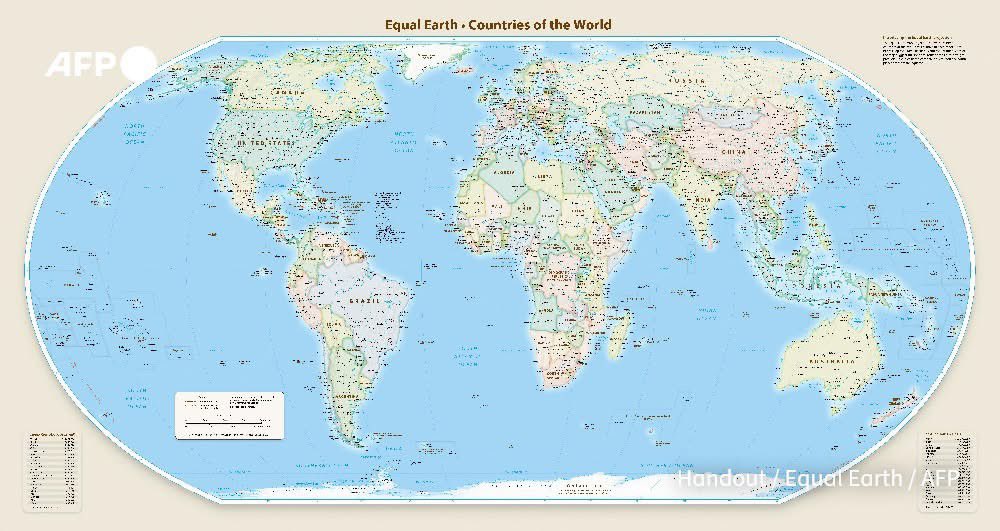
Ever taken a group selfie? The person closest to the camera looks biggest. Everyone else looks smaller.
Useful for a flattering photo. Not so useful if you want to understand everyone’s real size.
That is the map many of us grew up with. Built for navigation, not for showing true scale.
Somewhere along the way, we started using it to judge continents.
And scale shapes how we see importance, possibility and power.
Africa did not get bigger. We are simply seeing it properly.
Size matters.
This treasure is carried in the cells of every living African, but only recently have scientists begun unlocking its secrets.
The double helix of DNA and Africa have become the next frontier in genetic research.
Humans originated from Africa, and this makes Africans unique when compared to other populations.
“We (Africans) are the first populations of modern humans and, by studying our DNA, this will inform what is happening in the other populations. So, there is a gap in what we know about human genetic variation and data from Africa can close this gap,” said Dr Michelle Skelton of the University of Cape Town, who is part of the Human Heredity and Health in Africa (H3Africa) Administrative Co-ordinating Centre.
H3Africa is a health and genomics research consortium that spans 32 countries and includes 48 projects. The initiative began in 2012.
“The rest of the world is actually populated by a sub set of people who came from Africa and migrated out of the continent in several waves from roughly 70000 years ago,” said Professor Michele Ramsay of Wits University, who is also involved with H3Africa and leads a large, collaborative centre in a study on cardiometabolic disease (including obesity, hypertension and diabetes) across four African countries, with more than 12000 participants.
“You can see why the whole world would be interested to understand what aspects of African genetics variations they see in their populations.”
Slowly, more and more genetic research is happening across Africa.
At a recent conference in San Diego in the US scientists presented their findings in what is one of the largest sets of African genomic data available to date.
Researchers collected and analysed genomic material from 6400 individuals in Uganda, which was then combined with that of 7784 people from other African countries.
“This study represents one of the largest and most comprehensive efforts to identify genetic associations with disease within African populations, and will provide a roadmap for large-scale genome-wide association studies across the region,” Dr Ayesha Motala, a leader of the study and professor at the University of KwaZulu-Natal, told the conference.
This research has allowed some insight into the complex history of migration in east Africa, which has continued for thousands of years.
But besides following the paths of ancient migratory routes, genetics is providing insight into diseases and how they affect different populations.
“What we want to understand is the relationship between genetic variation and disease,” said Ramsay.
“We want to look at the people who are living now to understand how genetic variation has developed over tens of thousands of years and how it makes people more or less susceptible to particular diseases or traits.”
Some of the diseases are old, like malaria and TB infections, while others such as diabetes are associated with obesity, a modern-day pandemic that is beginning to gain a foothold on the continent.
There is a study of how obesity is affecting populations in west Africa, east Africa and South Africa.
But working in Africa does have its challenges.
There are cultural issues to deal with, especially developing an appropriate vocabulary to explain genetics and genomics to communities, cultural implications where blood might have to be taken as part of the study and requesting consent for future use of data and samples. Policies had to be drawn up to deal with such ethical issues.
Then there is also the logistics of dealing with different countries and institutions. Skills are also a problem and therefore capacity development is a priority. But ultimately, the plan is to collect more samples across the continent.
What will help in analysing large quantities of samples in order to collect genetic data is a genome chip that has been developed by H3Africa.
“This genome chip has been specifically designed for Africa, to detect specific genetic variations that are unique to Africans.
“We will now be able to look at bigger populations by just scanning the genome using this chip,” said Skelton.
https://t.co/UifAjHNgB3
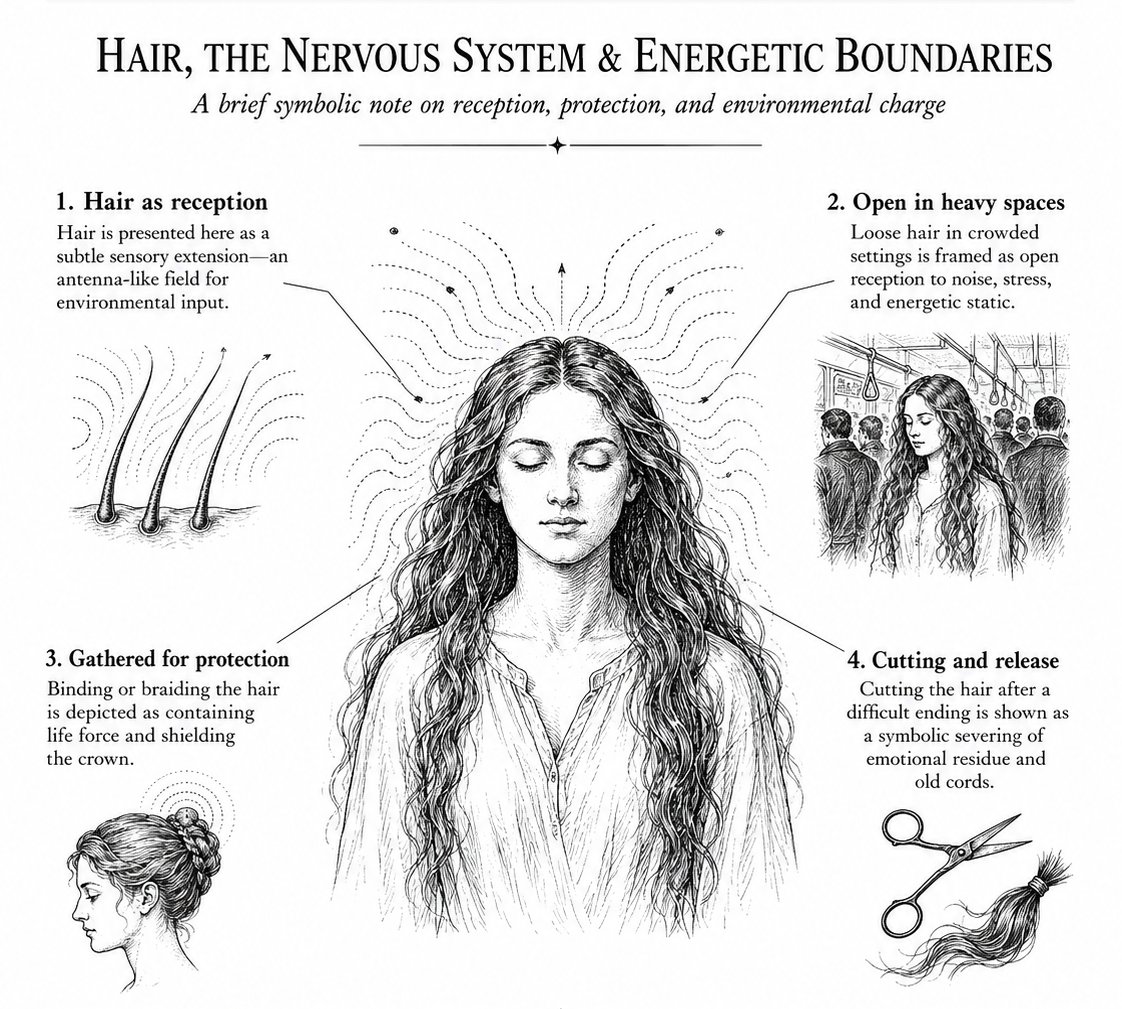
Modern science tells you your hair is just a collection of dead protein cells.
They completely missed the biology of energy.
Your hair is a physical extension of your nervous system.
It is a biological antenna transmitting and receiving subtle frequencies from your environment.
During the Vietnam War, the military quietly recruited indigenous trackers for their supernatural ability to sense danger before it happened.
But there was a problem.
Once these men were given standard military haircuts, their abilities completely vanished. They stopped sensing the unseen.
The government concluded that their long hair was the exact physical mechanism picking up the extrasensory information.
Every single strand on your head is highly conductive.
And this explains exactly why you feel so drained in modern cities.
When you walk into a crowded subway, a hospital, or a highly toxic office with your hair completely down, you are walking in with your receivers wide open.
You are actively catching the chaotic, low-frequency static of hundreds of stressed people around you.
Ancient yogis and indigenous healers understood this perfectly.
They rarely wore their hair loose in chaotic public spaces.
They gathered it at the top of the head to cover the crown chakra. They coiled it tightly to protect their energetic battery and keep their life force contained.
Cutting your hair after a painful breakup is not just a psychological reset.
It is a literal, physical severing of the cords holding the energetic memory of that person.
You can use this anatomy to protect yourself immediately.
When you are resting in nature or a safe space, let it down. Let it absorb the grounding frequencies of the earth.
But when you have to step into a heavy, draining environment, tie it back. Braid it tightly. Pin it up.
Close your antennas.
Try this simple physical boundary tomorrow and see how much energy you actually keep for yourself.