China tested an SLBM, exercised with Russia under Joint Sea-2026, advanced AI-enabled warfare concepts and recovered the reusable first stage of the Long March-10B.
The latest Tracking the PLA by Col Venkatraman KK (Retd) examines the signals behind these developments.
Read on CNAWS: https://t.co/b7Wubr3eMF
#PLA #China #IndoPacific #CNAWS
Pakistan’s 2025 defence reforms did more than restructure command. They formalised the military’s position as the country’s principal strategic and diplomatic interlocutor.
New CNAWS research by Bhanavi Mathur examines the implications for India and regional security.
https://t.co/DuYXAErjVi
#Pakistan #DefenceDiplomacy #CNAWS
The CNAWS Biannual Pakistan Militancy Assessment | January–June 2026 is now live.
The report records 1,610 security incidents, 1,215 militant attacks and 2,927 fatalities during the first half of 2026, highlighting the expanding scale and geographic spread of militancy across Pakistan.
Read the full assessment on the CNAWS website.
https://t.co/6T2Hlm3GC1
#CNAWS #Pakistan #TTP #Balochistan #Counterterrorism #OSINT
Future wars may not be won by the platform with the best specifications, but by the force that connects sensors, shooters, drones, satellites, and commanders faster than its adversary.
CNAWS’ latest explainer by Ashutosh Kumar Singh examines Mosaic Warfare, AI-enabled kill webs, distributed forces, and its implications for India.
https://t.co/9FKSn61X1x
#MosaicWarfare #FutureWarfare #MultiDomainOperations #CNAWS
Pleased to see The Sunday Guardian draw extensively on the CNAWS Pakistan Militancy Assessment | January–June 2026 for its report:
“Pak winning the battles, but militants are dictating the war”
Our biannual assessment examines militant activity, security trends and conflict dynamics across Pakistan through a structured six-month database built from official statements, militant communications, media reporting, OSINT and geospatial verification wherever possible.
The central finding is stark.
Pakistan’s security forces have conducted hundreds of counterterrorism operations, eliminated senior militant commanders and inflicted substantial battlefield losses. Yet these tactical gains have not translated into strategic control.
Between January and June 2026, CNAWS recorded:
• 1,610 security incidents
• 1,215 militant attacks
• 304 counterterrorism operations
• Sustained militant expansion across Khyber Pakhtunkhwa and Balochistan
The evidence suggests that militant organisations continue to influence the tempo, location and character of violence. Pakistan may be winning individual engagements, but it remains trapped in a prolonged war of attrition in which the strategic initiative has not decisively shifted to the state.
This assessment is part of CNAWS’ effort to move beyond event-based reporting and build structured, data-led analysis of Pakistan’s evolving militant landscape.
I appreciate @SundayGuardian and @mishra_abhi for engaging with our research and bringing its findings to a wider audience.
Read SundayGuardian article: https://t.co/XUAiCiT7Qs
Read the full CNAWS Pakistan Militancy Assessment: https://t.co/6T2Hlm3GC1
#Pakistan #Terrorism #Counterterrorism #Militancy #SecurityStudies #ConflictAnalysis #OSINT #SouthAsia #CNAWS #StrategicStudies
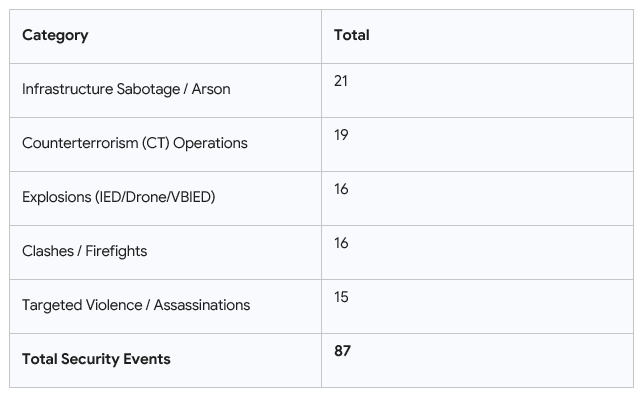
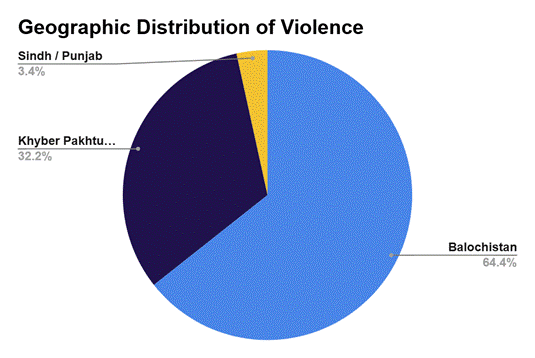
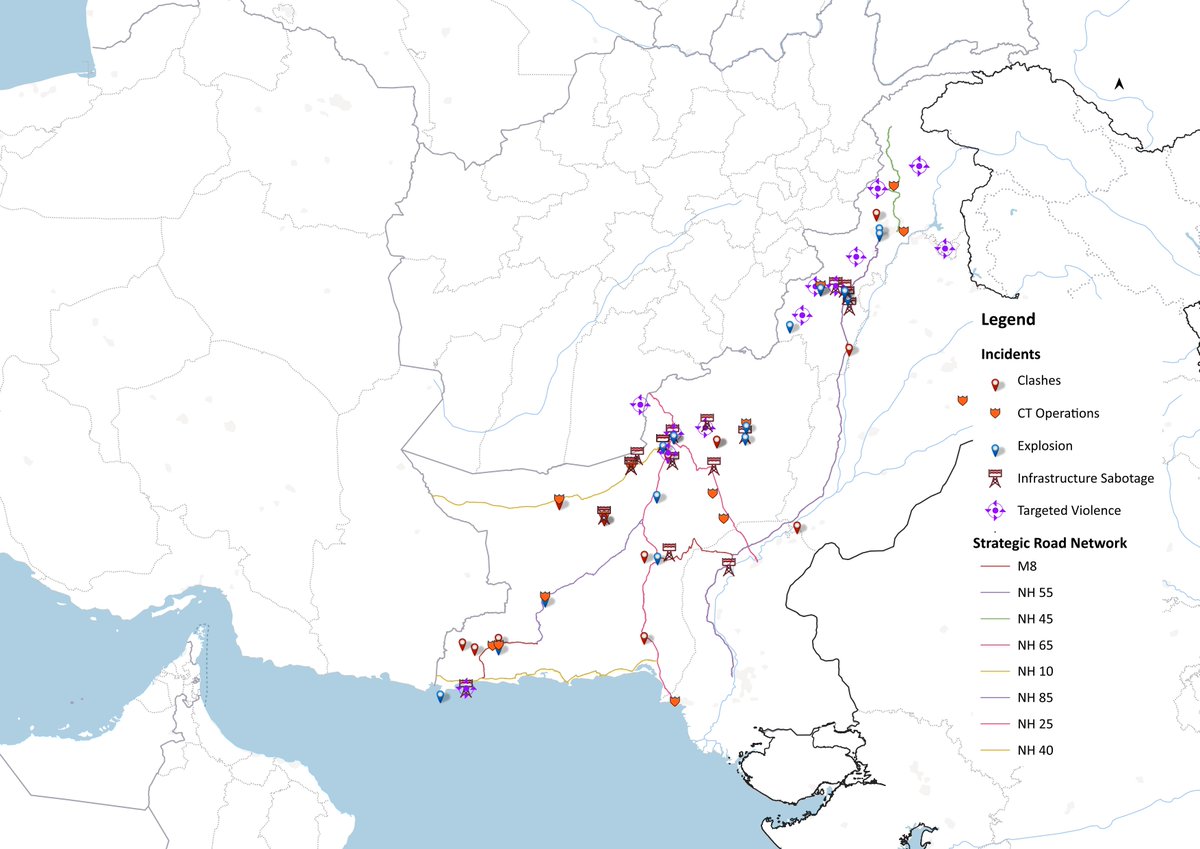
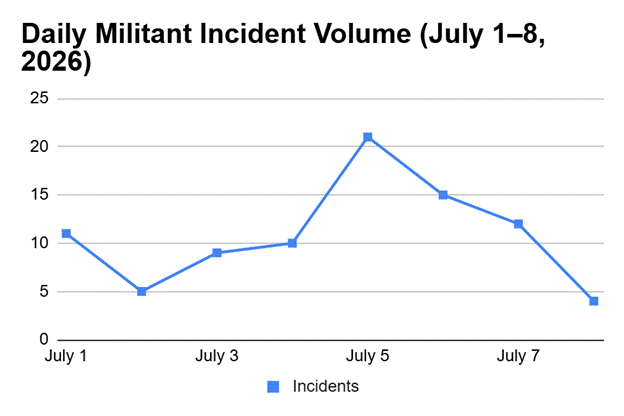
Militant Attacks in Pakistan between July 01-08, 2026.
Total Attacks: 87
Most Active Province: Balochistan | 56 Attacks
Most Active Districts: Nushki, Bannu and Kech
Most Targeted State Agencies: Frontier Corps and Police
Link to full report: https://t.co/6yjWDcia1Z
Source: CNAWS Pakistan Militancy Dashboard.
The Silent Disservice: Submarines and the Limits of India’s Indigenization Model
India’s submarine crisis is not just about a shrinking fleet.
It is about broken production continuity, lost expertise, delayed procurement, and repeated dependence on foreign technology.
CNAWS’ latest article by Meng Kit Tang examines whether Project 75(I) can finally break India’s cycle of delay and relearning.
Read the full article on CNAWS Website: https://t.co/vmB7BHiEHN
#IndianNavy #Project75I #Submarines #MaritimeSecurity #CNAWS
Pakistan recorded 87 security incidents between 1 and 8 July 2026, driven by TTP attacks in KP and coordinated Baloch insurgent operations across Balochistan.
The latest CNAWS SITREP examines militant tactics, infrastructure targeting, state response, and emerging operational trends in Pakistan's militancy landscape.
Author: Sushant Pawar, Lead Analyst for Pakistan at CNAWS
Read full report at CNAWS website: https://t.co/6yjWDciHRx
#Pakistan #TTP #Balochistan #Counterterrorism #CNAWS
The Israel–Iran shadow war is giving way to direct deterrence.
Missile strikes, drones, and overt retaliation are becoming instruments of strategic signalling, creating a new and far more dangerous security environment in West Asia.
New CNAWS research article by Taha Ali examines whether this model of controlled escalation can hold, or eventually spiral into regional war.
Link: https://t.co/rpq4H5UcvU
#IsraelIran #WestAsia #Geopolitics #Deterrence #CNAWS
Research Article | Silicon Geopolitics: Why Semiconductors Have Become the New Oil
Semiconductors are no longer just components. They are instruments of power.
Taiwan, ASML, US export controls, China’s self-reliance push and India’s semiconductor mission are now part of the same geopolitical contest.
Read Shubhi Malhotra’s article on CNAWS: https://t.co/O4TFVbLBV5
#SemiconductorGeopolitics #ChipWar #India
CNAWS Research Article | Psychographic Warfare and India's Battle for Cognitive Sovereignty
India’s next national security challenge may not begin at the border. It may begin inside the mind.
Our latest CNAWS research article by Mahima Katiyar examines how psychographic micro-targeting, AI-driven narrative manipulation and cognitive warfare can threaten India’s social cohesion, democratic resilience and cognitive sovereignty.
Read the full research paper on CNAWS website: https://t.co/3u5x8GcINZ
#CNAWS #CognitiveWarfare #PsychographicWarfare #InformationWarfare #AIWarfare #NationalSecurity #CognitiveSovereignty #Disinformation #HybridWarfare #IndiaSecurity #StrategicAffairs #DefenceStudies
#JammuAndKashmir’s recent ambush pattern cannot be seen as isolated attacks.
From #Poonch to #Kathua and #Baramulla, a recurring tactical signature has emerged. Blind curves, forested terrain, elevated firing positions, soft-skinned security-force vehicles, rapid exfiltration and possible #OGW facilitation.
Our latest #CNAWS infographic breaks down how L-shaped ambushes have been used by Pakistan-backed proxy networks in #JammuAndKashmir.
The report examines the role of outfits such as the People’s Anti-Fascist Front, widely understood as a proxy of #LashkarETaiba, and Kashmir Tigers, a proxy of #JaishEMohammad, in shaping this evolving ambush pattern.
The key concern is clear. These attacks are not random. They reflect terrain exploitation, tactical preparation, local enabling networks and a deliberate attempt to target vulnerable movement corridors.
Understanding the pattern is the first step toward disrupting it.
Read the full #CNAWS report on website: https://t.co/LLTJycWBm9
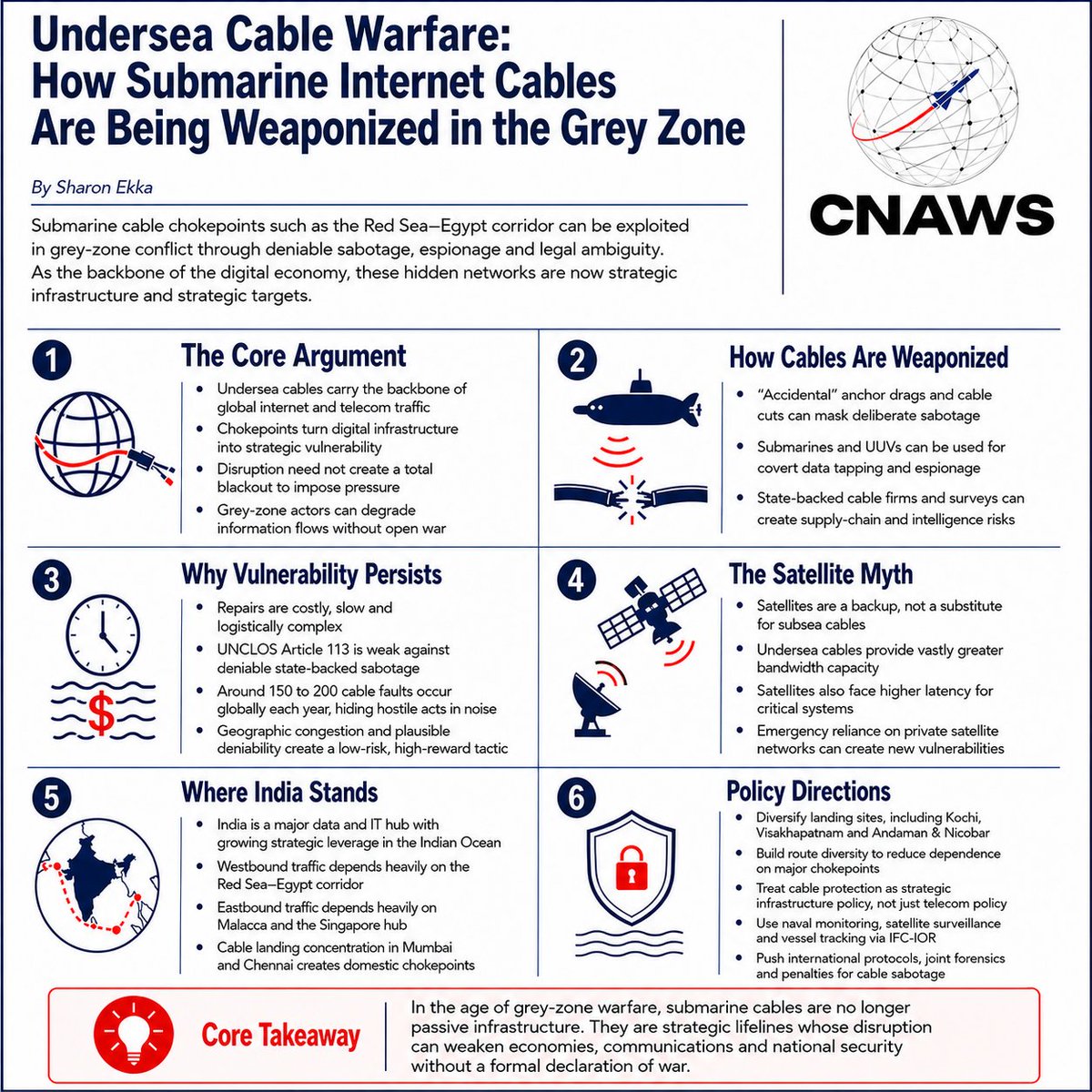
Submarine internet cables are no longer just invisible infrastructure beneath the oceans. They are becoming strategic targets in grey-zone warfare.
Our latest CNAWS research article by Sharon Ekka examines how undersea cable chokepoints can be exploited through deniable sabotage, espionage, supply-chain risks and legal ambiguity, and why India must treat cable protection as a national security priority.
Read the full article on CNAWS: https://t.co/OLKIx4u63r
Limited war between nuclear powers is entering a more unstable phase.
Drones, AI-enabled targeting, cyber operations and information warfare are compressing decision timelines and blurring escalation thresholds in South Asia. The challenge is no longer only deterrence. It is control.
Read the latest CNAWS research paper: https://t.co/tMtcqpvT90
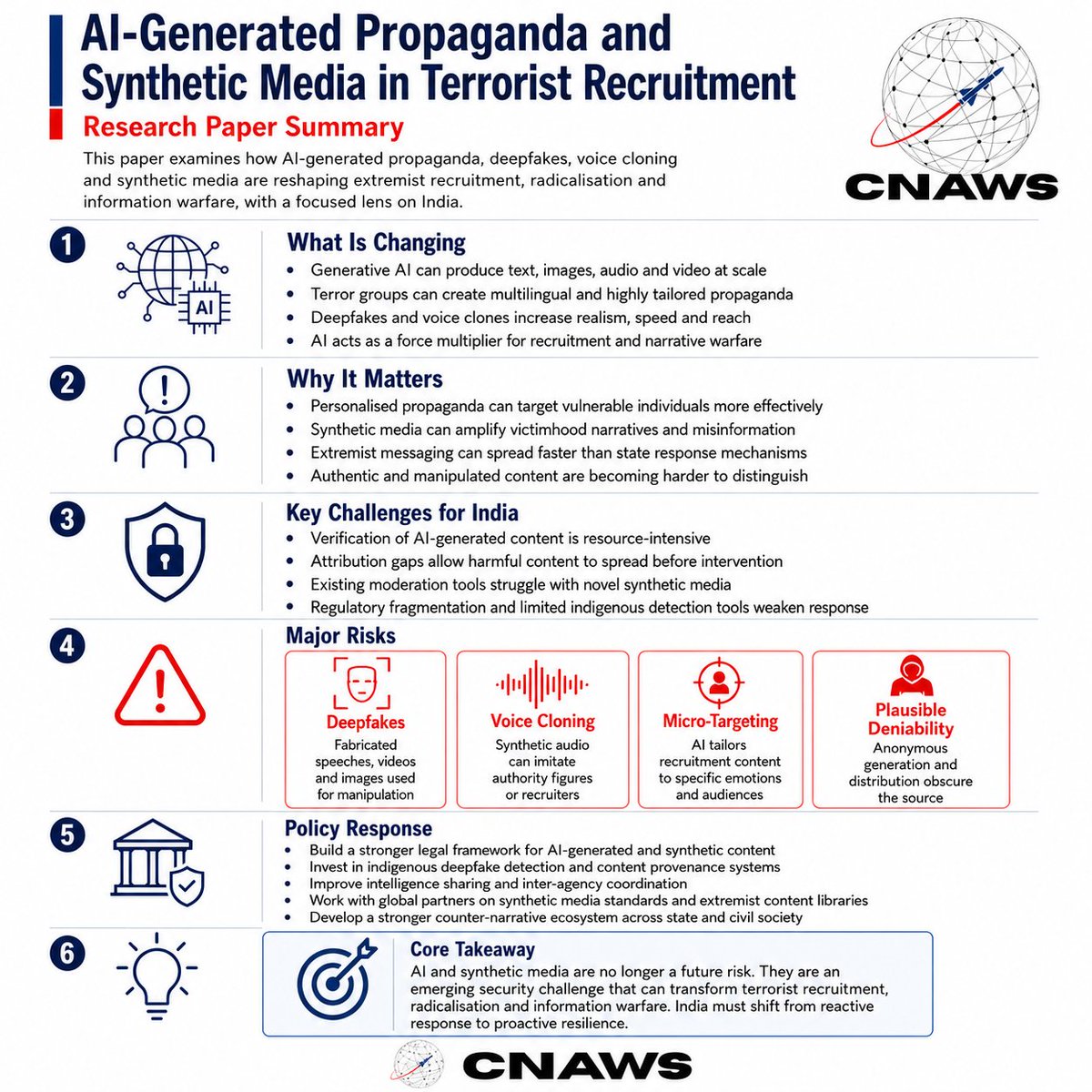
AI-generated propaganda is becoming a new weapon in terrorist recruitment.
Deepfakes, voice cloning and synthetic media can now be used to target vulnerable audiences, amplify extremist narratives and outpace traditional content moderation.
Read the latest CNAWS research paper: https://t.co/oCeHS2O4jR
Can limited war between nuclear powers remain limited?
In South Asia, drones, AI, cyber operations and information warfare are reshaping the India-Pakistan escalation space.
Nuclear deterrence still constrains full-scale war, but the grey zone below it is becoming faster, crowded and more unstable.
Sanjay Panicker Reghulal writes for CNAWS on why future limited wars may be far harder to control.
Read the full article on the CNAWS website: https://t.co/tMtcqpvT90
#CNAWS #LimitedWar #NuclearDeterrence #IndiaPakistan #SouthAsiaSecurity