Alibaba's AliExpress was caught using users' audio systems to track them.
AliExpress wasn't recording users but instead playing a silent sound and measuring how users' specific devices processed it in order to fingerprint them.
But don't worry because Brave stops this.
Today, we're launching the world's largest open-source CAD dataset for computer-use.
1,000+ hours across SolidWorks, Siemens-NX, AutoCAD & more.
Screen recordings, mouse/keyboard actions, input diagrams, output files, rubrics and narrations.
Link in the comments :)
@TomOlivier Hey Tom, I'd like to setup a time to chat with you about AutoGTM (and a couple of other things you've mentioned on x). Can you DM me your email or number (Phone/WhatsApp/Signal)? I have an idea that may be mutually beneficial.
The European Council formally adopted the UK’s participation in the Ukraine Support Loan.
Ukraine will now be able to use loan financing to procure crucial defence products made by UK-based industries, strengthening its ability to defend itself against Russia’s illegal war.
This is actually extremely cool.
For years the field of 3D scene reconstruction using things like conventional Wi-Fi signals - but the resolution was low, and the mathematics of doing it in real time computationally expensive.
millimeter wave is totally different.
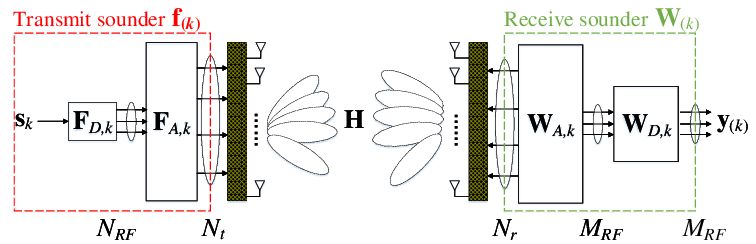
The general problem is, given an antenna and receiver that are connected over an RF link, how do you maximize or guarantee a minimum of bandwidth. This is the art and science of Channel Modeling, which at its simplest form is finding the transmission parameters of a two-port network where the device under testing is the atmosphere between the antennas. Take a known signal, play it through the Tx, connect a Vector Network Analyzer to the Rx, find the received power at each frequency, you know you the broadcast power so you can calculate S21, the power out of port 2 that went into port 1, and work backwards to how power you need your cell towers, how many, and etc, to get network coverage.
Things like walls, buildings, tables, chairs are basically invisible at lower frequencies, certainly AM or FM radio but also 3G cell service, but low frequencies carry less information since theres fewer waves per second you can modulate to carry bits. LTE bands or 4G start to diffract around objects, walls, etc, around 700MHz and getting into Wi-Fi router frequencies you start to see real loss of signal in a different room of a building, or in weird dead spots in your apartment.
When the waves are small enough to bounce off things in your environment, you don't get just a reduced signal at your receiver, you also get multiple copies of the same signal that all traveled different paths, some longer than others, which shows up as a phase delay. With the phase information you can start using the multiple paths an RF signal takes to actually cram more information in. Multipath multiple-input multiple-output or MIMO systems first showed up in the 802.11n WiFi standard, which added up to 4x streams, and now latest standards have 16x streams.
This is also why you see Wi-Fi routers with multiple antennas, by adjusting the relative phase between the antennas they can form the RF beam uniquely to the location of different users.
The more accurately you can actually figure out what the RF channel environment is, seeing which beams reflect where and what the paths are, is called Inverse Channel Modeling.
Inverse Channel Modeling is how you can use Wi-Fi signals to map out a room, see occupants inside of it, but Wi-Fi wavelengths are 10-15cm long, so they don't see high resolution.
Wavelengths in the millimeter range are in the sweet spot between feature resolution and ability to penetrate opaque materials - sub-millimeter gets into infrared and then visible light, or Lidar, which is its own ball game.
To see behind walls with a flat panel antenna my guess is that its something like a phased array of millimeter-wave antennas, which does a raster-scan of the forwards looking environment and then does an inverse-channel modeling calculation looking at the reflected component strengths and phases, likely sweeping across a range of frequencies and waveforms at each frequency.
Likely you can also train up an ML model to learn the same representation as the inverse-channel modeling algorithm with probably a 10,000-1e6x speedup, put that into an FPGA or some kind of ASIC, and get a handheld portable device that can see behind walls in real-time.
We’ve gotten down to sub $500 per red team drone for swarming sans warhead.
Soon will be under $400 and will be fully programmatically controlled.
It’s already a bit surreal to see with a handful but 50 of these is gonna be wild.
@sentradel
Introducing ACT-2 Preview
The first robotics model to unify broad generalization with high reliability. A single fine-tuning example can teach Memo a new behavior that generalizes.
Zero shot, real unseen homes, 99% success rate.
@NironMagnetics I'd like to get in touch with Tom soon. Please message me so that I can provide Niron with my contact information. Or you can reach me here: https://t.co/m08Bg7H1Xa.