Independent Think Tank analyzing global geopolitics, foreign policy, and governance. Based in Islamabad with a global outlook. Dialogue. Research. Strategy.”
China’s first aerial mothership, Jiutian SS-UAV, is scheduled for its maiden flight in June.
It can cruise at 15,000m high carrying over 100 small drones or 1,000 kg of missiles, with a range of 7,000km.
Don’t worry, China’s military is peace-oriented from the start. We grow stronger to deter aggression, unlike the US, always attacking other nations.
Peace and stability between India and Pakistan are essential. Millions face economic hardship, yet ruling elites on both sides remain detached from the suffering of the common people.
#IndiaPakistan#Peace#EconomicJustice#PeopleOverPolitics
A South Asian tragedy: two nuclear-armed countries with some of the most underdeveloped populations, spending millions of dollars on military escalation and drones—while it is the poor taxpayers who ultimately pay the price, in both money and blood, not the politicians/generals.
🎙️The effects of Trump’s immigration agenda are reverberating beyond the border with implications for education, tourism, and corporate jobs in the US.
What does it mean for the US economy? Bloomberg reporters answer your questions.
🔜 https://t.co/3Hro6KIk1N
Harvard has set an example for other higher-ed institutions – rejecting an unlawful and ham-handed attempt to stifle academic freedom, while taking concrete steps to make sure all students at Harvard can benefit from an environment of intellectual inquiry, rigorous debate and mutual respect. Let’s hope other institutions follow suit.
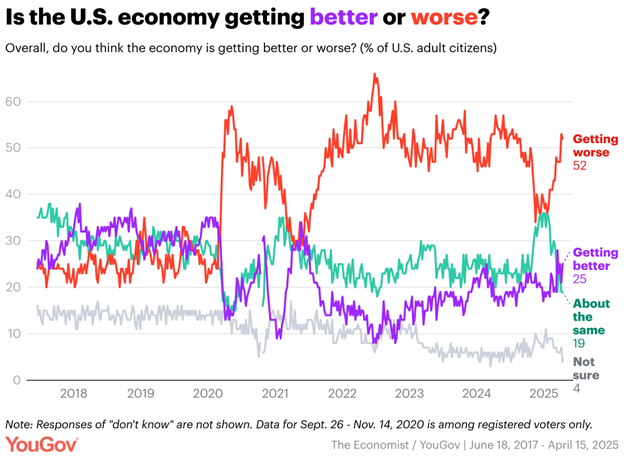
Trump’s tariffs were billed as a blow to China—but did they backfire on American consumers and global supply chains instead? The debate is far from over. #TradeWar #TrumpTariffs#GlobalEconomy #USChinaRelations#
Wow, some economists are faster than others!
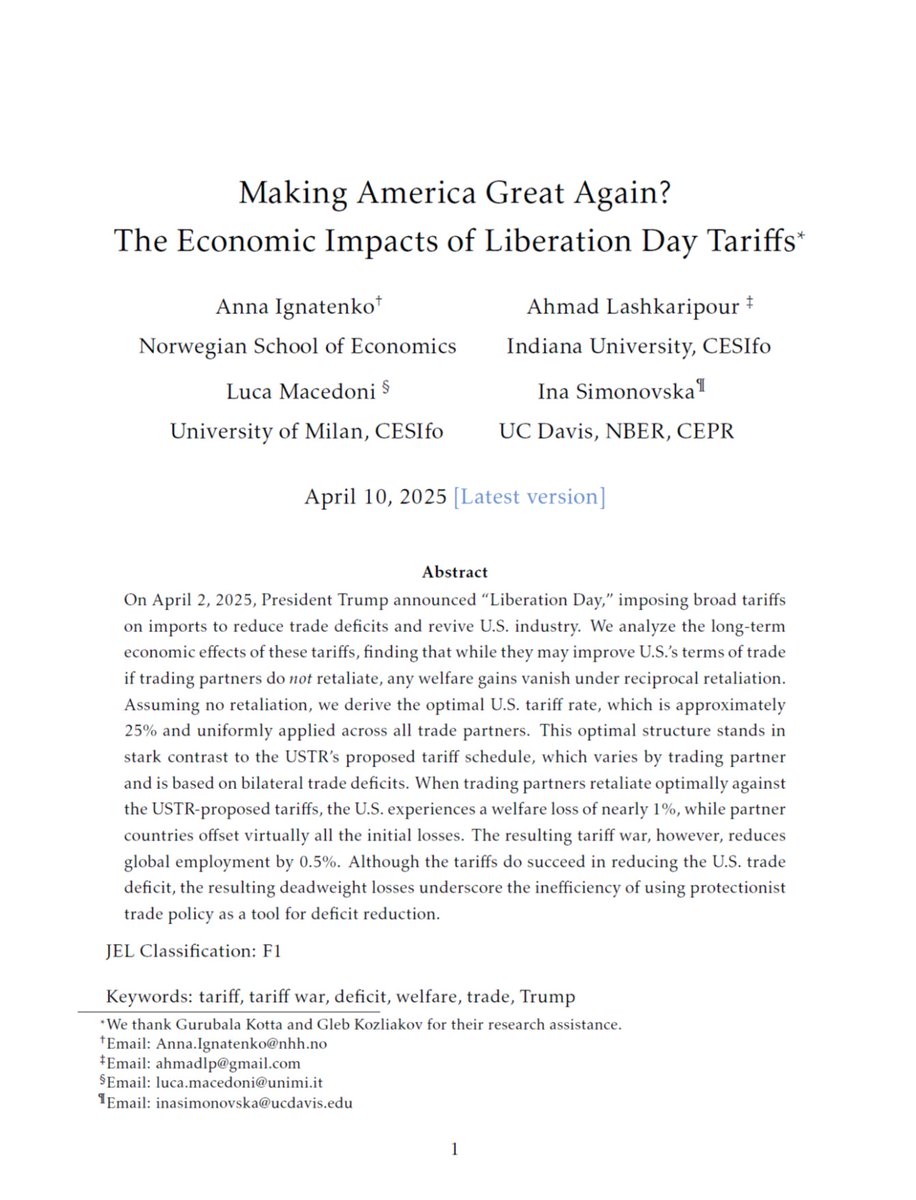
"Making America Great Again? The Economic Impacts of Liberation Day Tariffs" by Anna Ignatenko, Ahmad Lashkaripour, Luca Macedoni, and Ina Simonovska.
"We analyze the long-term economic effects of these tariffs, finding that while they may improve U.S.’s terms of trade if trading partners do not retaliate, any welfare gains vanish under reciprocal retaliation."
"Although the tariffs do succeed in reducing the U.S. trade deficit, the resulting deadweight losses underscore the inefficiency of using protectionist trade policy as a tool for deficit reduction."
https://t.co/FvrjB9WwS4