Good news for your Thanksgiving table, Colorado!
Thanksgiving dinner for 10 costs $56.28 in Colorado this year, $2.35 below the national average. Two years ago, Colorado was 24% above it. A cheaper turkey makes most of the difference.
Learn more: https://t.co/VhIZ1EPRfd
KOA NewsRadio covered our latest report. From 2019 through 2022, the numbers were close: 26 public companies left Colorado and 24 arrived. Since January 2023, 27 have left and only 13 have arrived. Every year since 2022 has been a net loss for Colorado.
Where are they going? Texas took the most, with six.
Read the full report: https://t.co/CSD0hlGAEr
Texas, California and Florida accounted for 13 of Colorado’s 27 public company exits from January 2023 through October 21, 2026.
These exits include headquarters relocations and acquisitions by companies based outside Colorado—not necessarily the relocation of all operations or jobs.
Explore the destinations and company details in CSI’s full report: https://t.co/CSD0hlGAEr
Colorado used to rank 33rd on the Tax Foundation's national rankings. Amendment 87's graduated tax, passed by voters in Colorado's November election, will drop that rank to 44th. That shift could present new challenges for a state already struggling to retain businesses.
CSI's latest report found that Colorado is losing public companies twice as fast as it gains them: https://t.co/lrkIgcISan
Check out the Tax Foundation's rankings: https://t.co/b9aieylKr0
Read the article: https://t.co/ieUAw11QwX
New CSI research tracks the net market value of public companies moving their headquarters into and out of Colorado from 2019 through 2026.
The data shows significant fluctuations, from a net gain of $36 billion in 2019 to a net loss of $17.1 billion in 2026, excluding Palantir.
Explore the full findings and what these trends reveal about Colorado’s business landscape.
Read the full report: https://t.co/CSD0hlGAEr
What do public company arrivals and exits mean for local philanthropy?
According to CSI's latest report on corporate headquarters and charitable giving, Colorado’s net company changes since 2023 are associated with $22 million to $74 million less in annual giving from public companies and their employees.
Learn more about which public companies have left Colorado in the last few years. Read the full report: https://t.co/CSD0hlGAEr
The facts matter. And so does the research behind them. 📊
From housing affordability to healthcare, jobs, and the economy, Common Sense Institute produces more than 85 reports each year to help Coloradans better understand the issues shaping our state.
Our research brings important facts and economic insights into conversations about Colorado's future.
Help us continue this work! Early Giving is open, and your support helps make continued research possible. 💙
Support CSI today: https://t.co/GVnE556pUM
Are you a resident of Denver or Boulder County? In 2024, about 36% of Denver households and 37% of Boulder County households spent more than 30% of their income on housing, both above the statewide rate of 34%.
CSI’s latest research examines housing affordability and inclusionary housing policies in Colorado. Read the report: https://t.co/IfyUeX0BTL
The Center Square highlighted Common Sense Institute Colorado research examining the potential economic impact of Ballot Issue 7A.
According to CSI's analysis, the measure could result in a cumulative $1.23 billion reduction in Colorado's GDP and $528 million in personal income through 2036.
The findings offer insight into the projected economic implications of the ballot measure and its potential effects on Colorado's economy.
Read the article: https://t.co/Q3bBOgvyfe
Read the Report: https://t.co/G0TDu11hSU
Denver’s affordable housing stock has grown since 2010, but the gap remains wide. As of July 2026, the city had 29,949 affordable units, compared with an average of 91,575 cost-burdened households earning below 80% of area median income from 2018 to 2022. The gap narrowed by just 0.6% between 2010 and 2026.
Read CSI’s latest housing research: https://t.co/IfyUeX0BTL
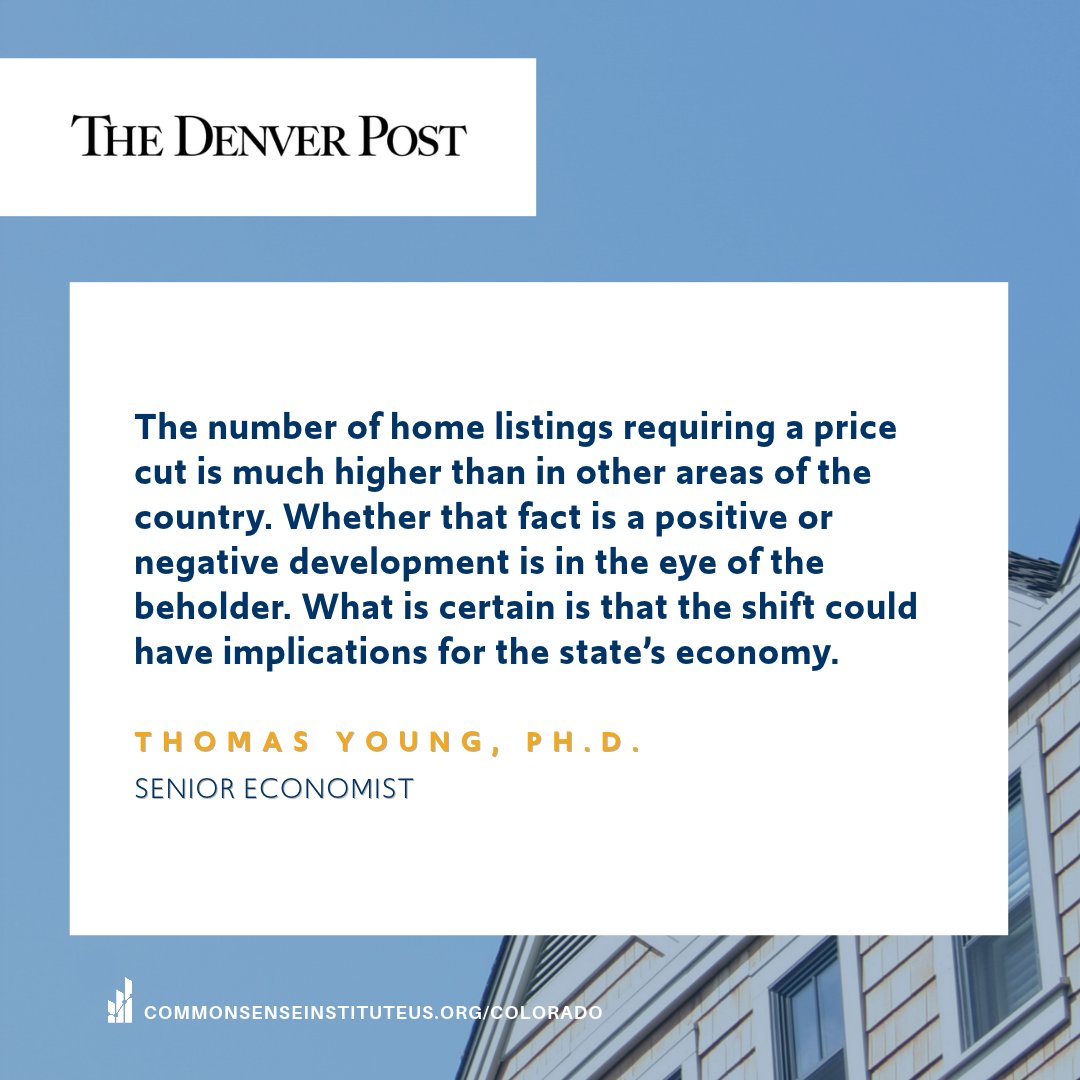
Colorado Springs and Denver lead the nation in home listings with price reductions, according to new CSI research highlighted by The Denver Post.
In September, 55.7% of listings in Colorado Springs and 55% in Denver saw price cuts. CSI Senior Economist Thomas Young, Ph.D., examines what the trend could mean for home values, homeowner equity, and Colorado’s economy.
Read the Article: https://t.co/m2RkhFp30D
Read the Report: https://t.co/eUu76xDO5U
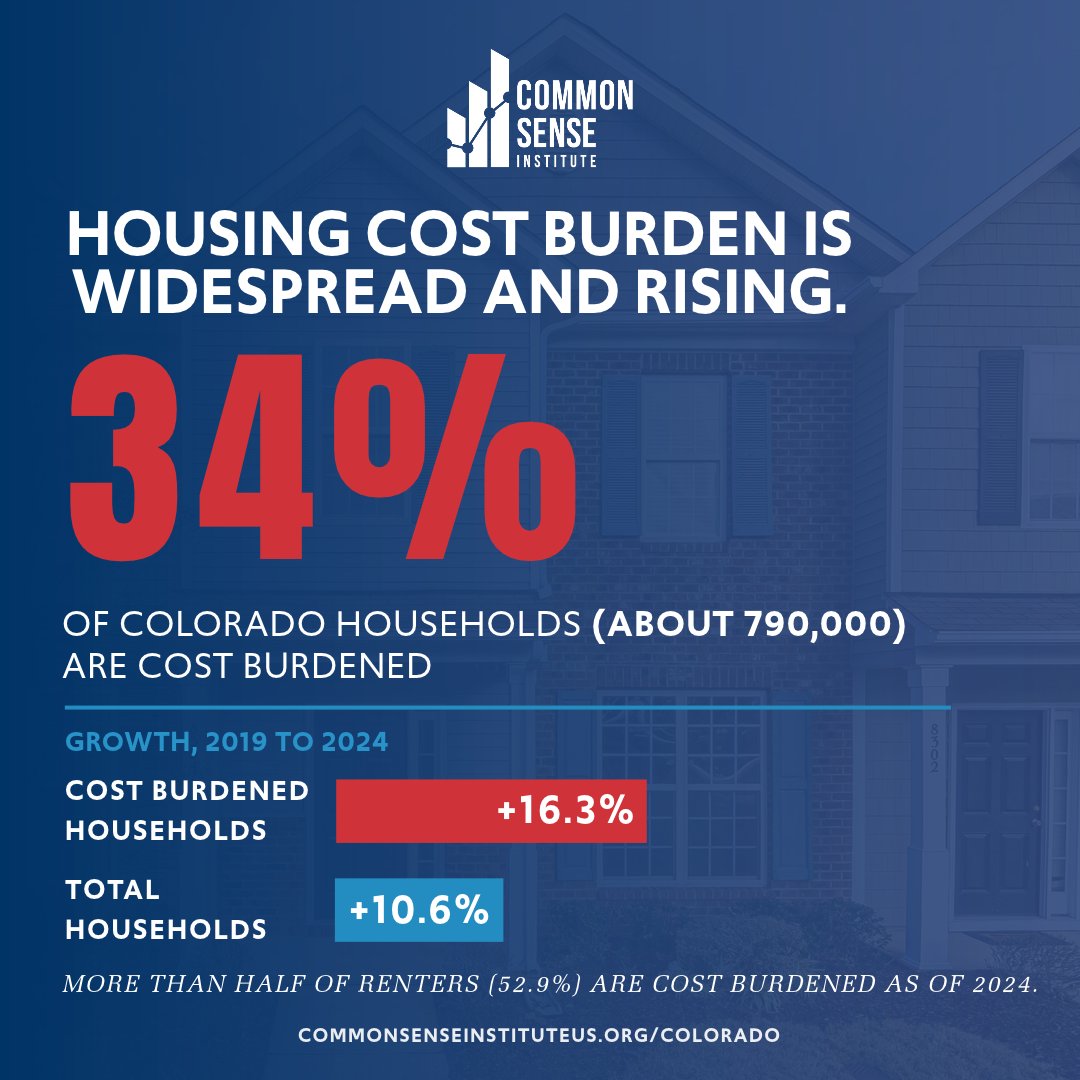
Housing cost burden continues to affect Colorado households.
According to Common Sense Institute research, more than one-third of Colorado households were housing-cost burdened in 2024, meaning they spent at least 30% of their income on housing.
The research also examines how housing cost burdens have changed over time, finding that the number of cost-burdened households has grown faster than the total number of households statewide.
More than half of Colorado renters are also considered cost burdened.
Explore CSI’s latest research: https://t.co/IfyUeX0BTL
Better questions lead to a better understanding of Colorado's future. 💡
From housing affordability and healthcare to jobs and the economy, the issues shaping our state deserve thoughtful questions and clear answers.
At Common Sense Institute, we explore these challenges through independent economic research, helping Coloradans better understand the issues affecting their communities.
💙 This Colorado Gives Day, support the research that keeps important conversations going. Early Giving is open, so you can make your gift today!
Give today: https://t.co/Nf5UsqaOLk
Denver’s housing landscape is changing!
According to new research from Common Sense Institute, the number of studio units in Denver increased 164% between 2005 and 2024, growing from approximately 8,700 to 23,000 units.
Studios and one-bedroom homes also accounted for more than one-third of all housing units added in Denver over the past 20 years.
Explore CSI’s latest research! https://t.co/3KE1dfF59Y
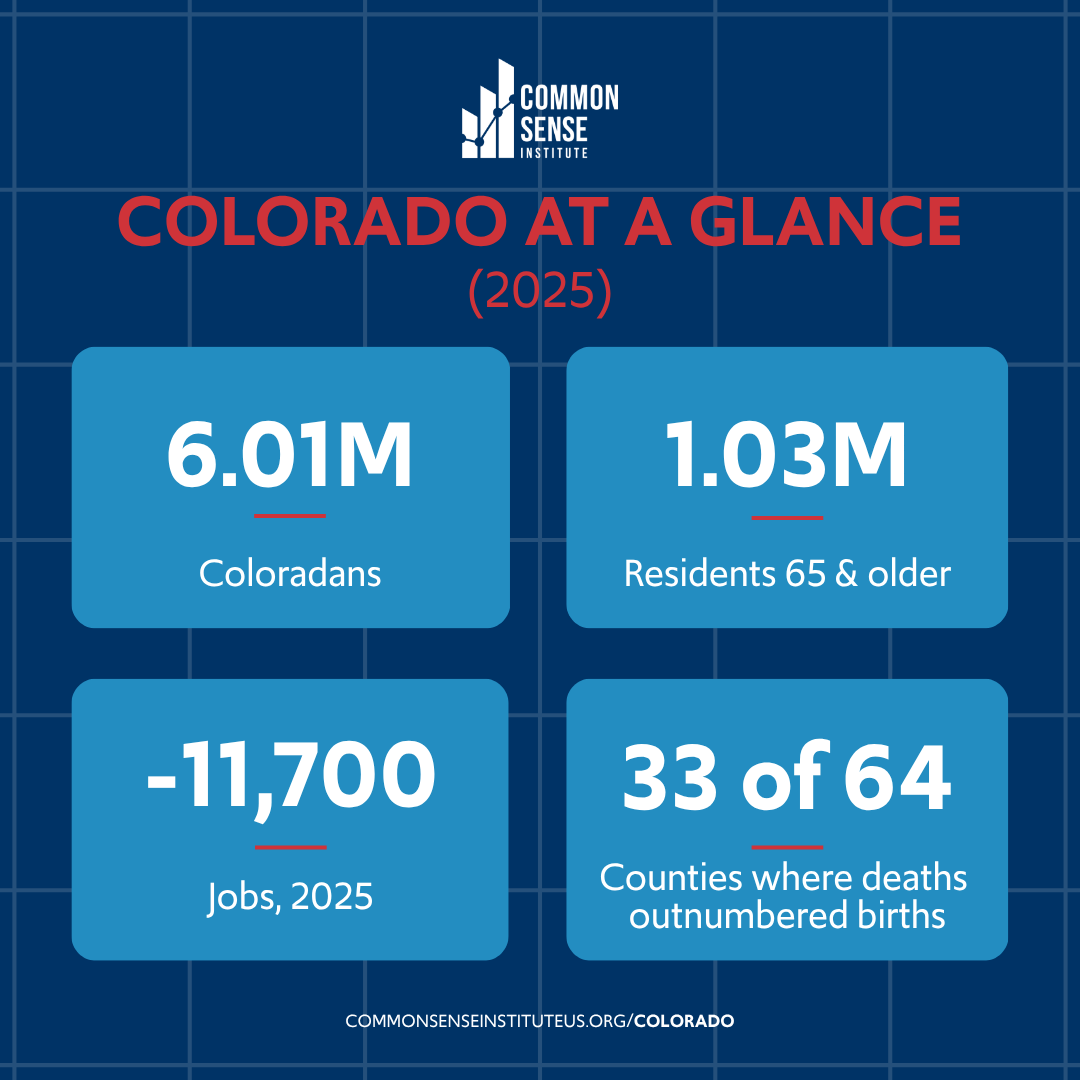
Colorado’s 2025 snapshot: 6.01 million residents, including 1.03 million people age 65 and older. The state lost 11,700 jobs, and deaths outnumbered births in 33 of 64 counties.
Curious about other trends? Learn more here: https://t.co/cAdCuZ3qvg
Smaller households are reshaping Colorado’s housing demand.
According to new research from Common Sense Institute, Colorado’s average household size declined from 2.55 people in 2020 to 2.45 in 2024.
That shift contributed to approximately 88,000 additional households between 2021 and 2024, compared to 69,000 resulting from population growth.
As more Coloradans live in smaller households, the state needs more housing units to accommodate the same number of people.
Explore CSI’s latest research! https://t.co/3KE1dfF59Y
What does slowing population growth mean for Colorado’s future?
The state added 23,725 people in 2025, its smallest population gain since 1990, as net migration fell from 58,458 in 2024 to 3,451 in 2025.
Explore more trends in CSI's latest release: https://t.co/cAdCuZ3qvg
Eggs & the Economy is underway! At a consequential moment for Colorado, today’s conversation looks beyond election headlines to explore what the results could mean for our economy and communities.
We’re also sharing new research on Colorado’s latest demographic trends—bringing facts and independent analysis to the conversation.
Follow along for highlights from today’s conversation.