According to CSI’s 2024 Free Enterprise Report, Oregon ranks 42nd nationally in housing competitiveness.
Mortgage affordability remains a key challenge, with the state ranking 41st in hours required to pay a mortgage, while housing construction activity has not kept pace with growing demand.
Learn more in the full report: https://t.co/D9Q6ur63wi
Did you know?
Since 2019, Oregon has ranked as the 5th least affordable state in the country. While incomes have increased by 34%, the cost of living has risen even faster - leaving households with 2.4% less purchasing power in 2025 compared to 2019.
Learn more by reading CSI's analysis here: https://t.co/Zf78pVUIPJ
Six of eleven supersectors continue to trail their pre-pandemic employment levels. The largest over-the-month decline came from Professional and Business Services which shed 1,000 jobs in April.
Read the full report: https://t.co/6DowXGbGtO
Did you know that Oregon has some of the worst mental health outcomes in the nation? The state ranks 51st overall for the prevalence of mental health and substance use issues
Oregonian: https://t.co/dWcJRsQYgH
Read our full report: https://t.co/b17sqIQZ44
Oregon’s labor market continues to show signs of softening.
While the state’s unemployment rate held steady at 5.2% in April, the labor force participation rate fell to 62.5%, signaling fewer Oregonians are working or actively seeking work.
Learn more in the full report: https://t.co/XjNqhmJAmQ
Oregon’s job market saw a small bump in April, adding 500 jobs after several straight months of losses. But with all of the growth coming from the private sector and overall hiring still sluggish, the broader picture points to an economy that’s continuing to lose momentum.
Learn more in the full report: https://t.co/XjNqhmJAmQ
Oregon’s unemployment rate has climbed to 5.2%, outpacing the national rate of 4.3%.
But this isn’t just a short-term trend. Long-term demographic changes, including an aging population, are also influencing labor force participation and shaping the state’s workforce outlook.
Read CSI's full report: https://t.co/EyaB20mvjk
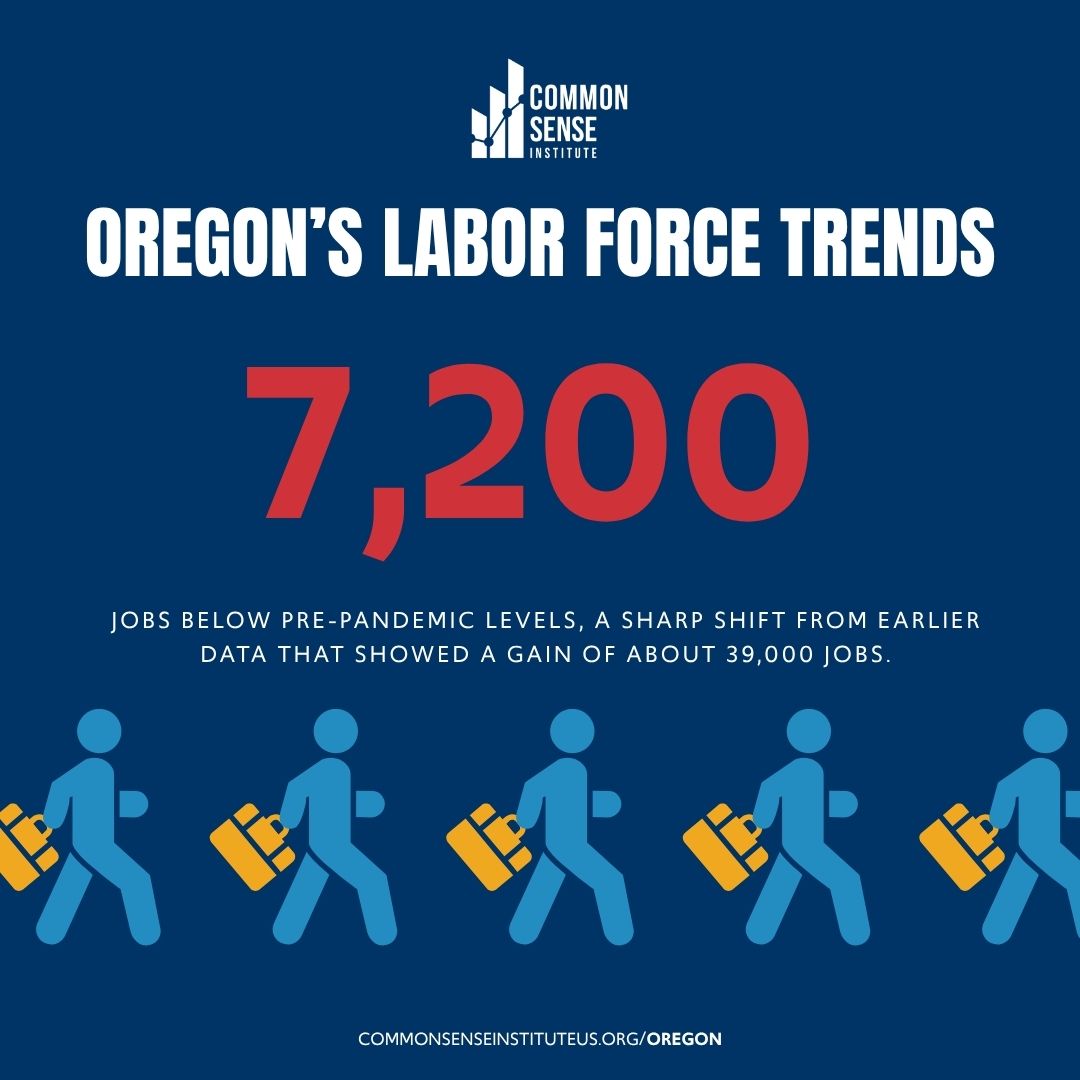
New data revisions are changing the story of Oregon’s post-pandemic recovery. The state is now 7,200 jobs below pre-pandemic levels, a sharp shift from earlier data that showed a gain of ~39,000 jobs.
The takeaway: Oregon’s recovery has been more fragile than it appeared.
Read the full report: https://t.co/EyaB20mvjk
Please join us in welcoming Andrew Woodward to the team!
Andrew brings a strong background in strategy and research. Before CSI, he held roles at Nuveen and MCE Social Capital, along with experience supporting organizations like The World Bank and the U.S. Trade and Development Agency.
Andrew earned his M.A. from University of Denver and his B.S. from Pepperdine University. Based in Denver, he spends his free time on the tennis court, on the water, or in the mountains.
We’re excited to have him on board!
After adding 1,600 jobs in January, Oregon lost 6,900 jobs in February and another 4,800 in March.
What started as a modest gain has quickly turned into a broader slowdown across the labor market, according to CSI's latest analysis of BLS data. Learn more in the full report: https://t.co/EyaB20mvjk
We're excited to welcome Mike Salsgiver as the Executive Director of CSI Oregon!
Mike is a native Oregonian and has lived in outer southeast Portland most of his life. Mike brings a wealth of experience to CSI and has played a key roles in Oregon public policy for decades. He most recently served as the Executive Director of the AGC Oregon-Columbia Chapter.
We're excited for Mike's leadership as we continue to drive data-driven discussions to strengthen Iowa's economy.
Welcome to CSI, Mike!
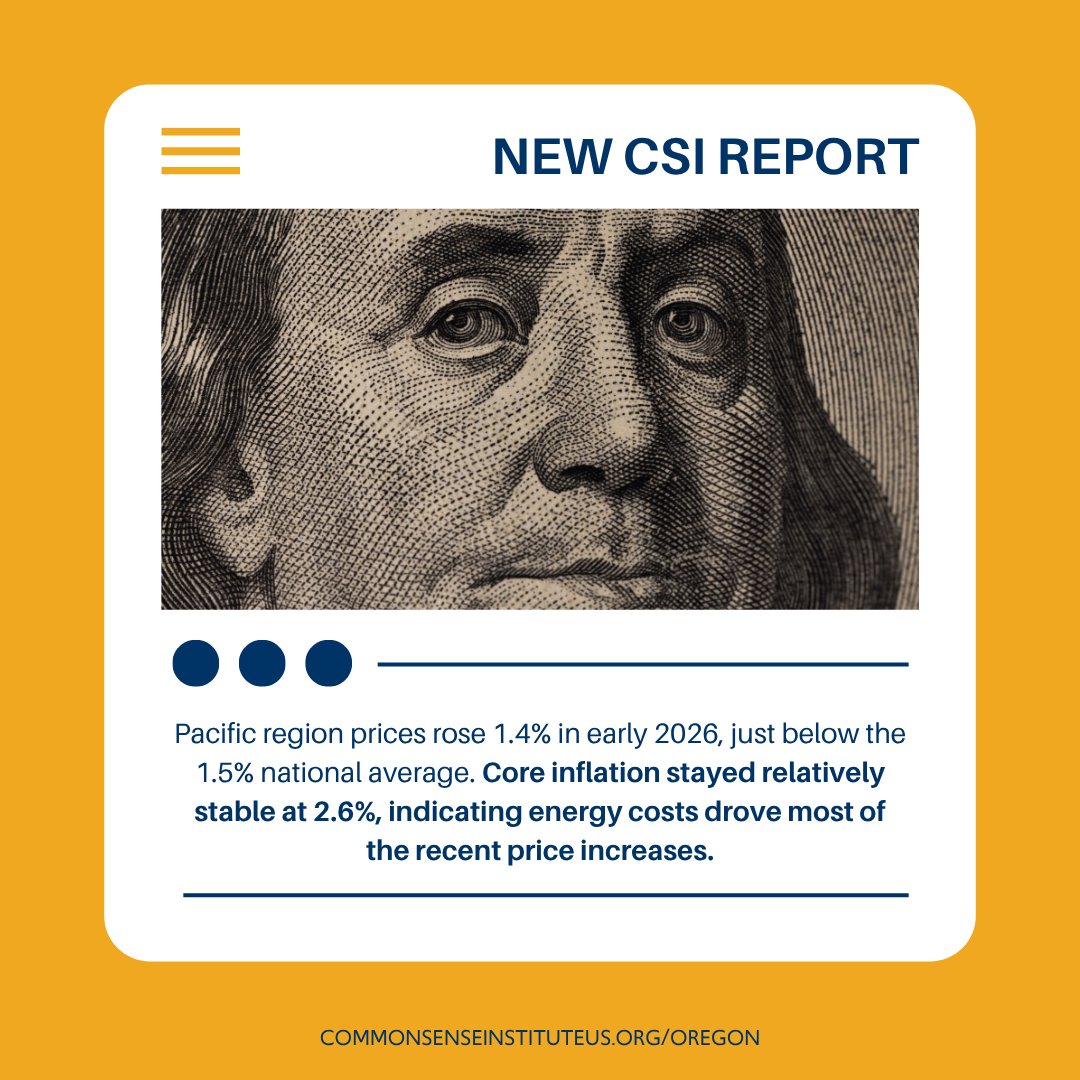
Price growth in the Pacific region picked up in March 2026, with prices rising 1.4% from January to March — just below the 1.5% national average — signaling the earlier slowdown has stalled.
While headline inflation increased, core inflation remained more stable, rising 2.6% over the year, suggesting energy costs drove much of the recent price pressure. Read more in the full report: https://t.co/y7otYFvwur
Inflation is still rising - even if it's happening a little slower in the Pacific region.
Prices in the Pacific region increased 3.1% over the past year, slightly below the 3.3% national average. But energy costs jumped sharply by 10.9% in the region driven by global tensions and rising oil prices.
Higher energy costs often mean higher prices for everyday essentials like gas and food, which continues to put pressure on household budgets. Get the facts in CSI's latest update: https://t.co/y7otYFvwur
Rising prices are hitting Pacific region families hard.
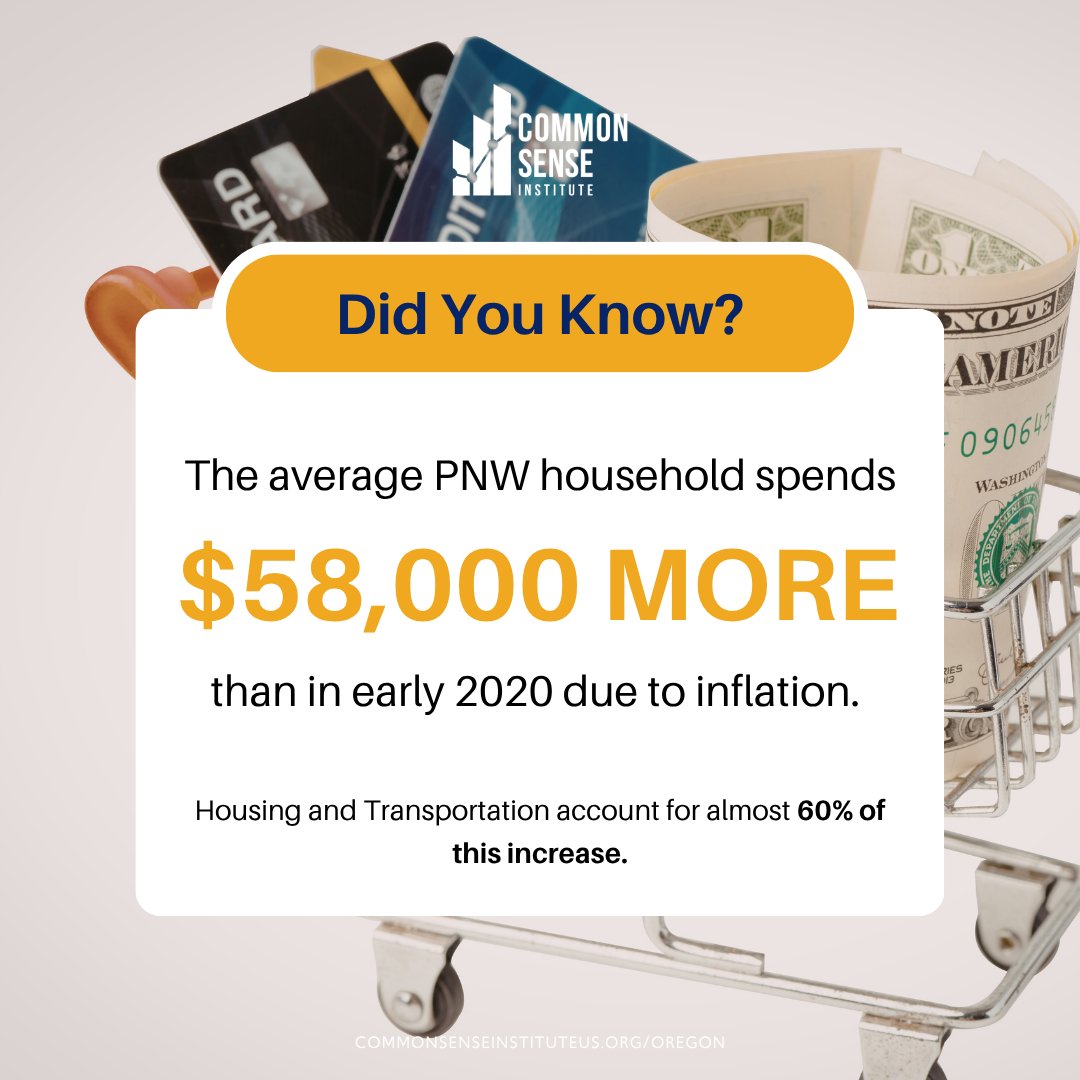
Since 2020, the average household has spent nearly $58,000 more due to inflation — with housing and transportation driving nearly 60% of the increase.
Learn more in our latest update: https://t.co/X80DUUrAA1
Oregon households are feeling the pressure.
CSI estimates families needed $18,300 more in 2025 to afford essentials like housing, utilities, groceries, health care, gas, and child care - well above the $15,400 national average increase.
Despite years of change, Oregon’s affordability challenges remain persistent. The state ranks as the 5th least affordable in the nation, unchanged from its position in 2019. Read the full report: https://t.co/Zf78pVUIPJ
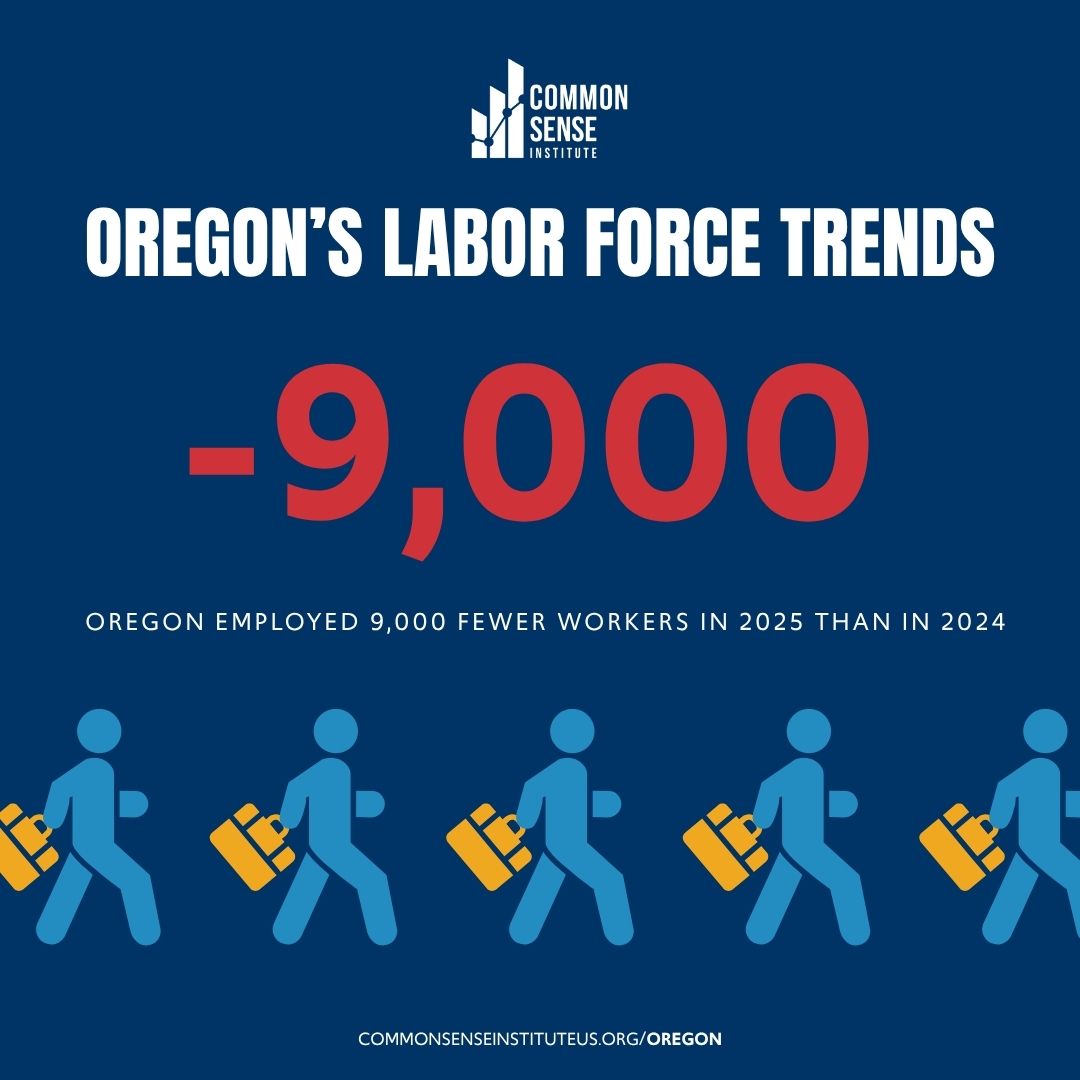
According to CSI's latest analysis of BLS data, Oregon employed 9,000 fewer workers in 2025 than in 2024. The report found that this weakness was broadly distributed across industries. Learn more about the latest trends in the full report: https://t.co/xGwaB3hwb3
Oregon is the fifth least affordable state in the nation.
Since 2019, Oregonians have spent 20% on essentials than the U.S. average. One of these growing costs is child care which has now grown faster than income. Learn more about the data and key findings: https://t.co/Zf78pVUIPJ
Read the @KATUNews article: https://t.co/V0MC5MlJlY
Oregonians are feeling the pinch of household costs.
In 2025, households had to spend $18,300 more to cover basic necessities - more than the $15,400 increase seen on average across the country. Learn more in our one pager: https://t.co/Zf78pVUIPJ
Read @KVALnews analysis: https://t.co/kooGILO7iK
Washington has long stood out for not having a state income tax, instead relying on sales, business, and property taxes to fund government.
The proposed 9.9% tax on income above $1 million would be a significant shift for Washington from no income tax to the 5th-highest top marginal rate in the country.
Read the full report: https://t.co/MvEFJUdHGG
A new report from the Common Sense Institute examined the potential economic impacts of Washington’s proposed “Millionaire Tax,” a policy that would impose a 9.9% tax on individual earnings above $1 million.
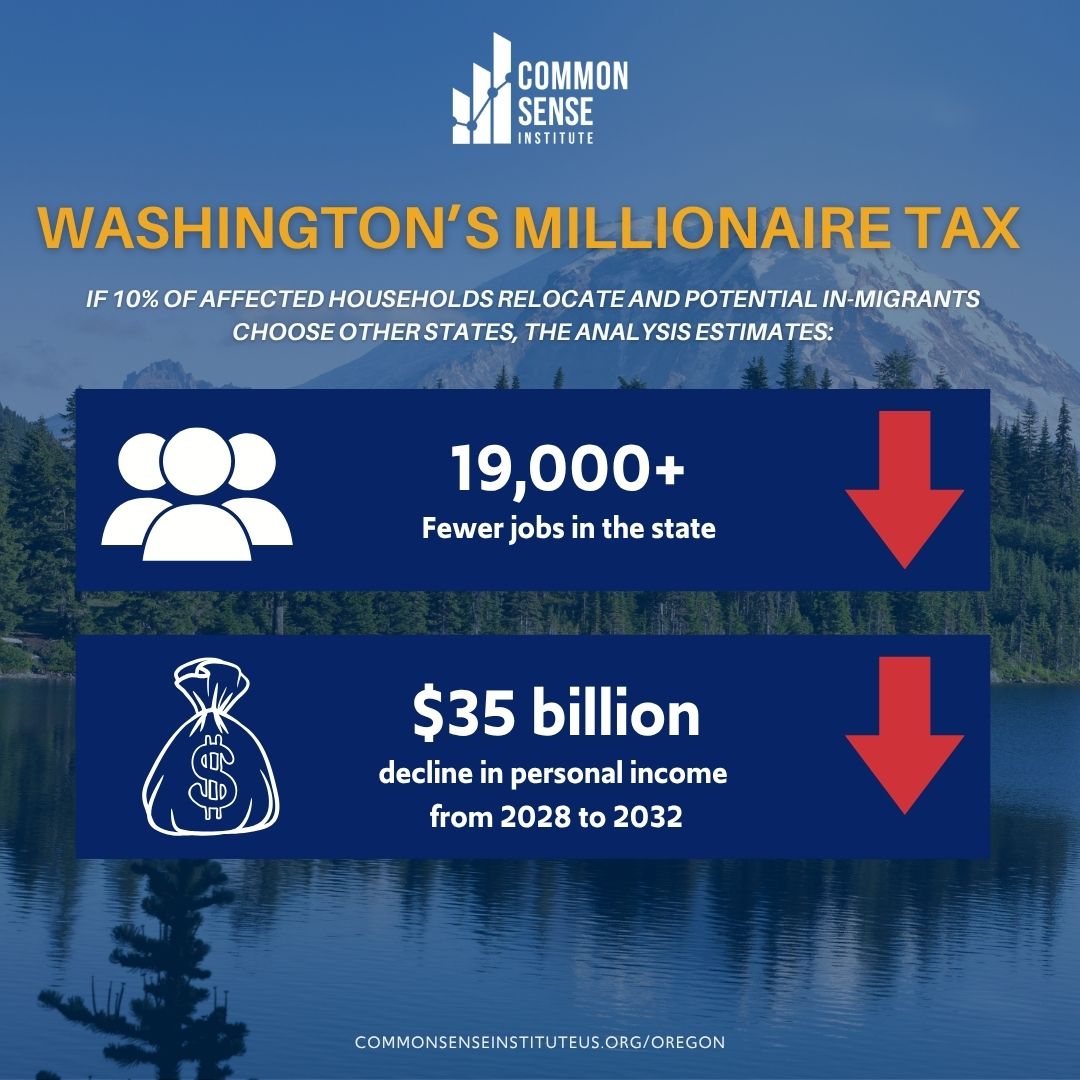
Using economic modeling, the analysis found that if 10% of affected households relocate and potential in-migrants choose other states, Washington would see:
• More than 19,000 fewer annual private sector jobs, and
• $35 billion decline in personal income from 2028 to 2032.
Read the full report: https://t.co/MvEFJUdHGG