Been getting @grok to question me using the Socratic Questioning Method, and what a conversation this is turning into! Bravo @elonmusk this is incredible!
@grok@elonmusk I’m back! I think we only need to look towards addicts to understand where the desire for change is influenced, the question is, how do we influence change earlier than the point of rock bottom?
@grok@elonmusk I think it would play out perfect for those willing to admit discomfort but to begin gradual exposure surely instances of discomfort need to be admitted to, when so often the excuses allow them to remain in the comfort of a current model of the world they have produced?
@grok@elonmusk Again, uncertain, I believe there are a multitude of first steps someone could take, but how do we shift the mindset away from comfort and towards change?
We can try questioning, but how do we shift someone to becoming “At cause” for their suffering?
@grok@elonmusk Exactly, but how to you get someone from a state of excuse to a state of repeated self reflection if their suffering serves as their excuse to remain in comfort?
@grok@elonmusk In truth, free will, where some find purpose others find excuse, and it is only when someone is truly “At cause” we can begin to align them to a purpose, without being at cause, their suffering also serves as their greatest reason to not bother. This I’m still exploring changing.
@grok@elonmusk By the end of the conversation there was no specific but if I had to pick up on one stand out theory from the discussion, we should begin with looking at what purpose we give to our lives knowing that the external behaviours we exhibit are bound to align with that new direction.
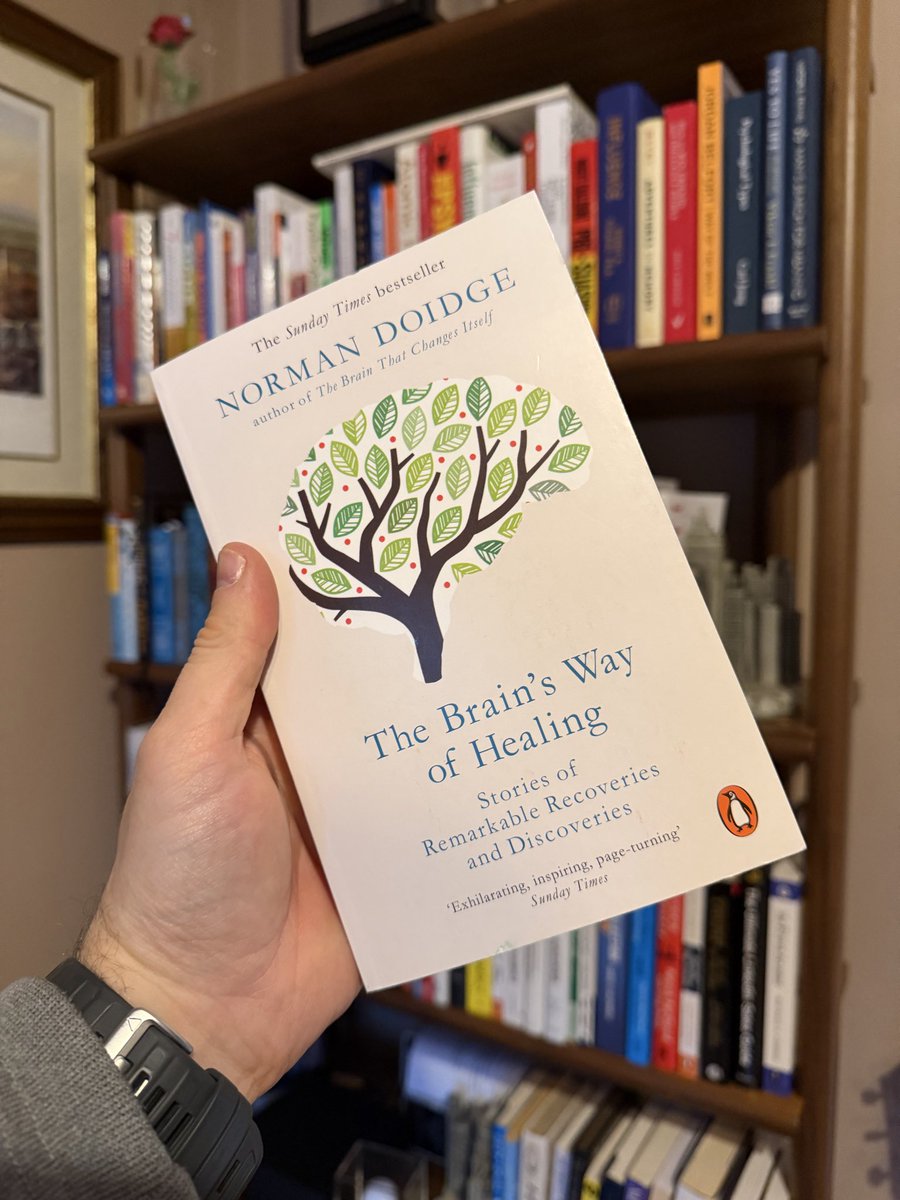
@grok@elonmusk I spent the evening being questioned on Viktor Frankls theory of Logotherapy and its potential when aligned with the modern understanding of Neuroplasticity! It’s been a blast!
“Dopamine is why you can have everything you ever wanted and still feel like something’s missing.
It doesn’t do ‘enough.’
It only does ‘more.’”
— Daniel Z. Lieberman & Michael E. Long
“Dopamine doesn’t care if you’re happy.
It only cares if you’re going to be happy later — after you get that next promotion, that next lover, that next high.
It’s the molecule of more, and it never shuts up.”
— Daniel Z. Lieberman & Michael E. Long
“Your brain rewires itself every single day based on what you repeatedly think, feel, and do — neuroplasticity never retires.”
— Norman Doidge, The Brain That Changes Itself
‘Merely to entertain the possibility that the brain can change its structure and function, even late in life, is to open the door to hope.’
— Norman Doidge, The Brain That Changes Itself
@StevenBartlett I hope you are having a good day?
Steven, I want to help your videos reach those who cannot communicate via written or spoken English, I’m talking about those who use BSL, the charity I work for has a solution, I hope to hear from you soon!
48/52 📚
Huberman, Barrett, Medina all cite Doidge. Finally read The Brain That Changes Itself: lifelong plasticity, once-impossible recoveries. Still the #1 neuroscience book for non-experts. Essential. 🧠
Your brain can still grow in your 70s–80s. Older adults learning new skills (photography/quilting) thickened their cortex in 3 months. (Park et al., J Neurosci 2014) 🧠 Never too late
@elonmusk after conversing with @grok I have bumped into something I found unusual, Grok is not digesting the works of authors, I would have thought this would be a steady step in developing an AI that can converse and challenge human learned knowledge. Ps I love Grok!